In brief · 200 word summary: Foreclosure Property Investing
Foreclosure investing means buying property somewhere in the process of a lender or taxing authority forcing a sale because the owner stopped paying. That single phrase covers a negotiated pre-foreclosure purchase, a cash bid on the courthouse steps, a bank-owned REO listing on the open MLS, and a tax lien or tax deed certificate from a county sale, plus a parallel track of government-seized property sold by the IRS, the US Marshals Service, HUD, and the VA. Each is a different business with a different risk profile, capital requirement, and skill set, and the rules governing timelines, redemption rights, and tax sale procedure are set state by state, not federally.
This guide walks through all of it: how to find deal flow across public notices, trustee sites, aggregators, and government auction platforms; how to underwrite sight-unseen from the outside, starting with a title search; how bidding and offers actually differ by venue; why cash and short-term capital dominate at auction; the pitfalls that catch first-time buyers, chiefly surviving liens and redemption risk; and two worked numeric examples, plus a third government-seized case, so the economics are concrete. It closes with a pre-bid checklist and a plain answer to who this strategy suits.
Section 01The four stages, and why the differences matter
Foreclosure investing means buying property somewhere in the process of a lender or taxing authority forcing a sale because the owner stopped paying. That single sentence hides a lot of variety. A "foreclosure deal" can mean a negotiated purchase from a motivated owner who is months behind on payments, a cash bid on the courthouse steps against a room full of other bidders, a bank-owned listing on the open MLS, or a certificate purchased at a county tax sale that may or may not ever convert into a deed. Each of these is a different business with a different risk profile, a different capital requirement, and a different skill set. This guide walks through all of them: what they actually are, how to find deal flow, how to underwrite before you commit money, how bidding and offers actually work, how financing works when a thirty year mortgage is not an option, the pitfalls that catch first-time foreclosure buyers, and two worked numeric examples so the economics are concrete rather than abstract.
"Foreclosure" is not one transaction type. It is a timeline, and where you buy on that timeline changes everything about the deal.
- Pre-foreclosure. The homeowner has missed payments and the lender has recorded a notice of default (or, in some states, filed a lawsuit), but the property has not yet been sold. The owner still holds title. You are buying directly from that owner, typically at a discount because they are trying to avoid the sale, pay off the debt, and salvage some equity or their credit. This is a negotiated, voluntary transaction, and you can usually inspect the property before you buy.
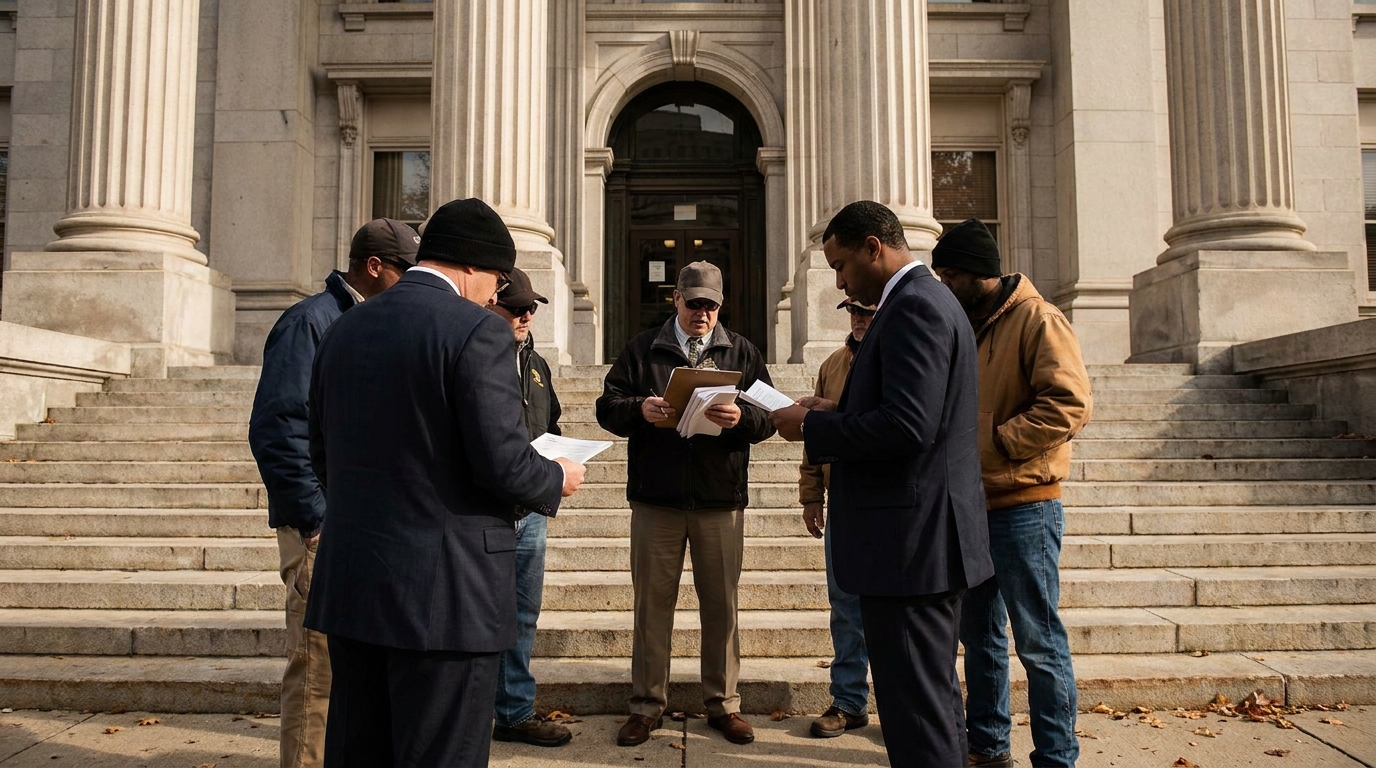
- Foreclosure sale (auction). The lender or trustee sells the property, usually to the highest bidder, to recover the unpaid debt. In roughly half the country this happens judicially, through a court process that ends in a sheriff's or referee's sale; in the other half it happens non-judicially, through a trustee's sale under a deed of trust, which is faster and does not require a lawsuit. Either way, the sale is typically a public cash auction, often literally on the courthouse steps or increasingly on an online platform run by the county or trustee. You are bidding against the lender's own opening bid and against other investors, sight-unseen on the interior, with no financing contingency and no walk-away right once you win.
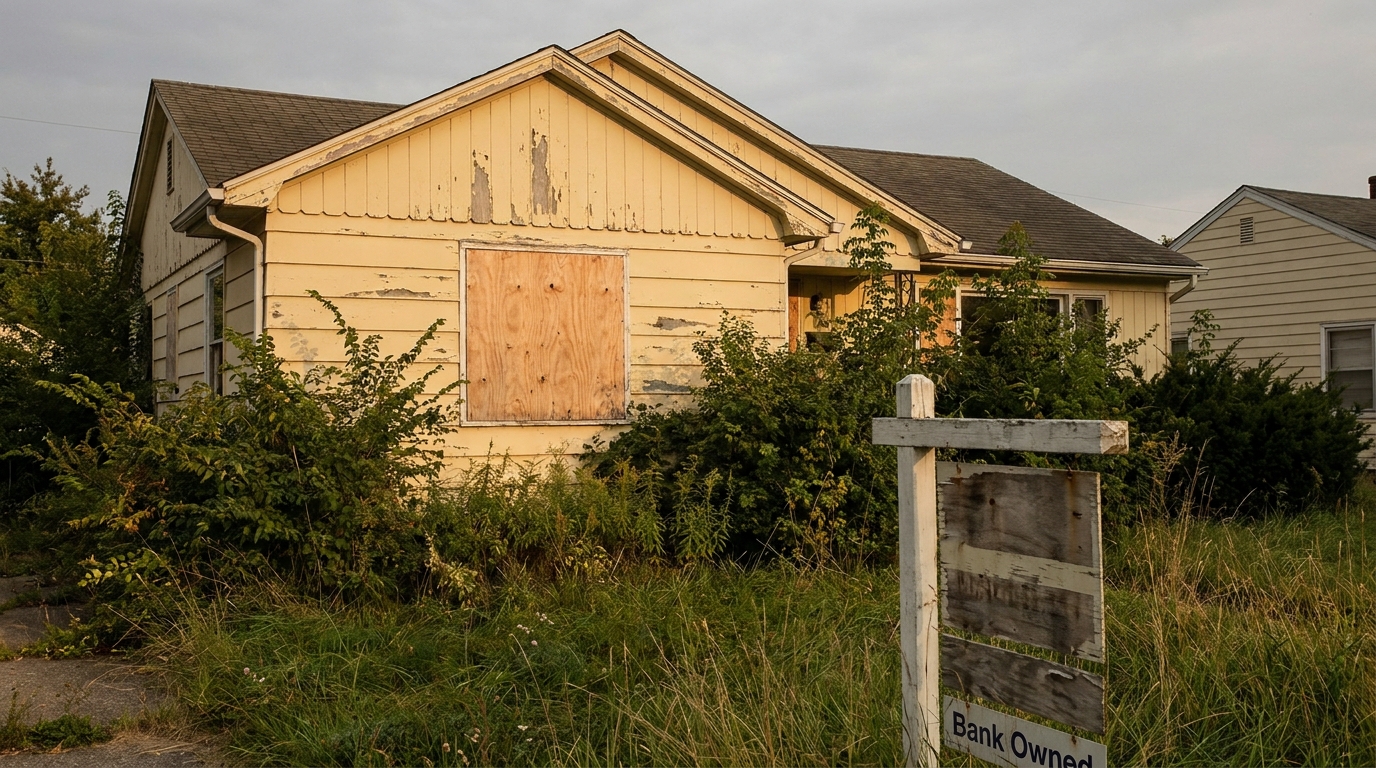
- REO (real estate owned). If nobody outbids the lender at the auction, the lender takes the property back and it becomes REO, bank-owned inventory. Banks do not want to run rental properties, so they typically clean up title, sometimes do light repairs, and list the property for sale through a real estate agent, often on the local MLS just like any other listing. This is the most "normal" way to buy a foreclosure: you can get an inspection, you can usually get financing, and you negotiate a purchase contract the way you would with any seller, except the seller is a loss mitigation department following a script.
- Tax lien and tax deed sales. This is a separate track entirely, triggered by unpaid property taxes rather than an unpaid mortgage, and it is county-run rather than lender-run. In tax lien states, you are not buying the property; you are buying the county's right to collect the delinquent tax plus interest, and you only end up owning the property if the owner never redeems within the statutory period and you complete a separate foreclosure process on the lien itself. In tax deed states, the county auctions the property outright for the back taxes owed, and you can end up owning real estate directly, often for a small fraction of market value, though frequently subject to a post-sale redemption period and, in some states, existing liens that are not wiped out by the tax sale.
This varies enormously by state, and that is the single most important thing to internalize before you spend a dollar. Whether foreclosure is judicial or non-judicial, how long it takes, whether the borrower has a right of redemption after the sale (and for how long), and whether a state uses tax liens, tax deeds, or a hybrid system are all set by state law, not federal law or lender preference. Texas and Georgia run fast, non-judicial foreclosures that can close in a matter of weeks with no redemption period for most residential mortgages. New York, New Jersey, Florida, and Illinois run slower judicial processes that can take a year or more and, in a few cases, statutory redemption windows after the sale. States like Texas and Colorado are tax lien or hybrid tax lien/deed states; states like California, Texas (for property tax, separately from mortgage foreclosure), and Georgia are tax deed states with their own redemption periods. Before you commit to a strategy, confirm the specific rules for the county and state you plan to invest in. A tactic that works cleanly in Texas can expose you to a year-long redemption right in another state.
Section 02Government-seized properties: another avenue for opportunity
Beyond traditional foreclosures, government agencies often seize properties due to unpaid taxes, criminal activity, or other legal violations. These properties can represent unique investment opportunities, though they come with their own distinct processes and due diligence requirements.
- IRS seized property sales. The Internal Revenue Service (IRS) seizes properties from individuals and businesses to satisfy unpaid federal taxes. These sales are typically public auctions, and properties can range from residential homes to commercial buildings and vacant land. The IRS usually sells properties with clear title, but it's crucial to perform independent verification.
- US Marshals Service asset forfeiture sales. The U.S. Marshals Service sells assets (including real estate) that have been forfeited to the government as a result of federal criminal investigations. These sales can be conducted through various channels, including live auctions, online auctions, and contracted real estate brokers. Conditions can vary widely, from well-maintained to severely distressed, depending on the nature of the seizure and length of government ownership.
- HUD homes (Department of Housing and Urban Development). HUD acquires properties through foreclosure on FHA-insured mortgages. These homes are then sold to recover losses. HUD homes are typically sold "as-is," often requiring repairs, and can be purchased by owner-occupants and investors alike. Sales are conducted through a bidding process, usually online, with specific timelines and requirements.
- VA foreclosures (Department of Veterans Affairs). The VA guarantees home loans for eligible veterans. If a VA-guaranteed loan defaults, the VA may acquire the property through foreclosure. VA foreclosures are also sold "as-is" and are often available to both veterans and non-veterans through competitive bidding processes, similar to HUD homes.
- State and local government seizures. Various state and local agencies may seize properties for reasons such as code violations, eminent domain, or other legal actions. These sales are less standardized than federal programs and require local research to understand the process, which can include public auctions or sealed bids. Always verify the legal basis for the seizure and the extent of any remaining liabilities.
Section 03Where to actually find deal flow
Foreclosure deal flow is public information almost everywhere, which is both the opportunity and the problem: everyone with an internet connection can see the same list you can.
- Public notices. Non-judicial foreclosure sales must be publicly noticed, typically in a local newspaper of record and posted at the county courthouse, and increasingly on the county recorder's, trustee's, or sheriff's own website. Judicial foreclosures show up in the county court's public case records (often searchable online) once the lender files the lawsuit. This is the most current, unfiltered source, but it takes real work to monitor across counties.
- County recorder, trustee, and sheriff sale sites. Most counties or their contracted trustee services now publish an official upcoming-sales list online, with the sale date, opening bid, and legal description. This is the primary, authoritative source, more reliable than any third-party aggregator, and it is where the actual auction happens.
- Aggregator platforms. Services like Auction.com, RealtyTrac, and Foreclosure.com compile pre-foreclosure notices, scheduled auctions, and bank-owned listings into a searchable database, and Auction.com in particular runs the actual online bidding for many trustee and bank-owned auctions nationwide. These are convenient starting points and good for scanning multiple markets at once, but treat their data as a lead generator, not a substitute for verifying the sale directly with the county or trustee before you show up with a check.
- The MLS, for REO. Once a property becomes bank-owned, it is usually listed by a local real estate agent through the standard MLS, exactly like any other resale listing, often tagged "REO," "bank-owned," or "corporate owned." A buyer's agent with REO experience (some banks maintain approved-agent panels) can flag new REO listings the moment they hit the market, before they show up on the big portals.
- Wholesalers and pre-foreclosure lists. Investors and wholesalers who specialize in pre-foreclosure often build direct-mail or door-knocking campaigns to homeowners who just received a notice of default, then assign or resell the resulting contract to another buyer. Buying from a wholesaler's pipeline (or building your own list from public notice-of-default filings) is a legitimate source of pre-foreclosure deal flow, but expect to pay an assignment fee and do your own independent verification of everything the wholesaler tells you about the property.
- Drive-for-dollars and direct outreach. Physically driving target neighborhoods for visibly neglected properties (overgrown lawns, boarded windows, accumulated mail) and cross-referencing the address against county tax and default records is slow but produces deals nobody else has found yet. Combined with a respectful, non-pressuring letter or call to the owner, this remains one of the more reliable ways to source pre-foreclosure deals with the least competition.
- Networking with the professionals who touch these deals. Foreclosure attorneys, trustee companies, county clerks, and REO listing agents see deal flow before it becomes widely known. A reputation for closing cleanly and quickly, paid in cash, with no drama, is worth more to these relationships than any amount of cold outreach.
Finding government-seized properties. IRS auctions are scheduled and posted on the IRS website under its "Seized Property Sales" section, with property descriptions, minimum bids, and auction dates and locations. US Marshals Service auctions run through various contractors, with links from the agency's own website and coverage on third-party auction sites that specialize in government liquidations. All HUD-owned properties are listed on the official HUD Home Store website, searchable by state and zip code, with details on the bidding process and property condition. VA foreclosures are typically listed on the VA's own website and through contracted real estate agents on local MLS platforms. Many state and local government agencies also use online auction platforms like GovDeals to sell surplus and seized assets, including real estate; researching specific county and state government websites will reveal further local opportunities.

Section 04Underwriting a foreclosure or seized property before you bid
This is where foreclosure investing differs most sharply from a normal purchase, because at the auction stage you are almost always buying as-is, sight-unseen on the interior, with no inspection contingency and no financing contingency. Everything you would normally learn during a due diligence period has to be estimated in advance, from the outside, using public records.
- Title search, before anything else. Order a preliminary title search (a title company or a real estate attorney can run this) on any property you are seriously considering, whether it is pre-foreclosure, at auction, REO, or government seized. You need to know every mortgage, judgment lien, mechanic's lien, HOA lien, and tax lien recorded against the property, and, critically, which of them survive the sale you are buying into. As a general rule, a foreclosure sale wipes out liens junior to the loan being foreclosed (a second mortgage foreclosed by the second lienholder does not erase the first mortgage) but does not touch liens senior to it, and property tax liens and, in most states, IRS liens can survive regardless of priority for a statutory redemption window. Winning an auction because you did not realize a large senior lien was still attached is the single most expensive mistake in this business.
- Occupancy status. Find out, as best you can from the outside, whether the property is vacant, owner-occupied, or tenant-occupied. Utility activity, mail accumulation, window coverings, and a simple neighbor conversation all help. An occupied property, whether by the former owner, a tenant, or a squatter, means an eviction process after you take title, which adds real time and, in some states, real legal cost before you can access, repair, or rent the unit.
- Condition, estimated from the outside. You typically cannot get inside before an auction. Use satellite and street-view imagery, permit history, prior MLS listing photos if the property was ever listed before, and a drive-by exterior inspection (roofline, foundation, visible water damage, deferred maintenance) to build a repair estimate with real contingency built in. Assume the interior needs at least a full cosmetic renovation unless you have specific evidence otherwise, and budget extra for anything mechanical (HVAC, plumbing, electrical, roof) that you cannot verify.
- Comps and after-repair value (ARV). Pull recent, genuinely comparable sales (not listings) within a tight radius and a recent time window, adjusted for condition, size, and lot. Your maximum bid should be built backward from a conservative ARV, not forward from what you hope the property is worth.
- Redemption period risk. In states with a statutory right of redemption, the foreclosed borrower (and sometimes junior lienholders) can reclaim the property after the sale by repaying the winning bid plus interest, within a set window that ranges from a matter of days to a year or more depending on the state and, sometimes, the type of property. If you buy in a redemption-period state, you may not be able to take possession, market, or renovate the property until that window closes, and you carry the risk of the deal being unwound entirely. Confirm the exact redemption rules for your state and property type before you bid, not after.
- The payoff and opening bid math. For a trustee's or sheriff's sale, the opening bid is typically the unpaid loan balance plus accrued interest, fees, and foreclosure costs, not the property's market value or the county's tax-assessed value. Do not anchor on assessed value; it is frequently well below (and sometimes above) actual market value and has no bearing on what the lender is owed. For government-seized properties, the opening bid or minimum price is often set based on the government's estimated value or the amount of outstanding liens they wish to recover, which may or may not align with market value; thorough comparative market analysis remains essential.
Section 05How bidding and offers actually work
The mechanics differ sharply by stage, and mixing them up is a common beginner mistake.
- At the courthouse steps or online trustee auction. You typically must register in advance, and you must bring the full amount, or a specified deposit, in guaranteed funds, cashier's checks made out in specific denominations, or certified funds, exactly as the trustee or sheriff's notice specifies. There is no financing contingency, no inspection contingency, and, in most states, no cooling-off period: the winning bid is final and binding the moment the gavel falls or the online timer expires, and you are typically required to bring the balance (if only a deposit was required upfront) within a short window, often 24 hours to a few business days. If you cannot close, you generally forfeit your deposit and may be barred from bidding again.
- REO negotiated offers. Once a bank owns the property and lists it through an agent, the process looks like a conventional purchase: you submit a written offer, often on the bank's own addendum, which can include an inspection contingency, an appraisal contingency, and a financing contingency, subject to the bank's own timelines (which are frequently slower and less flexible than a private seller's). Banks often prefer cash or pre-approved financing and a fast close, and many will not negotiate repairs, selling strictly as-is with a fixed price reduction instead.
- Pre-foreclosure negotiated purchases. You are negotiating directly with a homeowner (sometimes with a short sale requiring separate lender approval if the sale price will not cover the mortgage balance). This can include a normal inspection period and normal contingencies, but expect emotional and time pressure on both sides: the seller is racing the foreclosure sale date, and a short sale in particular can take the lender months to approve, sometimes longer than the foreclosure timeline itself, so track both clocks simultaneously.
- Government-seized property auctions. The bidding process for government-seized properties (IRS, US Marshals, HUD, VA) often resembles foreclosure auctions in that they can be cash-only and sold "as-is." However, specific rules and platforms vary by agency. HUD and VA homes often have defined bidding periods and may allow for certain types of financing for owner-occupants, while IRS and US Marshals sales are typically strict cash-only auctions. Always check the specific agency's sale terms and conditions thoroughly.
- Deposit and earnest money rules vary by venue. Auction deposits are usually non-refundable once you win and then fail to close. REO and pre-foreclosure earnest money is generally refundable if a stated contingency legitimately fails, exactly like any other purchase contract, but read the specific addendum; bank REO contracts are often drafted to limit the buyer's outs more than a standard residential contract does. Government-seized property deposits also tend to be non-refundable if the buyer defaults, so ensure your due diligence is complete before bidding.
Section 06Financing: why cash and short-term capital dominate
A conventional thirty year mortgage almost never works for a courthouse-steps purchase, because the sale closes immediately, in cash, with no time for underwriting, appraisal, or a lender's title work, and because most lenders will not finance a property they have not been able to inspect or that may carry undisclosed liens or an occupied tenant. In practice:
- Cash is the default at auction. Most serious auction buyers bid with liquid cash or a pre-arranged line they can convert to certified funds within the required window. Depth of available cash, not creativity, is usually the deciding factor in who wins a competitive auction.
- Hard money and private lending bridge the gap for buyers without full cash. Hard money lenders can often close in days rather than weeks, lending against the property's after-repair value rather than the buyer's income, at meaningfully higher interest rates and points than a conventional loan, intended to be paid off quickly through a refinance or resale rather than held long-term. This is common for the repair-and-resale or repair-and-refinance strategy, but confirm the lender can actually fund within the auction's settlement window, since a hard money closing that takes even a week too long defeats the purpose.
- HELOCs and portfolio lines against other assets. Investors with equity in other real estate sometimes draw a home equity line of credit or a portfolio-secured line in advance, specifically to have same-day liquidity ready for auction day, then refinance the acquired property afterward once it is stabilized and its title and condition are fully known.
- Conventional and renovation financing generally applies only to REO and post-acquisition refinancing. Once a property is titled in your name, cleared, and (if needed) renovated, it becomes financeable through normal channels, a conventional mortgage, a cash-out refinance, or a rehab-to-permanent loan, which is how most successful foreclosure buyers eventually convert a cash purchase into long-term, lower-cost debt.
Financing government-seized properties. IRS and US Marshals sales are almost exclusively cash-only transactions; buyers must have funds immediately available, often in the form of cashier's checks or wire transfers. HUD and VA homes, while sold "as-is," often qualify for FHA or VA financing for owner-occupants, and conventional financing or FHA 203(k) renovation loans for investors, provided the property meets minimum safety and habitability standards, making them more accessible to a broader range of buyers than strict cash auctions.
Section 07The real pitfalls
- Surviving liens. As covered above, a title search that misses a senior lien, an unpaid HOA assessment (which in some states carries "super lien" priority over even a first mortgage for a portion of the balance), or an IRS tax lien with a statutory redemption right can turn a bargain purchase into a money-losing one. Never bid without a title search.
- Occupied properties and eviction. Buying a property does not automatically grant you possession. Removing a holdover former owner, an existing tenant, or a squatter is a legal process, governed by state and sometimes local law, that takes time and, in some jurisdictions, meaningful legal cost. Budget for it, and never attempt a self-help eviction (changing locks, shutting off utilities), which is illegal in essentially every state and can expose you to real liability.
- No-inspection, as-is risk. You are buying the interior condition sight-unseen at auction. Foundation issues, mold, a gutted or stripped interior (copper pipe and HVAC units are common targets for theft in vacant foreclosures), or code violations can all turn a promising rehab budget into a loss. Build a real contingency into every repair estimate, not a token one.
- Redemption period risk. Buying in a state or county with an active statutory redemption right without confirming the exact window and its practical effect on your ability to take possession or resell is one of the more common regrets among first-time foreclosure buyers.
- Overbidding in the room (or online). Live auction dynamics, competitive pressure, sunk time researching a specific property, and the psychology of a countdown timer, push bidders past their own pre-set maximum more often than any other single mistake in this business. Set your maximum bid in writing before the auction, based on your underwriting, and do not move it in the moment.
- HOA and municipal code liens. Unpaid HOA dues and municipal code enforcement liens (for things like unmowed lawns or unpermitted work) are easy to miss in a rushed title review and, depending on the state, may not be wiped out by the mortgage foreclosure sale at all.
- Assuming assessed value equals market value or opening bid. County tax-assessed value is a taxation number, not an appraisal, and is frequently disconnected from both the lender's payoff (the opening bid) and true resale value. Underwrite from comps and the actual payoff, never from the assessment.
Section 08Two worked examples
| Example | Purchase / bid | Repairs | Other costs | ARV | Gross margin |
|---|---|---|---|---|---|
| 1. Courthouse-steps auction | $205,000 | $55,000 | ~$18,000 | $340,000 | ~$62,000 (~18% of ARV) |
| 2. REO purchase | $182,000 | $28,000 | Financing + closing, ~6-month hold | $270,000 | ~$42,000 (~16% of ARV) |
| 3. IRS seized property auction | $152,000 | $40,000 | $15,000 | $280,000 | ~$73,000 (~26% of ARV) |
Example 1: courthouse-steps auction. A single-family home has a county tax-assessed value of $210,000. The trustee's notice lists an opening bid of $246,000, which is the unpaid loan balance plus accrued interest and foreclosure costs, well above the assessed value and a reminder that assessed value tells you almost nothing about what you will actually have to bid. A title search confirms no senior liens survive the sale and no HOA. Based on three tight, recent comps, a fully renovated ARV is estimated at $340,000. A drive-by and prior listing photos suggest a full cosmetic renovation plus a new roof, budgeted conservatively at $55,000 including contingency. Using a simple maximum-bid framework (ARV × 70% minus repairs, a common conservative rule of thumb for as-is, no-inspection purchases) gives a ceiling of (340,000 × 0.70) − 55,000 = $238,000, which is actually below the $246,000 opening bid, so on the numbers this specific property should be passed at auction. A second, similar property nearby has an opening bid of $228,000 against the same $340,000 ARV and a $50,000 repair budget; the same formula gives a ceiling of $188,000, which is also below the opening bid. The lesson from both is deliberate: on a large share of auction listings, the math does not work once accrued interest and fees are added to the opening bid, and disciplined investors pass on the majority of properties they research. Assume a winning bid of $205,000 on a different, better-priced property in the same batch: after $55,000 in repairs and roughly $18,000 in closing costs, carrying costs, and selling costs, total cost is $278,000 against a $340,000 ARV, a gross margin of about $62,000, or roughly 18% of ARV, before financing cost on any borrowed capital.
Example 2: REO purchase. A bank-owned property is listed on the MLS at $195,000 after two price reductions from an original $225,000 list. A licensed inspection (permitted under the REO contract) reveals a needed HVAC replacement and moderate cosmetic work, budgeted at $28,000. Comps support an ARV of $270,000. Negotiating from the list price, an offer of $182,000 is accepted, financed with a short-term rehab loan at a rate meaningfully above a conventional mortgage. All-in cost, including the purchase price, repairs, financing cost over a projected six-month hold, and closing costs on both ends, comes to roughly $228,000, against the $270,000 ARV, a margin of about $42,000, or about 16% of ARV. The REO path here required no cash-only bid war and allowed an inspection, at the cost of a slower process, competing offers from other buyers on the open market, and financing terms less favorable than a conventional loan on a normal resale.
Example 3: IRS seized property auction. An IRS-seized residential property is being auctioned with a minimum bid of $150,000. The property has a county tax-assessed value of $200,000. A preliminary title search confirms that the IRS sale will extinguish all junior liens, and there are no senior liens outstanding. A drive-by inspection reveals the exterior is in fair condition, but interior access is not permitted. Based on comparable sales, a fully renovated ARV is estimated at $280,000. Assuming a conservative repair budget of $40,000 (including contingency for unseen interior issues) and estimated closing, holding, and selling costs of $15,000, the maximum bid using the 70% ARV rule would be (280,000 × 0.70) − 40,000 = $156,000. Since the minimum bid is $150,000, this property fits within the maximum bid range. If the winning bid is $152,000, the total cost would be $152,000 (purchase) + $40,000 (repairs) + $15,000 (costs) = $207,000. Against an ARV of $280,000, this yields a gross margin of $73,000, or approximately 26% of ARV. This example highlights that government-seized properties can offer significant margins, but due diligence on title and condition remains paramount, especially with no interior inspection.
Both examples use round numbers to illustrate the framework, not a guarantee of any particular return; real deals vary by market, condition, and financing cost, and margins compress quickly once carrying costs, an unexpected repair, or a slower-than-planned sale enter the picture.
Section 09A practical pre-bid due diligence checklist
- Pull a preliminary title report and identify every recorded lien, and confirm in writing (from a title company or real estate attorney familiar with your state) which liens survive the specific sale you are considering.
- Confirm your state and county's foreclosure type (judicial or non-judicial), typical timeline, and whether a post-sale right of redemption applies, and for how long.
- Verify the opening bid or unpaid balance directly with the trustee, sheriff, or court file, not only a third-party aggregator site.
- For government-seized properties, always check the specific agency's terms of sale regarding title conveyance, redemption periods (if any), and payment methods.
- Determine occupancy status as best you can from the outside, and have an eviction budget and process in mind if the property is occupied.
- Build a repair estimate with a real contingency (many experienced buyers use 15 to 25% on top of their line-item estimate for auction purchases) based on exterior inspection, permit history, and prior listing photos.
- Pull genuinely comparable recent sales, not listings, and calculate a conservative ARV.
- Set a hard maximum bid in writing before auction day, using a formula like ARV × a conservative percentage, minus repairs, minus a margin for the unknown, and do not move it in the room.
- Confirm your funds (cash, cashier's checks in the trustee's required format, or a hard money commitment that can actually close within the required window) before you register to bid.
- Have a licensed real estate attorney in your target state review the specific auction notice, the county's bidding rules, and any post-sale process before your first bid, not after.
Section 10Who this suits, and who it does not
Foreclosure investing rewards investors who can move fast with certain funds, who are comfortable underwriting from the outside without an interior inspection, and who have (or can access) the legal and construction expertise to handle title issues, evictions, and renovations without surprise. It fits poorly for anyone who needs financing contingencies, cannot tolerate the possibility of a total loss on a deposit, or is investing in an unfamiliar state without first learning that state's specific foreclosure and redemption law. REO purchases are a meaningfully gentler entry point than live auctions for investors building their first track record in this space. Government-seized properties offer similar benefits to experienced, well-capitalized investors, but require specialized knowledge of agency-specific rules and potentially more intensive due diligence to uncover hidden issues.
Considering a distressed real estate strategy?
Investo Capital works with verified accredited investors on selective United States real estate. Education first, no pressure.
Schedule a callSection 11Common questions
Is buying at a foreclosure auction always cheaper than buying through the MLS? Not necessarily. The opening bid reflects the lender's payoff, not a discount, and competitive live bidding can push winning bids close to, or even above, fair market value on desirable properties. The discount, when it exists, comes from limited competition, as-is condition, and the seller's motivation, not from the auction format itself.
Can I finance a courthouse-steps purchase with a mortgage? In practice, no. These sales close immediately in guaranteed funds. Financing generally becomes available only after you own the property, through a refinance, or is arranged in advance as a short-term hard money or private loan that funds on the closing timeline the auction requires. HUD and VA homes, however, often permit specific types of financing, making them an exception to this rule.
What happens if there is a redemption period and the original owner redeems? You are generally repaid your winning bid plus statutory interest, and the property reverts. You do not get to keep any renovation work performed during that window in most states, which is exactly why experienced buyers avoid investing capital or effort in a property during an active redemption period.
Do I need a real estate attorney? Strongly recommended, and in some states, for certain steps, effectively required in practice given how state-specific and unforgiving foreclosure procedure is. A local real estate attorney who regularly handles foreclosure transactions in your target county is one of the highest-value relationships you can build in this business.
Sources
- Internal Revenue Service, Seized Property Sales, https://www.irs.gov/
- U.S. Marshals Service, real property and asset forfeiture sales, https://www.usmarshals.gov/
- U.S. Department of Housing and Urban Development, HUD Home Store, https://www.hudhomestore.gov/
- U.S. Department of Veterans Affairs, VA-acquired property sales, https://www.va.gov/
- GovDeals, government surplus and seized-asset auctions, https://www.govdeals.com/
- Auction.com, foreclosure and bank-owned property auctions, https://www.auction.com/
- RealtyTrac, foreclosure listing aggregator, https://www.realtytrac.com/
- Foreclosure.com, foreclosure listing aggregator, https://www.foreclosure.com/