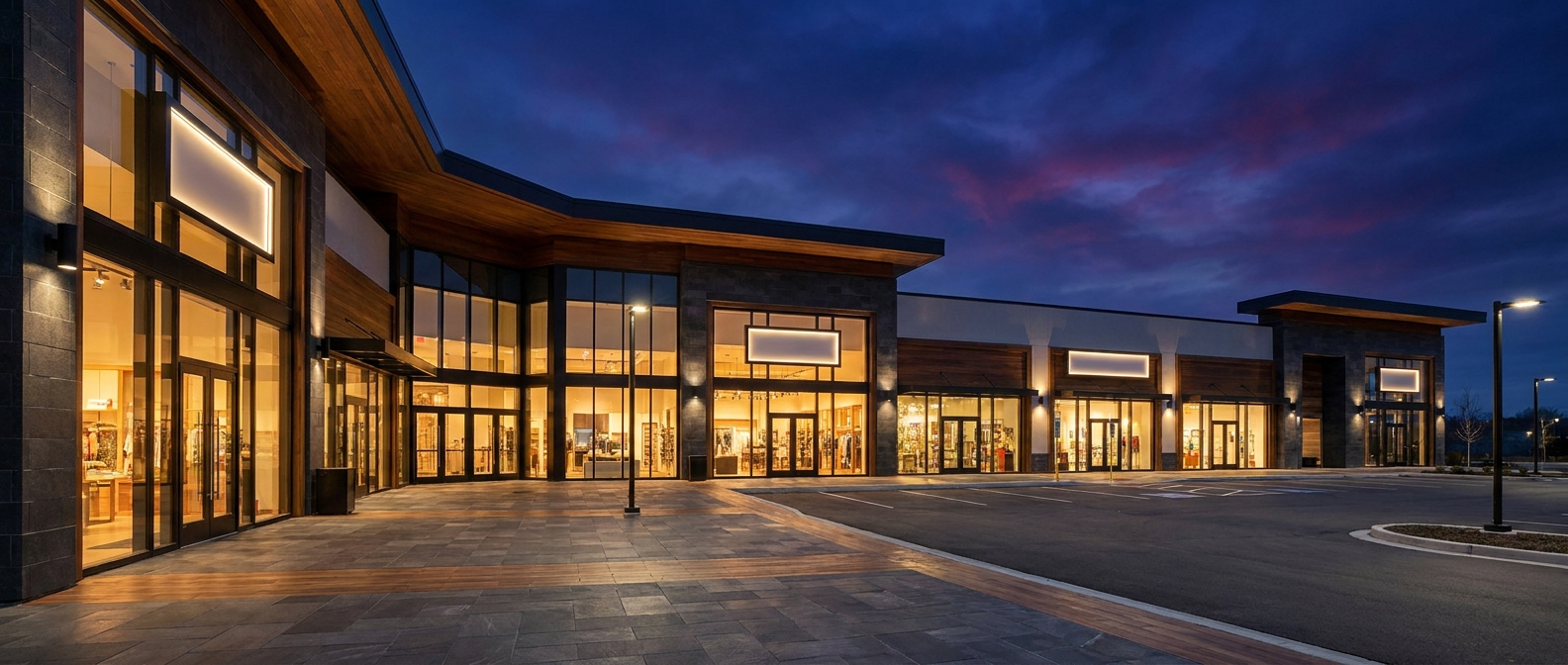
In brief · 200 word summary: Investing in Commercial Retail Centers
A commercial retail center is a multi tenant property where several businesses lease space in one location. The kind disciplined investors favor is the neighborhood or community center anchored by a necessity business, most often a grocer, with services and shops alongside. The anchor is the engine, bringing steady repeat foot traffic that the smaller tenants pay to access. This makes necessity retail defensive: people buy groceries and fill prescriptions in good times and bad, and that core demand has been the hardest part of retail for e commerce to take.
The market backdrop reinforces it. CBRE reported retail asking rents up 2.4 percent year over year to 24.59 dollars per square foot in early 2026, with record low new construction protecting the rents and occupancy of existing, well located centers. Retail commonly uses triple net leases, where tenants pay taxes, insurance, and maintenance, making net income more predictable. The key things to judge are the anchor's strength and remaining lease term, occupancy and tenant mix, lease rollover, tenant credit, co tenancy clauses, and sales per square foot. The main risks are anchor vacancy, weak tenant credit, and location. A disciplined buyer pays for real in place income, not an optimistic projection.
The essentials
- Retail centers are multi tenant properties anchored by a large draw, often a grocer, with smaller shops alongside.
- The sector is tight in early 2026: CBRE reported Q1 2026 asking rents up 2.4 percent year over year to 24.59 dollars per square foot, with record low new construction keeping vacancy low. Source: CBRE.
- The appeal is defensiveness: a grocery or necessity anchor drives repeat foot traffic that resists both recessions and e commerce.
- The risk sits in the anchor and the tenants: anchor vacancy, tenant credit, and co tenancy clauses can change a center's economics quickly.
Section 01What a retail center actually is
A commercial retail center is a multi tenant property where several businesses lease space in one location. The kind that disciplined investors favor is not the enclosed mall. It is the neighborhood or community center anchored by a necessity business, most often a grocer, alongside services and shops that people visit regularly: a pharmacy, a bank, a nail salon, a coffee shop, a quick service restaurant. The anchor is the engine. It brings steady, repeat foot traffic, and the smaller tenants pay for access to that traffic.
Section 02Why this type is considered defensive
Necessity retail behaves differently from discretionary retail. People buy groceries and fill prescriptions in good times and bad, which makes a grocery anchored center's income more stable through a downturn. It is also more resistant to e commerce, because the anchor's core business, fresh food and everyday needs, is the part of retail that has been hardest for online sellers to take. The current market backdrop reinforces the point. As CBRE reported, retail rents rose 2.4 percent year over year in early 2026 while new construction sat at record lows. Very little new supply is being built, which protects the rents and occupancy of existing, well located centers.
Section 03How the leases work: NNN
Retail centers commonly use triple net, or NNN, leases. Under a triple net lease the tenant pays not only rent but also its share of property taxes, insurance, and common area maintenance. For the owner, this pushes many of the variable and rising costs onto tenants, which makes the net income more predictable. It is one reason retail can be an attractive income asset when it is leased to solid tenants on long terms.
Section 04The metrics and terms that matter most
| What to look at | Why it matters |
|---|---|
| The anchor | Who it is, how strong its sales are, and how many years remain on its lease. The anchor drives the whole center. |
| Occupancy and tenant mix | A high, diversified occupancy with necessity tenants is more durable than one propped up by a single risky tenant. |
| Lease term and rollover | When leases expire. A wall of expirations in one year is a risk. Staggered, longer terms are safer. |
| Tenant credit | A national grocer's guarantee is very different from a single location startup's. |
| Co tenancy clauses | Some small tenants can reduce rent or leave if the anchor goes dark. Read these carefully. |
| Sales per square foot | How productive the tenants are. Healthy sales mean tenants can afford their rent and will renew. |
Section 05The real risks
- Anchor vacancy. If the anchor leaves, foot traffic falls and co tenancy clauses can trigger. Backfilling an anchor space takes time and money.
- Tenant credit. A center is only as strong as its tenants' ability to pay. Weak or concentrated tenancy is a hidden risk.
- E commerce pressure on the wrong tenants. Necessity retail resists online, but discretionary or commodity tenants can still be squeezed.
- Location. Retail is unforgiving on location. Traffic counts, visibility, and the trade area's demographics decide whether a center thrives.
Section 06What a disciplined buyer looks for
The pattern is consistent: a necessity anchor with strong sales and real lease term remaining, a diversified roster of durable smaller tenants, staggered lease expirations, a location with genuine traffic and a healthy trade area, and a price that reflects the real, in place income rather than an optimistic projection. In the current market, the scarcity of new supply is a tailwind for centers that already have these qualities.
Want to see how we evaluate a retail center?
Investo Capital works with verified accredited investors on selective United States real estate, including necessity retail. Education first, no pressure.
Schedule a callSources and related guides
- CBRE, US Quarterly Figures, retail: https://www.cbre.com/insights/us-quarterly-figures
- The metrics that matter, cap rate to IRR
- Sponsor and deal due diligence