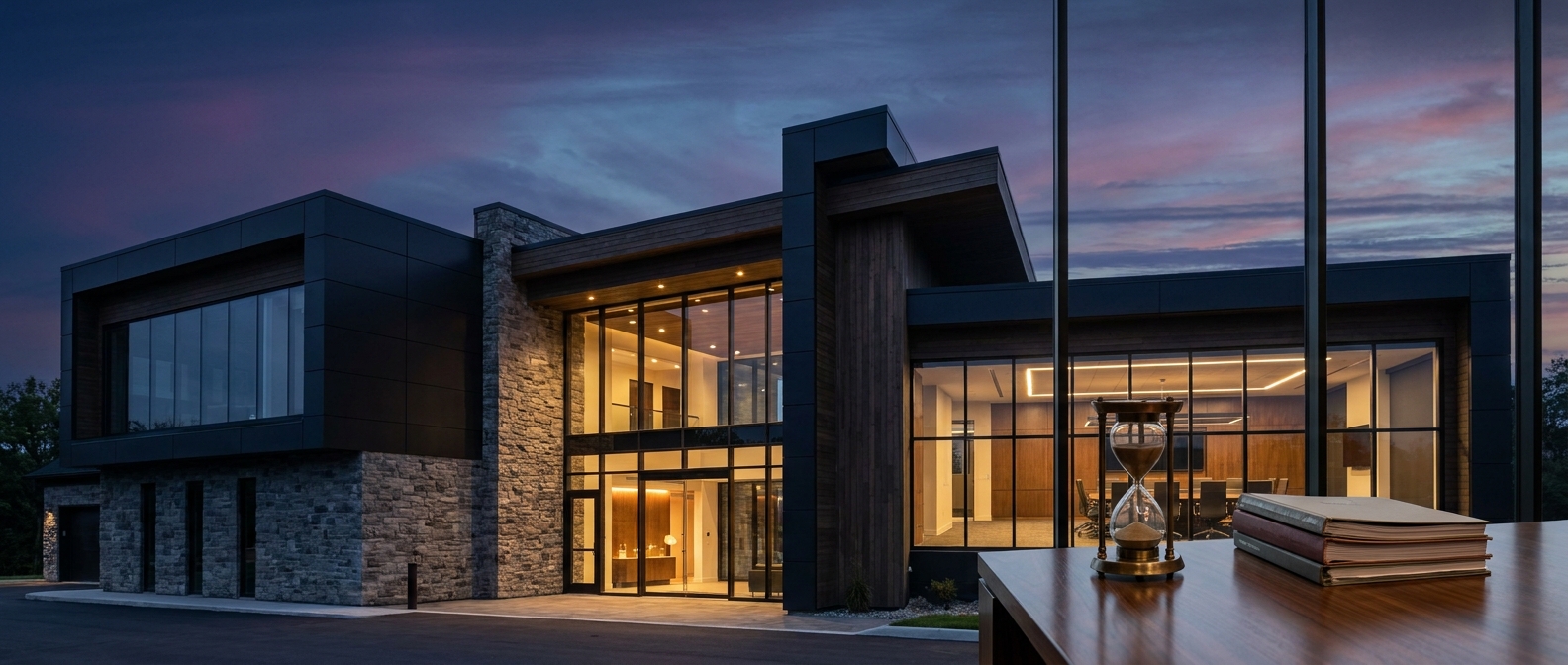
In brief · summary: The cost of doing nothing
Investors carefully weigh the risk of a bad decision but often ignore the risk of no decision. Doing nothing feels safe because no loss is visible, yet it carries a real and quiet cost, the return not earned and the compounding that never began.
Waiting for the perfect opportunity is an active strategy that assumes a clearly better entry is coming and that you will act when it does. Certainty and opportunity rarely arrive together, and the advantage often lives inside the discomfort rather than after it.
This is not a case for acting quickly. Patience is an edge, but it should be a decision with criteria, not avoidance dressed as prudence. The better question is whether an opportunity is sound on its own terms, underwritten conservatively, rather than whether the moment feels perfect.
Section 01The risk that does not announce itself
Most investors are careful about the risk of a bad decision. Far fewer are careful about the risk of no decision. Doing nothing feels safe because nothing visibly goes wrong. There is no loss to point to, no mistake to explain. But standing still is itself a choice, and it carries a cost that simply does not send an invoice.
That cost is the return you did not earn, the compounding that did not start, and the position you did not build while you waited. It is real, it is just invisible, and because it is invisible it is easy to ignore until years have passed.
Section 02Why waiting for perfect is its own strategy
Waiting for the perfect opportunity is not neutral. It is an active strategy with an assumption baked in, that a clearly better entry point is coming and that you will recognize it and act when it does. Sometimes that is true. Often it is not, and the perfect moment is only obvious in hindsight, after it has passed.
The trouble is that certainty and opportunity rarely arrive together. By the time an environment feels comfortable and the headlines are reassuring, much of the advantage has usually been priced in. The discount often lives inside the discomfort, not after it.
Section 03Discipline is not the same as delay
None of this is an argument for acting quickly or carelessly. Patience is a genuine edge, and the discipline to say no is one of the most valuable habits an investor can build. The point is narrower. Patience should be a decision, not a default. There is a difference between waiting for a specific reason and waiting simply because acting feels uncomfortable.
The healthy version of patience has criteria. It knows what it is waiting for and what would make it move. The unhealthy version is just avoidance wearing the costume of prudence, and it can keep a person on the sidelines through cycle after cycle.
Section 04A more honest question
Rather than asking whether now is the perfect time, a more useful question is whether a given opportunity is a sound decision on its own terms, underwritten conservatively, with risks understood and a plan that does not depend on perfect conditions. If it is, waiting for a better feeling is not caution. It is cost.
The goal is not to act for the sake of acting. It is to make sure that the comfort of doing nothing is not quietly charging you more than a disciplined decision would.