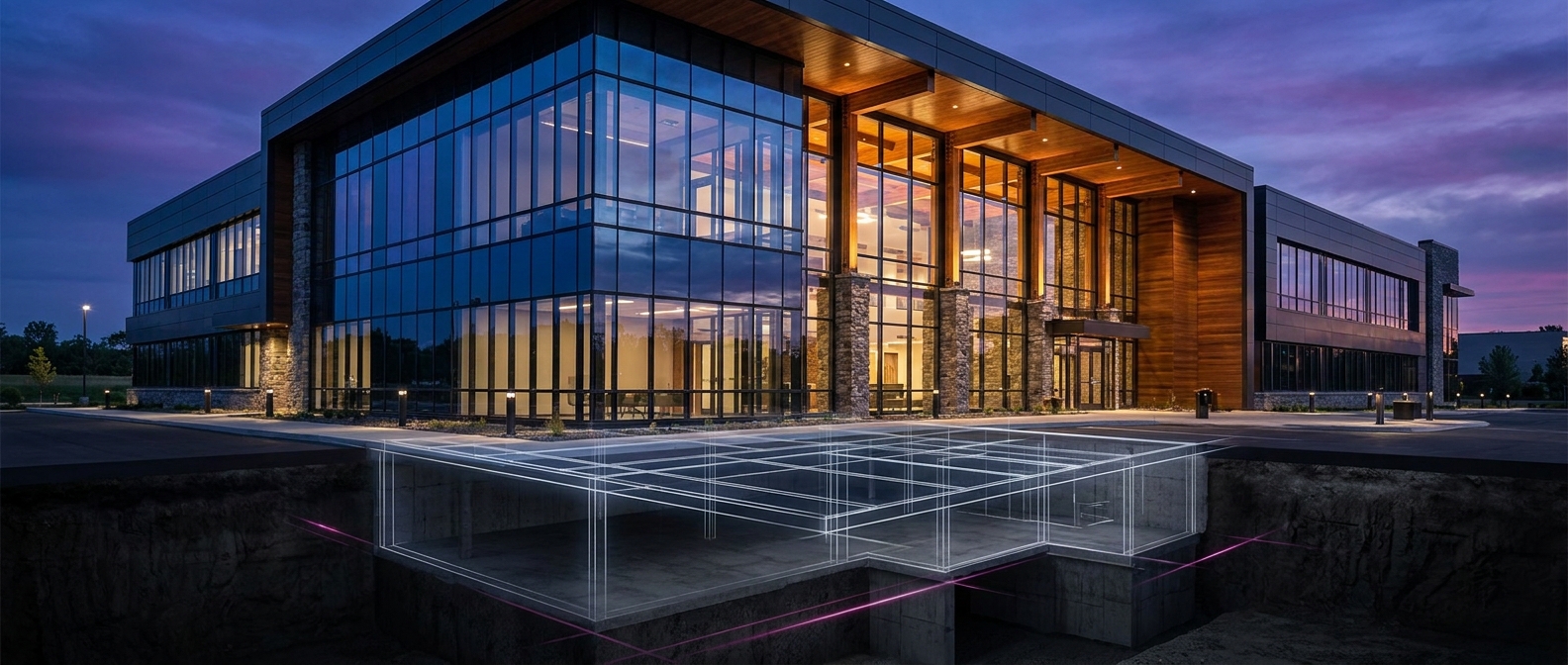
In brief · summary: Seen and unseen risks
Every investment carries visible risks, vacancy, rates, a soft market, that everyone names and that therefore tend to get priced in. The risks that actually damage investments are usually the ones never written down, the hidden assumptions inside a pro forma.
Hidden risk lives in the assumptions rather than the arithmetic, an optimistic expense line, insurance assumed to hold steady, rent growth that needs the good years to continue, a refinance the plan depends on. Blind spots such as concentration in one tenant, market, or exit are the second source.
The discipline is to interrogate assumptions as hard as numbers, stress each key input, ask what single failure would break the plan, and ask what a skeptic would worry about. A serious downside case is not pessimism. Confidence that survives a stress test is worth far more than confidence that only exists when everything goes right.
Section 01The visible risks are the easy ones
Every investment comes with a set of visible risks, the ones written on the page. Vacancy, interest rates, a soft market, a bad tenant. These are easy to name because everyone names them, and because they are visible they usually get priced in. The risks that actually damage investments tend to be different. They are the ones that were never written down, because no one thought to ask.
A pro forma is a model of what someone expects to happen. Its greatest weakness is not the numbers it contains but the assumptions it hides. Every projection rests on beliefs about rents, costs, timing, and behavior, and each of those beliefs is a place where reality can differ from the plan.
Section 02Where hidden risk lives
Hidden risk usually lives in the assumptions, not the arithmetic. An expense line that was modeled optimistically. Insurance that was assumed to hold steady in a market where it is rising. A rent growth rate that quietly requires the good years to continue. A refinance that the whole plan depends on but that the environment may not deliver. None of these appear as a risk. They appear as a number, which is exactly what makes them dangerous.
Blind spots are the second source. Concentration in a single tenant, a single submarket, or a single assumption. A dependence on one exit that may not be available when the time comes. The failure mode that no one modeled because it felt too unlikely to bother with, right up until it happened.
Section 03How to surface what you cannot see
The discipline is to interrogate the assumptions as hard as the numbers. For every key input, ask what happens if it is wrong, and by how much. Stress the expenses upward, the rents flat, the timeline longer, the exit weaker. Ask what single thing, if it failed, would break the whole plan, and then ask how likely that thing really is.
It also helps to ask what is not on the page at all. What would a skeptic worry about. What has to be true for this to work, and what would make it false. The goal is not to eliminate risk, which is impossible, but to move it from the category of things you cannot see into the category of things you have looked at directly.
Section 04A downside case is not pessimism
Building a serious downside case is sometimes mistaken for a lack of confidence. It is the opposite. Confidence that survives a stress test is worth something. Confidence that only exists in the base case is just optimism. An investment that still works when several assumptions disappoint is a fundamentally different thing from one that only works if everything goes right.
The investor who takes hidden risk seriously does not become timid. They become harder to surprise, which over a long enough horizon is one of the most valuable qualities an investor can have.