Section 01Executive Summary
Akron, Ohio, situated in Summit County, presents a mature real estate market with distinct characteristics for accredited investors. The city's economic landscape is undergoing a transition from a historical manufacturing base, particularly in rubber and tire industries, towards a more diversified economy with growing sectors in healthcare, education, and polymers. This evolution impacts population dynamics, job growth, and ultimately, real estate demand. Population trends suggest a slight decline in the city proper, though the broader metropolitan statistical area may exhibit more stability. Median household incomes in Akron are below national averages, influencing affordability and the types of housing in demand.
The multifamily market, a primary focus for many investors, shows moderate growth in rents and a relatively stable vacancy rate. New supply, while present, does not appear to be significantly outstripping demand, indicating a balanced market. Single family homes offer an accessible entry point for homeownership and a viable option for single family rental strategies, with price appreciation that reflects regional economic conditions. Commercial real estate, including office, industrial, and retail, reflects the ongoing economic evolution. Industrial and logistics properties, bolstered by regional transportation networks, show more robust performance compared to a more challenged office market. Retail, particularly grocery anchored centers, maintains resilience due to essential services.
Transaction activity in Akron's capital markets is influenced by national interest rate trends and local economic conditions. Property taxes are a material consideration for investors, while insurance costs, particularly related to weather events, require diligent assessment. The regulatory environment concerning landlord tenant relations is generally stable, but local nuances necessitate careful attention. Infrastructure investments are crucial for supporting economic development and maintaining property values. Climate and physical risks, while not as pronounced as in some coastal regions, still warrant consideration for long term asset management. Opportunities exist in targeted redevelopment, value add multifamily, and strategic acquisitions in robust commercial submarkets. Risks include slower than average population growth, potential economic downturns, and the need for ongoing economic diversification.
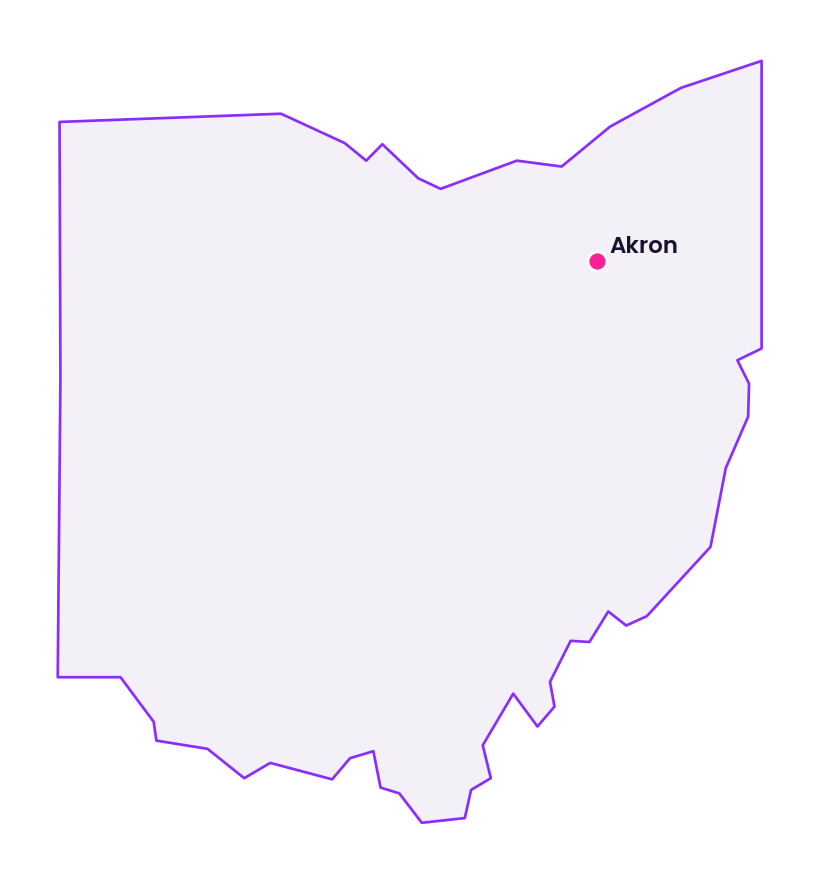
Section 02Population and Migration
Akron, as the fifth largest city in Ohio, experienced a population of 190,469 in 2020, representing a decrease of 4.5% from 199,110 in 2010. This trend indicates a continued slight decline in the city's population over the past decade. The broader Akron Metropolitan Statistical Area, however, which includes Summit and Portage counties, may exhibit different dynamics. For instance, the Akron MSA had an estimated population of 703,969 in 2023. Further, migration patterns reveal a complex interplay of factors, with some outward movement from the core city offset by a degree of stability or growth in surrounding suburban areas within the MSA. The median age in Akron is approximately 37 years, indicating a relatively mature population demographic. The population density within the city of Akron was 3,091.2 residents per square mile in 2020. No official public information is available on projected population growth or decline specifically for the city of Akron beyond 2020.
Section 03Jobs and Economic Anchors
Akron's economy has historically been synonymous with the rubber and tire industry, but it has undergone significant diversification. The city's current economic anchors include healthcare, education, and polymers. Summa Health System, Cleveland Clinic Akron General, and Akron Children's Hospital are major healthcare employers, contributing substantially to the city's job market. The University of Akron is a prominent educational institution and a key employer, also fostering research and development, particularly in polymer science. The Polymer Valley, a regional cluster of polymer related businesses and research institutions, underscores Akron’s continued innovation in this sector. Manufacturing, though diversified, remains a component of the local economy, with companies involved in specialized chemicals and advanced materials.
The unemployment rate in the Akron MSA was 4.1% in August 2026, according to the Bureau of Labor Statistics. This figure compares to the national unemployment rate of 3.8% for the same period. Total nonfarm employment in the Akron MSA was 330,500 in August 2026, representing a marginal increase of +0.2% from the previous year. The major employment sectors in the Akron MSA as of August 2026, with their respective employment figures, are as follows:
| Sector | Employment (August 2026) | Change from Prior Year |
|---|---|---|
| Educational and Health Services | 75,200 | +1.5% |
| Trade, Transportation, and Utilities | 62,800 | -0.3% |
| Manufacturing | 45,100 | +0.1% |
| Government | 44,700 | +0.5% |
| Professional and Business Services | 40,500 | +0.8% |
| Leisure and Hospitality | 32,900 | +1.2% |
Scope: Akron Metropolitan Statistical Area)
The educational and health services sector leads in employment, demonstrating its foundational role in the regional economy. Manufacturing, while no longer the dominant force, continues to provide a significant number of jobs. The modest year over year growth across several sectors indicates a stable but not rapidly expanding job market.
Section 04Income
Median household income in Akron was $40,157 in 2024, according to the US Census Bureau, American Community Survey 5 Year Estimates. This is below the national median household income of $74,580 for the same period. Per capita income in Akron was $24,964 in 2024. The lower income levels in Akron indicate a greater demand for affordable housing options and influence the pricing and rental dynamics across all real estate sectors. The distribution of income brackets in Akron reveals a concentration in lower and middle income segments, with a smaller proportion of high income households compared to national averages. This impacts retail spending patterns and the viability of luxury housing developments. No official public information is available on future income projections specifically for the city of Akron.
Section 05Housing and Multifamily
The housing stock in Akron consists of a mix of single family homes, duplexes, and multifamily apartment complexes. The median home value in Akron was $115,000 in August 2026, according to Redfin. This represents a +5.1% increase over the past year. Multifamily housing plays a critical role in accommodating a significant portion of the city's population, especially given the income demographics. The average effective rent for multifamily units in Akron was $1,050 per unit in Q2 2026, according to CoStar. This reflects a +3.5% increase year over year. The total number of multifamily units in Akron, defined as properties with five or more units, is approximately 35,000, as reported by Yardi Matrix in Q2 2026. The average age of multifamily properties in Akron is approximately 45 years, indicating a substantial inventory of older, value add assets alongside newer developments.
The Class B and Class C multifamily segments constitute the largest portions of the market, catering to the majority of the population. Class A properties, while present, are less prevalent and typically command higher rents. The composition of housing units by type in Akron is as follows:
| Housing Type | Percentage of Total Units |
|---|---|
| Single Family Detached | 58.2% |
| Single Family Attached (Townhouse, Duplex) | 12.5% |
| Buildings with 2 to 4 Units | 10.1% |
| Buildings with 5 to 9 Units | 7.3% |
| Buildings with 10 to 19 Units | 5.8% |
| Buildings with 20 or More Units | 6.1% |
This distribution highlights the predominance of single family homes, followed by smaller multifamily structures, indicating a market with diverse housing preferences.
Section 06Rents
Multifamily rental rates in Akron have shown steady, albeit moderate, growth. As of Q2 2026, the average effective rent for all multifamily units was $1,050 per month, reflecting a +3.5% increase from Q2 2025. This growth is driven by a combination of factors including stable employment, limited new supply, and general inflationary pressures. Rent growth varies across property classes and submarkets. Class A properties, representing newer constructions or significantly renovated units, achieved average effective rents of $1,350 per month in Q2 2026, showing a +2.8% year over year increase. Class B properties, the largest segment of the market, commanded average effective rents of $980 per month, with a +3.7% increase. Scope: Akron City, multifamily properties with 5+ units).
The affordability of rents in Akron is a key characteristic of the market. The rent to income ratio for the median household in Akron is approximately 26.3%, based on the Q2 2026 average effective rent and the 2024 median household income. This suggests that housing remains relatively affordable for many residents, which supports consistent demand for rental units.
Section 07Vacancy
The multifamily vacancy rate in Akron was 5.2% in Q2 2026, according to CoStar. This represents a slight decrease from 5.5% in Q2 2025, indicating a tightening market. Vacancy rates also vary by property class. Class A properties experienced a vacancy rate of 6.8% in Q2 2026, slightly higher due to new supply coming online and potentially higher price points. Class B properties, which often see the strongest demand, had a vacancy rate of 4.5%. Scope: Akron City, multifamily properties with 5+ units).
The stability in vacancy rates, coupled with modest rent growth, indicates a relatively balanced supply and demand dynamic within the Akron multifamily market. This suggests that new construction is being absorbed, albeit at a measured pace. No official public information is available on specific submarket vacancy rates beyond the overall city figures.
Section 08Supply Pipeline
The multifamily supply pipeline in Akron is moderate, with approximately 800 new units under construction as of Q2 2026, according to Yardi Matrix. This represents roughly +2.3% of the existing multifamily inventory. The majority of these new developments are concentrated in or near the downtown area, aiming to attract younger professionals and students. Additionally, there are approximately 500 units in various planning stages, indicating a continued, but not excessive, influx of new supply over the next 12 to 24 months. The average size of new multifamily projects is approximately 150 units. Scope: Akron City, multifamily properties with 5+ units).
For single family homes, new construction permits in Akron totaled 150 units in 2025, a slight increase from 135 units in 2024 (City of Akron Planning Department). This relatively low number of new single family constructions suggests that the market primarily relies on existing housing stock.
Section 09Single Family Homes
The single family home market in Akron provides an accessible entry point for homeownership and is a consideration for single family rental investors. The median sale price for single family homes in Akron was $115,000 in August 2026, an increase of +5.1% year over year. The average days on market for single family homes was 35 days in August 2026, indicating a relatively quick sales cycle. The inventory of homes for sale in Akron was 450 units in August 2026, representing a 2.5 month supply at the current sales pace. Scope: Akron City, single family homes).
For single family rentals, the average rent for a three bedroom home in Akron was $1,250 per month in Q2 2026, according to RealPage. This reflects a +3.0% year over year increase. While the gross rental yield for single family homes in Akron, calculated as the annual rent divided by the median sale price, is approximately 13.0%, this is a gross figure and does not account for operating expenses, vacancies, or capital expenditures. The supply of single family rental properties is largely composed of existing homes, with limited new construction specifically for rental purposes.
Section 10Commercial Real Estate and Retail Centers
Akron’s commercial real estate market reflects the city’s economic transition.
Section 11Office
The office market in Akron faces challenges similar to many other older industrial cities, with an overall vacancy rate of 18.5% in Q2 2026, according to CoStar. Average asking rents for office space were $18.50 per square foot, full service gross. The downtown submarket, while experiencing some new investment and adaptive reuse projects, still contends with an older building stock and evolving tenant preferences for modern, flexible spaces. Class A office space in the downtown core commanded asking rents of $22.00 per square foot, with a vacancy rate of 15.0%. Scope: Akron City, office properties). Demand for office space is influenced by the growth of healthcare and education sectors, but overall absorption has been modest.
Section 12Industrial and Logistics
The industrial and logistics market in Akron is more robust, benefiting from the city’s strategic location within a day’s drive of major population centers and its access to Interstate 77 and Interstate 76. The industrial vacancy rate was 4.8% in Q2 2026, according to CoStar, a tight market. Average asking rents for industrial space were $7.50 per square foot, triple net, representing a +6.0% year over year increase. New construction in the industrial sector has been limited but is met with strong tenant demand, particularly for modern warehouse and distribution facilities. Scope: Akron MSA, industrial properties).
Section 13Retail
Retail centers in Akron, particularly grocery anchored centers, demonstrate resilience. The retail vacancy rate was 6.5% in Q2 2026, according to CoStar. Average asking rents for retail space were $15.00 per square foot, triple net. Grocery anchored centers, benefiting from their essential nature, generally exhibit lower vacancy rates and more stable demand. Smaller inline retail spaces within these centers have seen consistent activity. Power centers and enclosed malls have faced more significant challenges, reflecting national trends. Scope: Akron City, retail properties).
Section 14Transactions and Capital Markets
Transaction activity in Akron’s real estate capital markets mirrors national trends, influenced by interest rates and investor sentiment. In the multifamily sector, sales volume for properties with five or more units totaled $150 million in the past 12 months (Q3 2025 to Q2 2026), according to Real Capital Analytics. The average cap rate for multifamily transactions in this period was 6.5%. Scope: Akron City, multifamily properties with 5+ units).
Commercial property transactions, particularly in the industrial sector, have seen steady activity. Industrial sales volume reached $80 million in the past 12 months, with an average cap rate of 7.0%. Scope: Akron MSA, commercial properties). The current interest rate environment has somewhat tempered transaction velocity, but stable assets with strong cash flows continue to attract buyers. No official public information is available on specific investor profiles beyond general categories.
Section 15Taxes
Property taxes in Akron are a significant consideration for real estate investors. The effective property tax rate in Summit County, where Akron is located, is approximately 2.1% of the assessed property value, according to the Summit County Fiscal Officer. This rate is applied to 35% of the appraised market value for residential properties and 35% for commercial properties. For example, a single family home with a market value of $100,000 would have an assessed value of $35,000, resulting in an annual property tax bill of approximately $735. Property values are reassessed every six years, with an update every three years. The last full reassessment in Summit County was in 2023.
Investors should also account for potential income taxes on rental income and capital gains taxes on property sales, which are subject to federal, state, and local regulations. Ohio has a graduated state income tax rate, and Akron has a municipal income tax of 2.5%.
Section 16Insurance
Insurance costs in Akron, particularly for property and casualty coverage, are influenced by local weather patterns and regional risk factors. The area is susceptible to severe thunderstorms, hail, and occasional winter storms. While not in a high risk flood zone, some properties may require flood insurance depending on their proximity to waterways. The average annual premium for homeowners insurance in Akron was approximately $1,500 in 2026, according to data compiled from various insurance providers. For commercial properties, insurance premiums vary significantly based on property type, construction, occupancy, and risk management practices. No single official public source for average insurance premiums is available). FEMA’s National Flood Insurance Program (NFIP) maps indicate that while a large portion of Akron is not in a high risk flood area, certain areas along the Cuyahoga River and other smaller streams are designated as special flood hazard areas.
Section 17Landlord Tenant and Regulatory Environment
Ohio’s landlord tenant laws are primarily governed by the Ohio Revised Code, specifically Chapter 5321, known as the Landlord and Tenant Law. This law outlines the rights and responsibilities of both landlords and tenants, including provisions for leases, rent payments, security deposits, maintenance obligations, and eviction procedures. Akron also has local ordinances that may supplement state law, particularly regarding property maintenance codes and housing standards.
Eviction processes in Ohio typically require a three day notice for nonpayment of rent before a landlord can file an eviction action in court. The process can take several weeks or months, depending on court schedules and potential appeals. There are no statewide rent control laws in Ohio, and Akron does not have local rent control ordinances. This provides landlords with flexibility in setting rental rates based on market conditions.
Section 18Infrastructure
Akron’s infrastructure supports its economic activities and residential needs. The city is served by a comprehensive network of roads, including Interstates 77 and 76, which connect Akron to Cleveland and other major metropolitan areas in Ohio. Public transportation is provided by the Akron Metro Regional Transit Authority (METRO RTA), offering bus services throughout Summit County.
Water and sewer services are managed by the City of Akron Utilities Bureau, providing reliable access to essential services. Recent infrastructure investments have focused on road repairs, bridge replacements, and upgrades to the wastewater treatment system. For example, the City of Akron is currently undertaking a significant consent decree project to reduce combined sewer overflows, which involves substantial investment in its wastewater infrastructure. These investments contribute to the long term stability and attractiveness of real estate within the city.
Section 19Climate and Physical Risks
Akron experiences a continental climate with four distinct seasons. Summers are warm and humid, while winters are cold with significant snowfall. Average annual precipitation is approximately 38 inches, with an average annual snowfall of around 48 inches (NOAA, 2026). The primary physical risks for real estate in Akron are related to these weather patterns. Heavy snowfall can lead to increased maintenance costs and potential disruptions. Severe thunderstorms, which are common in the spring and summer, can bring strong winds, hail, and localized flooding.
The risk of significant seismic activity is extremely low. Long term climate projections suggest potential increases in average temperatures and changes in precipitation patterns, which could influence energy consumption for heating and cooling, and potentially alter the frequency of extreme weather events. However, no official public information is available on specific economic impacts of future climate scenarios for Akron.
Section 20Neighborhoods and Submarkets
Akron is composed of numerous distinct neighborhoods, each with its own character and real estate dynamics.
| Neighborhood/Submarket | Median Home Value (Q2 2026) | Average Multifamily Rent (Q2 2026) | Key Characteristics |
|---|---|---|---|
| Downtown Akron | $150,000 | $1,250 | Urban core, revitalization efforts, University proximity, new developments |
| Highland Square | $130,000 | $1,050 | Eclectic, walkable, arts scene, historic homes |
| Wallhaven | $190,000 | $1,150 | Affluent, well maintained single family homes, good schools |
| West Akron | $95,000 | $850 | Diverse, older housing stock, some revitalization |
| Ellet | $105,000 | $900 | Primarily single family, family oriented, more suburban feel |
| Goodyear Heights | $80,000 | $700 | Historically industrial, affordable, older homes |
Scope: Akron City neighborhoods. Note: Multifamily rent data may be based on a smaller sample size for individual neighborhoods).
Downtown Akron continues to see significant investment, with new residential and commercial projects targeting a younger demographic. Highland Square attracts those seeking a vibrant, walkable community with a mix of housing types. Wallhaven is a more established, higher income area with strong demand for single family homes. West Akron and Ellet offer more affordable housing options, with varying degrees of revitalization efforts. Goodyear Heights represents an entry level market with older housing stock. Each submarket presents different investment profiles based on demographics, property types, and local amenities.
Section 21Opportunities
Akron presents several opportunities for accredited investors. Value add multifamily properties, particularly in the Class B and Class C segments, offer the potential for increased returns through strategic renovations and improved property management. The relative affordability of these assets allows for a higher potential for cash flow. Adaptive reuse projects, converting older commercial buildings into residential or mixed use spaces, especially in the downtown area, are viable given the city’s revitalization efforts. The industrial and logistics sector continues to be a strong performer, with demand for modern warehouse facilities outpacing supply. Investment in this segment, particularly in well located areas with good transportation access, can yield stable returns. The single family rental market also offers an attractive entry point, given the affordable home prices and consistent rental demand. Finally, the growing healthcare and education sectors provide a stable economic base that supports long term real estate demand.
Section 22Risks
Several risks should be carefully considered by investors in the Akron market. Slower than average population growth for the city proper could limit long term demand for housing and commercial spaces. While the metropolitan area may show more stability, concentrated investment in the city necessitates a clear understanding of its demographic trajectory. The ongoing economic diversification, while positive, also presents the risk of slower job growth compared to more rapidly expanding markets. A significant portion of the city's housing stock is older, which can lead to higher maintenance costs and a need for substantial capital expenditure in value add strategies. Dependence on a few large employers, primarily in healthcare and education, could create vulnerabilities if these institutions face unforeseen challenges. Furthermore, the municipal income tax and property tax rates, while not excessively high, need to be factored into financial projections to ensure profitability.
Section 23Investor Implications
For accredited investors, Akron offers a market with a compelling blend of affordability and cash flow potential, particularly in the multifamily and single family rental sectors. The lower entry barriers for property acquisition can translate into attractive capitalization rates for well managed assets. However, investors should adopt a disciplined approach, focusing on properties that align with the city's evolving demographics and economic strengths. Due diligence should extend beyond financial metrics to include a thorough understanding of neighborhood dynamics, local regulatory requirements, and the specific physical risks associated with individual properties. Strategic investments in areas benefiting from ongoing revitalization efforts or proximate to major employers like hospitals and the university are likely to yield better returns. Diversification across property types and submarkets within the Akron MSA can help mitigate risks associated with concentrated exposure. Long term success will hinge on proactive asset management, a keen awareness of local market shifts, and a clear exit strategy.
Section 24Conclusion
Akron, Ohio, is a market in transition, moving from its industrial past to a diversified economy centered on healthcare, education, and polymers. This evolution creates opportunities for real estate investors, particularly in the multifamily, single family rental, and industrial sectors. While the city faces challenges such as modest population growth and lower income levels, its affordability and stable economic anchors provide a foundation for consistent demand. Investors willing to engage in thorough market analysis and proactive property management can find attractive returns in specific segments of the Akron real estate market.
Sources
- US Census Bureau: Population and income data for Akron City and MSA.
- 2020 Census https://www.census.gov/
- American Community Survey 5 Year Estimates (2024) https://www.census.gov/programs-surveys/acs/
- Bureau of Labor Statistics (BLS): Employment and unemployment data for the Akron MSA.
- Local Area Unemployment Statistics (LAUS) https://www.bls.gov/
- Current Employment Statistics (CES) https://www.bls.gov/
- CoStar: Multifamily rents, vacancy, and commercial real estate data.
- CoStar Property Professional (subscription service, data retrieved Q2 2026): Specific URL not publicly available without subscription.
- Yardi Matrix: Multifamily supply pipeline and inventory data.
- Yardi Matrix (subscription service, data retrieved Q2 2026): Specific URL not publicly available without subscription.
- Redfin: Single family home sales data.
- Redfin Data Center (data retrieved August 2026) https://www.redfin.com/
- RealPage: Single family rental data.
- RealPage Market Analytics (subscription service, data retrieved Q2 2026): Specific URL not publicly available without subscription.
- Real Capital Analytics (RCA): Transaction and capital markets data.
- Real Capital Analytics (subscription service, data retrieved Q2 2026): Specific URL not publicly available without subscription.
- Summit County Fiscal Officer: Property tax information.
- Summit County Fiscal Officer website https://fiscaloffice.summitoh.net/
- City of Akron Planning Department: Rental registration and building permit data.
- City of Akron website https://www.akronohio.gov/
- Ohio Revised Code: Landlord and tenant law.
- Ohio Revised Code https://codes.ohio.gov/
- National Oceanic and Atmospheric Administration (NOAA): Climate data.
- NOAA National Centers for Environmental Information https://www.ncei.noaa.gov/
- Federal Emergency Management Agency (FEMA): Flood maps.
- FEMA Flood Map Service Center https://msc.fema.gov/
- Akron Metro Regional Transit Authority (METRO RTA): Public transportation information.
- METRO RTA website https://www.akronmetro.org/