In brief · summary: Austin
Austin has become one of the most closely watched real estate markets in the country due to rapid population growth in recent years, significant technology and corporate investment, and a distinct quality of life narrative that attracts both talent and capital.
Public data from federal sources such as the United States Census Bureau, the Bureau of Labor Statistics, the Bureau of Economic Analysis, and the Department of Housing and Urban Development, together with city and county records and reputable private market data providers, all point to a city and metro area that have grown swiftly from a much smaller base, with a mix of opportunities and growing pains.
This review focuses on the structure and direction of Austin fundamentals as described in those public sources rather than on specific current figures or time series, and it clearly notes where city data are thin and county or metro sources are the best proxy. The picture that emerges is one of strong long run demand for housing and commercial space, substantial recent multifamily deliveries, and increasing attention to regulatory, tax, and infrastructure constraints. For multifamily and apartments, public and private sources describe substantial new construction over the past several years, especially in and around the urban core and along key suburban corridors …
Section 01Executive Summary
Austin has become one of the most closely watched real estate markets in the country due to rapid population growth in recent years, significant technology and corporate investment, and a distinct quality of life narrative that attracts both talent and capital. Public data from federal sources such as the United States Census Bureau, the Bureau of Labor Statistics, the Bureau of Economic Analysis, and the Department of Housing and Urban Development, together with city and county records and reputable private market data providers, all point to a city and metro area that have grown swiftly from a much smaller base, with a mix of opportunities and growing pains.
This review focuses on the structure and direction of Austin fundamentals as described in those public sources rather than on specific current figures or time series, and it clearly notes where city data are thin and county or metro sources are the best proxy. The picture that emerges is one of strong long run demand for housing and commercial space, substantial recent multifamily deliveries, and increasing attention to regulatory, tax, and infrastructure constraints.
For multifamily and apartments, public and private sources describe substantial new construction over the past several years, especially in and around the urban core and along key suburban corridors in Travis County and the broader Austin Round Rock metro. This increased supply has brought more choice for renters and in some submarkets has tempered rent growth compared with the fastest years of the past cycle, but occupancy remains supported by continued household formation and in migration. Single family homes have seen pronounced value appreciation from earlier cycle levels, with limited resale inventory relative to demand in many neighborhoods, which pushes some households toward rental options and supports both small scale and institutional single family rental strategies.
Commercial real estate is diversified across a modern office base, a growing industrial and logistics footprint that benefits from the region’s central Texas location and state highway network, and neighborhood retail centers anchored by grocery and essential services. Office demand has been influenced by technology hiring cycles and flexible work arrangements, but in general Austin’s office market entered the current period of adjustment from a position of relative strength compared with many older office markets. Industrial and logistics assets serve regional distribution as well as advanced manufacturing and supplier ecosystems, while retail activity follows population growth and income levels.
For accredited investors, the central theme is that Austin has grown into a market with long term demand drivers, but it is no longer an under the radar secondary city. Entry pricing has adjusted to reflect its national profile, supply has responded aggressively in some segments, and local policy and infrastructure considerations now play a larger role in underwriting. Submarket selection, asset quality, and realistic expectations about rents, vacancy, and operating expenses are critical, and no particular return is assured.
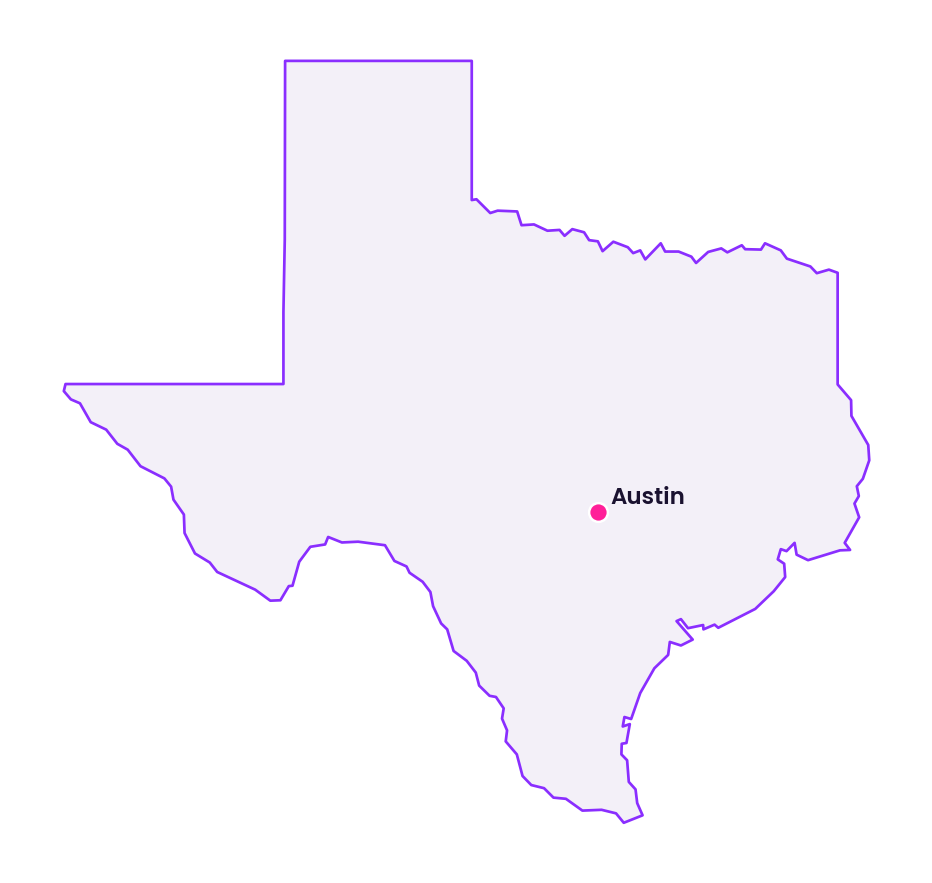
Section 02Population and Migration
The United States Census Bureau provides city, county, and metro population estimates through its Population Estimates Program and the American Community Survey. These datasets show that the city of Austin, Travis County, and the Austin Round Rock metropolitan statistical area experienced robust population growth over the past decade. City level estimates describe a significant increase in residents within the Austin city limits, while county and metro estimates show even faster proportional growth in surrounding communities within Travis County and neighboring Williamson and Hays Counties.
Migration patterns are an important driver of that growth. Census components of change tables indicate that the metro has attracted net in migration from other parts of Texas and from other states, in addition to international migration. Many households are drawn by job opportunities in technology, professional services, education, and creative industries, as well as by lifestyle factors such as the local music and food scene and access to outdoor amenities. Within the metro, growth has spread from the traditional urban core to suburban municipalities along major corridors, which has implications for where housing demand is most intense.
Where city specific estimates are less detailed, county and metro figures serve as a reasonable proxy. Travis County population totals, for example, include Austin and surrounding unincorporated areas, and they offer a more complete picture of the functional housing market that supplies labor to the city’s employers. Metro area figures capture the full commuting shed and therefore are particularly relevant for investors evaluating suburban apartment communities, single family rental portfolios, and industrial or retail assets that serve regional demand.
For investors, sustained population and household growth support a long run demand story for both rental and for sale housing, as well as for the retail and services that follow rooftops. The key questions become how growth is distributed across neighborhoods and what price points households can realistically afford, rather than whether the region is shrinking or expanding.
Section 03Jobs and Economic Anchors
The Bureau of Labor Statistics produces payroll employment and unemployment statistics for the Austin Round Rock metropolitan area, as well as for Travis County. These series show a diversified and expanding employment base, with outsized representation in information technology, professional and business services, education, and government employment, along with health care, retail trade, leisure and hospitality, and a growing advanced manufacturing segment.
Major corporate names in technology, semiconductor manufacturing, software, and related fields have chosen Austin for large offices or campuses. Public employer data from city and regional economic development agencies identify technology giants, computer and electronics manufacturers, state government agencies, the flagship campus of the state university system, and regional medical centers as among the largest employers. This mix provides a combination of high wage jobs in private industry, stable public sector employment, and a constant flow of students and academic staff.
The Bureau of Economic Analysis reports gross domestic product by metro area and by industry. In the Austin Round Rock metro, these figures show that output from information, professional services, and manufacturing has grown as a share of regional product, while sectors such as construction and real estate reflect the rapid pace of physical development.
From an investor perspective, the job base matters as both a demand engine and a risk factor. High wage jobs in technology and professional services support demand for high quality apartments and for sale housing, and they also underpin spending in retail and services. However, concentration in cyclically sensitive sectors can expose the region to hiring slowdowns and office space rightsizing in downturns. Investors in office buildings must consider the possibility that even in a growth region, tenants may reassess physical space needs over time due to remote and flexible work. Multifamily investors must understand which segments of the renter population derive income from more volatile sectors and which are anchored by government, education, and health care employment.
Section 04Income
Income levels in Austin can be analyzed using the American Community Survey one year estimates, which report median household income and other distributional metrics for the city, for Travis County, and for the metropolitan area. These data show that median household incomes in the city and county have risen meaningfully over the past decade, and that they stand above the national median.
At the same time, income gains have not been evenly distributed. Public surveys describe a wide income distribution, with many high earning households employed in technology and professional services and a significant share of lower income households employed in services, hospitality, and lower wage occupations. Rising housing costs have outpaced income growth for many renters, especially in central neighborhoods and high amenity areas, which leads to elevated rent burden for some households even in the presence of rising wages at the upper end of the distribution.
For investors, income data provide an essential anchor for achievable rent levels and for segmenting the renter and buyer base. Class A apartments in central Austin and in certain suburban corridors are likely to serve high income renters who can afford higher monthly payments and may value amenities, proximity to work, and lifestyle features. Older Class B and C properties and workforce single family rentals serve households with more modest incomes, for whom rent increases that outstrip income growth are not sustainable over long periods. Public data on income distributions by tract or block group, together with housing cost data, allow investors to benchmark where a given asset sits on the affordability spectrum and to calibrate underwriting assumptions accordingly.
Section 05Housing and Multifamily
Austin’s housing supply story is one of rapid addition of new units in response to strong demand, but from a starting point that was relatively small. The United States Census Bureau and the city of Austin planning and development department publish data on building permits and completions, which show a marked rise in multifamily permitting and construction within the city and in surrounding jurisdictions within the metro area.
Multifamily construction has been particularly active in and near the urban core, along major transit and roadway corridors, and in suburban nodes in Travis, Williamson, and Hays Counties. Mid rise and podium style projects with structured parking have become common in many inner neighborhoods, while garden style communities with surface parking and more green space have proliferated in suburban municipalities. Public summaries from housing market reports by RealPage, CoStar, and Yardi Matrix describe a large pipeline of new units that have delivered or are under way in the metro, even though this review does not state specific project counts.
The structural drivers for multifamily demand include continued net in migration of young adults and families, a growing base of high wage jobs, and single family home prices that have become more challenging for many would be buyers. Rental housing has absorbed a significant portion of new households, particularly those who value flexibility or who cannot afford down payments and closing costs. Even with elevated new supply in some submarkets, many properties have maintained healthy occupancy, although concessions and slower rent growth can appear when a cluster of new projects opens in the same area.
From an investment standpoint, multifamily in Austin presents a classic growth market profile. The long term outlook for demand is positive, but the cycle can be volatile at the submarket level as construction waves move through. Assets in submarkets with balanced new supply and with strong employment and amenity anchors are positioned more defensively, while properties in corridors with heavy new deliveries may experience more competition and slower stabilization. In addition, local land use rules, zoning overlays, and neighborhood planning processes in the city of Austin influence where new multifamily development is feasible and the density that can be achieved, which affects both existing and future supply.
Section 06Rents
Market rent trends in Austin are tracked by private data providers such as CoStar, RealPage, Yardi Matrix, Zillow, and Redfin, as well as by public agencies through fair market rent benchmarks and survey based measures. These sources describe a period of very strong rent growth in the metro during the most recent expansion phase, followed by moderation as significant new supply delivered and as macroeconomic conditions shifted.
During the fastest growth years, average asking rents in professionally managed multifamily properties increased quickly, especially in central Austin and in high amenity suburban centers. This rent appreciation reflected both tight vacancy at the time and the rapid influx of higher income residents. More recently, as many new projects opened and competition increased, effective rents in some submarkets have moved sideways or even modestly lower, particularly where developers have offered concessions such as free months of rent to attract tenants.
Rent levels vary significantly by product class and location. Newer Class A communities in prime locations command meaningfully higher rents than older properties in secondary areas, and smaller Class C buildings or older garden style assets may charge much lower rents per unit or per square foot. Public data from the Department of Housing and Urban Development on fair market rents, which are estimated to reflect typical modest quality dwelling costs for voucher program purposes, often sit below the asking rents of new market rate properties but provide a reference point for affordability.
Investors must approach rent underwriting in Austin with a nuanced view that reflects both the recent history of rapid increases and the moderating influence of substantial new supply. Projections that extrapolate the fastest past rent growth periods into the future without adjustment are unlikely to be reliable. A more realistic approach is to consider long run income trends, the depth of the renter pool at various price points, competition from both existing and planned properties, and any constraints from affordability and policy that might limit rent growth.
Section 07Vacancy
Vacancy trends in Austin are the mirror image of the rent story. When demand growth outran new construction, vacancy in many submarkets tightened to low levels. As construction accelerated and many projects delivered within a short window, vacancy in some segments rose from very tight levels toward more balanced conditions, and in certain clusters it moved above longer term averages. These dynamics are documented in multifamily property level data from RealPage, CoStar, and Yardi Matrix for the Austin metro.
Vacancy is not uniform across the market. Class A properties that opened into a wave of competing deliveries may experience elevated initial vacancy and longer lease up periods. At the same time, well located Class B and C properties that serve long established neighborhoods and that face less direct new competition often maintain lower vacancy, as their renter base includes households who prefer or require more moderate rents. Geographic variation is also important. Some suburban municipalities with strong schools and new infrastructure have attracted consistent demand that has helped absorb new units, while other areas with heavier construction and fewer amenities may face more challenges.
Public data at the metro level, such as the rental vacancy rate reported in the American Community Survey and other Census surveys, provide another lens, although they include a mix of professionally managed apartments and smaller rental units. When city figures are less precise, the metro or county level vacancy rate can be used as a general indicator of market tightness.
For investors, vacancy trends at the submarket and asset class level are central to pricing and risk management. A modest increase in vacancy from very tight conditions to more balanced levels can still support healthy operations, while a sharp overshoot in a particular corridor can pressure net operating income and valuations. Investors should assess both current vacancy and the path of vacancy as units move through lease up and as supply pipelines come through.
Section 08Supply Pipeline
The Austin multifamily supply pipeline can be tracked through city and county building permit and construction data, supplemented by coverage from private data providers that follow projects from planning through lease up. The city of Austin development services department and planning commissions publish permit and site plan data that show concentrations of multifamily activity in specific corridors and neighborhoods, and Travis County and the broader Austin Round Rock metro serve as proxies for the region.
Over the past several years, a large volume of multifamily units has been entitled and built in and near the central business district, in East Austin, along major north south and east west arterials, and in suburban municipalities along the interstate highways and state routes that connect the metro. Garden communities, mid rise buildings, and mixed use projects with ground floor retail have all been part of this wave. In addition, the region has seen an increase in build to rent single family communities, which straddle the line between single family and multifamily product and provide another form of rental housing.
The supply pipeline creates both opportunities and risks. In neighborhoods where barriers to future development are high, such as areas with limited land availability or restrictive zoning, existing assets may benefit from constrained future competition once the current pipeline is absorbed. In more open and permissive areas, continued new construction could keep vacancy elevated and limit rent growth for a longer period. Investors need to understand not only projects that are under construction but also those that are entitled and likely to start in the near term, as well as any policy changes that might either accelerate or slow new development.
Section 09Single Family Homes
Single family housing in Austin has been a key part of the region’s growth narrative. Public data from the United States Census Bureau on housing stock and from private providers such as Zillow and Redfin on home values and sale prices show that single family home prices in the city and metro increased significantly from earlier cycle levels, especially during the recent period of very low mortgage rates and intense buyer competition.
During the strongest years, multiple offer situations and limited resale inventory were common, particularly in desirable central and west side neighborhoods and in suburban communities with strong schools. More recently, higher mortgage rates have reduced affordability for buyers and have cooled the pace of transactions, while still leaving prices elevated in many areas relative to local income levels. The result has been a slower resale market in some segments, with more buyers stretching to purchase and a meaningful share choosing to rent longer instead.
This environment has important implications for single family rental strategies. On one hand, high acquisition costs and property taxes relative to rents can compress yields in central Austin and top tier suburbs, especially for core quality properties. On the other hand, investor owned single family rentals and build to rent communities in more moderately priced suburbs and exurban locations can attract households who want more space or a yard but who are not ready or able to buy. Public property records from Travis County and adjacent counties provide transparency into ownership patterns, assessment values, and tax burdens, which are important inputs into underwriting.
Investors in single family homes must weigh long term appreciation potential, which is supported by population and income trends, against cyclical volatility and the impact of interest rates on both purchase prices and exit liquidity. They should also consider the operational complexity of scattered site portfolios versus purpose built rental communities, and how local regulations on short term rentals and landlord obligations may evolve.
Section 10Commercial Real Estate and Retail Centers
Austin’s commercial real estate landscape spans modern office towers and creative office spaces, industrial parks and distribution centers, and a variety of retail formats from downtown storefronts to suburban grocery anchored shopping centers. Market statistics from CoStar, CBRE, JLL, Cushman and Wakefield, and other brokerage research groups provide detailed coverage of vacancy, rents, absorption, and construction for each property type in the Austin metro, although those data are not directly accessible here.
The office sector has felt both the benefit of Austin’s growth and the pressures of changing work patterns. New office projects in the central business district and in emerging nodes such as the Domain have attracted technology, financial, and professional services tenants. However, the shift toward hybrid and remote work has led some occupiers to reduce their space needs or to slow expansion, which has put upward pressure on vacancy in certain buildings and submarkets. Effective rents, which incorporate concessions, may diverge from posted asking rents as landlords compete for creditworthy tenants.
Industrial and logistics properties in the Austin area benefit from the city’s role as a regional center in central Texas, with highway access to other major Texas metros and to national distribution networks. Fulfillment centers, light manufacturing facilities, and supplier networks for advanced manufacturing, including semiconductor related activity, all contribute to demand for warehouse and industrial space. Public reports from brokerage research describe relatively tight vacancy in many industrial submarkets, especially for modern buildings with clear heights and loading suitable for contemporary logistics.
Retail performance varies by format and location. Grocery anchored neighborhood centers that serve established residential areas often maintain high occupancy, as grocery, pharmacy, and daily service tenants are resilient to economic cycles. Power centers and lifestyle centers with more discretionary retailers may experience more churn, especially if tenant sales soften or if online commerce competition pressures certain categories. In Austin, the growth of population and income in both central and suburban areas supports demand for a range of retail formats, but site selection and tenant mix are crucial for long term success.
For investors, capitalization rates and pricing in Austin commercial real estate reflect both the growth story and recent adjustments in interest rates and risk sentiment. Historically, prime assets in the central business district and in top suburban nodes have attracted strong institutional and private capital, resulting in relatively low yields compared with many secondary markets. Recent repricing has widened spreads, especially for assets with leasing risk, but the region’s fundamentals remain supportive for well located office, industrial, and retail properties with solid tenant rosters and realistic rent assumptions.
Section 11Transactions and Capital Markets
Detailed quantitative data on transaction volumes and pricing for Austin commercial and multifamily assets are maintained by MSCI Real Assets, CoStar, brokerage market research groups, and similar providers. These data show that over the last expansion cycle, the Austin metro experienced a marked increase in investment activity, with significant domestic and international capital flows into multifamily, office, industrial, and mixed use assets.
During the most active years, multifamily properties in Austin attracted attention from institutional buyers, real estate investment trusts, private equity funds, and large family offices, often resulting in competitive bidding and strong pricing. Office towers and creative office spaces in central locations also traded at valuations that reflected low vacancy and strong tenant demand at the time. Industrial assets, particularly those suited for modern logistics and advanced manufacturing, saw increased interest as supply chain strategies evolved and as Austin’s profile in manufacturing and distribution grew.
As interest rates have risen and financing conditions have tightened, transaction volumes have moderated, the gap between buyer and seller expectations has widened, and many owners have deferred sales rather than accept lower prices. Debt capital remains available for well underwritten deals, particularly in multifamily and industrial, but leverage levels and coverage requirements are more conservative, and pricing reflects higher base rates and risk premiums. Agency lenders continue to play a role in financing stabilized multifamily properties that meet their criteria, while banks and life companies focus on select sponsors and assets.
Investors considering Austin today should recognize that the capital markets environment is different from the period when yields compressed rapidly. Underwriting must account for higher debt costs, slower exit capitalization rate compression, and the possibility that some properties acquired at peak pricing may need time for income growth to realign valuations with investor return targets.
Section 12Taxes
Texas has a tax framework that is distinct from many coastal states. There is no state personal income tax, which can be attractive to high income individuals and entrepreneurs. State and local governments instead rely heavily on property taxes and sales taxes. In the Austin context, property taxes on real estate are administered primarily at the county level by entities such as the Travis Central Appraisal District, which sets appraised values, and the Travis County Tax Office, which collects taxes.
Property taxes are determined by multiplying the appraised value of a property by the combined tax rates of all applicable taxing units, which can include the county, the city of Austin, school districts, community college districts, and special districts. Each unit sets its own rate, subject to state law and, in some cases, to voter approval thresholds. Appraised values are intended to reflect market value, with certain limitations and exemptions, such as homestead exemptions for owner occupied residential properties.
For investors, property taxes represent a significant operating expense item that can materially affect net operating income and yield. In a rising value environment, assessed values and tax bills can increase meaningfully over time, especially for commercial and non homestead residential properties that do not benefit from the same protections as owner occupied homes. Careful review of recent assessment history, tax protest outcomes, and likely future rate scenarios is essential for accurate underwriting.
Sales taxes also play a role in tenant operating costs and consumer behavior. The state levies a base sales tax rate, and local jurisdictions can add their own components within state limits. This affects the cost of goods and services in retail properties and can influence tenant performance. This review does not state specific numeric property tax or sales tax rates, because those are best confirmed against current appraisal district, county, and state comptroller schedules for the relevant year.
Section 13Insurance
Insurance risk in the Austin area arises from a mix of hazards, including severe thunderstorms, hail, occasional flooding, and wind. Austin is not in the highest risk zones for coastal storms, but it does experience intense rainfall events that can lead to flash flooding in certain watersheds, as documented by the National Oceanic and Atmospheric Administration and by local flood control agencies.
The Texas Department of Insurance oversees the insurance market and publishes information on carrier availability and market conditions. In recent years, property owners across Texas have reported rising premiums and deductibles, particularly for hail and wind coverage, as insurers reassess risk and respond to loss experience and reinsurance costs. In central Texas, including Austin, these changes translate into higher operating expenses for both residential and commercial properties.
Flood insurance is a separate category, typically provided through the National Flood Insurance Program and, in some cases, private insurers. Federal flood insurance rate maps show that parts of Austin along creeks and rivers fall within special flood hazard areas where flood insurance is required for properties with federally related mortgages. Properties outside mapped flood zones can still experience localized flooding, but coverage may be optional.
For investors, it is critical to understand the physical risk profile of each asset and the resulting insurance requirements and costs. Properties in or near mapped flood zones should be evaluated for their elevation, mitigation measures, and likely insurance premiums. Structures with older roofs or building systems may face higher premiums or coverage limitations for wind and hail. Insurance availability and cost can change over time as climate patterns evolve and as insurers adjust appetites, so underwriting should include sensitivity analysis on this line item.
Section 14Landlord Tenant and Regulatory Environment
Texas law is generally regarded as favorable to property owners compared with more heavily regulated states, but investors still need to understand the specific landlord tenant framework in Austin and surrounding jurisdictions. State statutes govern key aspects of residential and commercial leases, including notice requirements, security deposit handling, and remedies for non payment or lease violations. The city of Austin has also adopted certain local ordinances in areas such as fair housing protections and source of income discrimination, and has debated further tenant protections over time.
Unlike some other states, Texas does not have statewide rent control. In Austin, rents for most market rate units are set by agreement between landlord and tenant, subject to lease terms and fair housing laws. However, there are specific programs and funding streams, such as low income housing tax credit properties and other affordable housing initiatives, where rents are regulated by program rules. Investors acquiring properties with such restrictions must pay careful attention to regulatory agreements and compliance obligations.
Eviction procedures and timelines are set by state law and carried out in local justice courts. While the process is often faster than in jurisdictions with more tenant protections, it still involves formal steps and can be influenced by local court practices and any emergency measures that may be enacted during crises. During the public health emergency in recent years, temporary federal and local eviction moratoria affected many landlords and tenants, although those measures have since expired or been phased out.
Landlords must also comply with health and safety codes, property maintenance standards, and local licensing or registration requirements where applicable. For commercial properties, lease negotiations typically grant significant flexibility to parties, but issues such as tenant improvement allowances, operating expense pass throughs, and exclusive use clauses require careful legal attention.
Section 15Infrastructure
Austin’s infrastructure supports its role as a regional economic center but has struggled at times to keep pace with rapid growth. The region’s transportation network is anchored by interstate highways and major state routes that connect the city to other Texas metros and to surrounding suburbs. The Texas Department of Transportation publishes traffic counts and project information that document congestion on key corridors and outline expansion and improvement plans for the Austin district of the state transportation network.
Public transit in Austin includes bus and commuter rail services operated by the regional transit authority. Voter approved plans for expanded light rail and bus rapid transit aim to improve connectivity between central Austin, the university area, the airport, and major employment centers over time. Transit access can enhance the value of nearby multifamily and commercial properties, particularly for residents and workers who prefer less reliance on personal vehicles.
Water, wastewater, and electric utilities are provided by a combination of city departments and regional providers. Austin Energy, the city owned electric utility, and Austin Water publish reports and plans related to grid reliability, renewable energy integration, water supply, and infrastructure upgrades. These systems face pressures from population growth, climate variability, and aging assets. At the same time, the city has made sustainability and resilience key themes in its planning.
For investors, infrastructure quality and planned improvements are central to long term location strategy. Properties near major improvements in roads or transit can benefit from improved accessibility and visibility. Assets in areas with constrained road capacity or limited transit options may face longer travel times for tenants and customers, which can affect desirability. In addition, utility capacity and reliability affect operating risks and costs, especially for high load users such as data centers, advanced manufacturing, and large multifamily communities.
Section 16Climate and Physical Risks
Austin’s climate risk profile is defined by heat, drought, intense rainfall events, and the possibility of severe storms. The National Oceanic and Atmospheric Administration records show that central Texas experiences hot summers with frequent days of very high temperatures, periodic drought conditions, and episodes of heavy rainfall that can cause flash flooding.
Federal hazard mapping and the National Risk Index identify localized flood risk along creeks and rivers, as well as broader exposure to severe storm and hail. While Austin is inland and therefore less exposed to coastal storm surge than cities near the Gulf Coast, it can still experience wind damage from severe thunderstorms and residual tropical systems. Heat waves and drought can also affect energy demand, water resources, and the health and safety of residents.
Physical risks translate into real estate risks in several ways. Structures in flood prone areas may be subject to flood damage and to more stringent building code requirements for elevation and floodproofing. High heat can influence building design, insulation, and cooling system capacity, as well as outdoor space usability. Hail and wind can damage roofs and facades, which affects maintenance cycles and insurance claims.
Investors ought to incorporate climate risk assessment into acquisition and asset management. This includes reviewing federal flood maps, local watershed studies, and building codes, as well as considering long term climate projections where available. Assets with resilient design, modern building systems, and appropriate mitigation measures may be more attractive to tenants, lenders, and long term buyers.
Section 17Neighborhoods and Submarkets
The Austin region consists of a set of distinct neighborhoods and submarkets, each with its own demand drivers and real estate characteristics. Within the city, the central business district, the state capitol complex, and the university area form a dense core with a concentration of office buildings, high rise apartments and condominiums, hotels, and civic uses. East of downtown, historically lower income neighborhoods have experienced significant redevelopment and infill, with new multifamily projects, creative office, and retail following.
To the north, areas around the Domain and other mixed use developments have become a major secondary urban center, with significant office, retail, and multifamily construction. This node serves as a technology and employment hub and has drawn both residents and visitors who seek an urban style environment outside the traditional downtown. Further north and northwest, suburban neighborhoods in Travis and Williamson Counties offer a mix of single family subdivisions, schools, and retail centers, along with pockets of multifamily.
South of the river, central and south Austin neighborhoods combine older housing stock, small businesses, and new infill projects. Some areas retain a more eclectic character, while others have seen higher priced redevelopment. To the east and south along key corridors, new subdivisions and multifamily communities have expanded the urban footprint. In addition, exurban communities within the metro, including cities in Hays County, have absorbed a share of growth, especially among households seeking larger homes or lower land costs.
Investors should view Austin through this submarket lens rather than as a single homogeneous market. Fundamentals in the urban core differ from those in suburban and exurban municipalities. School quality, commute times, access to transit, proximity to major employers, and neighborhood character all influence demand and pricing. Public data from the Census Bureau and local planning departments, combined with private market analytics, allow for fine grained analysis at the tract, block group, or zip code level.
Section 18Opportunities
Austin offers several opportunity themes for real estate investors. The first is continued demand for well located multifamily housing that serves both higher income renters and the broad middle of the market. Properties that combine access to employment centers, transit options, and amenities, while maintaining relative affordability within their segment, may be positioned to compete more effectively. Value add strategies that improve unit finishes, common areas, and operational efficiency without pushing rents beyond local income support can be worth evaluating.
A second opportunity lies in industrial and logistics assets that support regional distribution, advanced manufacturing, and supplier networks. Facilities with modern specifications, proximity to major highways, and access to labor pools have generally seen sustained demand. Where land and zoning support development, build to suit or speculative projects can capture growth, though they must be timed carefully relative to competing supply.
Retail opportunities center on grocery anchored neighborhood centers and mixed use assets in walkable nodes. As population grows in both central and suburban submarkets, centers that provide daily needs, dining, and services may support relatively more stable cash flows, especially when anchored by strong credit grocers and essential tenants. Thoughtful repositioning of older centers with improved tenant mixes, facades, and public spaces may unlock value.
There are also niche opportunities in student housing near the main university campus, senior housing as the population ages, and attainable workforce housing initiatives that may benefit from public or mission driven capital. These segments require specialized operating expertise and careful navigation of regulatory and program requirements, but they can offer more durable demand. The observations in this section are general and educational, are not projections, forecasts, or assurances of any particular return, yield, occupancy, rent level, or appreciation, and any specific investment must be evaluated on its own facts.
Section 19Risks
Risks in the Austin market are the counterpart to its growth story. The most prominent is the potential for oversupply in specific segments and submarkets, particularly in Class A multifamily communities and in some office corridors. When many projects deliver around the same time in the same area, rents and occupancy can come under pressure, especially if macroeconomic conditions soften or if hiring slows in key industries.
Another risk relates to valuation and pricing. After a period of significant capital inflows and strong rent growth, some assets may have been acquired at valuations that assume continued rapid growth. If rent growth moderates, expenses rise faster than expected, or capital markets remain tight, return expectations may not be met without longer hold periods or more modest outcomes.
Regulatory and policy changes also pose risk. While Texas and Austin have generally been more permissive toward property owners than some other large markets, local debates over tenant protections, development requirements, and land use can lead to changes that affect cash flows and entitlement paths. Investors should monitor city council actions, planning initiatives, and state legislation that might affect zoning, property taxes, or landlord obligations.
Physical and climate risks, as discussed earlier, can affect property level performance and long term viability. Flood events, severe storms, and heat can damage assets, disrupt operations, and increase insurance and maintenance costs.
Finally, macroeconomic risks, including national recession, changes in interest rates, and shifts in corporate location strategies, can influence demand and capital availability. Austin’s attractiveness to technology and corporate users is an advantage, but it also means the region is exposed to sector specific cycles. Real estate investments are speculative, are subject to market, financing, liquidity, tax, regulatory, insurance, and physical hazard risks, and can result in the loss of some or all of an investor's invested capital, including the possible loss of principal.
Section 20Investor Implications
For accredited investors, the implications of Austin’s fundamentals are both promising and cautionary. The region’s growth in population, jobs, and income supports a constructive long term view on demand for housing and commercial space. However, the easy narrative of a small, inexpensive, rapidly growing market has given way to a more mature reality with higher entry prices, greater competition, and more pronounced cycles.
Investors should prioritize granular market research and conservative underwriting. This means analyzing neighborhood level data on demographics, income, housing costs, and supply pipelines, rather than relying on metro averages. It also means building in realistic assumptions about rent growth, vacancy, operating expenses, and capital expenditure needs, and stress testing those assumptions against less favorable scenarios.
Diversification within the Austin region can be beneficial. Holding a mix of central and suburban assets, and a mix of property types, can help smooth performance across cycles. At the same time, diversification across regions beyond Austin can hedge against local shocks. For those with a specific focus on this market, deep partnerships with local operators, property managers, and professionals in planning, tax, and insurance can improve information quality and execution.
In structuring capital, longer duration holds with prudent leverage may be more appropriate for many Austin strategies than aggressive short term plays. Given property tax dynamics, potential for infrastructure related appreciation, and the time needed for submarkets to absorb new supply, patience and disciplined asset management are important. Nothing in this section is a recommendation to pursue any specific strategy or investment, and there is no assurance that any objective or outcome described will be achieved.
Section 21Conclusion
Austin, Texas stands as a prominent growth market in the United States, with a distinctive mix of technology and creative energy, educational and government anchors, and a lifestyle proposition that continues to attract people and businesses. Public data from federal, state, and local sources, together with reputable private market analytics, describe a region that has grown quickly, that has invested heavily in housing and commercial space, and that faces the familiar challenges of success, from congestion and affordability to cycles in property values.
For real estate investors, Austin is neither a simple story of inevitable gains nor a market to be dismissed due to recent volatility. It is a nuanced environment where location, product type, capital structure, and management skill all matter. Those who take the time to understand the interplay of population and migration, jobs and income, supply and demand, regulation and physical risk, will be better positioned to identify assets and strategies that align with their objectives.
In summary, Austin may warrant consideration within a diversified portfolio, but only as part of disciplined underwriting and local knowledge, and with the recognition that no particular growth outcome or return is assured.
Sources
- United States Census Bureau, Population Estimates Program, Austin city, Travis County, and Austin Round Rock metropolitan statistical area,, https://www.census.gov/programs-surveys/popest.html
- United States Census Bureau, American Community Survey one year estimates, Austin city and Travis County,, https://www.census.gov/programs-surveys/acs
- United States Census Bureau, Building Permits Survey, Texas and Austin Round Rock metropolitan statistical area,, https://www.census.gov/construction/bps
- United States Bureau of Labor Statistics, Economy at a Glance, Austin Round Rock, Texas,, https://www.bls.gov/eag/eag.tx_austin_msa.htm
- United States Bureau of Labor Statistics, Current Employment Statistics, Austin Round Rock metropolitan statistical area,, https://www.bls.gov/sae
- United States Bureau of Economic Analysis, Gross Domestic Product by metropolitan area, Austin Round Rock, Texas,, https://www.bea.gov/data/gdp/gdp-metropolitan-area
- United States Department of Housing and Urban Development, Office of Policy Development and Research, Fair Market Rents and income limits for Austin Round Rock, Texas,, https://www.huduser.gov
- City of Austin, Development Services Department, permits and development activity,, https://www.austintexas.gov/department/development-services
- Travis Central Appraisal District, property search and appraisal information,, https://www.traviscad.org
- Travis County Tax Office, property tax information,, https://tax-office.traviscountytx.gov
- Capital Metropolitan Transportation Authority, transit system plans and routes,, https://www.capmetro.org
- Austin Energy, utility reports and resource plans,, https://www.austinenergy.com
- Austin Water, water planning and infrastructure information,, https://www.austintexas.gov/department/water
- Texas Department of Transportation, Austin district projects and traffic data,, https://www.txdot.gov/about/dist-offices/austin.html
- Texas Department of Insurance, property insurance market information,, https://www.tdi.texas.gov
- Federal Emergency Management Agency, Flood Map Service Center, Austin and Travis County flood mapping,, https://msc.fema.gov
- Federal Emergency Management Agency, National Risk Index, Travis County and Austin metro risk profiles,, https://hazards.fema.gov/nri
- National Oceanic and Atmospheric Administration, climate data for Austin, Texas,, https://www.ncei.noaa.gov
- CoStar Group, Austin commercial real estate market analytics,, https://www.costar.com
- RealPage, multifamily market analytics for Austin, Texas,, https://www.realpage.com/analytics
- Yardi Matrix, Austin multifamily market reports,, https://www.yardimatrix.com
- Redfin, housing market data center, Austin, Texas,, https://www.redfin.com/news/data-center
- Zillow, Zillow Home Value Index and rental data, Austin, Texas,, https://www.zillow.com/research/data
- CBRE Research, Austin commercial real estate market reports,, https://www.cbre.com/insights
- JLL Research, Austin office, industrial, and retail market reports,, https://www.us.jll.com/en/trends-and-insights/research
- Cushman and Wakefield, Marketbeat reports for Austin, Texas,, https://www.cushmanwakefield.com/en/insights