In brief · summary: Baton Rouge
Baton Rouge is Louisiana's capital and the industrial heart of the state's petrochemical corridor along the Mississippi River, and its real estate profile in 2026 is a study in contrasts: a booming industrial construction economy paired with one of the most oversupplied apartment markets in the nation. The city proper is home to 222,795 residents as of July 1, 2025 according to the US Census Bureau, and its economy is anchored by one of the largest refining and chemical complexes in the country, by state government, and by Louisiana State University.
The investment picture is defined by that oversupply meeting genuine distress opportunity. On the apartment side, the MMCG database placed Baton Rouge multifamily vacancy at 14.1% in the first quarter of 2026, the fifth highest among the fifty largest metropolitan areas and far above the national rate of 8.6%, the product of a supply surge that has cooled rent growth and forced pricing resets.
That distress has drawn value oriented buyers back into the market, and the commercial brokerage ELIFIN reported apartment communities of more than 180 units trading between roughly $35,000 and $50,000 per unit in the first half of 2026. On the ownership side, homes are exceptionally affordable, with Redfin reporting a median sale price of $240,000 …
Section 01Executive Summary
Baton Rouge is Louisiana's capital and the industrial heart of the state's petrochemical corridor along the Mississippi River, and its real estate profile in 2026 is a study in contrasts: a booming industrial construction economy paired with one of the most oversupplied apartment markets in the nation. The city proper is home to 222,795 residents as of July 1, 2025 according to the US Census Bureau, and its economy is anchored by one of the largest refining and chemical complexes in the country, by state government, and by Louisiana State University.
The investment picture is defined by that oversupply meeting genuine distress opportunity. On the apartment side, the MMCG database placed Baton Rouge multifamily vacancy at 14.1% in the first quarter of 2026, the fifth highest among the fifty largest metropolitan areas and far above the national rate of 8.6%, the product of a supply surge that has cooled rent growth and forced pricing resets. That distress has drawn value oriented buyers back into the market, and the commercial brokerage ELIFIN reported apartment communities of more than 180 units trading between roughly $35,000 and $50,000 per unit in the first half of 2026. On the ownership side, homes are exceptionally affordable, with Redfin reporting a median sale price of $240,000 for the three months ending June 2026, with city sale prices broadly stable over the year.
The core educational takeaway for an accredited investor is that Baton Rouge offers a low cost, industrially anchored market with strong construction employment and genuine value add apartment opportunity at reset pricing, offset by a severe apartment oversupply, weak population growth, high poverty, and the Louisiana insurance crisis. What follows details each figure with its named source and scope.
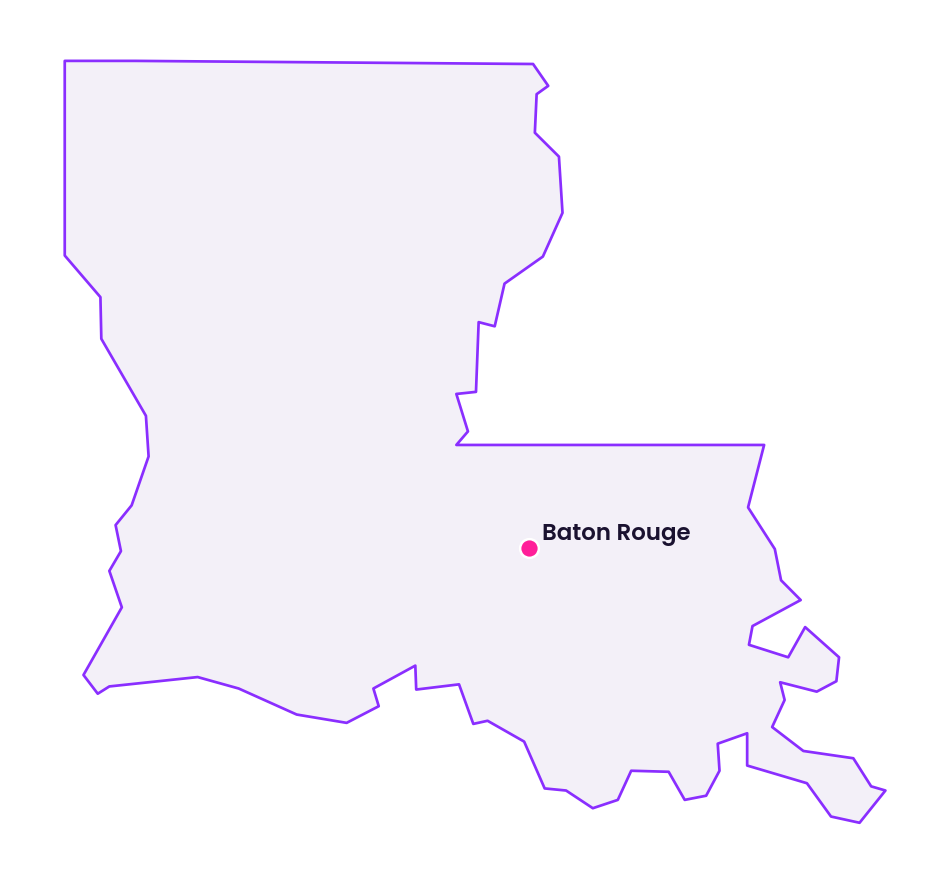
Section 02Population and Migration
Baton Rouge's population is flat to declining, a structural weakness that shapes the demand side of every asset class. The Census Bureau estimated the city at 222,795 residents as of July 1, 2025, down 2.1% from the April 2020 census count of 227,470, continuing a slow erosion from 229,493 in 2010. The city has 88,205 households at 2.37 persons per household, and its identity as a university and government town is reflected in a low owner occupancy rate and a large renter base.
| Measure | Value | Period and source |
|---|---|---|
| City population | 222,795 | July 1, 2025 estimate, US Census Bureau |
| City population, 2020 census | 227,470 | April 1, 2020, US Census Bureau |
| City population, 2010 census | 229,493 | April 1, 2010, US Census Bureau |
| City change, 2020 to 2025 | -2.1% | US Census Bureau |
| Households | 88,205 | 2020 to 2024 ACS, US Census Bureau |
| Persons per household | 2.37 | 2020 to 2024 ACS, US Census Bureau |
| Owner occupied housing rate | 47.8% | 2020 to 2024 ACS, US Census Bureau |
The demographic profile carries both opportunity and caution. Baton Rouge is majority Black at 50.5%, with a high poverty rate of 25.7% and a low owner occupancy rate of 47.8%, the latter reflecting the large student population tied to Louisiana State University and Southern University and a deep renter base. The metro, which is larger than the city and includes fast growing Ascension and Livingston parishes, has fared somewhat better than the central city, as households have migrated to suburban parishes, and Redfin migration data even showed modest net inflow from New Orleans. For an investor, the population data is a genuine caution: Baton Rouge is a slow growth market where apartment demand depends on the student population, the industrial workforce, and suburban household formation rather than on organic population expansion, which compounds the current oversupply challenge.
Section 03Jobs and Economic Anchors
Baton Rouge's economy is unusual and, at present, unusually strong on the construction side, driven by a wave of industrial megaprojects along the Mississippi River petrochemical corridor. The US Bureau of Labor Statistics reported total nonfarm employment for the metro at 436,000 in July 2026 on a preliminary basis, up a robust 3.7% year over year, one of the stronger growth rates among comparable metros, with an unemployment rate of 4.7% for June 2026, not seasonally adjusted, and a civilian labor force of roughly 438,000, data extracted August 28, 2026. The standout is construction employment, which surged 27% year over year to 57,700 jobs, reflecting the enormous capital investment flowing into refining, chemicals, and liquefied natural gas along the river.
| Sector | Jobs (thousands) | Source and period |
|---|---|---|
| Trade, Transportation and Utilities | 74.0 | BLS, June 2026 |
| Government | 70.8 | BLS, June 2026 |
| Education and Health Services | 62.3 | BLS, June 2026 |
| Construction | 57.7 | BLS, June 2026 |
| Professional and Business Services | 56.2 | BLS, June 2026 |
| Leisure and Hospitality | 40.2 | BLS, June 2026 |
| Manufacturing | 31.9 | BLS, June 2026 |
| Financial Activities | 23.0 | BLS, June 2026 |
| Other Services | 16.8 | BLS, June 2026 |
| Information | 3.8 | BLS, June 2026 |
The table reveals an economy where construction at 57,700 jobs is nearly as large as the education and health sector, an extraordinary feature that reflects the industrial building boom and that also means employment is somewhat cyclical and tied to megaproject timelines. Government at 70,800, encompassing the state capital, Louisiana State University, and public institutions, provides a stable base, though it declined 4.7% year over year amid state budget pressure. Professional and business services grew a strong 7.9%, aided by the industrial project activity, while manufacturing at 31,900 anchors the permanent industrial base.
The employer roster is dominated by energy, chemicals, and the industrial services that support them. ExxonMobil operates one of the largest and most versatile refining and chemical complexes in the world in Baton Rouge and is the parish's largest property taxpayer by a wide margin, having paid East Baton Rouge Parish roughly $32.7 million in property taxes in 2017, about two and a half times the second ranked payer. Major industrial services and construction firms including Brown and Root, Turner Industries, and Cajun Industries are headquartered or heavily present in the metro, alongside chemical producers such as Albemarle, a leader in lithium for electric vehicle batteries, BASF, Dow, and Shell. Louisiana State University, the State of Louisiana, and health systems Our Lady of the Lake Regional Medical Center and Baton Rouge General round out the base. For an investor, this economy is a genuine strength in its industrial construction momentum and a genuine risk in its cyclicality and dependence on the energy and chemical sectors.
Section 04Income
Incomes in the city of Baton Rouge are low, reflecting the large student and lower wage service population, though the industrial workforce supports a higher earning segment. The Census Bureau reported a median household income for the city of $49,994 in 2024 dollars for the 2020 to 2024 period, with per capita income of $34,731 and a high poverty rate of 25.7%.
| Measure | Value | Period and source |
|---|---|---|
| Median household income | $49,994 | 2020 to 2024 ACS, US Census Bureau |
| Per capita income | $34,731 | 2020 to 2024 ACS, US Census Bureau |
| Persons in poverty | 25.7% | 2020 to 2024 ACS, US Census Bureau |
| Median gross rent | $1,067 | 2020 to 2024 ACS, US Census Bureau |
The relationship between income and housing cost is favorable on affordability but constrained on rent growth potential at the low end. With a city median household income of $49,994 and a median gross rent of $1,067, annualized rent of roughly $12,804 represents about 26% of median household income, a stretched ratio that, combined with the 25.7% poverty rate, means a substantial share of city renters are cost burdened and that the lowest tier of the market faces genuine affordability limits. The metro income picture is stronger than the central city figure, lifted by the high wage industrial and professional workforce in the suburban parishes. For an investor, the income data argues for focusing on workforce and industrial worker housing and on the suburban parishes where incomes are higher, rather than on the deeply affordable urban segment where collection risk and affordability constraints are most acute.
Section 05Housing and Multifamily
The Baton Rouge apartment market is the clearest case of oversupply among the markets in this series, and it defines the local investment thesis. The MMCG database placed Baton Rouge multifamily vacancy at 14.1% in the first quarter of 2026, the fifth highest among the fifty largest metropolitan areas in the country and far above the national vacancy rate of 8.6%. This elevated vacancy is the product of a multiyear supply surge that outpaced the metro's slow population growth, and it has cooled rent growth and forced pricing resets across the market.
| Metric | Value | Source and period |
|---|---|---|
| Baton Rouge multifamily vacancy | 14.1% | MMCG database, Q1 2026 |
| National multifamily vacancy | 8.6% | MMCG database, Q1 2026 |
| City median gross rent | $1,067 | 2020 to 2024 ACS, US Census Bureau |
| National average asking rent | $1,769 | MMCG database, Q1 2026 |
The essential point is that Baton Rouge overbuilt relative to its demand base, producing a vacancy rate roughly 5.5 percentage points above the national average and among the worst in the nation. The Greater Baton Rouge Business Report characterized the market in April 2026 as entering a stabilization phase, with modest rent growth, steady vacancy, and a slowdown in new construction that should allow the market to work through its excess supply over time. For an investor, the oversupply is simultaneously the market's greatest weakness and its greatest opportunity, because it has created distressed pricing that value oriented buyers are actively exploiting.
Section 06Rents
Baton Rouge rents are affordable and, under the weight of oversupply, have grown slowly or stagnated. The Census reported a city median gross rent of $1,067 for the 2020 to 2024 period, well below the national average asking rent of $1,769 that the MMCG database reported, and the Business Report described rent growth as modest as the supply surge cooled pricing power. With vacancy at 14.1%, owners have limited ability to push rents and are more likely to be offering concessions to fill units.
The rent environment reflects the imbalance between a slow growing demand base and an elevated supply pipeline. In an oversupplied market, effective rents, which account for concessions, tend to lag advertised asking rents, and the pricing pressure falls hardest on the newer, higher tier product that comprised most recent construction, while the older, more affordable one and two star segment, which serves a captive renter base with fewer alternatives, tends to hold up better. This pattern is consistent with the national data, where the MMCG database showed the one and two star segment growing at 1.1% against just 0.2% for the four and five star segment. For an investor, the rent data reinforces the case for value oriented acquisition of older, affordable product at reset pricing, where rents are defensible and where the acquisition basis is low enough to generate yield even in a soft rent environment, rather than for chasing the oversupplied luxury segment.
Section 07Vacancy
Vacancy is the defining metric of the Baton Rouge apartment market and the number that most demands investor attention. At 14.1% in the first quarter of 2026 per the MMCG database, metro vacancy was the fifth highest among the fifty largest metropolitan areas and sat well above the national rate of 8.6%, as the ranking below shows. This is a market working through a serious oversupply.
| Metro | Multifamily vacancy | Source and period |
|---|---|---|
| Sarasota | 17.6% | MMCG database, Q1 2026 |
| Huntsville | 17.4% | MMCG database, Q1 2026 |
| San Antonio | 15.8% | MMCG database, Q1 2026 |
| Memphis | 15.4% | MMCG database, Q1 2026 |
| Baton Rouge | 14.1% | MMCG database, Q1 2026 |
| National average | 8.6% | MMCG database, Q1 2026 |
The trajectory, however, is toward gradual improvement rather than further deterioration. The Business Report noted that new construction was slowing heading into 2026, which is the necessary condition for vacancy to stabilize and eventually compress, and national forecasters expect absorption to overtake deliveries in oversupplied markets by the second half of 2026, setting the stage for recovery entering 2027. The high vacancy has also driven the pricing resets that make the market attractive to value oriented buyers, effectively pricing in the oversupply. For an investor, the vacancy data is a clear warning that requires conservative underwriting of occupancy and concessions, but it is also the source of the opportunity, because assets are trading at bases low enough to withstand elevated vacancy and to benefit substantially when the market normalizes.
Section 08Supply Pipeline
The supply pipeline is the cause of the current oversupply, and its slowdown is the basis for the recovery thesis. Baton Rouge added apartment supply faster than its slow growing population could absorb over the past several years, pushing vacancy to 14.1%, and the Business Report confirmed that new construction was cooling heading into 2026 as the market absorbed the excess.
The dynamic mirrors the national supply story but in a market with weaker demand fundamentals. Nationally, the MMCG database documented nearly 1.8 million units delivered over three years, a supply surge that pushed national vacancy to 8.6%, and the same forces operated in Baton Rouge but against a slower growing population, producing a worse outcome. The critical point for the forward view is that the pipeline is contracting, which removes the primary source of pressure, and that the metro's strong construction employment reflects industrial rather than residential building, so the apartment supply overhang is not being continuously replenished. For an investor, the supply picture supports patience: the market is oversupplied now, but the slowdown in deliveries means the imbalance should ease over the next several years, rewarding capital that acquires at today's distressed pricing and holds through the normalization.
Section 09Single Family Homes
The for sale housing market in Baton Rouge is exceptionally affordable and, despite the apartment oversupply, has held its value with brisk transaction velocity. Redfin reported a median sale price of $240,000 for the three months ending June 2026, and city sale prices have been broadly stable over the year.
| Metric | Value | Source and period |
|---|---|---|
| Median sale price | $240,000 | Redfin, 3 months ending June 2026 |
| Median value, owner occupied homes | $234,700 | 2020 to 2024 ACS, US Census Bureau |
| Owner occupancy rate | 47.8% | 2020 to 2024 ACS, US Census Bureau |
The Census Bureau reported a median value of owner occupied homes in the city of $234,700 for the 2020 to 2024 period and an owner occupancy rate of just 47.8%, one of the lowest of any market in this series and a reflection of the deep renter base tied to the universities and the transient industrial workforce. The single family rental angle is genuinely attractive on affordability, with a median price near $240,000 producing workable cash flow, and the low ownership rate ensures a deep rental demand pool. Steady prices and relatively quick sales indicate a functioning, liquid market despite the apartment glut, because single family and multifamily are distinct segments with different buyer and renter pools. For an investor, Baton Rouge single family rentals offer some of the most affordable entry pricing of any metro, well suited to yield oriented buy and hold strategies serving the large local renter base.
Section 10Commercial Real Estate and Retail Centers
Baton Rouge commercial real estate showed active transaction volume across property types in 2026, with the brokerage ELIFIN reporting 275 commercial sales totaling $379.4 million across East Baton Rouge and Ascension parishes in the first half of the year, a deal count up 8.7% from a year earlier even as dollar volume fell 20.9%, meaning more buildings changed hands at smaller prices. The composition by property type reveals where activity concentrated.
| Property type | Sales | Dollar volume | Source and period |
|---|---|---|---|
| Retail | 62 | $77.3 million | ELIFIN, H1 2026 |
| Multifamily | 23 | $73.8 million | ELIFIN, H1 2026 |
| Land | 63 | $64.6 million | ELIFIN, H1 2026 |
| Industrial | 57 | $50.1 million | ELIFIN, H1 2026 |
| Office | 48 | $41.8 million | ELIFIN, H1 2026 |
Retail led dollar volume at $77.3 million across 62 sales, reflecting the metro's role as the retail hub for the Capital Region and supporting grocery anchored and necessity centers. Multifamily nearly matched retail at $73.8 million on just 23 sales, the story within the story, as value oriented buyers acquired older apartment communities at reset pricing, with three communities of more than 180 units trading between roughly $35,000 and $50,000 per unit, including the 328 unit Bellecour Crossing at about $35,400 per unit in January 2026 and the 186 unit Eden Point at roughly $49,700 per unit in June 2026. Industrial and office remained active on transaction count but lighter on dollars, with 57 industrial sales at $50.1 million and 48 office sales at $41.8 million, and the average recorded commercial sale fell from $1.9 million to $1.4 million year over year. Industrial demand is underpinned by the petrochemical corridor and the Port of Greater Baton Rouge, one of the largest ports in the nation and the farthest inland deepwater port on the Mississippi River, while office faces the same national headwinds. For an investor, retail and value oriented multifamily are the most active and attractive commercial opportunities, and the very low per unit apartment pricing is the clearest signal of the distressed entry points the oversupply has created.
Section 11Transactions and Capital Markets
The transaction data confirms that capital is actively pursuing Baton Rouge at reset pricing, particularly in multifamily. ELIFIN reported that value add buyers are back in the Baton Rouge multifamily market and closing deals, with the apartment communities that traded in the first half of 2026 doing so at bases of roughly $35,000 to $50,000 per unit, extraordinarily low figures that reflect both the age of the assets and the pricing impact of the 14.1% vacancy environment.
| Transaction metric | Value | Source and period |
|---|---|---|
| Total commercial sales | 275 | ELIFIN, H1 2026 |
| Total commercial dollar volume | $379.4 million | ELIFIN, H1 2026 |
| Deal count, year over year | +8.7% | ELIFIN, H1 2026 |
| Dollar volume, year over year | -20.9% | ELIFIN, H1 2026 |
| Average recorded sale | $1.4 million | ELIFIN, H1 2026 |
The rise in deal count alongside the fall in dollar volume and average sale size indicates that buyers are active but are paying less, acquiring more but smaller and more affordable assets, and the multifamily per unit figures near $35,000 to $50,000 are far below replacement cost, offering substantial embedded value for buyers who can improve operations and hold through the oversupply. For an investor, the capital markets read is that Baton Rouge is a genuine value market right now, where reset pricing and active value add buyers signal that the distress has created real opportunity for patient capital.
Section 12Taxes
Property taxes in Baton Rouge are low, a significant advantage that partially offsets the state's insurance burden and supports the value investment thesis. Louisiana has among the lowest effective property tax rates in the nation, and Louisiana assesses residential property at just 10% of market value, with a homestead exemption that shields the first $75,000 of market value, equivalent to the first $7,500 of assessed value, from most property taxes for owner occupants. The result is a modest effective burden on homeowners, though the exemption benefits owner occupants rather than investors.
A defining feature of the Baton Rouge tax landscape is the industrial tax base and the state's Industrial Tax Exemption Program. ExxonMobil alone paid East Baton Rouge Parish roughly $32.7 million in property taxes in 2017, about two and a half times the second ranked payer, illustrating how heavily the parish depends on its industrial complex for revenue. At the same time, Louisiana's Industrial Tax Exemption Program has historically granted large property tax abatements to manufacturers, which reduces the tax contribution of new industrial investment and has been a subject of local debate. For an income property investor, the practical points are that residential and commercial property taxes are low relative to national norms, which supports net operating income and reinforces the market's affordability, and that the industrial tax base, while substantial, is subject to exemption programs that shape parish finances. The low property tax environment is a genuine structural positive that complements the distressed acquisition opportunity in apartments.
Section 13Insurance
Insurance is the most significant cost risk in Baton Rouge, as it is throughout Louisiana, and it must be underwritten carefully. Louisiana carries among the highest homeowner insurance costs in the nation, the product of repeated catastrophic hurricanes and a property insurance market in crisis, with multiple private insurers having withdrawn or become insolvent and property owners pushed toward the state insurer of last resort, Louisiana Citizens Property Insurance Corporation, whose rates are set by law at 10% above the highest private rate in each parish. Louisiana Citizens approved an average homeowner rate increase of 63% in 2022, with some parishes seeing increases above 100%.
While Baton Rouge sits inland and faces less hurricane storm surge risk than coastal New Orleans, it is still exposed to hurricane wind damage and, critically, to severe flooding, as demonstrated by the catastrophic August 2016 flood, an extreme rainfall event unrelated to any hurricane that inundated large portions of the Baton Rouge area and caused billions of dollars in damage. That flood reshaped the region's understanding of flood risk and insurance needs, exposing that many damaged properties sat outside mapped high risk flood zones and lacked flood coverage. For an investor, insurance is a first order underwriting variable in Baton Rouge: premiums are high and rising, flood coverage is essential given the 2016 experience, and both wind and flood exposure must be priced aggressively into any pro forma.
Section 14Landlord Tenant and Regulatory Environment
Louisiana operates under a civil law system distinct from the common law used elsewhere, but its residential landlord tenant framework is broadly landlord favorable and supports rental investment in Baton Rouge. Louisiana has no statewide rent control, and state law generally preempts local rent regulation, so rents are set by the market, a structural protection for rental income. Eviction procedures in Louisiana are relatively efficient by national standards, with a defined summary process for nonpayment that resolves comparatively quickly, which supports collection and is particularly relevant in a market with a high poverty rate and a transient student and industrial workforce.
The regulatory environment on the development side is comparatively permissive, consistent with Louisiana's business friendly posture and reflected in the very supply wave that produced the current oversupply, since Baton Rouge did not have the entitlement constraints that limit building in more restrictive markets. Short term rental regulation exists at the municipal level and is a minor consideration in a market driven by long term rental demand and industrial worker housing. The overall regulatory read is favorable for rental investment, with no rent control, efficient eviction enforcement, and low development barriers, though the last of these is a double edged feature, since the same permissiveness that favors owners operationally also enabled the oversupply. Investors should confirm current local rental and permitting requirements before underwriting any specific strategy.
Section 15Infrastructure
Baton Rouge possesses major industrial and transportation infrastructure centered on the Mississippi River, which is the foundation of its economy. The Port of Greater Baton Rouge is one of the largest ports in the nation by tonnage and the farthest inland deepwater port on the Mississippi, handling petrochemicals, grain, and bulk commodities, and it anchors the industrial corridor that runs along the river between Baton Rouge and New Orleans. The metro is served by Interstate 10 and Interstate 12, and the region has long grappled with traffic congestion at the aging Interstate 10 Mississippi River bridge, with a new bridge project in planning to relieve one of the state's most significant infrastructure bottlenecks.
The industrial infrastructure is a genuine competitive advantage, as the concentration of refining, chemical, and port capacity supports the megaproject investment driving the construction boom, and the river provides low cost bulk transportation that underpins the petrochemical cluster. The countervailing infrastructure challenges are traffic congestion, which affects quality of life and commuting across the metro, and the drainage and flood control systems that the 2016 flood revealed to be inadequate for extreme rainfall events, prompting ongoing investment in watershed and drainage improvements. For a real estate investor, the infrastructure picture is favorable on the industrial and port side, which sustains the economic base, and challenged on the transportation and drainage side, where congestion and flood control are genuine issues that affect specific submarkets and warrant attention in site selection.
Section 16Climate and Physical Risks
Baton Rouge's physical risk profile is dominated by flooding and hurricanes, and the 2016 flood made clear that rainfall flooding is as serious a threat as tropical systems. The region is exposed to hurricane wind damage, though as an inland city it faces less storm surge risk than coastal Louisiana, and to severe riverine and rainfall flooding, most dramatically demonstrated by the catastrophic August 2016 flood that inundated large areas of the metro after extreme rainfall, damaged tens of thousands of homes, and caused billions of dollars in losses. The Amite and Comite rivers and the region's flat, low lying terrain make rainfall flooding a persistent and material risk.
The consequences for real estate are direct and severe, operating through the insurance market and through property values. Flood risk requires flood insurance through the Federal Emergency Management Agency National Flood Insurance Program or private markets for many properties, and the 2016 flood exposed that a large share of damaged properties sat outside mapped high risk zones and were uninsured for flood, a lesson that has reshaped underwriting in the region. Elevation and flood history are first order variables at the individual property level, and investors must scrutinize FEMA flood maps, base flood elevations, and the flood history of specific parcels rather than relying on zone designations alone. Extreme heat and humidity are chronic factors that raise cooling costs. For an investor, the climate conclusion is that Baton Rouge carries genuine and demonstrated flood risk that must be central to underwriting, that insurance costs reflect this risk, and that property specific flood due diligence is essential rather than optional.
Section 17Neighborhoods and Submarkets
Baton Rouge's residential geography ranges from the affluent southern and southeastern neighborhoods to the more challenged northern areas, with much of the metro's growth having migrated to the suburban parishes. Within the city and the immediate area, the southern corridors near Louisiana State University and toward the suburbs contain the higher value neighborhoods and the newer apartment product, while the northern and older central areas are more affordable and face higher poverty and disinvestment.
The metropolitan growth story lies in the suburban parishes rather than the central city. Ascension Parish to the southeast, home to Gonzales and much of the petrochemical corridor investment, and Livingston Parish to the east have captured the bulk of the region's population and housing growth, drawing families seeking newer housing, better schools, and proximity to the industrial job centers, and ELIFIN's transaction data covered both East Baton Rouge and Ascension as the core commercial market. Within multifamily, the newer, higher tier product that drove the oversupply is concentrated in the growing southern and suburban submarkets, while the older, more affordable stock that value add buyers are targeting is spread across the established areas. For an investor, the practical conclusion is that submarket and parish selection is decisive: the suburban parishes offer growth, higher incomes, and proximity to industrial jobs at the cost of exposure to new supply, while the older urban submarkets offer distressed value add pricing and a deep renter base but require careful attention to location, flood risk, and neighborhood trajectory.
Section 18Opportunities
The clearest opportunity in Baton Rouge is value oriented multifamily acquisition at the distressed pricing the oversupply has created. With metro vacancy at 14.1% and apartment communities of more than 180 units trading at roughly $35,000 to $50,000 per unit, far below replacement cost, patient capital with operational expertise can acquire assets at bases low enough to generate yield even in a soft rent environment and to benefit substantially as the market normalizes once the supply pipeline clears. ELIFIN's data confirms that sophisticated value add buyers are already active and closing at these levels.
A second opportunity is single family rental, where a median price near $240,000 and a low price per square foot produce some of the most affordable entry economics of any metro, supported by a deep renter base and a 47.8% ownership rate. A third opportunity is exposure to the industrial construction boom, where 27% year over year construction employment growth and the petrochemical megaproject cycle drive demand for workforce housing, industrial and flex space, and services. A fourth is grocery anchored and necessity retail, the most active commercial sector by dollar volume, serving the Capital Region. Underpinning these is a low property tax environment and home prices and rents affordable enough to provide a defensive floor.
Section 19Risks
The dominant risk is the apartment oversupply itself, with metro vacancy at 14.1% among the highest in the nation, which pressures rents, elevates concessions, and requires conservative underwriting of occupancy and lease up. Until the supply is absorbed, apartment fundamentals will remain soft, and a value add thesis depends on the market normalizing over a multiyear hold. The second major risk is the insurance and flood exposure, with Louisiana's insurance crisis driving high and rising premiums and the 2016 flood demonstrating genuine and underappreciated flood risk that can cause catastrophic loss and that demands rigorous property specific due diligence.
The third risk is the economy's cyclicality and concentration, since the current strength is heavily driven by industrial construction tied to megaproject timelines and by the energy and chemical sectors, which are exposed to commodity cycles and to shifts in energy policy, while government employment is declining. Additional risks include weak population growth and a declining central city, which lost 2.1% of its population since 2020, a high 25.7% poverty rate that constrains the low end of the rental market, and traffic and drainage infrastructure challenges. Property taxes are low, a genuine offset. None of these is disqualifying, but together they define Baton Rouge as a value and yield market for specialists rather than a growth market, where the oversupply is both the opportunity and the primary risk.
Section 20Investor Implications
For an accredited investor, Baton Rouge is a value oriented, specialist's market where the apartment oversupply has created genuine distressed acquisition opportunity for capital that can underwrite the risks. The attractive elements are real: apartment communities trading at $35,000 to $50,000 per unit far below replacement cost, exceptionally affordable single family housing, a booming industrial construction economy with 3.7% job growth, low property taxes, and active value add buyers validating the opportunity. The offsetting challenges are equally real and are dominated by the 14.1% apartment vacancy, the Louisiana insurance crisis and flood risk, economic cyclicality, and weak population growth.
The strategies the data most supports are value add multifamily acquisition of older, affordable product at reset pricing, held through the multiyear absorption of the oversupply; single family rental at some of the lowest entry prices in the country; and exposure to industrial, workforce housing, and grocery anchored retail tied to the petrochemical corridor. Underwriting must center on three variables above all: conservative occupancy and concession assumptions given the oversupply; aggressive insurance cost assumptions and property specific flood due diligence given the 2016 experience; and the cyclicality of the industrial construction economy. Baton Rouge rewards investors who treat the current oversupply as a value opportunity to be acquired at distressed bases and held patiently, and who bring the operational expertise and risk discipline that a soft, insurance heavy market demands, rather than investors seeking growth or passive stability.
Section 21Conclusion
Baton Rouge is an affordable, industrially anchored capital city whose real estate market pairs a booming petrochemical construction economy with one of the most oversupplied apartment markets in the nation. Metro apartment vacancy of 14.1% is among the highest in the country, and that distress has created genuine value opportunity, with apartment communities trading at $35,000 to $50,000 per unit and sophisticated value add buyers actively closing. Homes are exceptionally affordable at a $240,000 median and sell briskly, and the industrial economy is adding jobs at a strong pace led by a surge in construction employment. Beneath these dynamics sit weak population growth, a high poverty rate, the Louisiana insurance crisis, and demonstrated flood risk from the 2016 disaster, offset by low property taxes. For the accredited investor, Baton Rouge is best understood not as a simple yes or no but as a value and yield market for specialists, where the apartment oversupply is both the central risk and the central opportunity, and where conservative occupancy underwriting, aggressive insurance and flood analysis, and patient capital will separate strong returns from losses. Every figure in this review carries a named public source and an explicit scope so that the reader can verify it independently.
Sources
- US Census Bureau, QuickFacts, Baton Rouge city, Louisiana, population, income, housing, and demographic figures, retrieved August 31, 2026, https://www.census.gov/quickfacts/fact/table/batonrougecitylouisiana/PST045225
- US Bureau of Labor Statistics, Baton Rouge LA Economy at a Glance, labor force, unemployment, and nonfarm employment by sector, data extracted August 28, 2026, https://www.bls.gov/eag/eag.la_batonrouge_msa.htm
- MMCG, US Multifamily Market Outlook 2026, national vacancy and Baton Rouge metro vacancy ranking, https://www.mmcginvest.com/post/u-s-multi-family-market-outlook-2026-current-conditions-investment-trends-and-five-year-forecast
- Greater Baton Rouge Business Report, Baton Rouge multifamily market stabilizes as supply surge cools rent growth, April 2026, https://www.businessreport.com/realestate/baton-rouges-multifamily-market-stabilizes-as-supply-surge-cools-rent-growth
- Redfin, Baton Rouge LA Housing Market, median sale price and related housing metrics, three months ending June 2026, https://www.redfin.com/city/1336/LA/Baton-Rouge/housing-market
- ELIFIN Realty, Baton Rouge Commercial Real Estate Sales H1 2026, commercial sales by property type and notable multifamily transactions, https://elifinrealty.com/baton-rouge-commercial-real-estate-sales-h1-2026/
- CoStar, Apartments.com and CoStar multifamily forecast, national vacancy near 8.5%, https://investors.costargroup.com/news-releases/news-release-details/apartmentscom-and-costar-raise-near-term-us-multifamily-rent
- ExxonMobil, Baton Rouge operations, refining and chemical complex overview, https://corporate.exxonmobil.com/locations/united-states/baton-rouge-operations
- Instawork, Best Companies to Work for in Baton Rouge, industrial and petrochemical employer base, https://www.instawork.com/blog/best-companies-in-baton-rouge-la
- Louisiana Citizens Property Insurance Corporation, rate level changes and rate setting methodology for the Louisiana insurance crisis, https://www.lacitizens.com/AboutUs/rates
- Stirling Properties, Baton Rouge MSA market insights, commercial market context, https://www.credaglobal.org/chapters/find-a-local-chapter/united-states-chapters/louisiana/gulf-coast/news/stirling-market-insights-baton-rouge-msa-louisiana-q225