In brief · summary: Bloomington
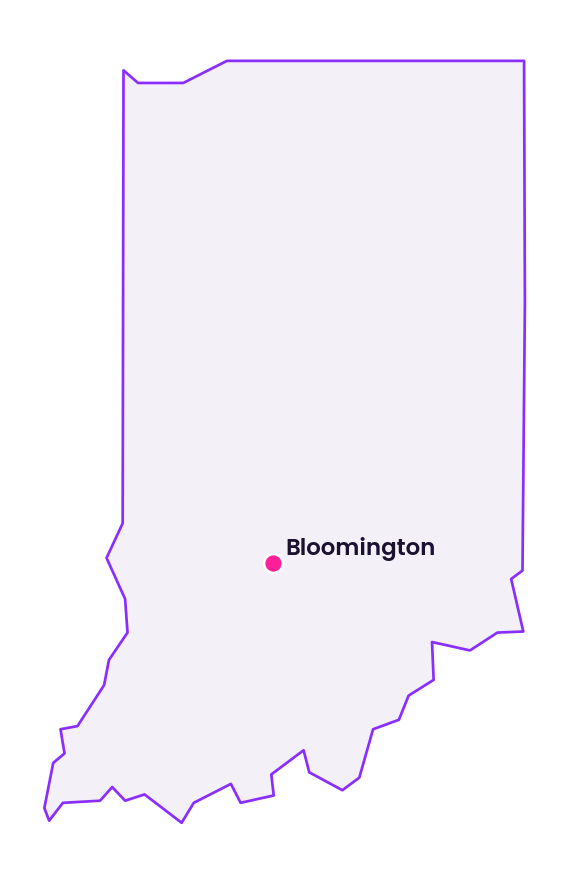
Bloomington is a classic university centered regional market anchored by the main campus of Indiana University and serving as the county seat of Monroe County. Public data from the United States Census Bureau, the American Community Survey, the Bureau of Labor Statistics, and the Bureau of Economic Analysis identify Bloomington and Monroe County as a mid sized college community with a large student presence, a mix of education, health care, and public sector employment, and a housing stock that leans heavily toward renter households.
This review focuses on the structure and direction of Bloomington’s market using those public datasets as a conceptual base, and it does not state specific figures that cannot be verified against a named source. For multifamily investors, Bloomington is first and foremost a student housing and university adjacent market, with a large share of rental units occupied by students and university staff, and with pronounced seasonality around the academic calendar.
Purpose built student apartments, conventional multifamily properties, and small two to four unit rentals compete for similar demand pools near campus, while workforce households tend to locate slightly farther from the university core. Single family homes serve a combination of long term residents, faculty and staff, and small scale investors who rent to students or to …
Section 01Executive Summary
Bloomington is a classic university centered regional market anchored by the main campus of Indiana University and serving as the county seat of Monroe County. Public data from the United States Census Bureau, the American Community Survey, the Bureau of Labor Statistics, and the Bureau of Economic Analysis identify Bloomington and Monroe County as a mid sized college community with a large student presence, a mix of education, health care, and public sector employment, and a housing stock that leans heavily toward renter households. This review focuses on the structure and direction of Bloomington’s market using those public datasets as a conceptual base, and it does not state specific figures that cannot be verified against a named source.
For multifamily investors, Bloomington is first and foremost a student housing and university adjacent market, with a large share of rental units occupied by students and university staff, and with pronounced seasonality around the academic calendar. Purpose built student apartments, conventional multifamily properties, and small two to four unit rentals compete for similar demand pools near campus, while workforce households tend to locate slightly farther from the university core. Single family homes serve a combination of long term residents, faculty and staff, and small scale investors who rent to students or to young professionals.
Commercial real estate in Bloomington is scaled to the local economy, with office and medical space tied to the university, the hospital system, and professional services, industrial and logistics space oriented toward light manufacturing and distribution along regional highways, and retail centers that mix grocery anchored neighborhood centers with downtown storefronts and campus adjacent retail. Because Bloomington is not a large metro, public and private data on vacancy, rents, and capitalization rates are thinner than in major markets, and Monroe County and state level series are often the most defensible proxies.
For accredited investors, Bloomington does not offer scale comparable to major metros, but it does offer the stability and particular dynamics of a mature university town. The key is to understand how Indiana University anchors demand, how enrollment and funding affect student housing, how local incomes support workforce housing and retail, and how limited land and planning policies constrain or enable new supply. This review walks through those elements and then frames opportunities and risks for capital that is considering exposure to this market.
Section 02Population and Migration
The United States Census Bureau publishes population totals and characteristics for the city of Bloomington and for Monroe County through the decennial census and the annual Population Estimates Program. These sources consistently describe Bloomington as the primary population center in Monroe County, with the city accounting for a large share of county residents. The American Community Survey further shows that Bloomington has a distinct age profile, with a very large share of residents in the traditional college age range, reflecting the presence of Indiana University Bloomington.
City specific population estimates beyond the decennial census are subject to sampling and methodology limits, especially in a community where student residence patterns change between campus housing and off campus rentals. For that reason, Monroe County level estimates and Bloomington metropolitan area series provide useful context for overall growth trends. Those county and metro series indicate that over multiple years, total population in the Bloomington area has grown modestly, with higher education, health care, and related services anchoring demand, while some rural areas of the county have seen slower growth.
Migration data from the Census Bureau’s components of change, reported at the county level, show how much of the change in Monroe County population stems from net domestic migration, international migration, and natural increase. In a university community, there is a constant inflow and outflow of students who may not appear in long term migration statistics in the same way as permanent movers, but who still drive housing demand. Monroe County level migration statistics are therefore the most reliable proxy for structural changes in the local resident base, while the university’s own enrollment and housing data, which are not accessed directly here, add a separate cyclical dimension.
For investors, the most important conclusion is that Bloomington’s population is relatively stable in aggregate, with modest long term growth, but with significant annual churn in where and how people live due to academic cycles. Stability comes from the enduring presence of the university and associated institutions, while volatility comes from semester based move ins and move outs, changing enrollment by cohort, and gradual shifts in where students prefer to live relative to campus.
Section 03Jobs and Economic Anchors
The Bureau of Labor Statistics reports employment data at the metropolitan and county level for Monroe County and the Bloomington metropolitan area. These series show that the local job base is heavily influenced by education, with Indiana University as the single largest employer, supported by significant employment in health care and social assistance, public administration, retail trade, hospitality, and some manufacturing and professional services. In essence, Bloomington functions as both a university center and a regional service hub for surrounding counties.
Gross domestic product by metropolitan area from the Bureau of Economic Analysis gives a sense of the value added distribution in the local economy. In the Bloomington metro, output is concentrated in education services, health care, public administration, and manufacturing, with real estate and rental and leasing also contributing. While precise dollar values are not presented here, Bureau of Economic Analysis data confirm that the education sector and related activities represent a significant share of local economic activity.
Indiana University brings not only direct employment in teaching, research, and administration, but also indirect and induced jobs in housing, retail, dining, entertainment, and services that serve students, faculty, and staff. The presence of a major research university also supports a small but important base of technology and knowledge intensive activity, including spin off companies and partnerships with firms that locate in or near Bloomington to leverage university talent.
Beyond the university, Monroe County employment includes manufacturing and logistics facilities, regional health care institutions, local and county government, and a wide range of small and mid sized businesses. Bureau of Labor Statistics data on unemployment and labor force participation, at the county level, indicate that the local unemployment rate has often tracked near or below the state average over time, though academic calendars and student labor participation introduce some seasonality.
For real estate investors, this job structure has several implications. Demand for student oriented housing is closely tied to university enrollment and funding. Workforce housing demand depends on the health of local services, health care, and manufacturing. Office space needs are anchored by institutional and professional service users rather than by large national office tenants. Retail and hospitality performance depends on student spending, visitor activity for events and conferences, and the spending power of permanent residents.
Section 04Income
Income statistics for Bloomington and Monroe County from the American Community Survey show a distribution that reflects both student households with limited earnings and permanent households with a range of incomes. Median household income for Monroe County, which includes Bloomington, tends to be lower than in some larger Indiana metros because many student households report low current income despite substantial long term earning potential. At the same time, a significant share of faculty, professional staff, health care workers, and small business owners earn moderate to higher incomes.
Per capita income, especially when measured for the county or metro, may look higher than median household income because it spreads institutional and individual earnings over a population base that includes many low earning students. Bureau of Economic Analysis personal income data at the county level provide additional context on aggregate earnings, dividends and interest, and transfer receipts, though those figures are not reproduced numerically here.
For investors, this income structure means that headline median income figures need to be interpreted carefully. In student dominated neighborhoods, low reported household incomes do not necessarily imply chronic rent affordability stress in the same way as in non student areas, because students often receive financial support from families, loans, or scholarships, and may be sharing housing costs across multiple roommates. In more traditional residential neighborhoods, especially those with higher concentrations of non student households, median income is a more direct proxy for ability to pay rent or a mortgage.
In underwriting, investors should rely on tract level or neighborhood level income data where possible, and distinguish between student oriented and non student oriented submarkets. They should also consider the mix of employment types among local residents and how sensitive those incomes are to economic and policy changes.
Section 05Housing and Multifamily
Bloomington’s housing stock is shaped by the presence of Indiana University and the constraints of local planning and topography. The Census Bureau’s housing unit data and the American Community Survey report a relatively high share of renter occupied units in the city compared with state averages, reflecting the large student population. Owner occupied housing includes single family homes in established neighborhoods, condominiums and townhomes, and some mixed use properties.
On the multifamily side, Bloomington has a large inventory of apartments and shared houses that function as student housing, ranging from purpose built off campus student communities with amenity packages to small multifamily buildings and single family homes converted to rentals. Many of these properties are located within a short distance of campus or along key transit and biking routes. Conventional multifamily properties that cater to non student households, such as young professionals, families, and seniors, are more likely to be located slightly farther from campus or along arterial roads.
City and county planning and permit portals show that over the past decade, numerous multifamily projects have been approved and built in and around Bloomington, including mid rise buildings near downtown and campus, and garden style communities toward the outskirts. Because Bloomington is not a very large market, the addition of a single large student housing project or apartment complex can materially affect local supply and competition in the short term.
From an investor perspective, Bloomington’s multifamily market divides into at least two distinct segments. The first is student oriented housing, where demand is driven by enrollment and student preferences for specific product types and locations. Leasing is highly seasonal, and properties are often leased by the bed, with individual leases and amenity offerings that reflect student expectations. The second is conventional multifamily serving non student households, where leasing is more evenly distributed over the year, and unit mix, parking, and design cater to longer term residents.
Understanding the balance between these segments, the university’s on campus housing capacity and policies, and the pipeline of new projects is essential in assessing risk and opportunity in Bloomington multifamily.
Section 06Rents
Rent levels and trends in Bloomington are tracked by private data sources such as CoStar, Yardi Matrix, RealPage, Zillow, and Redfin, as well as by public sources like the American Community Survey and the United States Department of Housing and Urban Development’s fair market rent estimates for the Bloomington metro. Because current series are not accessible here, this review does not state specific rent figures, but instead describes the general structure of rents in the market.
In student oriented submarkets near campus, asking rents per unit and per bedroom can be relatively high in absolute terms, reflecting the willingness of students and their families to pay for proximity to campus, modern amenities, and roommate friendly layouts. Pricing is often structured on a per bed basis for purpose built student housing, which complicates direct comparisons to conventional multifamily rents. In older student rentals, including houses and small apartment buildings, rents may be lower on a per bed basis but still relatively high compared with typical workforce housing in other small Indiana markets.
In non student oriented multifamily, rents reflect local income levels, unit quality, and competition from small rentals and single family homes. Conventional properties with amenities such as in unit laundry, covered parking, and updated finishes can command premium rents relative to older stock. Fair market rent levels from the Department of Housing and Urban Development for Monroe County provide a reference point for what is considered typical cost for modest units, which is relevant for voucher programs and affordable housing, and also serves as an indicator of broader rent levels.
Investors should expect rent growth in Bloomington to be influenced by university enrollment trends, changes in on campus housing supply, and broader economic conditions in Monroe County. When enrollment increases and new student housing supply is limited, landlord leverage rises and rents may increase. When large new projects open or enrollment stagnates, competition intensifies and concessions become more common.
Section 07Vacancy
Vacancy dynamics in Bloomington are shaped by the academic calendar and by the division between student oriented and non student housing. Data from the American Community Survey on rental vacancy at the city and county level give a broad view of the share of rental units that are unoccupied and available, but they do not capture the seasonal peaks and troughs that matter in a student market. Private multifamily data sources such as CoStar, RealPage, and Yardi Matrix provide more granular vacancy and leasing statistics for professionally managed properties, although they are not directly accessed here.
Student housing typically experiences a rapid leasing cycle prior to the start of each academic year, with many properties preleasing for the fall well in advance. Occupancy can be very high during the school year and then lower during summer months, depending on how leases are structured and whether students remain in town for work or classes. Properties that are newer or located very close to campus may sustain higher occupancy, while those farther away or with older amenities may see higher vacancy or more volatile leasing.
In conventional multifamily that serves non student households, vacancy is more steady throughout the year, influenced more by job trends, household formation, and local supply. Class A properties with strong amenities and good access to services may maintain lower vacancy, while older properties in less desirable locations may have higher vacancy and more turnover.
For investors, vacancy assumptions in Bloomington should differentiate between student and non student segments, and should account for preleasing cycles, renewal behavior, and the effect of new supply. County level vacancy from the American Community Survey can serve as a background metric, but property type and location specific performance are more informative.
Section 08Supply Pipeline
The supply pipeline in Bloomington consists of both new construction and substantial renovation and repurposing of existing buildings. City planning and permitting records, including zoning approvals, building permits, and development review minutes, identify where and when projects have been approved. Over the past years, the city has seen new student housing developments near Indiana University, mixed use projects with residential units above retail, and conventional multifamily communities along key corridors.
Because Bloomington is physically bounded by environmental features and has a long established urban core, opportunities for large greenfield apartment communities within city limits are limited. Much of the newer multi unit housing has come through infill redevelopment, adaptive reuse, and higher density projects in previously underutilized sites. Surrounding areas of Monroe County and adjacent counties host more traditional garden style communities where land is more available.
The presence of Indiana University also influences the pipeline indirectly. When the university expands on campus housing, demand for certain off campus properties can shift. When university plans emphasize maintaining or reducing on campus housing, private developers may respond with more off campus projects. Public university facilities planning documents, which are not quoted directly here, are therefore another component of supply analysis.
Investors must track the pipeline at a granular level, since a single large project in a small market like Bloomington can materially affect submarket balance. For example, a new large student housing project within walking distance of campus can draw tenants from older properties and put pressure on rents and occupancy for a few years until the market rebalances.
Section 09Single Family Homes
Single family housing in Bloomington and Monroe County provides both ownership opportunities for residents and a base for small scale rental activity. Census data and county property records show a mix of older homes in central neighborhoods, mid century subdivisions, and newer developments toward the edges of the city. Private data sources such as Redfin and Zillow track median sale prices, time on market, and inventory for Bloomington and the wider area, but specific figures are not reproduced here.
Historically, single family home prices in Bloomington have reflected the balance between local incomes, investor demand, and proximity to campus and employment centers. Homes in neighborhoods near Indiana University and the downtown area tend to command higher prices per square foot, reflecting both owner occupant and investor interest. Properties in farther suburban locations may offer more space and newer construction at lower price points, appealing to families and long term residents.
Inventory and months of supply statistics from local real estate associations and listing platforms indicate that at times the Bloomington single family market has been tight, with relatively few homes listed relative to demand. In such periods, sellers have more leverage, and buyers, including investors, may face competition and rising prices. When mortgage rates are low and investor interest is high, acquisition capitalization rates for single family rentals can compress significantly, making yield dependent on long term rent growth and appreciation.
Single family rentals in Bloomington take several forms. Some investors purchase homes near campus and lease them to groups of students. Others focus on family oriented neighborhoods and rent to non student households. Build to rent communities, which have emerged in larger metros, are less common in a small market like Bloomington but could become a niche over time in suburban areas where land is more available.
Investors pursuing single family strategies must understand local zoning rules concerning occupancy limits, especially where more than a certain number of unrelated individuals share a dwelling, as well as any local ordinances regarding parking, noise, and property maintenance. They must also account for property tax assessments, insurance costs, and the operational complexity of scattered site portfolios.
Section 10Commercial Real Estate and Retail Centers
Bloomington’s commercial real estate sector is relatively small in absolute terms but important in supporting the local economy. Office space is concentrated in downtown Bloomington, near Indiana University, and in small suburban office parks. Many tenants are tied to education, health care, legal and professional services, and non profit organizations. There are few very large corporate office towers, which means the market is less directly exposed to national office downsizing trends than major metros, but it is still affected by remote work arrangements and space use decisions among local employers.
Industrial and logistics properties in Monroe County are oriented toward light manufacturing, warehousing, and distribution that serve regional and state markets. Facilities near major highways provide space for manufacturers, suppliers, and distributors. Because Bloomington is not a major logistics hub, industrial demand is more tied to specific employers and sectors than to national distribution networks, which can both stabilize and concentrate risk.
Retail centers range from downtown storefronts that serve students and residents, to neighborhood centers anchored by supermarkets and pharmacies, to community centers with a mix of big box and smaller tenants on arterial roads. Grocery anchored centers in established neighborhoods typically maintain steady occupancy, as residents rely on these locations for daily needs. Retail near campus benefits from student foot traffic, though tenancy can be volatile as concepts change with consumer tastes.
Publicly available summaries of commercial market conditions from brokerage firms and CoStar, which are not directly quoted here, indicate that vacancy and rents in Bloomington’s commercial segments are influenced more by local business formation and the health of the university and health care anchors than by national corporate office utilization patterns. Capitalization rates and pricing for commercial assets in Bloomington are also shaped by the limited pool of institutional capital focused on small markets, often resulting in higher yields but lower liquidity than in major metros.
For investors, commercial real estate in Bloomington can play a complementary role in a portfolio that seeks income from stable neighborhood retail or mission critical medical office and university related properties. Careful tenant underwriting, lease structure analysis, and assessment of local competition are essential.
Section 11Transactions and Capital Markets
Detailed statistics on commercial and multifamily transactions in Bloomington are collected by private data sources such as CoStar, Real Capital Analytics within MSCI Real Assets, and brokerage firms. Public series at the city level are limited, and Monroe County transaction records, while comprehensive, are not aggregated in a way that makes them easily comparable across time in this environment. Therefore, no specific transaction volumes or capitalization rates are reported here.
Qualitatively, Bloomington is a small market that sees regular but modest transaction activity in multifamily, student housing, single family rental portfolios, and small commercial assets. Many deals involve local or regional investors, small private funds, and owner occupants, rather than large national institutions. Student housing portfolios and newer multifamily communities may attract interest from specialized student housing operators or regional apartment owners.
Debt financing for Bloomington properties typically comes from local and regional banks, credit unions, and, for qualifying multifamily projects, potentially from agency lenders that finance properties in smaller markets. The scale of properties often places them below the size thresholds favored by some national capital providers, which can limit competition but also limit liquidity.
Investors should assume that entry and exit in Bloomington may take more time and require more targeted marketing than in major metros. Pricing is influenced by local investor expectations, available financing, and perceived stability of university and hospital demand. Because current capitalization rate and volume data are not accessible, investors should rely on up to date market intelligence from lenders and brokers at the time of deployment.
Section 12Taxes
Property taxation in Bloomington is administered at the county level by the Monroe County Assessor and the Monroe County Treasurer. Indiana uses a market value based assessment system with constitutional rate caps that limit the total property tax burden for different classes of property as a share of gross assessed value. For example, state statute sets different maximum tax caps for homestead residential, other residential, and non residential properties, although this review does not quote numeric cap percentages.
Monroe County sets tax rates through a combination of county, city, school district, and other local taxing units, subject to state oversight and limits. Assessed values are determined by the Assessor based on market data, property characteristics, and periodic reassessment cycles. Investors can review parcel level assessment histories and tax bills through county online portals.
For investors, property taxes are a major operating expense that must be modeled carefully. Acquisitions at prices well above prior assessed values may lead to significant assessment increases over time, and any changes in rate structures or caps at the state level can alter forward looking tax burdens. Indiana’s system of tax caps provides some predictability, but local variations in rates, special assessments, and deductions still matter.
Income taxation is at the state level. Indiana levies a state income tax, and many counties, including Monroe County, impose local income taxes as well. These taxes affect investor returns and the after tax incomes of tenant households, although they are generally lower than combined rates in some coastal states. Sales taxes, which include state and local portions, affect retail tenants and consumer spending. This review does not state specific numeric income, property, or sales tax rates, because those are best confirmed against current Indiana Department of Revenue and Monroe County schedules for the relevant year.
Section 13Insurance
Insurance in Bloomington and Monroe County addresses hazards typical of the region, including severe thunderstorms, hail, wind, occasional flooding in low lying areas, and winter weather. The Indiana Department of Insurance oversees the insurance market in the state, while national insurers and regional carriers underwrite property policies for residential and commercial assets.
Federal flood insurance rate maps identify areas within Monroe County that are subject to special flood hazard area designations near rivers, creeks, and drainage channels. In those locations, flood insurance is typically required for mortgaged properties, and investors must budget for those premiums. Outside mapped flood zones, flood risk is lower but not zero, and some owners choose to carry flood coverage as a precaution.
Severe weather, including hail and wind, can damage roofs, siding, and building systems. Claims experience and regional loss patterns influence insurance premiums and deductibles, which have tended to rise in many parts of the Midwest. Winter storms can cause ice dams, frozen pipes, and slip hazards, all of which have insurance implications.
For investors in Bloomington, insurance costs may be lower in absolute terms than in regions with wildfire or coastal storm exposure, but they are still a material expense line and can increase over time. It is prudent to obtain property specific quotes and to consider resilience measures, such as impact resistant roofing, drainage improvements, and maintenance practices, that can reduce risk and potentially premiums.
Section 14Landlord Tenant and Regulatory Environment
Indiana law governs the basic framework of residential and commercial landlord tenant relationships, including security deposit handling, notice requirements, rights and obligations related to habitability and repairs, and remedies for non payment and lease violations. Compared with some other states, Indiana is often viewed as more favorable to landlords, with relatively straightforward eviction processes and no statewide rent control.
Bloomington, as a city, has authority to adopt certain ordinances that affect rental housing, such as rental registration, inspection programs, occupancy limits, and zoning rules that define where rental properties are allowed. For example, local codes may limit the number of unrelated individuals who can occupy a single family home in certain zones, which is particularly relevant for student rentals. The city also enforces building safety and health codes that apply to both owner occupied and rental housing.
There is no citywide rent control program in Bloomington. Rents for most market rate units are set by agreement between landlords and tenants, subject to anti discrimination and fair housing laws. Certain properties that receive public subsidies or financing may be subject to rent and income restrictions under program rules, which investors must observe strictly.
During the recent public health emergency, temporary eviction related measures were implemented at the federal and sometimes local level, but those have largely expired. Investors should nevertheless stay aware of any new proposals at the state legislature or city council that could affect eviction procedures, source of income protections, or tenant remedies.
Overall, Bloomington offers a relatively predictable regulatory environment for landlords compared with many coastal cities, but the student housing context introduces specific compliance complexities, especially around occupancy and property maintenance.
Section 15Infrastructure
Bloomington’s infrastructure supports its role as a university town and regional center. The city is served by state highways that connect to the wider Indiana road network and by local streets that provide access to neighborhoods, campus, and employment centers. The Indiana Department of Transportation and local agencies maintain these roadways and plan improvements. Traffic volumes in Bloomington can spike around university events and during commute periods, but congestion is modest compared with large metropolitan areas.
Public transit is provided by Bloomington Transit and by campus oriented shuttle systems associated with Indiana University. Bus routes connect key residential areas, campus, downtown, and major retail and employment nodes. Transit usage among students is supported by university programs, while permanent residents rely more heavily on private vehicles, walking, and biking.
Water and wastewater services are provided by municipal utilities that draw from local surface water sources and treat wastewater for discharge. Utility reports, which are not quoted here, discuss investments in treatment capacity, distribution networks, and regulatory compliance. Electric and gas utilities are provided by regional investor owned companies, with infrastructure scaled to local demand and subject to state regulation.
Digital infrastructure, including broadband and mobile connectivity, is critical in a university community, and Bloomington benefits from investments made to serve the campus and associated research and administrative functions. These systems support remote learning, research, and telecommuting.
For investors, infrastructure quality and reliability are key considerations. Properties with easy access to major roads, transit routes, and campus are more desirable for students and workers. Adequate utility capacity and reliability are necessary for multifamily and commercial operations. Planned infrastructure projects, such as roadway improvements or utility upgrades, can enhance location value, while known bottlenecks or infrastructure deficits can constrain growth.
Section 16Climate and Physical Risks
Bloomington’s climate is characterized by four distinct seasons, with warm summers, cold winters, and transitional spring and fall periods. Data from the National Oceanic and Atmospheric Administration for the Bloomington area show average temperatures and precipitation patterns consistent with a humid continental climate, though specific values are not restated here. Severe weather events can include thunderstorms, heavy rainfall, hail, occasional tornadoes in the wider region, and winter storms.
Physical risks that matter for real estate include flooding in low lying areas, wind and hail damage, ice and snow accumulation, and heat waves. The Federal Emergency Management Agency’s National Risk Index and flood maps indicate that certain areas near creeks, rivers, and drainage features face elevated flood risk, while much of the urbanized area is at lower risk. Drainage infrastructure and land use patterns influence how stormwater flows during heavy rain events.
Climate change projections suggest potential shifts in precipitation intensity, temperature extremes, and storm patterns over time, which could affect the frequency and severity of events in the Bloomington region. While this review does not present specific projections, investors should be aware that historical climate norms may not fully describe future conditions.
Practical implications for real estate include the need for adequate stormwater management, elevation or flood proofing where appropriate, resilient building envelopes that can withstand hail and wind, and building systems capable of handling temperature fluctuations. Insurance and maintenance planning must reflect these physical risks.
Section 17Neighborhoods and Submarkets
Bloomington divides functionally into several distinct neighborhoods and submarkets, each with its own real estate profile. The downtown and campus adjacent area includes Indiana University, civic buildings, cultural venues, and a mix of student housing, apartments, and small commercial properties. This area sees heavy foot traffic, strong demand for rentals, and higher land and property values in relative terms.
Just beyond the immediate campus area are neighborhoods of older single family homes, small apartment buildings, and mixed use properties. Some of these neighborhoods have transitioned from primarily owner occupied to high shares of rental occupancy, especially where student demand has spilled over. Others maintain a more stable mix of faculty, staff, and long term residents.
Farther from campus, suburban style neighborhoods in Bloomington and in surrounding Monroe County offer single family homes with larger lots, townhomes, and some apartment communities. These areas are more oriented toward families and non student households, with schools, parks, and local retail centers. Industrial and commercial corridors run along major roads and near highway interchanges, hosting light manufacturing, distribution, and larger format retail.
From an investment perspective, student dominant neighborhoods offer higher gross potential rents but more operational complexity, frequent turnover, and more sensitivity to university policies. Non student neighborhoods may offer lower gross rents but more stable tenancy and less intensive management. Downtown and campus adjacent assets benefit from strong location fundamentals but can be expensive to acquire or to redevelop. Suburban and exurban submarkets may provide opportunities for workforce housing or small industrial and retail investments, with lower entry costs but more dependence on car access.
Section 18Opportunities
Several opportunity themes emerge for accredited investors evaluating Bloomington. In multifamily, there is ongoing demand for updated, well managed student housing that balances proximity to campus with amenities and security. Properties that can distinguish themselves through quality, management, and thoughtful design can compete for a share of student demand, particularly when Indiana University maintains or grows enrollment.
There is also opportunity in conventional multifamily serving non student renters, including young professionals, faculty and staff, health care workers, and retirees. Well maintained garden style communities and small apartment buildings in non student dominated neighborhoods may provide relatively steady cash flow with less volatility than pure student housing.
In single family, selective acquisition of homes in neighborhoods with strong owner occupant demand and limited new construction may offer long term appreciation potential, though yields on rentals may be modest and appreciation is not assured. Niche strategies around faculty housing, medium term rentals for visiting scholars, or carefully managed student rentals can create value when combined with local expertise.
Commercial opportunities include neighborhood retail centers anchored by grocery and essential services, particularly in growing residential areas, as well as medical office and university related facilities that serve stable institutional tenants. Small industrial properties that house local manufacturers or distributors may also be attractive, provided tenant credit and lease terms are sound.
Because Bloomington is a small market, successful execution often depends on local relationships, deep knowledge of zoning and neighborhood dynamics, and the ability to operate efficiently at smaller scales. The observations in this section are general and educational, are not projections, forecasts, or assurances of any particular return, yield, occupancy, rent level, or appreciation, and any specific investment must be evaluated on its own facts.
Section 19Risks
Risks in Bloomington align with its strengths. The city’s dependence on Indiana University and associated institutions creates concentration risk. A sustained decline in enrollment, significant changes in university housing policy, or a shift in funding could reduce demand for student housing and affect local employment and spending. While such changes are typically gradual, they are important to monitor.
Market risk includes the potential for oversupply in student housing and multifamily. When developers add significant new student oriented capacity within a short period, older properties may face pressure on rents and occupancy. In a small market, even a single large project can shift conditions for several years.
Liquidity risk is inherent in smaller markets. Exiting an investment may take more time and may depend on a relatively limited pool of potential buyers. Pricing is influenced more by local investor sentiment and financing conditions than by broad national capital flows.
Regulatory and political risk includes potential changes to zoning, occupancy limits in student neighborhoods, rental registration and inspection regimes, and property tax policies. Local opposition to specific development projects can also delay or alter outcomes.
Physical and climate risks such as flooding, severe storms, and winter weather can damage assets and disrupt operations. Insurance costs can rise after loss events or as carriers reassess regional risk. Real estate investments are speculative, are subject to market, financing, liquidity, tax, regulatory, insurance, and physical hazard risks, and can result in the loss of some or all of an investor's invested capital, including the possible loss of principal.
Section 20Investor Implications
For accredited investors, Bloomington is best viewed as a specialized satellite market, suitable for targeted strategies rather than large scale capital deployment. The market rewards detailed local knowledge, prudent sizing of investments, and careful alignment between asset type and demand driver.
In multifamily, investors should decide explicitly whether they are pursuing student housing, conventional housing, or a blend, and structure operations accordingly. Lease structures, marketing, and amenity offerings differ between these segments. Underwriting should model seasonality in leasing, potential competition from new projects or university housing changes, and the impact of modest shifts in enrollment.
Single family and small multifamily investments benefit from active asset management and close attention to tenant quality and property conditions. Scaling such portfolios requires systems and local teams capable of handling maintenance, leasing, and compliance efficiently.
Commercial investments should focus on tenants and locations with durable relevance, such as essential retail or medical uses, and be underwritten with conservative assumptions about rent growth and re leasing in a small tenant pool.
Capital structure should reflect the size and liquidity of the market. Moderate leverage, strong debt service coverage, and sufficient reserves can cushion the impact of leasing variability and unexpected expenses. Exit planning should allow for extended marketing periods and consider likely buyer profiles, which may be other private investors, local operators, or, in the case of student housing, specialized firms. Nothing in this section is a recommendation to pursue any specific strategy or investment, and there is no assurance that any objective or outcome described will be achieved.
Section 21Conclusion
Bloomington, Indiana offers a distinctive investment environment centered on the presence of a major research university and the stability that comes with it. The city and Monroe County combine a large student population, a significant share of renter households, and a modest but diversified employment base in education, health care, manufacturing, and services. Housing and multifamily markets are shaped by academic cycles, local planning, and income distributions that differ between student and non student neighborhoods.
While the scale of Bloomington limits the volume of institutional capital it can absorb, it creates room for targeted strategies that leverage local knowledge and long term relationships. Multifamily, student housing, small commercial assets, and select single family rentals can all play a role in a broader portfolio, provided investors accept the inherent concentration, liquidity, and operational risks, and recognize that no particular outcome or return is assured.
This review has emphasized structure and relationships rather than precise figures. Investors who consider commitments in Bloomington should supplement this qualitative framing with up to date quantitative data from the public sources cited and from reputable private market datasets, as well as with on the ground insights from trusted local partners.
Sources
- United States Census Bureau, Decennial Census and Population Estimates Program, Bloomington city and Monroe County, Indiana,, https://www.census.gov/programs-surveys/popest.html
- United States Census Bureau, American Community Survey one year and five year estimates, Bloomington city and Monroe County, Indiana,, https://www.census.gov/programs-surveys/acs
- United States Census Bureau, Housing Unit and Tenure Data, Bloomington city and Monroe County, Indiana,, https://www.census.gov/data.html
- United States Bureau of Labor Statistics, Local Area Unemployment Statistics, Monroe County, Indiana,, https://www.bls.gov/lau
- United States Bureau of Labor Statistics, Quarterly Census of Employment and Wages, Monroe County, Indiana,, https://www.bls.gov/cew
- United States Bureau of Economic Analysis, Local Area Gross Domestic Product and Personal Income, Bloomington metropolitan area,, https://www.bea.gov/data/income-saving/local-area-personal-income
- United States Department of Housing and Urban Development, Office of Policy Development and Research, Fair Market Rents and income limits, Bloomington, Indiana metro,, https://www.huduser.gov
- Monroe County Assessor, property assessment data,, https://www.co.monroe.in.us/department/?structureid=17
- Monroe County Treasurer, property tax billing information,, https://www.co.monroe.in.us/department/?structureid=21
- City of Bloomington, Planning and Transportation Department, planning and zoning information,, https://bloomington.in.gov/planning
- City of Bloomington, Housing and Neighborhood Development Department, housing programs and reports,, https://bloomington.in.gov/housing
- Indiana Housing and Community Development Authority, statewide housing programs and data,, https://www.in.gov/ihcda
- Indiana Department of Revenue, state tax information,, https://www.in.gov/dor
- Indiana Department of Insurance, property insurance information,, https://www.in.gov/idoi
- Federal Emergency Management Agency, Flood Map Service Center, Monroe County, Indiana,, https://msc.fema.gov
- Federal Emergency Management Agency, National Risk Index, Monroe County, Indiana,, https://hazards.fema.gov/nri
- National Oceanic and Atmospheric Administration, climate data for Bloomington, Indiana,, https://www.ncei.noaa.gov
- Bloomington Transit, public transit information,, https://bloomingtontransit.com
- Indiana Department of Transportation, state and regional transportation information,, https://www.in.gov/indot
- Zillow, Bloomington, Indiana housing market data,, https://www.zillow.com/research/data
- Redfin, Bloomington, Indiana housing market data,, https://www.redfin.com/news/data-center
- CoStar Group, Bloomington, Indiana commercial and multifamily market analytics,, https://www.costar.com
- Yardi Matrix, Bloomington, Indiana multifamily market reports,, https://www.yardimatrix.com
- RealPage, Bloomington, Indiana student and multifamily housing analytics,, https://www.realpage.com/analytics