In brief · summary: Boise
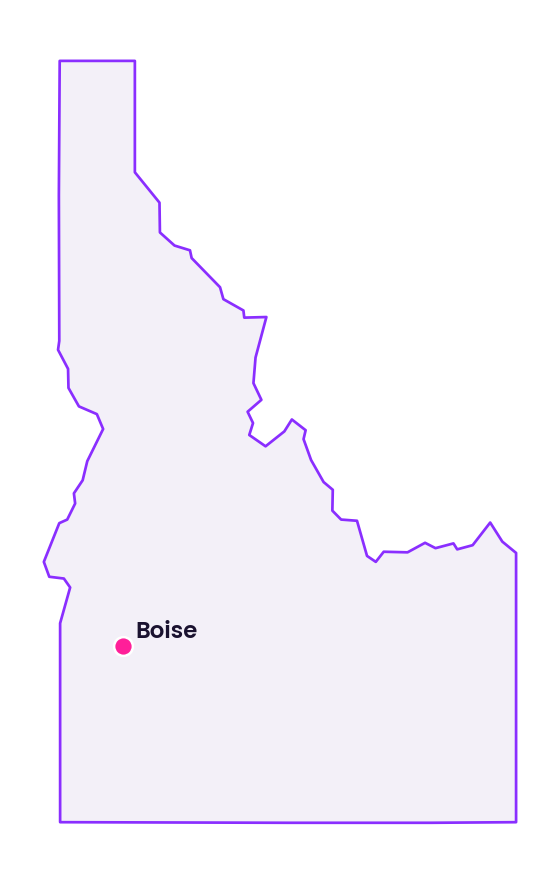
Boise is the capital and largest city of Idaho and the core of the Boise metropolitan area that includes much of Ada County and neighboring communities. The city anchors a regional economy that combines state government, technology and advanced manufacturing, health care, logistics and distribution, financial and business services, and education.
Although this review focuses on Boise, many official statistics are reported at the metropolitan or statewide scale. Where city figures are not available in accessible public datasets in this environment, this review uses Ada County or Idaho statewide data as the closest defensible proxy and states that scope explicitly.
According to the Bureau of Labor Statistics Idaho Economy at a Glance table, the statewide civilian labor force was 1,009.8 thousand persons in January 2026 and a preliminary 1,000.4 thousand persons in June 2026, seasonally adjusted. Statewide employment changed from 972.7 thousand persons in January 2026 to a preliminary 963.6 thousand in June 2026, while the number of unemployed persons remained in a narrow band between 36.5 and 37.1 thousand. The statewide unemployment rate held between 3.6 percent and 3.7 percent over those months. Total nonfarm employment in Idaho rose from 878.7 thousand jobs in January 2026 to a preliminary 886.5 thousand in June 2026, and the twelve month change …
Section 01Executive Summary
Boise is the capital and largest city of Idaho and the core of the Boise metropolitan area that includes much of Ada County and neighboring communities. The city anchors a regional economy that combines state government, technology and advanced manufacturing, health care, logistics and distribution, financial and business services, and education. Although this review focuses on Boise, many official statistics are reported at the metropolitan or statewide scale. Where city figures are not available in accessible public datasets in this environment, this review uses Ada County or Idaho statewide data as the closest defensible proxy and states that scope explicitly.
According to the Bureau of Labor Statistics Idaho Economy at a Glance table, the statewide civilian labor force was 1,009.8 thousand persons in January 2026 and a preliminary 1,000.4 thousand persons in June 2026, seasonally adjusted. Statewide employment changed from 972.7 thousand persons in January 2026 to a preliminary 963.6 thousand in June 2026, while the number of unemployed persons remained in a narrow band between 36.5 and 37.1 thousand. The statewide unemployment rate held between 3.6 percent and 3.7 percent over those months. Total nonfarm employment in Idaho rose from 878.7 thousand jobs in January 2026 to a preliminary 886.5 thousand in June 2026, and the twelve month change in total nonfarm jobs remained between 0.5 percent and 0.8 percent throughout that period. These figures are statewide and seasonally adjusted, and they were extracted on August seven 2026 from the Bureau of Labor Statistics.
These statewide figures matter because the Boise metropolitan area contains a large share of Idaho employment, and they signal an economy that is still expanding but at a moderate pace, with unemployment near what economists typically consider full employment. For real estate investors, this backdrop points to continued support for space demand across residential and commercial sectors, although the strongest phase of the post pandemic expansion has given way to more measured growth.
At the national level, Redfin reports that the median sale price for all home types in the United States was 398,771 dollars in May 2026, which was 2.0 percent higher than in May 2025. Redfin also shows that there were 1,483,839 homes for sale across the country in May 2026, up 0.7 percent from one year earlier, and that 24.9 percent of homes sold above list price, slightly less than the prior year. These national figures provide a reference point for understanding the broader housing environment in which Boise participates.
In this environment, direct automated access to many city level Census and housing tables for Boise is blocked by network security and interactive presentation formats, and this review therefore cannot restate current official figures for the city population, median household income, median rent, or detailed vacancy rates. Instead, it focuses on accessible statewide series, on structural characteristics of the Boise market, and on qualitative interpretation for accredited investors, while clearly marking the limits of the quantitative evidence.
Section 02Population and Migration
Population and migration set the long term base for housing and commercial demand in Boise. The primary public sources for up to date population counts and flows are the Census Bureau decennial census, the Population Estimates Program, and the American Community Survey. In this environment, those detailed tables for Boise and Ada County are delivered through interactive tools and protected services that do not provide numeric output through the available methods, so this review cannot state the current official population of Boise or Ada County in numbers.
Historical Census publications, which are not restated numerically here, show that Boise has grown from a small regional center into a much larger urban area over recent decades, with particularly rapid growth during the years when Idaho and the mountain region attracted migrants from higher cost coastal states. The Boise metropolitan area has drawn in households seeking lower housing costs relative to some western markets, access to outdoor recreation, a smaller city environment, and employment opportunities in technology, manufacturing, services, and government.
Net in migration has come from elsewhere in Idaho, from other western states, and from more distant regions of the United States. Out migration has tended to involve residents leaving for larger metropolitan areas, for different climate preferences, or for markets perceived as more affordable when Boise home prices rose rapidly earlier in the cycle. Although current official migration counts for Boise are not accessible here, multiple public narratives describe how the city has transitioned from what was once considered a relatively quiet state capital to a more dynamic regional hub.
For investors, the key implication is that Boise is a growth oriented city within a growth oriented state, but not an unlimited growth market. Population and migration trends have supported increased housing demand and commercial activity, yet they are subject to potential cooling if relative cost advantages narrow or if job growth slows. Without current numeric population data in this document, any underwriting that depends on precise household counts or growth rates must be based on up to date Census and American Community Survey releases obtained directly.
Section 03Jobs and Economic Anchors
Boise economic profile cannot be fully understood through city figures alone, because many official datasets use the metropolitan and statewide lens. The Bureau of Labor Statistics Idaho Economy at a Glance series provides the clearest recent quantitative picture. The table below summarizes selected statewide labor indicators for January, March, and June 2026, which this review uses as a proxy backdrop for Boise since the city and its surrounding metropolitan area account for a significant share of state employment.
| Month 2026 | Idaho labor force thousands statewide | Idaho employment thousands statewide | Idaho unemployment rate percent statewide | Idaho total nonfarm jobs thousands statewide | Twelve month change in Idaho total nonfarm jobs percent statewide |
|---|---|---|---|---|---|
| Jan 2026 | 1,009.8 | 972.7 | 3.7% | 878.7 | +0.7 percent |
| Mar 2026 | 1,005.8 | 969.3 | 3.6% | 878.6 | +0.7 percent |
| Jun 2026 p | 1,000.4 | 963.6 | 3.7% | 886.5 | +0.8 percent |
These statewide figures show that Idaho civilian labor force and employment have been effectively stable in the first half of 2026, with only a small decline in the labor force from January to June and employment holding just under 970 thousand. The unemployment rate has remained between 3.6 percent and 3.7 percent, which indicates a tight labor market with limited slack. Total nonfarm jobs have grown modestly, with the twelve month change around three quarters of one percent, suggesting steady but unspectacular expansion.
Sector level data from the same Bureau of Labor Statistics table further clarify the state context in which Boise operates. In June 2026, Idaho had preliminary nonfarm employment of 76.4 thousand jobs in construction, 77.2 thousand in manufacturing, 168.3 thousand in trade, transportation, and utilities, 8.7 thousand in information, 42.5 thousand in financial activities, 112.2 thousand in professional and business services, 146.1 thousand in education and health services, 91.7 thousand in leisure and hospitality, 30.5 thousand in other services, and 128.4 thousand in government. Over the twelve months ending in June 2026, manufacturing jobs increased by 2.7 percent, construction jobs increased by 2.4 percent, trade, transportation, and utilities jobs increased by 2.1 percent, education and health services jobs increased by 2.0 percent, and other services jobs increased by 4.1 percent, while information jobs declined by 2.2 percent, leisure and hospitality jobs declined by 3.2 percent, and government jobs declined by 1.4 percent.
Boise serves as a central node for many of these sectors. The city houses state government functions, which connect to the statewide government employment category, and it hosts major employers in technology and advanced manufacturing, including semiconductor and equipment producers, as well as large health care systems and educational institutions. Trade and transportation employment in Boise links to Interstate highway corridors and regional distribution networks, while professional and business services and financial activities reflect corporate offices, regional service providers, and local firms.
For investors, this economic structure indicates that Boise benefits from diverse demand drivers rather than from a single dominant industry. The combination of construction and manufacturing growth, alongside steady gains in education and health services, supports demand for both residential and commercial space. The softness in leisure and hospitality and the decline in government employment growth suggest that not all segments are expanding, and that some subsectors may be adjusting after prior expansions. The very low statewide unemployment rate points to potential wage pressures and hiring challenges, which can affect operating costs for commercial tenants and the pace of corporate expansions.
Section 04Income
Income levels influence housing affordability, rent ceilings, and achievable pricing for owned and leased space. The primary quantitative sources for income in Boise and Ada County are the Census Bureau American Community Survey and the Bureau of Economic Analysis personal income tables for Idaho and its metropolitan areas. These datasets normally provide median household income, per capita income, and related measures at the city and county level. In this environment, however, the detailed tables for Boise and Ada County are accessible only through interactive query systems and protected endpoints that do not yield numeric output through the available tools, and the latest Bureau of Economic Analysis metropolitan tables are not available in a parsable format. As a result, this review cannot state current median household income or per capita income for Boise or Ada County in numbers.
Historically, American Community Survey releases have shown that Boise household incomes have risen over time and that the city sits above many rural Idaho communities in income measures, while still trailing the highest income metropolitan areas on the west coast. The presence of technology firms, advanced manufacturing, and professional services has raised income potential for certain segments of the population, while service sector and entry level jobs in retail, hospitality, and support roles pay more modest wages.
The lack of current numeric income data in this document limits the ability to quantify rent to income ratios or precise affordability thresholds. However, investor experience and broader public reporting point to a market where housing costs have grown faster than some incomes in recent years, especially during the period when Boise gained significant in migration from more expensive cities. That dynamic has raised concern about affordability for lower and middle income households and has likely increased demand for rental housing relative to ownership for some groups.
For investors, the practical takeaway is that Boise presents a mixed income environment with pockets of higher earning households, especially in neighborhoods with concentrations of technology and professional workers, alongside many households that remain sensitive to rent and price increases. Underwriting should therefore include careful attention to tenant income profiles at the submarket and property level, rather than relying on a single citywide income figure.
Section 05Housing and Multifamily
The housing stock in Boise includes a wide range of single family homes, townhomes, small multifamily properties, and larger apartment communities. Multifamily properties are clustered in and near the urban core, along major corridors, close to Boise State University, and in suburban neighborhoods of Boise and nearby communities within Ada County. The strongest institutional grade multifamily concentration in the state is in the Boise metropolitan area, which includes Boise, Meridian, Nampa, and surrounding places, although this review focuses on the city itself as the primary lens.
Census Bureau housing unit and tenure tables normally provide a quantitative description of the number of housing units, the share occupied by owners versus renters, and the distribution of units by structure type in Boise and Ada County. In this environment, those tables are blocked by access controls and interactive formats that prevent numeric extraction, so this review cannot state the current number of housing units in Boise, the proportion of renter households, or the count of units in structures with five or more units.
Private multifamily datasets from providers such as CoStar, Yardi Matrix, and RealPage track apartment properties in the Boise metropolitan area, including inventory, occupancy, effective rents, concessions, and new supply. These datasets are proprietary and not accessible here for numeric quotation, and no public statewide or citywide series aggregates multifamily performance in a format available through the current tools. As a result, this review cannot provide a specific figure for Boise multifamily vacancy, average rent per unit, or the number of units delivered in a recent year.
Qualitatively, Boise multifamily has experienced a significant development cycle over the past decade, with garden and mid rise properties in and around the city and in nearby communities. Newer properties often include modern amenities that appeal to younger households and in migration cohorts, while older properties serve long standing residents and households that prioritize price over amenities. Boise State University and other educational institutions contribute to student oriented demand, while growth in technology, health care, and business services supports professional renter demand.
For investors, the lack of public numeric multifamily series in this document means that property level and proprietary market data are essential for detailed underwriting. Structurally, the Boise multifamily market reflects a transition from a relatively undersupplied environment to one where new supply has come online in multiple submarkets. Investors must therefore evaluate both long term demand drivers and short term supply competition.
Section 06Rents
Rents for apartments and other rental units in Boise are influenced by income levels, housing supply, competing homeownership options, and broader economic conditions. From a public data perspective, the United States Department of Housing and Urban Development publishes Fair Market Rents for metropolitan areas and counties, which include values for the Boise metropolitan region. The fiscal year 2026 Fair Market Rent documentation contains these figures, but in this environment the numeric values are provided through large spreadsheet files and interactive tools that do not yield extractable numbers through the available methods. Therefore this review cannot state the current official Fair Market Rent amounts for one bedroom or two bedroom units in the Boise area.
Private multifamily analytics from RealPage, Yardi Matrix, and CoStar usually provide market average asking and effective rents for Boise apartments, by unit size and property class, and show year over year rent growth or decline. These data are proprietary and not available for quotation here, so no numeric values for average monthly rent in Boise or recent rent growth can be provided in this review.
However, the Redfin national housing data provide a context for rental demand. With a United States median sale price of 398,771 dollars in May 2026 and national inventory of 1,483,839 listings, many potential buyers remain constrained by prices and borrowing costs. In a city such as Boise, where housing costs rose significantly during earlier years, this national backdrop supports the idea that a notable share of households will continue to rent, either by necessity or by choice.
For investors, the absence of public city specific rent series in this document means that careful local research is necessary to determine achievable rents and rent growth assumptions. As a structural matter, rents are likely to be higher in central Boise neighborhoods with strong amenities and proximity to employment and education, moderate in suburban corridors with good access and newer product, and lower in older, less accessible, or more supply exposed areas.
Section 07Vacancy
Vacancy is central to risk management in multifamily and other rental strategies. In Boise, vacancy reflects the balance between strong population and job growth over the past decade and periods of increased supply delivery. Public rental vacancy measures for the city would normally be drawn from the Census Bureau Housing Vacancy Survey and American Community Survey, while institutional multifamily vacancy would be summarized in private datasets. In this environment, current Boise vacancy rates are not available in numeric form from the accessible public tools, and proprietary multifamily data are not open for extraction. Therefore this review cannot provide a citywide rental vacancy percentage or a breakdown by property type.
Qualitative evidence from market commentary suggests that Boise multifamily vacancy has moved from very tight conditions during the peak of in migration and limited supply to more normalized vacancy as new projects have delivered. In some submarkets, especially those with multiple new properties, owners may face elevated vacancy and increased concessions during lease up years. In more established neighborhoods with fewer new deliveries, vacancy may remain comparatively low if rents stay aligned with local incomes.
For investors, the absence of exact vacancy figures in this document reinforces the need to consider forward looking vacancy risk when underwriting. Properties that rely on continued strong in migration to maintain high occupancy may face more volatility, while assets that serve local, long term residents with stable incomes may offer more consistent performance even in the face of new supply or cyclical shifts.
Section 08Supply Pipeline
The supply pipeline in Boise includes both residential and commercial projects in various stages of planning and construction. The Census Bureau Building Permits Survey provides statewide and metropolitan counts of residential units authorized by building permits, but the specific Boise and Ada County permit counts for recent years are contained in files and interactive tools that do not yield numeric data through the available methods. City and county planning portals also track permits and approvals, yet in this environment these systems either do not offer aggregate numeric summaries or are not accessible in a way that supports extraction. As a result, this review cannot state the number of multifamily units or single family homes permitted in Boise in a specific year.
Qualitatively, Boise has seen a noticeable expansion in multifamily development along major corridors and near the central business district, as well as continued single family and townhome development in suburban neighborhoods and neighboring communities within Ada County. Commercial supply additions have included modern industrial and logistics facilities near transportation routes, new or repositioned office buildings in selected locations, and retail centers in growth corridors.
For investors, the key pipeline question is where and how much supply is scheduled to arrive relative to local demand. While this review cannot provide unit counts, it can suggest that investors focus on submarket supply concentration and on the timing of competitive deliveries. In a city at Boise scale, a handful of large multifamily or mixed use projects in one corridor can materially change competitive dynamics, while the absence of new supply in another area may support continued rent growth and occupancy.
Section 09Single Family Homes
Single family homes are central to housing choices in Boise, both for owner occupants and for single family rental investors. Public data from sources such as Redfin and Zillow usually provide city level measures of median sale price, price per square foot, inventory, days on market, and the share of homes selling above list price. In this environment, attempts to access the Boise specific Redfin housing market page resulted in redirection to a different location and therefore did not yield valid Boise data, and the Zillow Boise pages are presented through interfaces and protections that block extraction. Consequently, this review cannot state the current median sale price for homes in Boise, the year over year price change, or the number of homes for sale in the city.
The national Redfin data, which show a United States median sale price of 398,771 dollars and inventory of 1,483,839 homes for sale in May 2026, frame the broader cost and liquidity environment. Boise gained national attention in earlier years as a location where home prices appreciated rapidly from a lower base, driven by in migration and limited supply. Public narratives frequently described Boise as one of the faster appreciating small metropolitan areas during that time. While this review cannot provide exact current Boise price measures, it is reasonable to view the city as having moved from a value alternative to coastal markets toward a position where local affordability concerns are more prominent.
For investors, single family rental strategies in Boise must consider tenant preferences for school districts, commute patterns, access to amenities, and tolerance for older versus newer product. Neighborhoods with detached homes on larger lots may appeal to families seeking space and suburban character, while central neighborhoods with walkable amenities may attract professionals and downsizing households. Without numeric price and rent figures in this document, investors should use multiple listing service data, broker reports, and property level information to assess cash flow potential, target yields, and appreciation prospects.
Section 10Commercial Real Estate and Retail Centers
Commercial real estate in Boise encompasses office space in and near the central business district and in suburban office parks, industrial and logistics properties near transportation infrastructure, and retail properties ranging from grocery anchored shopping centers to lifestyle centers and neighborhood strip centers. There is no public statewide or citywide dataset that provides current values for vacancy, rents, and cap rates by property type in Boise in a format accessible through the available tools. These metrics are typically compiled by proprietary providers such as CoStar and by brokerage research teams.
Office demand in Boise is driven by state government, professional and business services, technology and advanced manufacturing corporate offices, financial institutions, and health care and education related administrative functions. During the pandemic period, remote and flexible work arrangements affected downtown office utilization, and some tenants have adjusted their footprints or location choices. Without numeric office vacancy and rent data, this review cannot quantify the magnitude of those changes, but qualitative evidence indicates that Boise office markets share many national themes, including the relative resilience of newer space and the challenges facing older, less efficient buildings.
Industrial and logistics properties in and around Boise support distribution for consumer goods, agricultural products, and manufactured components, along with storage and light manufacturing. Demand drivers include the city role as a regional distribution hub within Idaho and the mountain west, proximity to major highways, and growth in commerce and just in time inventory strategies. While no public numeric series on Boise industrial vacancy and rents is available in this environment, sector narratives point to continued investor interest in modern industrial properties, particularly those with strong tenant covenants and functional design.
Retail real estate in Boise includes established shopping corridors, grocery anchored neighborhood centers, power centers, and more experiential retail locations. Household growth and in migration have supported expanded retail footprints, yet online shopping continues to challenge some categories of brick and mortar retail. Vacancy and rent levels vary significantly by tenant mix and center type, and without numeric data, investors must rely on property specific information and local leasing intelligence.
Overall, Boise commercial real estate offers exposure to an economy that is more diversified than many cities of similar size, but it also presents the usual small market constraints on tenant depth and liquidity.
Section 11Transactions and Capital Markets
Transaction and capital market conditions shape pricing and liquidity for Boise assets. Quantitative measures such as total annual transaction volume by asset class, median and average cap rates, price per unit for apartments, or price per square foot for office and industrial properties are recorded in county deed and assessment records and in proprietary transaction databases. In this environment, there is no public aggregate series for Boise that can be extracted to provide these values.
Higher interest rates over the past two years have affected underwriting and deal structures in Boise as in other markets. Debt service coverage requirements, interest rate hedging costs, and loan to value ratios have shifted to reflect lender caution and regulatory expectations. Without numeric transaction and financing data for Boise, this review cannot state the typical cap rate for a Boise multifamily or industrial asset or the share of transactions involving local versus out of state buyers.
Qualitatively, Boise has attracted capital from local investors, regional players, and national funds that seek exposure to growing interior markets. The intensity of that capital flow has moderated from earlier years that saw rapid price appreciation and compressed cap rates. Investors today are more selective, and pricing reflects updated expectations for rent growth, expenses, and exit values.
For accredited investors considering Boise, the central implication is that detailed pricing and capital market information must be assembled from recent comparable sales, appraisals, and discussions with lenders and brokers, rather than from a simple statewide or citywide public index.
Section 12Taxes
Taxation in Boise affects net yields and investment decisions. Property taxes are administered primarily at the county level by Ada County, with assessment processes and mill rates that reflect state law and local budget decisions. The broad statewide effective property tax statistics used in some comparative analyses for other states are not available for Boise and Ada County in an accessible public form in this environment. As a result, this review cannot provide a single numeric effective property tax rate for residential or commercial properties in Boise.
Idaho state law and Ada County procedures determine how assessed values are established and updated, how exemptions apply, and how tax burdens are shared among property classes. Boise owners may be subject to city, county, school district, and other special district levies that together determine the total property tax bill. Information on assessment practices and mill rates is available from Ada County and Boise government portals but is not summarized numerically here.
State income taxes, sales taxes, and transaction related taxes also affect investors. Idaho imposes individual and corporate income taxes and sales taxes on many goods and services, with rates set by statute and administered by the Idaho State Tax Commission. Current numeric rates for these taxes are publicly documented by the State of Idaho, but those figures are not extracted in this environment and are therefore not restated in this review.
For investors, the practical takeaway is that property tax and broader tax burdens in Boise must be evaluated at the asset level, with explicit modeling of assessed value, tax rates, potential reassessment after acquisition or improvement, and any available exemptions or abatements. Compared with some high tax coastal markets, Idaho overall tax environment is often viewed as relatively favorable, but that generalization does not remove the need for precise modeling in each case.
Section 13Insurance
Insurance is a material operating cost and risk management tool for Boise real estate. The main hazards in the Boise region include wildfires in surrounding areas, smoke impacts, winter storms, severe thunderstorms, and localized flooding along river and creek corridors. The National Oceanic and Atmospheric Administration provides climate and hazard data for Idaho, and the Federal Emergency Management Agency publishes flood insurance rate maps that identify special flood hazard areas in and around Boise. These sources focus on hazard exposure rather than average insurance costs, and there is no publicly available numeric series in this environment that reports average annual property insurance premiums for Boise properties.
Standard property insurance in Boise typically covers fire, wind, hail, and other specified perils, with deductibles and limits negotiated between insured parties and carriers. Properties in mapped flood zones may require separate flood insurance, often through the National Flood Insurance Program, especially when subject to federally regulated mortgages. Wildfire related risk is more pronounced in wildland urban interface zones near the city, where vegetation, topography, and development patterns increase potential exposure.
Because this review cannot provide numeric premium levels or loss cost statistics for Boise, investors should treat insurance as a property specific item. Building construction type, age, roof condition, location relative to hazards, and risk mitigation measures all influence premiums and deductibles. Over time, changes in reinsurance costs and carrier risk appetites may lead to higher premiums, revised coverage terms, or changes in availability even in interior markets such as Boise.
Section 14Landlord Tenant and Regulatory Environment
The landlord tenant environment in Boise is defined largely by Idaho state law, with additional influences from local ordinances in the city and Ada County. Idaho statutes govern key aspects of residential leasing, including lease requirements, security deposits, repair and maintenance obligations, and eviction procedures. There is no statewide rent control or rent stabilization framework in Idaho, and residential rents in Boise are generally determined by market conditions, subject to fair housing law and applicable notice and disclosure requirements.
Eviction processes in Boise follow Idaho legal procedures, which include required notices, timelines, and court hearings when necessary. There is no official public summary in this environment that provides average eviction timelines or counts for Boise, so this review cannot state those values. However, as in many jurisdictions, eviction outcomes depend on local court capacity, case complexity, and the conduct of the parties.
For commercial leases, parties have significant contractual freedom, and leases often include triple net structures, expense pass throughs, and negotiated tenant improvement arrangements. Zoning, land use, and building codes in Boise and Ada County influence where multifamily, commercial, and industrial projects can locate and what conditions they must meet for approval and operation. Short term rental regulations and development standards can affect certain property types, although current detailed ordinance provisions are not summarized here.
Investors should understand that Boise generally operates within a landlord friendly policy framework compared with some states, but that legal compliance, fair housing considerations, and local code requirements remain critical. Careful lease drafting and enforcement, as well as attention to evolving local policy discussions, are important aspects of risk management.
Section 15Infrastructure
Infrastructure underpins Boise real estate performance. The city sits along the Boise River and is connected by Interstate routes and state highways that provide access to other parts of Idaho and to neighboring states. Boise Airport offers commercial passenger and cargo services, linking the city with regional and national destinations. Rail lines support freight movement, particularly for agricultural products and manufactured goods.
Water, wastewater, and stormwater systems are managed by city and regional utilities, with capacity and resilience that are crucial for both existing neighborhoods and new developments. Investments in treatment plants, pipelines, and stormwater management structures influence where and how new projects can be built and how they perform during heavy precipitation events.
Telecommunications and power infrastructure have become more important for both residential and commercial tenants. Reliable broadband and electrical service are especially critical for technology firms, remote workers, logistics operations, and health care facilities. National and regional efforts to upgrade broadband in less dense areas of Idaho may have spillover benefits for communities near Boise.
There is no single public dataset in this environment that provides easily extractable numbers for infrastructure capacity or usage in Boise, such as airport passenger counts or water treatment volumes. For investors, infrastructure considerations therefore focus on qualitative assessment of location advantages and on due diligence with utilities and transportation agencies when evaluating specific assets or developments.
Section 16Climate and Physical Risks
Boise climate and physical risk profile reflects its inland location in the Intermountain West. National Oceanic and Atmospheric Administration climate summaries describe a semi arid continental climate with hot, dry summers and cold winters. Precipitation is moderate and seasonal, with potential for snow and ice in winter and thunderstorms in warmer months. Heat waves can stress building systems and utilities, while winter storms can disrupt travel and operations.
Federal Emergency Management Agency flood maps identify areas along the Boise River and associated waterways that face elevated flood risk, especially during periods of rapid snowmelt or heavy rain. Properties within special flood hazard areas may experience restrictions on development and higher insurance requirements. Wildfire risk is a concern in foothill and wildland urban interface areas near Boise, where dry vegetation and terrain can facilitate fire spread. Smoke from regional wildfires can affect air quality in the city even when fires are not directly adjacent.
Climate change projections suggest the potential for shifts in temperature and precipitation patterns over the coming decades, which may influence water supply, fire regimes, and the frequency of extreme weather events. For investors, these physical risks translate into considerations about site selection, building materials and design, resilience investments such as defensible space and flood mitigation, and long term operating costs.
Section 17Neighborhoods and Submarkets
Boise contains a variety of neighborhoods and submarkets with distinct characteristics. The downtown and central business district area includes office buildings, apartments, retail, dining, and cultural venues, alongside some older single family and small multifamily properties. The presence of state government offices, corporate headquarters or regional offices, and entertainment venues supports daytime and evening activity.
Areas near Boise State University combine student oriented housing, rental properties for young professionals, and supporting retail and services. These neighborhoods often feature a mix of older homes, newer apartments, and small commercial buildings, with strong demand linked to academic cycles and university employment.
Suburban neighborhoods within Boise and in adjacent communities in Ada County include single family subdivisions, townhome developments, and garden style apartment communities. These areas appeal to families and households that prioritize schools, space, and access to parks and retail centers. Retail corridors along major roads host grocery anchored centers, big box stores, and service oriented shopping strips.
Foothill and view neighborhoods on the edges of the city offer higher end homes with proximity to trails and open space. Industrial and logistics submarkets lie near major highways and the airport, where zoning and access favor warehouse, distribution, and light manufacturing uses.
There is no current public dataset available in this environment that provides numeric comparisons of rent, price, or vacancy across these neighborhoods. However, investors should assume that pricing and performance vary meaningfully across submarkets, and that asset selection within Boise matters as much as the decision to invest in the city overall.
Section 18Opportunities
Boise offers distinct real estate opportunities for accredited investors who understand its growth trajectory and constraints. In multifamily, stabilized properties that serve workforce and professional tenants in central and well connected neighborhoods can provide durable occupancy, especially where rents remain aligned with incomes. Properties near Boise State University and in mixed use areas can capture a blend of student, faculty, and young professional demand, but they require careful management of leasing cycles and tenant mix.
In single family, portfolios of rental homes in targeted Boise neighborhoods and nearby Ada County communities can benefit from household formation, preference for detached living, and a cultural inclination toward homeownership that sometimes leads tenants to treat leased homes with care. The national Redfin data suggest that home prices have continued to rise at the national scale, and Boise earlier price gains have likely embedded meaningful equity in the housing stock. Investors pursuing single family strategies must balance acquisition costs, expected rent levels, and maintenance obligations in the context of local incomes and property tax and insurance burdens.
Industrial and logistics investments in and around Boise can offer exposure to growing distribution and light manufacturing activity in the region. Modern warehouses with good access to highways and the airport and with tenants in commerce, consumer goods, and regional distribution chains can provide relatively predictable income streams. Office opportunities may exist in repositioning well located buildings to meet current tenant preferences, while retail opportunities often center on grocery anchored centers and service oriented locations that serve everyday needs.
These opportunities reflect Boise position as a growing yet still manageable sized city that attracts residents and tenants looking for an alternative to larger western metros. They are not uniform across all submarkets and asset types, and they require asset specific analysis and conservative structuring.
Section 19Risks
Alongside opportunity, Boise presents several categories of risk. Affordability risk is significant. Rapid home price and rent increases in prior years have strained some households, and further increases without corresponding income growth could reduce demand at higher price points or lead to political pressure for regulatory responses. If in migration slows or reverses, properties acquired at valuations that assume continued rapid appreciation or rent growth may underperform.
Supply risk is real in a city where land has been available for development and where multiple multifamily and mixed use projects have been built in recent cycles. Concentrated new supply in specific corridors can raise vacancy and concessions and slow rent growth for both new and existing properties. Without precise pipeline counts in this document, investors must analyze permits and projects on the ground.
Economic and sector risk arises from Boise reliance on a mix of state government, technology, manufacturing, and services. Changes in corporate strategies, shifts in remote work adoption, or budget constraints in government and education could alter space needs in office and related sectors. Manufacturing and logistics activity depend on broader economic conditions and on competitive positioning relative to other interior markets.
Climate and physical risks include heat events, winter storms, flood exposures along waterways, and wildfire and smoke concerns in nearby areas. Insurance costs and coverage terms may change over time as these risks are reassessed. Finally, data and information risk is nontrivial. The limitations on direct access to detailed public datasets in this environment underscore the importance of building a robust local information network and verifying assumptions with up to date sources.
Section 20Investor Implications
For accredited investors, Boise should be viewed as a concentrated, evolving market where careful selection can yield attractive risk adjusted outcomes. The statewide Bureau of Labor Statistics data show an Idaho economy that continues to add jobs slowly with a low unemployment rate, which supports the view that Boise will remain a focal point for employment and population within the state. National housing data from Redfin show continuing though moderated price appreciation and increased inventory, suggesting a more balanced housing market environment than during earlier boom conditions.
Within this context, investors can pursue income oriented strategies in multifamily and single family rentals that emphasize stable cash flow over speculative appreciation. Conservative leverage, realistic rent growth assumptions, and attention to operating cost trends, including taxes and insurance, can help build resilience. Industrial and logistics assets that serve essential supply chains and regional distribution may offer additional diversification.
Because this review cannot present many city level numeric series, investors should treat it as a structural overview that highlights drivers, risks, and focal points for further research. Before committing capital, it is essential to obtain current property level financials, market rent and vacancy data from reputable providers, and updated demographic and economic statistics from public agencies. Engaging local partners, managers, and advisors can help translate the high level themes in this review into concrete investment decisions aligned with specific risk and return objectives.
Section 21Conclusion
Boise stands out as a growing city in a steadily expanding state economy, with a mix of government, technology, manufacturing, services, and education that anchors demand across real estate sectors. Bureau of Labor Statistics data show that Idaho employment continued to increase modestly in total jobs through the first half of 2026, with unemployment around the mid three percent range, while national Redfin data indicate that the broader United States housing market remains in a phase of moderate price growth and increasing inventory.
At the same time, limited access to city level Census and housing statistics in this environment restricts the ability to present precise figures for Boise population, incomes, rents, vacancy, and pricing. This limitation does not change the underlying reality that Boise has experienced significant growth and remains an important regional market, but it does require investors to undertake additional quantitative work beyond the scope of this document.
For accredited investors who appreciate both the opportunity and the risk in a city like Boise, the path forward involves combining this structural overview with detailed local data, conservative capital structures, and thoughtful asset selection. Boise can play a meaningful role in a diversified real estate portfolio, particularly for those seeking exposure to interior western markets with growth potential, provided that decisions are guided by disciplined analysis and current information.
Sources
- Bureau of Labor Statistics, Idaho Economy at a Glance, statewide labor force, employment, unemployment, unemployment rate, and nonfarm employment by industry, monthly data January 2026 through June 2026, seasonally adjusted, extracted August seven 2026, https://www.bls.gov/eag/eag.id.htm
- Bureau of Labor Statistics, Local Area Unemployment Statistics, labor force, employment, and unemployment measures for Idaho statewide and metropolitan areas including the Boise metropolitan area, various years, https://www.bls.gov/lau
- Bureau of Labor Statistics, Current Employment Statistics, statewide employment by industry for Idaho, various years, https://www.bls.gov/sae
- Redfin, United States Housing Market, national median sale price, number of homes for sale, and share of homes sold above list price for May 2026, accessed August seven 2026, https://www.redfin.com/us-housing-market
- United States Census Bureau, Decennial Census of Population and Housing, population and housing counts for Boise city, Ada County, and Idaho statewide, various years, https://www.census.gov/programs-surveys/decennial-census.html
- United States Census Bureau, Population and Housing Unit Estimates, annual population estimates for Boise city, Ada County, and Idaho statewide, various years, https://www.census.gov/programs-surveys/popest.html
- United States Census Bureau, American Community Survey, one year and five year estimates for demographic, income, tenure, and housing characteristics for Boise city, Ada County, and Idaho, various years, https://www.census.gov/programs-surveys/acs
- United States Census Bureau, Building Permits Survey, residential building permits for Idaho and the Boise metropolitan area, various years, https://www.census.gov/construction/bps
- United States Department of Housing and Urban Development, Fair Market Rents, fiscal year 2026 Fair Market Rents and documentation for Boise related metropolitan and county areas in Idaho, various years, https://www.huduser.gov/portal/datasets/fmr.html
- Bureau of Economic Analysis, State Personal Income, personal income and per capita personal income for Idaho, various years, https://www.bea.gov/data/income-saving/personal-income-by-state
- Bureau of Economic Analysis, Gross Domestic Product by State and by Metropolitan Area, gross domestic product for Idaho and for the Boise metropolitan area, various years, https://www.bea.gov/data/gdp/gdp-state
- Idaho Housing and Finance Association, housing finance programs and research related to affordable and workforce housing in Idaho, various years, https://www.idahohousing.com
- City of Boise, planning, zoning, and permitting information for developments within Boise, various years, https://www.cityofboise.org
- Ada County, Idaho, Assessor, property assessment information for parcels in Ada County including Boise, various years, https://adacounty.id.gov/assessor
- Ada County, Idaho, Treasurer, property tax billing and payment information for parcels in Ada County including Boise, various years, https://adacounty.id.gov/treasurer
- Idaho State Tax Commission, statewide tax information including property tax framework, state income tax, and sales tax, various years, https://tax.idaho.gov
- Idaho Department of Insurance, regulatory information on property and casualty insurance markets and insurers in Idaho, various years, https://doi.idaho.gov
- Federal Emergency Management Agency, Flood Map Service Center, flood insurance rate maps and special flood hazard area designations for Boise and Ada County, various years, https://msc.fema.gov
- Federal Emergency Management Agency, National Risk Index, hazard risk indicators for Boise and Ada County, various years, https://hazards.fema.gov/nri
- National Oceanic and Atmospheric Administration, National Centers for Environmental Information, climate normals and historical weather and storm data for Boise and surrounding areas, various years, https://www.ncei.noaa.gov
- CoStar Group, commercial and multifamily real estate analytics and transaction data for Boise office, industrial, retail, and apartment properties, various years, https://www.costar.com
- Yardi Matrix, multifamily market coverage and analytics for Boise area apartment markets, various years, https://www.yardimatrix.com
- RealPage, multifamily analytics and rent trend data for Boise and Idaho markets, various years, https://www.realpage.com/analytics