In brief · summary: Cape Coral
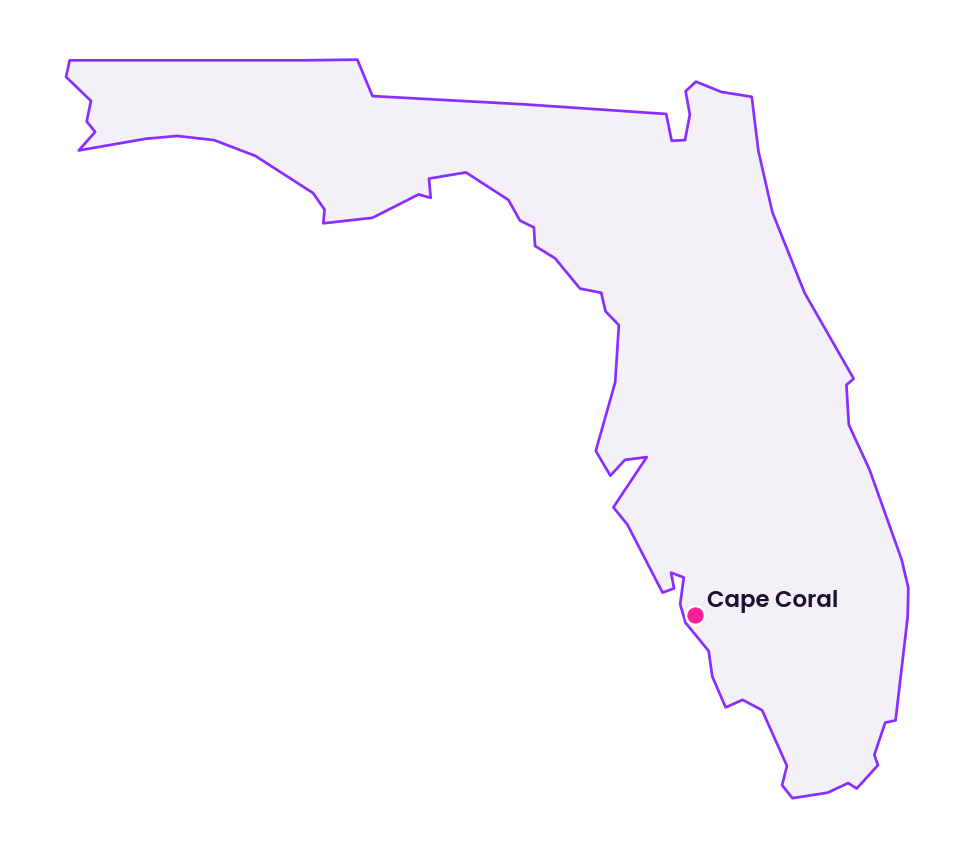
Cape Coral is a rapidly developed coastal city in Lee County on the southwest coast of Florida. Public data from the United States Census Bureau and the American Community Survey show that the city has grown from a small planned community into a sizable city within the Cape Coral Fort Myers metropolitan area, with population concentrated in low rise neighborhoods built around an extensive canal network.
The Bureau of Labor Statistics, the Bureau of Economic Analysis, and Lee County data describe an economy that relies on services, construction, health care, tourism, and retirement related spending, with many residents commuting within the metro. This review does not restate numeric series even where they exist publicly, and instead provides a structured, qualitative analysis grounded in those named public sources.
The housing stock in Cape Coral is dominated by single family homes, including many waterfront houses along canals, with a growing but still limited inventory of traditional multifamily rental product compared with more urban Florida metros. Single family homes serve both owner occupants and a large pool of investors who operate long term rentals and seasonal rentals. Multifamily and apartment style housing is more concentrated in certain corridors and in nearby Fort Myers. Commercial real estate is scaled to the local population and …
Section 01Executive Summary
Cape Coral is a rapidly developed coastal city in Lee County on the southwest coast of Florida. Public data from the United States Census Bureau and the American Community Survey show that the city has grown from a small planned community into a sizable city within the Cape Coral Fort Myers metropolitan area, with population concentrated in low rise neighborhoods built around an extensive canal network. The Bureau of Labor Statistics, the Bureau of Economic Analysis, and Lee County data describe an economy that relies on services, construction, health care, tourism, and retirement related spending, with many residents commuting within the metro. This review does not restate numeric series even where they exist publicly, and instead provides a structured, qualitative analysis grounded in those named public sources.
The housing stock in Cape Coral is dominated by single family homes, including many waterfront houses along canals, with a growing but still limited inventory of traditional multifamily rental product compared with more urban Florida metros. Single family homes serve both owner occupants and a large pool of investors who operate long term rentals and seasonal rentals. Multifamily and apartment style housing is more concentrated in certain corridors and in nearby Fort Myers. Commercial real estate is scaled to the local population and visitor flows, with neighborhood and corridor retail, medical and professional office, and flex and light industrial space that supports services and small scale logistics.
Cape Coral’s real estate market is heavily influenced by climate and physical risk. The city experienced significant impacts from major hurricanes in recent years, and public information from the Federal Emergency Management Agency, the National Oceanic and Atmospheric Administration, and Lee County confirms that storm surge, wind, and flood are central considerations for any asset. Insurance availability and premium levels are therefore a key determinant of investment performance alongside rents, vacancy, and capitalization rates.
For accredited investors, Cape Coral offers a mix of growth oriented and yield oriented opportunities tied to population inflows to southwest Florida and to lifestyle driven demand. At the same time, it presents elevated climate and insurance risks, a tax and infrastructure profile typical of Florida municipalities that rely on property taxes and fees, and a housing market that can be cyclical because of its concentration in discretionary, retirement, and second home demand. The following sections walk through population and migration, jobs and income, housing and multifamily, rents and vacancy, supply, single family, commercial real estate, capital markets, taxes and insurance, regulation, infrastructure, climate and physical risks, submarkets, and then frame opportunities, risks, and investor implications.
Section 02Population and Migration
United States Census Bureau decennial census counts and Population Estimates Program data classify Cape Coral as one of the larger cities in Florida by population, and multi year American Community Survey results show that the city has experienced strong population growth since the early two thousands. City level estimates indicate that the population has increased as undeveloped platted lots have been built out and as households have relocated from other states and regions, particularly from northern and midwestern states. Exact population numbers and growth rates from those series are not restated in this environment, but the directional trend is clear.
At the metro scale, Cape Coral belongs to the Cape Coral Fort Myers metropolitan area in Lee County. County level population estimates show significant growth over the past several decades, driven by net domestic in migration and net international in migration as well as natural increase. The county has attracted retirees, second homebuyers, and working age households employed in services, health care, and construction. Within Lee County, Cape Coral functions largely as a residential city with a limited industrial base and significant bedroom community characteristics.
Migration into Cape Coral has been influenced by Florida’s absence of a state personal income tax, the appeal of waterfront and warm climate living, and relative affordability compared with some other coastal Florida cities. The city’s development pattern of pre platted lots has allowed for rapid construction during growth phases, while infrastructure and environmental constraints have shaped which areas have been built at any given time.
For investors, these population and migration patterns support a long term demand story for housing and services, but they also imply sensitivity to macroeconomic conditions, tax policy in origin states, and perceptions of climate risk. Growth is highly dependent on continued attractiveness to retirees and remote or flexible workers, and on the ability of the metro to support service and health care employment for working age residents.
Section 03Jobs and Economic Anchors
The Bureau of Labor Statistics publishes employment and unemployment data at the metropolitan level for the Cape Coral Fort Myers area, and the Bureau of Economic Analysis provides gross domestic product by metropolitan area and by industry. Together, these sources show that the regional economy relies heavily on services, with significant employment in leisure and hospitality, retail trade, construction, health care and social assistance, real estate and rental and leasing, and other personal and business services. Manufacturing and large scale corporate offices play a smaller role than in many inland metros.
Within Cape Coral, employment is concentrated in local retail and services, schools, medical offices, city government, and small businesses. Many residents commute across the bridges into Fort Myers and other parts of Lee County for jobs in hospitals, regional retail centers, offices, and service establishments. The metro also benefits from tourism and seasonal residents, who support hospitality, dining, and recreational activities.
Public data from the Bureau of Economic Analysis show that real gross domestic product for the Cape Coral Fort Myers metro has grown over time in line with population and construction cycles, with notable swings around housing and economic downturns. Construction and real estate have contributed a meaningful share of output, indicating that the metro is exposed to housing cycles and external capital flows.
For multifamily and commercial investors, the job base implies that tenant incomes are concentrated in service, health care, construction, and small business activities rather than in high wage corporate or technology sectors. This supports strong demand for moderate rent housing during growth periods, but it also introduces risk that rent levels cannot grow too quickly relative to wages without raising affordability concerns and higher turnover. Office demand is local and service oriented rather than driven by large national tenants, and industrial demand is focused on local distribution and services rather than national logistics hubs.
Section 04Income
American Community Survey estimates for Cape Coral and Lee County provide information on median household income, per capita income, and income distributions. While specific current values from those sources are not restated here, the pattern described by the survey is that median household income in Cape Coral is similar to or modestly above statewide Florida medians, with significant variation by age group and neighborhood. Retiree households often have fixed but stable incomes from pensions, Social Security, and investment income, while working age households derive income from local jobs in health care, retail, hospitality, construction, and professional services.
Income distribution data show that Cape Coral, like many Florida coastal communities, has a mix of middle income households and higher income households, along with a group of lower income renters and workers in lower wage service roles. Public housing and deeply subsidized units are relatively limited in Cape Coral itself, though the metro as a whole includes some income restricted and voucher assisted housing.
Area median income figures from the Department of Housing and Urban Development for the Cape Coral Fort Myers metro, published annually for housing program purposes, are higher than many non coastal Florida metros due to the presence of retirees and higher income residents, but they still reflect the service based nature of the local economy. These area median income values set the framework for affordable housing targeting and for agency underwriting of multifamily properties.
For investors, income levels and distributions condition rent and price strategies. Class A multifamily and higher end single family rentals can target households with higher incomes, but the pool of such households is not unlimited. Workforce and affordable rental housing that aligns rents with the incomes of service and health care workers has durable demand, especially when located near jobs and services. Aggressive rent increases that are not supported by local incomes or by inflows of higher income renters can lead to higher vacancy and collection risk.
Section 05Housing and Multifamily
Cape Coral’s housing landscape is distinctive because of its development history. The city was platted with an extensive grid of lots and canals, leading to a housing stock dominated by single family detached homes on individual lots, many of them waterfront or with canal access. Census and American Community Survey data confirm a high share of single family structures compared with many urban areas. Multifamily housing and traditional apartment complexes exist but form a smaller share of units than in more urban Florida metros.
That said, multifamily is still present and important, especially for renters who are not in a position to own a home. Multifamily properties in and near Cape Coral tend to be low or mid rise, often garden style or courtyard configurations, located along main roads or near commercial nodes. Additional rental housing exists in the form of duplexes, triplexes, and small multi unit properties embedded in single family neighborhoods, along with a significant number of condominiums and townhomes that function as rentals.
At the metro scale, nearby Fort Myers and other Lee County municipalities provide additional multifamily stock, including some larger communities with more institutional characteristics. Private data from CoStar, Yardi Matrix, and RealPage, which this environment cannot query, report on rents, occupancy, and property level characteristics across these assets.
For investors, the relatively small traditional multifamily base in Cape Coral means that institutional multifamily opportunities may be more limited in number and size than in larger metros. Many rental opportunities are in smaller properties or scattered site single family portfolios. However, the predominance of single family and the persistent demand from retirees, seasonal residents, and workers can create favorable conditions for thoughtfully selected multifamily assets, especially when combined with professional management and capital investment to maintain or enhance quality.
Section 06Rents
Multifamily and rental housing rents in Cape Coral are shaped by the city’s role as a coastal lifestyle community, the composition of its housing stock, and competition from ownership. Public data from the American Community Survey on gross rent levels in the city and metro indicate that median rents are higher than in many inland Florida metros but still below the highest levels seen in major coastal cities. The survey distributions show a significant share of households paying moderate rents that align with local incomes, along with a subset whose rent burdens are high relative to income.
Private data from CoStar, Yardi Matrix, RealPage, Zillow, and Redfin, which cannot be accessed here, report asking and effective rents by property class and location. In general, newer and amenity rich multifamily communities and well located condominiums in or near Cape Coral command higher rent levels, while older small scale properties and units farther from the waterfront or main corridors have lower rents.
Seasonal demand plays a role in parts of the market. Some owners operate units as seasonal rentals, especially during winter months when visitors from colder states arrive. These units often command higher monthly effective rents but suffer from vacancy in off seasons, and they may rely on online platforms or seasonal leasing.
For investors in long term rentals, the key is to set rents that balance income goals with local market absorption capacity. Attempting to push rents to seasonal or short term rental levels in long term leases can result in more frequent turnover, while underpricing relative to market can leave value on the table. Fair market rent benchmarks from the Department of Housing and Urban Development for the metro provide a reference point for what is considered typical rent for modest units, and can be used in combination with private data to calibrate expectations.
Section 07Vacancy
Vacancy dynamics in Cape Coral are influenced by the mix of owner occupied housing, long term rentals, and seasonal or short term rentals. The American Community Survey reports rental vacancy rates for the city and the metro, which in many years have been moderate, but these measures combine many different unit types and usage patterns. Private multifamily datasets provide more targeted vacancy information for professionally managed properties, though those numbers are not accessible in this environment.
Structurally, long term rental vacancy in stable neighborhoods tends to be relatively low when local employment is healthy and when in migration is strong, as households seek housing options in a limited multifamily stock environment. In periods following major storms, vacancy can temporarily shift as units are damaged, repaired, or rebuilt, and as some residents relocate. Seasonal and short term rental vacancy patterns are different, with high occupancy in peak tourist and snowbird seasons and lower occupancy in off seasons.
For investors, vacancy assumptions in underwriting should differentiate between property types and strategies. A long term multifamily asset or single family rental portfolio serving local workers and year round residents can be underwritten with stabilized vacancy in line with other Florida metros of similar scale, adjusted for local conditions. Seasonal or furnished rentals need a different model that reflects off season vacancy and operational intensity. Storm and reconstruction cycles also need to be considered, as major events can temporarily reduce effective supply and then create increased demand for undamaged units.
Section 08Supply Pipeline
Cape Coral’s supply pipeline consists primarily of single family home construction, with some multifamily and mixed use projects. City planning and permitting portals, along with Census building permits data for Lee County, show that the city experiences waves of construction activity that correspond to housing cycles and population inflows. When demand and capital are strong, builders move quickly to construct homes on platted lots, especially in areas where infrastructure is in place. When conditions weaken, building permits and starts can decline sharply.
Multifamily development in Cape Coral itself is more limited, but projects occasionally come forward on larger sites along main roads or in locations near commercial centers. Because the number of such sites is modest, and because zoning can restrict multifamily in predominantly single family neighborhoods, the pipeline of traditional multifamily communities within Cape Coral is less deep than in some other Florida markets. Nearby Fort Myers and other Lee County municipalities add to the regional multifamily pipeline.
This pattern has two main implications for investors. First, the single family share of new supply remains high, which affects both for sale and rental markets. Second, the scarcity of new multifamily construction in some periods can support occupancy and rent levels in existing communities, as long as overall demand remains strong. Investors must review city and county records for current permit volumes and projects to gauge competition.
Section 09Single Family Homes
Single family homes are the dominant asset in Cape Coral and the primary focus of many investors. Census data and Lee County property appraiser records confirm that most residential parcels in Cape Coral are single family lots, many on canals or waterfronts. Private real estate data from Zillow, Redfin, and local multiple listing services provide detailed information on median sale prices, list to sale ratios, inventory, and months of supply at city and neighborhood levels, though those exact numbers are not restated here.
Historically, Cape Coral single family prices have been volatile compared with some inland markets, reflecting the city’s exposure to housing cycles and investor and retiree demand. During national housing booms, Cape Coral has seen rapid price appreciation and extensive construction, followed by significant price corrections during downturns. More recent cycles have shown renewed price gains as remote work and tax migration trends have favored Florida, with some moderation as interest rates have risen.
Inventory and months of supply metrics fluctuate with these cycles. In strong demand periods with limited new inventory, months of supply can fall to levels that indicate strong seller conditions, while in corrections they can rise, particularly in neighborhoods with many investor owned properties.
For investors, single family rental strategies in Cape Coral can follow several paths. One is acquiring more modest inland homes and renting to local workers and families as long term rentals. Another is acquiring waterfront or higher value homes and renting to higher income households, either as long term or seasonal rentals. A third is participating in new construction communities as a build to rent investor where that model is applied. Each path requires careful attention to purchase price, property taxes, insurance, maintenance, management, and vacancy, as well as to climate resilience. Outcomes depend on purchase basis, alignment of rents with realistic tenant demand, and cost control, and no particular return is assured.
Section 10Commercial Real Estate and Retail Centers
Commercial real estate in Cape Coral is composed of neighborhood and corridor retail, small to medium office and medical office buildings, and flex and light industrial properties. Because the city’s economy is service oriented and integrates with Fort Myers and the broader Lee County region, many larger scale commercial assets and corporate offices are located elsewhere in the metro, while Cape Coral itself focuses on local services and retail.
Retail centers in Cape Coral include grocery anchored neighborhood centers serving residential areas, strip centers along major roads with a mix of restaurants, personal services, and local shops, and some larger centers with big box and specialty tenants. Grocery anchored centers tend to perform relatively well, as residents rely on them for daily needs, while centers that depend on discretionary or niche tenants can see more turnover.
Office space includes small buildings for professional services, medical practices, and local businesses, often located near main roads and health care facilities. Larger regional medical centers and hospital campuses in Lee County provide demand for medical office both within and near Cape Coral. Traditional multi tenant office towers are less common than in larger metros.
Industrial and logistics real estate within Cape Coral is limited compared with more industrial municipalities in Lee County, but there are flex and light industrial properties that house contractors, distribution, storage, and small manufacturing.
Private commercial data from CoStar and brokerage firms report vacancy, rents, and capitalization rates for these property types, but numeric values are not available here. Qualitatively, capitalization rates for Cape Coral commercial properties are higher than for prime coastal core markets, reflecting local tenant bases and growth expectations, though yields alone do not determine outcomes and returns are not assured.
Section 11Transactions and Capital Markets
Transaction activity and capital flows in Cape Coral are recorded in Lee County property records and aggregated by private data providers such as CoStar and MSCI Real Assets. Publicly, there is no single, current, fully aggregated numeric dataset of Cape Coral commercial and multifamily transaction volumes and capitalization rates that is accessible in this environment, so this discussion remains qualitative.
Historically, Cape Coral has attracted a mix of local and out of state capital, particularly in single family and small multifamily investments. Periods of national housing and credit expansion have brought in significant investor interest, including from individuals and funds seeking to acquire homes and small rental portfolios. Commercial and multifamily assets of institutional scale within the city are fewer, but the broader metro sees activity from regional and national investors in retail and medical office.
Capital costs and availability for Cape Coral properties reflect national conditions, Florida specific risk perceptions, and lender views on climate and insurance risk. Lending for stabilized multifamily and commercial properties is available from banks, credit unions, and in some cases agencies and life companies when assets meet criteria, but leverage levels and pricing are sensitive to insurance and operating risk assessments.
Because no official public information is accessible here that summarizes current transaction metrics, investors should rely on up to date proprietary datasets and local brokerage insight when forming specific pricing and capitalization rate expectations.
Section 12Taxes
Florida’s tax structure is a key element in the attractiveness of Cape Coral for residents and investors. The state does not levy a personal income tax, and relies instead on sales taxes, corporate income taxes, fees, and property taxes. State tax administration is handled by the Florida Department of Revenue.
Property taxes in Cape Coral are administered at the county level by the Lee County Property Appraiser and collected by the Lee County Tax Collector. Properties are assessed at just value, subject to statutory provisions for homestead exemptions and caps on annual assessment increases for owner occupied primary residences. Non homestead residential properties and commercial properties do not benefit from the same degree of assessment cap, making their assessed values more responsive to market value changes.
Local millage rates include levies from Lee County, the City of Cape Coral, the school district, and special districts. Effective property tax burdens for investors in non homestead and commercial properties can be significant in absolute dollars because of property values, even if nominal rates are competitive compared with some other states.
Sales taxes in Lee County consist of the state rate plus local option surtaxes, which affect consumer prices and retail tenant operating costs but are still moderate compared with total tax burdens in high income tax states.
For investors, property taxes must be modeled carefully at the parcel level, taking into account current assessed values, exemptions, millage rates, and likely future assessment increases, especially after acquisition when just value reassessments may occur. This review does not state specific numeric tax rates, because those are best confirmed against current Florida Department of Revenue and Lee County schedules for the relevant year.
Section 13Insurance
Insurance is a central concern in Cape Coral real estate because of exposure to hurricanes, tropical storms, storm surge, wind, and flood. The Florida Office of Insurance Regulation and the Florida Department of Financial Services monitor the property insurance market statewide, while insurers, reinsurers, and residual market mechanisms determine the availability and cost of coverage.
Coastal and canal front properties in Cape Coral are at higher risk of storm surge and flood, as documented by Federal Emergency Management Agency flood maps and hurricane inundation models. Properties in special flood hazard areas must carry flood insurance if they have federally related mortgages, and even properties outside mapped zones may be vulnerable to intense rainfall and drainage issues. Flood insurance can be obtained through the National Flood Insurance Program or private carriers, and premiums depend on elevation, construction, mitigation features, and updated mapping.
Wind and hurricane insurance is often provided as part of homeowners and commercial property policies, sometimes with separate deductibles and coverage limits for named storms. Insurers in Florida have faced significant losses from past storms, fraud, and litigation, leading to carrier exits, failures, or reduced underwriting appetites, and to rising premiums and deductibles in many coastal markets.
For investors in Cape Coral, insurance expenses are a major and highly variable line item. Underwriting should include current quotes for property and flood insurance, realistic assumptions about future premium increases, and consideration of risk mitigation measures such as roof upgrades, impact windows, elevation improvements, and flood barriers. In some cases, insurance availability may constrain financing options, as lenders require certain coverage levels.
Section 14Landlord Tenant and Regulatory Environment
Florida law establishes the landlord tenant framework for residential and commercial properties, including lease requirements, security deposit handling, maintenance obligations, notice periods, and processes for addressing breaches and evictions. Compared with more heavily regulated states, Florida is generally considered favorable to property owners, but compliance with all statutory requirements is essential.
Cape Coral, as a city, operates within this statewide framework. There is no citywide rent control, and rents for market rate units are determined by market conditions and lease terms. Some properties may participate in federal housing programs or state and local affordable housing initiatives, which bring their own rent and income restrictions, but most market rate housing operates under contract law and general residential landlord tenant statutes.
Eviction procedures follow Florida court processes and have specific notice and filing requirements. During recent public health emergencies, temporary eviction protections were enacted at federal and sometimes state levels, but these measures have been phased out or altered.
For landlords and investors, Cape Coral offers regulatory predictability in many respects, as long as state statutes and local codes regarding habitability, safety, and property maintenance are followed. At the same time, enhanced scrutiny of insurance and building codes in coastal Florida can lead to more stringent inspection and retrofit requirements over time, which affect operating and capital costs.
Section 15Infrastructure
Cape Coral’s infrastructure network is central to its functioning as a residential city. The city’s road system is a grid of local streets, arterials, and connections to bridges that link Cape Coral to Fort Myers and other parts of Lee County. Daily commuting for work and services often requires travel across these bridges, and congestion can develop at peak periods.
Public transit options within Cape Coral and the wider metro are more limited than in dense urban metros, with regional bus services providing some connectivity. Private vehicles remain the primary mode of transportation for most residents.
Cape Coral’s extensive canal system is both a recreational and stormwater feature. Canals and associated drainage systems help manage rainfall and provide waterfront amenities, but they also create challenges for infrastructure such as roads and utilities that must cross or navigate around waterways.
Water, sewer, and stormwater services are provided by municipal utilities and are critical in a growing coastal city. Expansion of central water and sewer infrastructure has historically lagged behind platted lot development in some areas, resulting in phases of extension projects and associated assessments and fees. Electric and telecommunications infrastructure is provided by regional utilities and providers, with ongoing efforts to improve resilience and capacity.
For investors, infrastructure quality and access influence property desirability and operating costs. Properties in areas with central utilities, good road access, and proximity to services and employment centers hold advantages. Properties in areas awaiting utility extensions or that face infrastructure capacity limits may see higher development and operating costs.
Section 16Climate and Physical Risks
Cape Coral faces significant climate and physical risks. The National Oceanic and Atmospheric Administration and the Federal Emergency Management Agency identify southwest Florida, including Cape Coral, as vulnerable to hurricanes and tropical storms that bring strong winds, storm surge, and heavy rainfall. Recent significant storms have affected Cape Coral and neighboring communities, causing widespread property damage, power outages, and disruptions to services.
Storm surge modeling shows that low lying areas near canals and the Caloosahatchee River are particularly at risk during major storms, while inland parts of the city may face more wind and rainfall related damage. Sea level rise projections indicate that baseline water levels will increase over time, which can exacerbate storm surge and saltwater intrusion, and affect drainage and groundwater.
Intense rainfall events, even outside tropical systems, can overwhelm drainage capacity, leading to localized flooding. High heat and humidity create additional stress on building systems and residents, increasing cooling loads and energy use.
For real estate investors, these risks translate into several concerns. Physical damage to structures and infrastructure can lead to capital losses and business interruption. Insurance costs and availability are influenced directly by risk assessments. Building codes and resilience requirements may become more stringent, necessitating upgrades and retrofits. Investor and lender perceptions of climate risk may affect liquidity and pricing for assets in higher risk zones.
Investors should integrate climate risk analysis into acquisition and asset management, using Federal Emergency Management Agency maps, local hazard assessments, and engineering evaluations, and should consider the relative risk profiles of different neighborhoods and elevations within Cape Coral.
Section 17Neighborhoods and Submarkets
Cape Coral’s neighborhoods and submarkets can be understood through their geography, vintage, and proximity to water, services, and employment. The city is often divided informally into quadrants or sections that differ in development stage, infrastructure, and housing stock. While numeric data for each submarket are not presented here, the relative characteristics can be summarized in words.
Waterfront canal neighborhoods closer to the bridges are driven by access to canals and boating, proximity to Fort Myers and regional services, and lifestyle appeal. Their housing stock consists of single family homes, many with docks and pools, along with some higher value redeveloped properties, and they carry high property and insurance costs, strong lifestyle demand, and high sensitivity to storm surge and flood risk. Central inland neighborhoods with established infrastructure serve year round residents, families, and local workers with moderate access to services. Their stock includes single family homes on interior lots, some duplexes and small multifamily, and properties of varied ages and conditions, and they offer more moderate pricing, steady demand from the local workforce, and less direct storm surge risk, though they remain exposed to wind and rainfall. Outlying areas with newer or incomplete buildout are driven by future growth potential, lower entry prices, and speculative development. Their stock is newer single family construction on platted lots, some vacant lots, and limited multifamily, and their infrastructure may be less complete, with demand tied to ongoing in migration and sensitivity to construction and market cycles.
For multifamily and commercial investors, central locations with established infrastructure and access to roads, schools, and retail offer a balance between demand and risk. Waterfront areas offer potential for higher rents and prices but with higher climate and insurance risk. Outlying areas may present land and development opportunities but require confidence in long term growth and infrastructure extensions.
Section 18Opportunities
Cape Coral presents several opportunity themes for accredited investors with appropriate risk tolerance. In residential, one key opportunity is the acquisition and professional management of scattered site single family rentals in central neighborhoods that serve year round workers and families. These assets may offer cash flow when purchased at a reasonable basis and managed efficiently.
Another opportunity lies in carefully selected multifamily properties and small communities that serve workforce tenants and retirees who prefer rental living. Properties that are elevated, built to higher construction standards, and located in less flood exposed zones can be positioned as resilient alternatives, which may gain value over time as climate awareness increases.
On the commercial side, grocery anchored neighborhood centers and well located strips serving growing neighborhoods may provide relatively stable income, as long as tenant credit and lease structures are sound. Medical office and health care related facilities may benefit from demographic trends toward an older population and continued expansion of health care services in the metro.
Development opportunities exist in selected infill or redevelopment sites, particularly those that can deliver resilient, code compliant housing or small mixed use projects in under served locations. However, development risk in Cape Coral is elevated by construction cost volatility, insurance and financing constraints, and climate risk, so it suits sponsors with strong local capabilities and capital structures. The observations in this section are general and educational, are not projections, forecasts, or assurances of any particular return, yield, occupancy, rent level, or appreciation, and any specific investment must be evaluated on its own facts.
Section 19Risks
Risks in Cape Coral are substantial and must be weighed carefully against opportunities. Climate and physical risk is foremost. Hurricanes, storm surge, flood, and sea level rise can threaten asset integrity, infrastructure, and livability. Insurance risk is closely linked, as premiums and deductibles may rise, coverage may become more limited, and carriers may change their appetite for certain property types or locations.
Market risk includes exposure to swings in retirement and second home demand, sensitivity to interest rates, and reliance on continued in migration. The local economy’s dependence on services, health care, construction, and tourism means that national and regional economic downturns can have outsized effects on employment and housing demand.
Liquidity risk is also relevant. While Florida in general and southwest Florida in particular have attracted significant investor attention, liquidity for specific asset types in Cape Coral can vary, especially for larger commercial properties or for assets in less central locations.
Regulatory and policy risk encompasses potential changes in state insurance frameworks, building codes, land use regulations, and local fees and assessments for infrastructure. While Florida is generally perceived as supportive of property development, responses to climate and infrastructure challenges could alter cost structures. Real estate investments are speculative, are subject to market, financing, liquidity, tax, regulatory, insurance, and physical hazard risks, and can result in the loss of some or all of an investor's invested capital, including the possible loss of principal.
Section 20Investor Implications
For accredited investors, Cape Coral should be approached with a strategy that integrates growth exposure with explicit risk management. Returns will be driven not only by rent and price appreciation but also by the ability to control operating costs, particularly insurance and property taxes, and by resilience to climate events.
Investors should prioritize submarkets and properties with relatively lower physical risk within the city, such as elevated sites and buildings with strong construction and mitigation features. They should target tenant segments whose incomes and housing preferences align with the rent and product being offered, including year round workers, retirees, and long stay seasonal residents. They should adopt capital structures with moderate leverage and adequate reserves to withstand climate events, insurance shocks, and market downturns. They should build partnerships with local experts in insurance, engineering, property management, and legal matters to navigate the specificities of Cape Coral and Lee County. Finally, they should pursue diversification across property types and geographies so that exposure to Cape Coral’s climate and market risks is balanced within broader portfolios.
In some cases, Cape Coral may be best suited for selective allocations within a larger Florida or Sunbelt strategy, rather than as a primary focus, given the magnitude of climate and insurance uncertainties. Nothing in this section is a recommendation to pursue any specific strategy or investment, and there is no assurance that any objective or outcome described will be achieved.
Section 21Conclusion
Cape Coral, Florida is a distinctive coastal city with a strong lifestyle appeal, a rapidly developed single family housing stock, and growing but still modest multifamily and commercial real estate sectors. Public data and market experience indicate that the city has benefited from sustained in migration, favorable state tax conditions, and demand from retirees and remote workers. At the same time, it faces serious climate and insurance challenges, and its economic base is concentrated in service and retirement oriented sectors.
For accredited investors, Cape Coral may offer income and appreciation potential in carefully chosen single family, multifamily, and commercial assets, particularly in locations that balance demand access with risk mitigation, though no particular outcome or return is assured. These opportunities come with heightened downside risks related to climate, insurance, and market cycles. A prudent approach requires conservative underwriting, detailed physical and regulatory due diligence, and integration of Cape Coral allocations into a diversified portfolio.
Any investment decision should be informed by current, property specific data from the public sources cited below and from reputable private datasets, combined with engineering assessments and on the ground knowledge.
Sources
- United States Census Bureau, QuickFacts, Cape Coral city Florida,, https://www.census.gov/quickfacts/fact/table/capecoralcityflorida
- United States Census Bureau, American Community Survey one year and five year estimates, Cape Coral city and Lee County Florida,, https://www.census.gov/programs-surveys/acs
- United States Census Bureau, Population and Housing Unit Estimates, Lee County Florida and Cape Coral Fort Myers metro,, https://www.census.gov/programs-surveys/popest.html
- United States Census Bureau, Building Permits Survey, Lee County Florida,, https://www.census.gov/construction/bps
- United States Bureau of Labor Statistics, Economy at a Glance, Cape Coral Fort Myers FL metropolitan area,, https://www.bls.gov/eag/eag.fl_capecoral_msa.htm
- United States Bureau of Labor Statistics, Local Area Unemployment Statistics, Lee County Florida,, https://www.bls.gov/lau
- United States Bureau of Economic Analysis, Gross Domestic Product by Metropolitan Area, Cape Coral Fort Myers FL,, https://www.bea.gov/data/gdp/gdp-metropolitan-area
- United States Bureau of Economic Analysis, Personal Income by County, Lee County Florida,, https://www.bea.gov/data/income-saving/local-area-personal-income
- United States Department of Housing and Urban Development, Office of Policy Development and Research, Fair Market Rents and income limits, Cape Coral Fort Myers FL,, https://www.huduser.gov
- Federal Housing Finance Agency, House Price Index, Florida and Cape Coral Fort Myers metro,, https://www.fhfa.gov/DataTools/Downloads/Pages/House-Price-Index.aspx
- Lee County Property Appraiser, parcel search and assessment information,, https://www.leepa.org
- Lee County Tax Collector, property tax billing and payment information,, https://www.leetc.com
- City of Cape Coral, Community Development and Planning Division,, https://www.capecoral.gov/department/community_development
- Florida Housing Finance Corporation, statewide housing programs and research,, https://www.floridahousing.org
- Florida Department of Revenue, property tax and state tax information,, https://floridarevenue.com
- Florida Office of Insurance Regulation, property insurance market information,, https://www.floir.com
- Federal Emergency Management Agency, Flood Map Service Center, Cape Coral and Lee County Florida,, https://msc.fema.gov
- Federal Emergency Management Agency, National Risk Index, Lee County Florida,, https://hazards.fema.gov/nri
- National Oceanic and Atmospheric Administration, climate and hurricane data for southwest Florida,, https://www.ncei.noaa.gov
- CoStar Group, Cape Coral and Lee County multifamily, retail, office, and industrial market analytics,, https://www.costar.com
- Yardi Matrix, Southwest Florida multifamily market reports,, https://www.yardimatrix.com
- RealPage, Southwest Florida multifamily analytics,, https://www.realpage.com/analytics
- Zillow, Cape Coral Florida housing market and rental data,, https://www.zillow.com/research/data
- Redfin, Cape Coral Florida housing market data,, https://www.redfin.com/news/data-center