In brief · summary: Cleveland
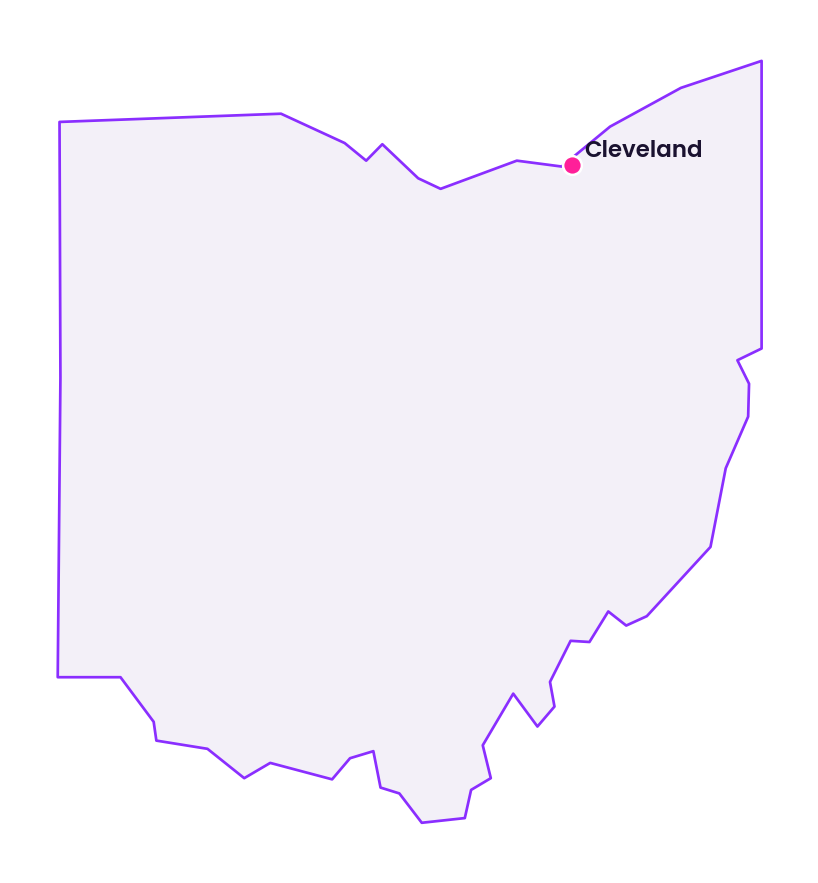
Cleveland is a legacy industrial city on the southern shore of Lake Erie and the urban core of the Cleveland Elyria metropolitan area. Public information from the United States Census Bureau, the American Community Survey, the Bureau of Labor Statistics, the Bureau of Economic Analysis, the United States Department of Housing and Urban Development, and Ohio and local agencies portrays a region that has moved from heavy manufacturing concentration toward a more diversified base built around healthcare, higher education, advanced manufacturing, business services, and logistics.
City level population and employment remain below late twentieth century peaks, but select neighborhoods near the central business district, University Circle, and the lakefront have stabilized or grown, while many east side and outlying areas continue to face disinvestment. For real estate, Cleveland offers a multifamily market that is small in national terms but important regionally, with institutional scale assets downtown and in University Circle, and a much larger stock of older small multifamily and two and three family properties in neighborhoods.
Single family homes and small rentals dominate much of the housing stock, with home values and rents that are moderate in national comparison but still challenging for many local households. Commercial real estate includes a central business district office core with elevated vacancy, …
Section 01Executive Summary
Cleveland is a legacy industrial city on the southern shore of Lake Erie and the urban core of the Cleveland Elyria metropolitan area. Public information from the United States Census Bureau, the American Community Survey, the Bureau of Labor Statistics, the Bureau of Economic Analysis, the United States Department of Housing and Urban Development, and Ohio and local agencies portrays a region that has moved from heavy manufacturing concentration toward a more diversified base built around healthcare, higher education, advanced manufacturing, business services, and logistics. City level population and employment remain below late twentieth century peaks, but select neighborhoods near the central business district, University Circle, and the lakefront have stabilized or grown, while many east side and outlying areas continue to face disinvestment.
For real estate, Cleveland offers a multifamily market that is small in national terms but important regionally, with institutional scale assets downtown and in University Circle, and a much larger stock of older small multifamily and two and three family properties in neighborhoods. Single family homes and small rentals dominate much of the housing stock, with home values and rents that are moderate in national comparison but still challenging for many local households. Commercial real estate includes a central business district office core with elevated vacancy, a network of industrial and logistics properties along interstate corridors and near the port and airport, and a retail landscape anchored by grocery and daily needs centers in viable neighborhoods and suburban nodes.
This review does not restate specific point figures, even though they are available in the named public sources, and instead focuses on the structure of Cleveland’s economy and real estate markets, the relative position of the city within Cuyahoga County and the metro, and the qualitative implications for accredited investors who use current data from the cited sources as part of their own underwriting.
Section 02Population and Migration
According to United States Census Bureau decennial counts and annual Population Estimates for Cleveland city and Cuyahoga County, the city has experienced long run population decline from its mid twentieth century high, followed by a period of slower loss and some localized stabilization in recent years. American Community Survey one year and five year estimates for Cleveland city and for Cuyahoga County show that the city remains significantly smaller in population than in past decades, while the surrounding suburban communities in Cuyahoga and neighboring counties have held more of their population base.
Census county and metro level components of change indicate that the Cleveland Elyria metro has seen a combination of modest net domestic out migration, modest international in migration, and natural change that together produce very low net growth at the regional level. Within that pattern, Cleveland city has tended to lose residents to suburban jurisdictions and to other states, while receiving a share of international migrants and students.
Age distribution data from the American Community Survey for Cleveland city and Cuyahoga County show a relatively high share of older residents compared with national averages, and a meaningful presence of college age and young adult residents around major universities and medical centers. Many neighborhoods away from those anchors tend to have older populations and lower household sizes.
For investors, these population and migration patterns mean that demand is not evenly distributed across the city. Neighborhoods near downtown, the Flats, Ohio City, Tremont, and University Circle have seen renewed demand from professionals, students, and empty nesters, while many east side residential areas and some west side corridors continue to lose residents and maintain high vacancy and low property values. The metro is better understood as a set of micro markets, some with stable or rising population and others with structural decline, rather than as a uniformly growing region.
Section 03Jobs and Economic Anchors
The Bureau of Labor Statistics state and area employment series and Economy at a Glance pages for the Cleveland Elyria metropolitan area, along with Bureau of Economic Analysis gross domestic product by metro data, show that the region has a diversified but service oriented economy, with deep strengths in healthcare and social assistance, education, manufacturing, professional and business services, finance and insurance, and trade transportation and utilities.
Healthcare and higher education are the dominant anchors. The Cleveland Clinic system, University Hospitals, MetroHealth, and other providers, together with Case Western Reserve University and Cleveland State University, form a dense medical and educational cluster in and around University Circle and the central city. Bureau of Labor Statistics industry employment data for the metro indicate that education and health services account for a larger share of nonfarm employment here than in many peer metros, which underpins steady demand for professional and support workers and supports strong housing demand in adjacent neighborhoods.
Manufacturing remains an important component of the regional base. Bureau of Economic Analysis industry output data and Bureau of Labor Statistics manufacturing employment series show that the region still has a sizable footprint in fabricated metals, transportation equipment, chemicals, and plastics and rubber products, even though absolute employment is lower than in earlier decades. Companies such as Cleveland Cliffs, Owens Corning in the broader region, and numerous mid sized manufacturers contribute to this base.
Financial and business services also play a role. Institutions such as KeyCorp and Progressive, along with law and accounting firms, shared services centers, and technology and creative firms, are significant employers. Trade and transportation are supported by the Port of Cleveland on Lake Erie, the interstate network, and Cleveland Hopkins International Airport.
Public sector employment at the city, county, and state levels, together with education, provides additional stability. However, Bureau of Labor Statistics unemployment series historically show that the Cleveland metro has often had higher unemployment rates than national averages during downturns, reflecting industrial sensitivity to the business cycle.
For real estate investors, the strength of healthcare, education, and certain manufacturing and business services clusters supports multifamily and single family demand in specific areas, particularly near University Circle, downtown, and employment corridors. At the same time, the cyclical vulnerability of manufacturing and the region’s slower population growth caution against aggressive growth assumptions.
Section 04Income
American Community Survey one year and five year estimates show that median household income in Cleveland city is significantly below that of Cuyahoga County and below national medians, while the county and metro as a whole have median incomes that are closer to national figures but still reflect a legacy industrial region rather than a high income coastal metro. City income distributions show a high share of households in lower income brackets, and poverty rates in the city that exceed both state and national averages.
Within the county, American Community Survey small area estimates illustrate stark spatial differences. Neighborhoods near downtown, University Circle, and certain west side areas have higher median incomes, often associated with professionals and students in shared housing, while many east side neighborhoods have low incomes and high poverty and unemployment. Suburban communities in Cuyahoga County and neighboring counties report higher incomes and lower poverty rates, which shapes both ownership and rental housing demand.
Bureau of Economic Analysis personal income series for Cuyahoga County and the metro show that wages and salaries in healthcare, education, manufacturing, finance and insurance, and professional services are key components of total personal income, while transfer payments and retirement income account for significant shares in older and lower income communities.
For investors, this income structure has direct implications. Class A multifamily and higher end single family product in the city must target the relatively limited pool of higher income households and students able to pay above average rents. Class B and C properties and workforce housing must be priced carefully to remain affordable to local wage earners, many of whom have modest incomes. Investment theses that assume rapid rent growth at the upper end of the market should be treated with caution, given income constraints and competition from subsidized and naturally affordable stock.
Section 05Housing and Multifamily
Census housing characteristics and American Community Survey data for Cleveland city and Cuyahoga County show an older housing stock with a large share of structures built before the middle of the twentieth century. Single family detached homes, two and three family houses, and small apartment buildings predominate in many neighborhoods, while larger multifamily properties are concentrated downtown, in University Circle, and in select near west and near east side areas.
Cleveland’s multifamily landscape can be grouped into several segments. The first segment consists of downtown and near downtown high and mid rise properties, including renovated historic buildings and newer ground up developments. These assets serve young professionals, some empty nesters, and students and staff who value urban amenities and proximity to employment and culture.
The second segment includes purpose built garden style communities, townhouses, and low rise apartments in inner ring neighborhoods and suburbs within the city limits. Many of these properties date from the post war era and later twentieth century and provide workforce and middle market housing.
The third segment consists of two and three family houses and small apartment buildings scattered through older neighborhoods, particularly on the near west and near east sides. These owner operated or small investor assets play a central role in housing low and moderate income renters.
The final segment includes subsidized and income restricted properties supported by programs administered by the United States Department of Housing and Urban Development, the Ohio Housing Finance Agency, and local agencies. These properties provide housing for low income households, seniors, and persons with disabilities.
Given the age of much of the stock, capital needs are significant. Many properties require investments in roofs, windows, mechanical systems, plumbing, electrical work, and environmental remediation, including lead paint and in some cases asbestos. For institutional investors, the most scalable opportunities tend to lie in larger downtown and University Circle properties and in select garden style communities, while small buildings require more intensive management and local knowledge.
Section 06Rents
Rents in Cleveland reflect the interaction of modest incomes, an aging housing stock, and localized demand surges in some neighborhoods. United States Department of Housing and Urban Development fair market rent benchmarks for the Cleveland Elyria metropolitan area provide reference points for modest quality units of various sizes, with metro level fair market rents for two bedroom units that are below those in higher cost coastal metros but material relative to local income distributions.
American Community Survey gross rent distributions for Cleveland city and Cuyahoga County show that a significant share of renter households pay a large portion of their income toward housing, even though absolute rent levels are modest in national comparison. Incomes at the bottom of the distribution are low enough that even relatively low dollar rents can create rent burden.
Private rental market data from providers such as CoStar, Yardi Matrix, RealPage, Zillow, and Redfin generally report that Class A properties downtown and in University Circle command the highest asking rents in the metro, reflecting newer construction, amenity packages, and central locations. Renovated Class B properties in west side neighborhoods and near University Circle achieve mid level rents that are above the city average but below top tier assets. Older Class B and Class C stock in many neighborhoods rents at lower levels, often at or near the fair market rent thresholds set by the United States Department of Housing and Urban Development, and frequently serves voucher holders and low income households. Student focused properties near University Circle and some western campuses can achieve higher effective rent per bedroom, particularly in new or renovated developments, though preleasing and turnover management are critical.
For investors, rent strategy must be grounded in local incomes and competition. Downtown and University Circle properties can support higher rents but face competition from new and renovated buildings, and are sensitive to changes in office demand and perceptions of safety and amenities. Workforce and affordable housing investments can provide stable occupancy if rents remain aligned with local earnings and if public funding streams are reliable.
Section 07Vacancy
Rental vacancy in Cleveland is highly segmented. American Community Survey rental vacancy rates for Cleveland city and Cuyahoga County show elevated vacancy in some periods relative to national averages, but these aggregate metrics blend strong and weak submarkets and do not fully capture physical distress and abandonment in some neighborhoods.
Private provider data at the property and submarket level typically indicate that well located, professionally managed downtown and University Circle properties tend to maintain relatively low stabilized vacancy following lease up, as long as they are competitively positioned and surrounding amenities remain attractive. Class B properties in stable inner ring neighborhoods near employment and transit often sustain moderate vacancy and steady absorption, with some vulnerability to local employment shifts. Older stock in neighborhoods with declining population and weak amenities can exhibit high structural vacancy, with units kept offline due to condition or lack of demand. Small buildings and scattered site single family rentals may have higher turnover related vacancy, particularly when tenant screening and management resources are limited.
Investors should avoid relying on citywide or countywide vacancy metrics and instead examine submarket level and property level occupancy histories, competitive sets, and neighborhood trajectories. In well chosen locations, it is reasonable to assume low to moderate stabilized vacancy for quality assets, while in more fragile areas underwriting should incorporate higher vacancy and credit loss allowances.
Section 08Supply Pipeline
Residential and multifamily supply in Cleveland can be tracked through the United States Census Bureau Building Permits Survey, which reports permit counts for the Cleveland Elyria metro, and through planning and building department records for the City of Cleveland and Cuyahoga County. Over recent years, building permit data and local planning reports indicate that new multifamily construction has been concentrated in and near downtown, University Circle, and selected west side neighborhoods such as Ohio City and Tremont, often involving mid rise mixed use projects and adaptive reuse of commercial and industrial structures into apartments. There has been limited large scale new multifamily construction in many east side neighborhoods and in older inner ring areas that have weaker market fundamentals, though some projects supported by subsidies and community development initiatives have moved forward. Suburban jurisdictions in the county and in neighboring counties have seen additional multifamily construction, often in garden style or podium formats, serving households who prefer suburban settings. Single family permitting has been modest in the city but more active in some suburban and exurban areas, as greenfield sites and subdivision opportunities are more available there than in the urban core.
For investors, the current supply pipeline suggests that downtown and University Circle may see periods of competitive pressure as new projects deliver, though supply growth remains moderate in national perspective given the region’s slow population growth. Older Class A and well located Class B properties will need to invest in amenities and maintenance to remain competitive. Neighborhoods with limited new supply but stable or improving demand can offer opportunities for acquisitions and measured rent growth.
Section 09Single Family Homes
Single family homes are the dominant residential form across much of Cleveland and surrounding suburbs. American Community Survey housing stock data show that single family detached units, along with two and three family houses, comprise the majority of occupied housing units in Cleveland city and Cuyahoga County, with apartments in larger buildings accounting for a smaller share.
Private sources such as Zillow and Redfin consistently report that median sale prices for homes in Cleveland city are substantially lower than national medians, and also lower than in many suburban communities within the metro. Price levels in many east side and certain west side neighborhoods remain depressed due to historic disinvestment and ongoing population loss, while prices in near west side neighborhoods and in favored suburbs have risen over the last cycle from lower starting points.
Inventory data and months of supply from these providers show that some near west side neighborhoods and select inner ring suburbs have experienced relatively tight for sale inventory and seller friendly conditions, especially for move in ready homes at price points accessible to middle income households. Many distressed neighborhoods have ample inventory at low price points, with longer marketing times and greater condition risk. Investor activity, including small and mid sized investors acquiring single family homes for rental, has been notable in certain areas, particularly where acquisition prices are low relative to achievable rents.
Single family rentals in Cleveland range from individual houses owned by small landlords to scattered site portfolios held by regional investors. Yields can be attractive on paper because of low acquisition costs, but effective returns depend heavily on maintenance, management, tax and utility burdens, and tenant quality.
For accredited investors, single family and small multifamily strategies in Cleveland can focus on portfolios of homes and duplexes in stable or improving neighborhoods near employment, schools, and amenities, where moderate rents can be supported by local incomes. They can involve selective entry into revitalizing areas where improved safety, amenities, and infrastructure support appreciation and rent growth, while recognizing higher volatility. And they generally counsel avoidance of deeply distressed areas where physical and social risks can overwhelm apparent yield advantages.
Section 10Commercial Real Estate and Retail Centers
Cleveland’s commercial real estate environment includes office, industrial and logistics, and retail segments, with demand patterns shaped by legacy urban form, changing workplace habits, and regional trade flows.
Office space is concentrated in the central business district, which hosts government offices, law and accounting firms, financial institutions, and headquarters or major offices for corporations, along with additional clusters in University Circle medical and educational campuses, and in suburban nodes such as Independence and Beachwood. Private data from CoStar, CBRE, JLL, and Cushman and Wakefield generally indicate that downtown office vacancy has risen meaningfully compared with pre pandemic levels, reflecting the shift toward remote and hybrid work, tenant downsizing, and competition from suburban options. Class A buildings with modern systems and amenities fare better, while older properties with functional obsolescence or capital needs are under pressure and may face conversion or extended vacancy. Suburban office markets vary, with some nodes retaining stable occupancy due to convenient access and large floor plates, and others experiencing soft demand.
Industrial and logistics properties benefit from the region’s central location within the eastern half of the United States, access to interstate highways, the port, and the airport. Industrial inventory includes warehouses, distribution centers, manufacturing facilities, and flex buildings. Private market reports suggest relatively healthy occupancy and rent growth in well located industrial submarkets, particularly along interstate corridors and near logistics nodes, with limited new supply relative to demand.
Retail real estate in Cleveland is anchored by grocery and daily needs centers, regional malls, and neighborhood strips. Grocery anchored centers in stable neighborhoods and suburbs generally maintain occupancy and modest rent growth, while malls and discretionary retail centers confront national headwinds from e commerce and shifting consumer behavior. Urban neighborhood retail in revitalizing areas such as parts of Ohio City, Tremont, and Downtown has seen improved tenant mixes and foot traffic, but small business tenant risk remains material.
For investors, commercial opportunities in Cleveland are strongest in industrial and logistics assets in strategic locations, grocery and daily needs retail in resilient trade areas, and selective office investments in high quality buildings with long term anchor tenants or viable conversion paths. Lower quality office and retail assets in challenged areas face significant leasing and valuation risk.
Section 11Transactions and Capital Markets
Publicly accessible, timely quantitative data on transaction volumes, prices, and capitalization rates for Cleveland commercial and multifamily properties are limited, as detailed series are generally maintained by private data providers such as CoStar and MSCI Real Assets. County recorder and auditor records in Cuyahoga County report individual transactions but do not aggregate them into easily usable time series.
Qualitative information from brokerage reports and market commentary suggests that Cleveland is a secondary or tertiary market for national capital, with more limited institutional participation than larger coastal metros but steady regional investor activity. Capitalization rates for stabilized multifamily, industrial, and grocery anchored retail tend to be higher than those in primary markets, reflecting perceived risk, slower growth, and lower liquidity, while still offering spreads over local borrowing costs. Office transaction activity has declined, particularly for older and higher vacancy assets, as underwriting becomes more conservative and lenders apply tighter standards. Transaction volumes fluctuate with national capital market conditions, interest rates, and lender appetite, and can be episodic in smaller submarkets.
Investors considering Cleveland assets should supplement public information with current private market data and local brokerage insight to calibrate pricing, yields, and debt terms.
Section 12Taxes
Taxation in Cleveland involves state, county, and municipal layers. The Ohio Department of Taxation administers state level individual income, corporate, and sales taxes, while Cuyahoga County administers property assessments and tax billing, and the City of Cleveland levies a municipal income tax on wages and business income earned within city limits.
Property taxes are a significant operating expense for real estate assets. The Cuyahoga County Fiscal Office determines values for taxation and applies millage rates set by the county, city, school districts, and special districts. Effective property tax burdens vary by property type and jurisdiction and can represent a substantial share of gross income for multifamily and commercial properties.
Cleveland’s municipal income tax applies to residents and to nonresidents who work in the city, and to business income attributable to activities in the city. This tax influences business location decisions and can affect the net earnings of residents, which in turn influences housing affordability.
This review does not state specific numeric tax rates, because those are best confirmed against current Ohio Department of Taxation, Cuyahoga County, and City of Cleveland schedules for the relevant year. For investors, it is important to review current assessed values and recent reassessment patterns for target properties and comparables, to model property taxes under assumptions that reflect potential reassessment following acquisition or redevelopment, and to understand the combined effect of state and local income taxes, sales taxes, and property taxes on both investor returns and tenant disposable income. In some suburban jurisdictions within the metro, property tax rates, school levies, and municipal income taxes differ from those in Cleveland city, which can influence household and business location patterns and thus demand for particular properties.
Section 13Insurance
Insurance for Cleveland properties covers hazards such as fire, theft, liability, wind and hail, severe thunderstorms, winter storms, and limited flood risk. The Ohio Department of Insurance oversees insurance markets, but premiums, deductibles, and coverage are set by individual carriers based on risk assessments.
Cleveland’s continental climate and proximity to Lake Erie create particular exposures. Lake effect snow and ice storms can stress roofs, gutters, and building systems, and increase slip and fall liability. Severe thunderstorms with high winds and hail occur in warmer months, affecting roofs, windows, and exterior finishes. Flood risk is more localized, associated with river valleys such as the Cuyahoga River and low lying areas with drainage limitations, as mapped by the Federal Emergency Management Agency.
Properties in designated special flood hazard areas that carry federally related mortgages must maintain flood insurance through the National Flood Insurance Program or private carriers. Properties outside these zones may still face surface water or sewer backup issues during intense storms.
Investors should obtain updated insurance quotes for property and, where applicable, flood coverage, with attention to coverage limits, exclusions, and deductibles. They should assess building condition, particularly roofs, windows, and mechanical systems, and plan capital projects that can reduce physical risk and potentially moderate premiums. They should also account for the possibility of premium increases over time, especially as carriers adjust portfolios in response to regional and national loss experience.
Section 14Landlord Tenant and Regulatory Environment
Landlord tenant law in Cleveland is largely governed by Ohio state statutes, which establish obligations for landlords and tenants, including requirements for habitability, security deposits, notices, and eviction procedures. The City of Cleveland adds local housing, building, and health codes that affect rental operations, and in recent years has implemented additional requirements aimed at improving housing quality and public health.
One important local initiative is the lead safe rental certification program, which requires many rental properties built before a certain year to obtain lead safe certificates after appropriate inspection and, if necessary, remediation. This policy reflects the prevalence of lead paint in the older housing stock and aims to reduce lead exposure among children. Compliance involves inspection costs and, in some cases, rehabilitation expenses, but noncompliance can lead to penalties and restrictions on rental operations.
Cleveland also requires rental registration and may require certificates of occupancy or housing code inspections for certain properties. Eviction proceedings take place in local courts under state law, and landlords must follow statutory procedures for notice, filing, and court appearances.
For investors, the regulatory environment implies that due diligence must include review of code compliance, lead risk, and any outstanding violations or orders, that capital plans should incorporate resources for bringing properties into compliance, particularly regarding lead, electrical, plumbing, and structural issues, and that lease agreements and management practices must be aligned with Ohio and Cleveland requirements, including processes for handling security deposits, rent increases, and tenant communications. While Ohio does not have traditional rent control in the sense of ongoing caps on rent increases for market rate units, public attention to affordability and housing quality can shape future policy developments, especially in the city.
Section 15Infrastructure
Cleveland’s infrastructure system combines legacy assets from an earlier industrial era with ongoing investments in roads, transit, water, and civic facilities. The interstate network, including routes that cross the region east west and north south, connects the metro to other Great Lakes cities and the national system. State and local highways link Cleveland to suburbs, industrial corridors, and regional markets.
The Greater Cleveland Regional Transit Authority operates bus and rail services, including light and heavy rail lines that connect the airport, downtown, University Circle, and some suburban areas, along with bus routes that cover much of the city. Transit ridership is influenced by employment concentrations, car ownership levels, and service quality, and it is particularly important for lower income households and students.
Cleveland Hopkins International Airport provides passenger and cargo services, while the Port of Cleveland on Lake Erie supports bulk and container cargo and some passenger operations. Freight rail lines serve industrial areas and link the region to national networks.
Water, sewer, and stormwater systems are managed by entities such as the Northeast Ohio Regional Sewer District and local utilities. Combined sewer systems in parts of the city have required major consent decree driven investments to manage overflows and water quality impacts, which can affect utility costs and infrastructure related surcharges.
For investors, proximity to transportation infrastructure, transit, and major utilities is a key determinant of location quality for both residential and commercial assets. Properties near rail and bus lines, major roads, and employment centers can attract a broader tenant base, while those in areas with infrastructure deficits or ongoing major projects may face temporary disruption or higher costs.
Section 16Climate and Physical Risks
Cleveland’s climate is characterized by cold winters, warm summers, significant precipitation, and strong seasonality, as documented by National Oceanic and Atmospheric Administration climate normals and historical data for the region. Lake effect snow events can bring intense snowfall to parts of the metro, while thunderstorms and heavy rain in warmer months can create localized flooding and wind damage.
The Federal Emergency Management Agency National Risk Index and Flood Map Service Center identify spatial patterns of river and floodplain risk along the Cuyahoga and other rivers and in low lying neighborhoods. While Cleveland does not face coastal hurricane storm surge risk, it is exposed to inland flooding, severe wind events, and winter storms.
Climate change projections for the Great Lakes region, summarized in federal and academic reports, indicate a tendency toward warmer average temperatures, more frequent heavy rainfall events, and changes in lake ice coverage. These changes can increase the frequency and severity of flooding, stress stormwater systems, and alter freeze thaw patterns that affect roads and building envelopes.
Investors should incorporate physical risk assessment into acquisition and asset management by reviewing flood maps and historical flood records for each property, evaluating building elevations, drainage, and the capacity of roofs and facades to withstand snow and wind, planning for capital improvements that enhance resilience such as upgraded roofing, drainage improvements, and building envelope reinforcement, and recognizing that physical risk can influence insurance costs, financing terms, and long term asset liquidity.
Section 17Neighborhoods and Submarkets
Cleveland is a city of distinct neighborhoods and submarkets, with very different housing stock, income levels, demand drivers, and risk profiles. The following describes several broad segments in qualitative terms for orientation; actual investment decisions require more granular, property specific analysis.
Downtown and the Flats draw demand from office employment, entertainment, sports, and lakefront amenities. The stock is dominated by high and mid rise multifamily, mixed use buildings with ground floor retail, and adaptive reuse of historic structures. This segment offers exposure to urban living and institutional tenants, but it is sensitive to office demand, safety perceptions, and competition from new projects.
University Circle and nearby east side institutions are anchored by major hospitals, universities, and cultural institutions. The stock includes mid rise multifamily, student housing, mixed use buildings, and smaller rentals on adjacent streets. Demand from students and professionals is strong, land is constrained, and the stakeholder environment is complex, but the segment offers the opportunity for stable occupancy at moderate to high rents.
Near west side neighborhoods such as Ohio City and Tremont benefit from proximity to downtown, restaurants and bars, and historic housing. The stock consists of renovated single family and two and three family homes, small apartments, mixed use buildings, and some new infill. These revitalizing areas have rising values and rents and active local development, but they require careful pricing and community relations.
Legacy east side neighborhoods away from anchors are marked by historic disinvestment, limited employment access, and aging populations. The stock is older single family and small multifamily, with significant vacancy and blight in some tracts. These areas carry high physical and credit risk and low acquisition costs, need intensive management and community engagement, and are suitable only for specialized strategies.
Inner ring and suburban communities offer access to schools, retail, highways, and suburban employment. The stock includes single family subdivisions, garden style multifamily, and grocery anchored centers. These areas offer more stable demand and higher incomes than many city neighborhoods, with differences in tax and regulatory environments across jurisdictions.
This segmentation is simplified but emphasizes that Cleveland is not a uniform investment landscape. The strongest residential and mixed use fundamentals tend to concentrate in and near the first three segments, while the latter segments require more nuanced and patient capital.
Section 18Opportunities
Given this backdrop, several opportunity themes stand out for accredited investors considering Cleveland.
First, well located multifamily properties in downtown and University Circle, particularly those that can deliver quality housing at rent levels consistent with local professional incomes, may offer steady occupancy and moderate growth potential. Assets that combine modern features with historic character, and that are positioned near transit and amenities, may be especially competitive.
Second, workforce and middle market housing in stable near west side neighborhoods and select east side and inner ring areas may provide relatively resilient cash flows when acquired at appropriate basis and managed with attention to maintenance, safety, and community relations. Value add strategies that upgrade units and common areas without overshooting local rent tolerance can be effective.
Third, industrial and logistics assets along key corridors and near the port and airport, including functional older warehouses and modern distribution centers, can benefit from regional supply chain needs and limited new supply in some submarkets. These assets may offer durable income potential with tenant bases that range from national logistics providers to regional manufacturers.
Fourth, grocery anchored and daily needs retail centers in resilient trade areas in the city and suburbs may offer relatively stable income, particularly when anchored by strong grocers and complemented by service oriented tenants.
Fifth, there is mission aligned potential in the rehabilitation of existing housing stock in distressed neighborhoods, often in partnership with public and nonprofit entities, to improve housing quality and address affordability. These efforts can carry higher operational and political complexity but may access subsidized financing and support. The observations in this section are general and educational, are not projections, forecasts, or assurances of any particular return, yield, occupancy, rent level, or appreciation, and any specific investment must be evaluated on its own facts.
Section 19Risks
Cleveland real estate carries significant risks that must be weighed against these opportunities.
Demographic risk is central. Long run population decline in the city and slow regional growth limit aggregate demand and create pockets of structural vacancy. Neighborhoods that have not benefited from recent reinvestment may continue to lose residents and economic activity.
Economic risk arises from the region’s exposure to cyclical manufacturing and the possibility of restructuring among large employers, even as healthcare and education provide stabilizing influence. Shocks to key institutions could affect housing and commercial demand in specific areas.
Physical and climate risk stems from winter storms, heavy rainfall, flooding in certain corridors, and aging infrastructure, which can impose higher maintenance and capital expenditure requirements.
Policy and regulatory risk includes the possibility of changes to local taxation, incentives, and housing code enforcement, as well as ongoing implementation of lead safety and other quality standards that increase compliance costs.
Capital market and liquidity risk reflect the fact that Cleveland is a secondary or tertiary market with fewer institutional buyers and lenders than larger metros. Exits may require longer marketing times, and pricing may be more sensitive to national capital flows.
Neighborhood level risks include crime, school quality, and perception, which influence tenant decisions, rent levels, and occupancy. These factors are highly localized and can change over time. Real estate investments are speculative, are subject to market, financing, liquidity, tax, regulatory, insurance, and physical hazard risks, and can result in the loss of some or all of an investor's invested capital, including the possible loss of principal.
Section 20Investor Implications
For accredited investors, Cleveland is best treated as a selective allocation rather than a broad market exposure. Successful strategies typically share several traits.
They focus on submarkets with clear, durable demand drivers, such as proximity to major hospitals, universities, and employment centers, and avoid or size carefully exposure to areas that rely solely on speculative revitalization or transient trends.
They underwrite conservatively, with realistic rent and occupancy assumptions that reflect local incomes and competition, and with explicit allowances for property taxes, insurance, and capital expenditures tied to aging building systems and regulatory compliance.
They use moderate leverage and business plans that can withstand slower than expected lease up, modest rent growth, and periods of capital market volatility.
They rely on strong local management and partnership networks, including property managers, legal counsel, and community stakeholders, who understand neighborhood dynamics, code enforcement, and tenant expectations.
They diversify across property types and geographies, both within the metro and at the portfolio level, to balance higher yield opportunities in Cleveland with investments in markets that have different growth and risk profiles. Nothing in this section is a recommendation to pursue any specific strategy or investment, and there is no assurance that any objective or outcome described will be achieved.
Section 21Conclusion
Cleveland, Ohio remains a significant economic and cultural center in the Great Lakes region, with enduring strengths in healthcare, education, manufacturing, and logistics, and with a rich but aging housing and building stock. Public data from federal agencies and Ohio and local entities show a city that has not fully escaped its legacy of industrial decline, but that has achieved meaningful revitalization in a limited set of neighborhoods anchored by major institutions and amenities.
For real estate investors, Cleveland offers a combination of modest acquisition costs, potentially attractive going in yields, and targeted growth in well chosen submarkets, balanced by demographic headwinds, physical and regulatory challenges, and liquidity constraints. Multifamily, single family rental, industrial, and essential retail assets in the right locations may offer durable income potential, especially when managed with careful attention to community and building conditions, though no particular outcome or return is assured.
This review has focused on the structural features of Cleveland’s market and their qualitative implications. Any specific investment decision should be supported by up to date quantitative data from the cited public sources and from reputable private providers, as well as detailed property level due diligence.
Sources
- United States Census Bureau, Decennial Census and Population and Housing Unit Estimates, Cleveland city, Cuyahoga County, and Cleveland Elyria metropolitan area,, https://www.census.gov/programs-surveys/popest.html
- United States Census Bureau, American Community Survey one year and five year estimates, Cleveland city and Cuyahoga County,, https://www.census.gov/programs-surveys/acs
- United States Census Bureau, Housing Vacancies and Homeownership, state and large metro tables including Cleveland metro,, https://www.census.gov/housing/hvs
- United States Census Bureau, Building Permits Survey, Cleveland Elyria metropolitan area,, https://www.census.gov/construction/bps
- United States Bureau of Labor Statistics, Economy at a Glance, Cleveland Elyria OH metropolitan area,, https://www.bls.gov/eag/eag.oh_cleveland_msa.htm
- United States Bureau of Labor Statistics, State and Area Employment, Ohio and Cleveland Elyria metro,, https://www.bls.gov/sae
- United States Bureau of Labor Statistics, Local Area Unemployment Statistics, Cuyahoga County and Cleveland Elyria metro,, https://www.bls.gov/lau
- United States Bureau of Economic Analysis, Gross Domestic Product by metropolitan area, Cleveland Elyria OH,, https://www.bea.gov/data/gdp/gdp-metropolitan-area
- United States Bureau of Economic Analysis, Personal Income by County and metropolitan area, Cuyahoga County and Cleveland Elyria metro,, https://www.bea.gov/data/income-saving/local-area-personal-income
- United States Department of Housing and Urban Development, Office of Policy Development and Research, Fair Market Rents and income limits, Cleveland Elyria OH metro,, https://www.huduser.gov
- Federal Housing Finance Agency, House Price Index, Ohio and Cleveland Elyria metropolitan statistical area,, https://www.fhfa.gov/DataTools/Downloads/Pages/House-Price-Index.aspx
- Ohio Housing Finance Agency, housing and multifamily program data,, https://ohiohome.org
- Ohio Department of Taxation, state tax information and statistics,, https://tax.ohio.gov
- Ohio Department of Insurance, insurance market information,, https://insurance.ohio.gov
- Cuyahoga County Fiscal Office, property assessment and tax information,, https://fiscalofficer.cuyahogacounty.gov
- City of Cleveland, Department of Building and Housing, permits and code enforcement,, https://www.clevelandohio.gov/departments/buildinghousing
- City of Cleveland, City Planning Commission, planning documents and development information,, https://www.clevelandohio.gov/departments/cityplanningcommission
- Northeast Ohio Regional Sewer District, regional sewer and stormwater infrastructure information,, https://www.neorsd.org
- Greater Cleveland Regional Transit Authority, transit network information,, https://www.rideRTA.com
- Federal Emergency Management Agency, Flood Map Service Center, Cleveland and Cuyahoga County,, https://msc.fema.gov
- Federal Emergency Management Agency, National Risk Index, Cuyahoga County Ohio,, https://hazards.fema.gov/nri
- National Oceanic and Atmospheric Administration, National Centers for Environmental Information, climate data for Cleveland Ohio,, https://www.ncei.noaa.gov
- CoStar Group, Cleveland multifamily, office, industrial, and retail market analytics,, https://www.costar.com
- Yardi Matrix, Cleveland and Ohio multifamily market reports,, https://www.yardimatrix.com
- RealPage, Cleveland multifamily market analytics,, https://www.realpage.com/analytics
- Zillow, Cleveland Ohio housing market and rental data,, https://www.zillow.com/research/data
- Redfin, Cleveland Ohio housing market data center,, https://www.redfin.com/news/data-center
- CBRE Research, Cleveland commercial real estate market reports,, https://www.cbre.com/insights
- JLL Research, Cleveland office, industrial, and retail market insights,, https://www.us.jll.com/en/trends-and-insights/research
- Cushman and Wakefield, Marketbeat reports for Cleveland,, https://www.cushmanwakefield.com/en/insights
- MSCI Real Assets, United States Capital Trends, including Cleveland,, https://www.msci.com/our-solutions/real-estate/real-assets