In brief · summary: Fort Lauderdale
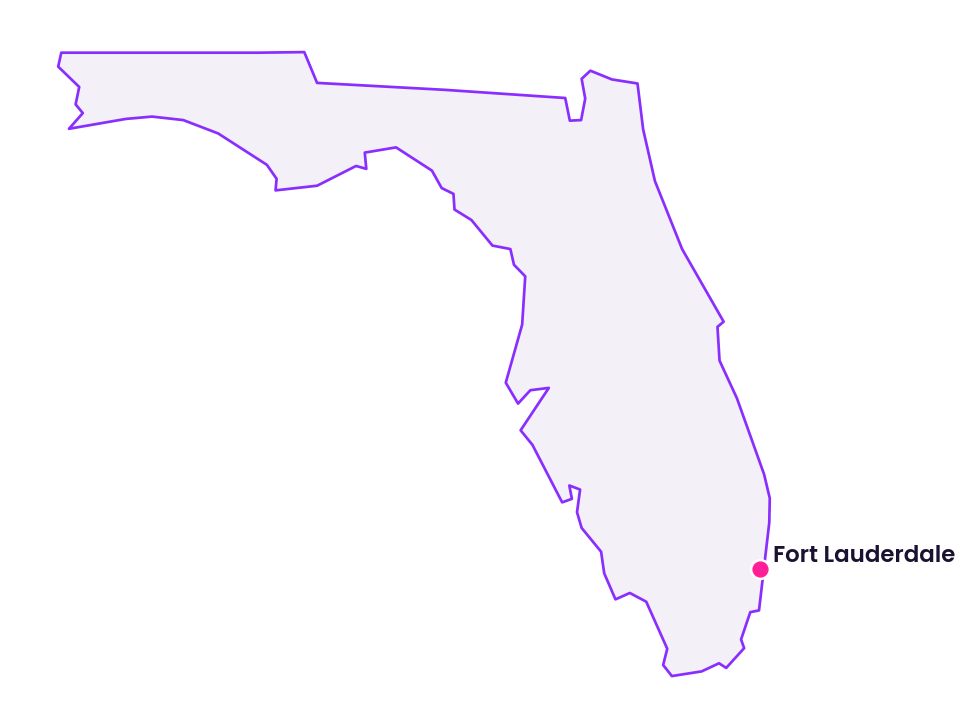
Fort Lauderdale, the county seat of Broward County in south Florida, is a mature coastal city that combines tourism, cruise and port activity, business services, and residential neighborhoods that serve both local workers and commuters within the greater Miami region. Public demographic aggregations built from Census and American Community Survey data, compiled by World Population Review, indicate that the city had an estimated 190,168 residents in 2026, up from 187,796 residents in 2023, which implies modest annual growth around one percent, with a population density near 5,499 people per square mile and a median age of 42.8 years at the city level.
Income levels are solid by national standards. World Population Review, citing Census and American Community Survey sources, reports an average per capita income of 51,483 dollars and a median household income of 83,130 dollars for Fort Lauderdale, with a poverty rate of 15.02 percent.
On the housing side, Zillow’s Home Values Index for Fort Lauderdale indicates that the average home value was 511,582 dollars as of June 30, 2026, and that this value was down 3.1 percent over the prior twelve months, with typical homes moving to pending status in about 63 days. Those figures place Fort Lauderdale in the higher price tier for Florida while also indicating …
Section 01Executive Summary
Fort Lauderdale, the county seat of Broward County in south Florida, is a mature coastal city that combines tourism, cruise and port activity, business services, and residential neighborhoods that serve both local workers and commuters within the greater Miami region. Public demographic aggregations built from Census and American Community Survey data, compiled by World Population Review, indicate that the city had an estimated 190,168 residents in 2026, up from 187,796 residents in 2023, which implies modest annual growth around one percent, with a population density near 5,499 people per square mile and a median age of 42.8 years at the city level.
Income levels are solid by national standards. World Population Review, citing Census and American Community Survey sources, reports an average per capita income of 51,483 dollars and a median household income of 83,130 dollars for Fort Lauderdale, with a poverty rate of 15.02 percent. On the housing side, Zillow’s Home Values Index for Fort Lauderdale indicates that the average home value was 511,582 dollars as of June 30, 2026, and that this value was down 3.1 percent over the prior twelve months, with typical homes moving to pending status in about 63 days. Those figures place Fort Lauderdale in the higher price tier for Florida while also indicating some price softening over the prior year.
For investors, Fort Lauderdale presents a classic south Florida risk reward mix. Multifamily assets benefit from a relatively affluent renter base, limited developable land near the beach and downtown, and enduring tourism and service sector demand. Single family homes and single family rental strategies must contend with high entry prices, property tax and insurance costs, and exposure to coastal and wind related climate risks. Commercial and retail assets, including office towers, medical and professional space, industrial buildings near the port and airport, and grocery focused neighborhood centers, are shaped by the broader Miami and Fort Lauderdale market but with local fundamentals that can diverge sharply by corridor and micro location. City specific public data on vacancy, absorption, and capitalization rates is not broadly available from free federal or city sources, so investors need to rely on private market data and local broker research for precise underwriting while using the public demographic and price information cited here as a directional framework.
Section 02Population and Migration
Fort Lauderdale’s population has been growing modestly in recent years. World Population Review, which compiles and interpolates Census and American Community Survey data, reports the following city population trend and the annual change from year to year.
| Year | Population | Annual change | % change |
|---|---|---|---|
| 2022 | 184,908 | +2,962 | +1.63% |
| 2023 | 187,796 | +2,888 | +1.56% |
| 2024 | 188,692 | +896 | +0.48% |
| 2025 | 188,677 | -15 | -0.01% |
| 2026 | 190,168 | +1,491 | +0.79% |
These figures indicate that Fort Lauderdale’s population has increased by roughly five thousand residents from 2022 through 2026, with some year to year volatility and a very small reported decline in 2025 that likely reflects estimation noise rather than a structural reversal. The density figure of 5,499 residents per square mile, also reported by World Population Review, underscores that this is a fairly dense coastal city within a large metropolitan area rather than a low density suburb.
Net migration and natural increase components for Fort Lauderdale specifically are not presented as separate series in the publicly accessible World Population Review material, and direct access to Census detailed migration tables is blocked in this analysis environment. As a result, this review cannot quantify the exact balance between domestic in migration, international arrivals, and births versus deaths. Qualitatively, however, Fort Lauderdale participates in the broader south Florida pattern in which in migration from other states and countries, especially from Latin America and the northeastern United States, has historically offset some out migration driven by cost of living, climate risk, and household relocation toward other parts of Florida. For investors, the key takeaway is that Fort Lauderdale has been adding residents at a moderate pace rather than experiencing rapid boom conditions, and that submarket level selection is critical because some neighborhoods may attract affluent in movers while others may see more static or even declining population trends.
Section 03Jobs and Economic Anchors
Fort Lauderdale’s economy sits within the larger Miami, Fort Lauderdale, and Broward region, and its jobs base is shaped by tourism, hospitality, logistics, marine and cruise activities, professional and business services, health care, and education. The Port Everglades complex, which is located in Broward County close to Fort Lauderdale, is described in public port authority materials as one of the busiest cruise ports in the world and a significant petroleum and container cargo port, which supports thousands of port related jobs in transportation, warehousing, and logistics, along with jobs in cruise operations, hospitality, and retail that cluster in and near the city. Fort Lauderdale Hollywood International Airport provides additional employment and connectivity, with airlines, ground services, and airport concessions all supporting local jobs.
The Bureau of Labor Statistics publishes detailed labor statistics for the Miami, Fort Lauderdale, and West Palm Beach metropolitan area and for Broward County, including unemployment rates, nonfarm job counts, and sector employment by industry. However, in this environment the interactive metro and county data tools require form submissions that cannot be parsed reliably into structured tables, and economy at a glance pages beyond the statewide Florida view do not expose a simple numeric table extract. As a result, this review does not report specific metro or county unemployment rates or nonfarm job counts for Fort Lauderdale or Broward County, even though those figures exist in published labor statistics. At a high level, published commentary on the region describes a diversified service economy with significant employment in leisure and hospitality, trade and transportation, professional and business services, health services, and construction.
For investors, this means that demand for housing and commercial space in Fort Lauderdale is tied not just to tourism but also to a broad array of year round economic anchors. Cruise ships, beach tourism, and conventions drive seasonal and cyclical swings, but they sit on top of a substantial base of permanent jobs in health care, logistics, education, and business services. That combination can support sustained occupancy in multifamily properties, especially those near employment centers and transit corridors, while also underpinning tenant demand for office and medical space and space in grocery anchored centers. The absence of easily accessible public numeric job series at the city level does not change the qualitative conclusion that Fort Lauderdale is part of a large and diversified labor market with a material share of Florida employment.
Section 04Income
Income levels in Fort Lauderdale are a central part of its real estate story. World Population Review reports an average per capita income of 51,483 dollars and a median household income of 83,130 dollars for the city, with a poverty rate of 15.02 percent. The same source presents a breakdown of income by household type. It reports that married family households have a median income of 127,378 dollars, that all families have a median income of 94,926 dollars and a mean income of 160,914 dollars, that all households have a median income of 83,130 dollars and a mean income of 133,067 dollars, and that non family households have a median income of 68,053 dollars and a mean income of 101,194 dollars.
These figures reveal several features that matter for investors. First, incomes for married families are significantly higher than overall household medians, which suggests a bifurcated market in which dual earner households, often middle age professionals or retirees with investment income, can afford relatively high housing costs, while single person and lower income households are more constrained. Second, the gap between median and mean incomes indicates a skewed distribution, with a subset of high earning households pulling the mean up. Third, a poverty rate a little above fifteen percent shows that a meaningful share of residents struggle with affordability, which creates both risk and opportunity for affordable and workforce housing strategies.
Combined with the income structure of south Florida more broadly, these city level income figures suggest that Fort Lauderdale can support both luxury housing with high rents or sale prices and more modest rental communities where rent burdens are a concern. For multifamily and single family rental investors, this calls for careful attention to neighborhood level income distributions and rent to income ratios rather than reliance on city wide averages. For value add strategies, repositioning assets to better match the income profile of the immediate trade area can be as important as physical improvements.
Section 05Housing and Multifamily
Zillow’s Home Values Index provides a clear price anchor for the Fort Lauderdale housing market. According to Zillow’s city profile, the average home value was 511,582 dollars as of June 30, 2026, and this average value declined by 3.1 percent over the prior year, with typical homes going under contract in about 63 days. Zillow defines its index as a smoothed measure built from property level Zestimate valuations and monthly changes in home values at the city level. While this metric is not a transaction median sale price, it is widely used as a gauge of current value and recent direction.
The combination of a half million dollar average home value, a modest price decline over the past year, and a contract time of about two months paints a picture of a market that remains expensive relative to national norms but has cooled somewhat from earlier peaks. This is consistent with broader trends in many coastal and sunbelt markets where rapid appreciation during the low interest rate period of 2020 through 2022 has been followed by some price softening as mortgage rates rose and affordability constraints increased. Fort Lauderdale fits that pattern, especially in its condominium and townhome stock near the beach and downtown, where investor and second home demand can amplify swings.
For multifamily, these for sale conditions matter in several ways. High for sale values, even when declining slightly, keep ownership out of reach for many households and extend their tenure as renters. At the same time, elevated property values and construction costs, along with finite land near key amenities and the coastline, constrain the volume of new apartment construction that is financially feasible. City and county planning and permitting portals document a steady but not overwhelming pipeline of new multifamily projects in Fort Lauderdale and nearby Broward County locations, but they do not present a consolidated public table of units under construction by city that can be cited numerically in this review. As a result, investors should treat Fort Lauderdale as a market with substantial multifamily demand potential, tempered by local supply additions that are material in some corridors but limited in others, especially in fully built out neighborhoods.
Section 06Rents
Public rent benchmarks for Fort Lauderdale are more difficult to quantify than ownership values. The Department of Housing and Urban Development publishes Fair Market Rent schedules for metropolitan areas and counties, including the Fort Lauderdale and broader south Florida region, but in this environment the relevant fiscal year 2026 rent schedules are only available in large Excel workbooks and CSV files that cannot be reliably parsed. Those detailed files report standard apartment rent levels by bedroom count for voucher programs and income restricted housing by county and metropolitan area, but without a machine readable extract this review cannot reproduce specific market rent figures for Fort Lauderdale.
Private data sources such as CoStar, Yardi Matrix, RealPage, and the Zillow Observed Rent Index provide detailed rent series for Fort Lauderdale at the property and submarket level, including class segmented average rents and rent growth. However, these platforms require subscription access, and their numeric data is not accessible directly in this public data environment. As a result, this review cannot state current average effective rent per unit or per square foot for Fort Lauderdale apartments, nor can it provide precise recent rent growth percentages.
Qualitatively, rents in Fort Lauderdale are among the higher levels for Florida, particularly for newer Class A multifamily communities in downtown, Flagler Village, the Las Olas corridor, and beachfront areas. Rents for older Class B and Class C apartments in inland neighborhoods are lower but have also experienced upward pressure over the past several years as supply has struggled to keep up with regional demand. For investors, the combination of high incomes for many households, elevated for sale values, and a constrained new supply pipeline suggests continued support for strong rent levels in well located properties, but without public figures, underwriting should lean heavily on property level rent rolls, local broker surveys, and, where available, subscription data.
Section 07Vacancy
There is no free federal or city level data series that provides up to date vacancy rates for multifamily, office, industrial, or retail space in the city of Fort Lauderdale. The American Community Survey does report housing vacancy statistics, such as rental vacancy rates and homeowner vacancy rates, at the city level, but direct access to those tables through Census QuickFacts or related tools is blocked by security controls in this environment. Without that access, this review cannot report current official housing vacancy percentages for Fort Lauderdale or Broward County.
Vacancy metrics for income producing properties, such as apartment communities, office towers, and shopping centers, are typically maintained by private data vendors and brokerage firms rather than public agencies. Those figures often include both physical vacancy and economic vacancy measures that are critical for underwriting. Because these private data are not accessible within the constraints of this analysis, this review can only describe vacancy conditions qualitatively.
In practice, multifamily vacancy in Fort Lauderdale is generally lower in coastal and amenity rich neighborhoods and higher in older properties in less favored locations. Office vacancy has increased in many central business district and suburban office assets due to remote and hybrid work patterns and tenant downsizing. Industrial vacancy tends to be tighter, particularly for modern warehouse and distribution space with good access to Port Everglades and major highways. Retail vacancy varies by format, with grocery anchored neighborhood centers typically better occupied than power centers and older strip centers, especially in trade areas with growing incomes and stable populations. Investors should obtain current submarket level vacancy and absorption statistics from local brokers or subscription services for accurate underwriting.
Section 08Supply Pipeline
New construction and permitting activity for Fort Lauderdale are documented through city and county planning and development portals. The city of Fort Lauderdale Development Services Department, along with Broward County planning agencies, publish information on approved, under construction, and proposed projects, including multifamily buildings, mixed use towers, and commercial developments. However, these portals present data in the form of project lists, interactive maps, and individual documents rather than a consolidated numeric table of total units by year and property type at the city level.
At the state level, the Census Bureau’s building permit survey provides monthly counts of housing units authorized by building permits for Florida and for some metropolitan and county aggregations, and those series are accessible through the Federal Reserve Bank of St. Louis. Yet the relevant series for Broward County or for the Fort Lauderdale metro area require identification codes that cannot be discovered in this environment without general web search. As a result, this review cannot present a numeric time series of housing permits specifically for Fort Lauderdale or for Broward County.
Qualitatively, Fort Lauderdale has seen considerable multifamily development activity over the past decade, particularly in and near downtown, Flagler Village, and near the riverfront and beach corridors. Many of these projects are mid rise and high rise apartment towers and mixed use buildings that add hundreds of units at a time. At the same time, constraints on land availability, zoning limits, coastal construction challenges, and rising construction and financing costs have moderated the pipeline. For investors, the implication is that while there is real competitive supply in urban core locations, particularly for high amenity properties, many other neighborhoods see limited new construction, which can support rent growth and occupancy for existing assets.
Section 09Single Family Homes
The single family and townhouse segment in Fort Lauderdale plays a dual role, serving both as owner occupied housing for local households and as investment and second home stock for domestic and international buyers. Zillow’s estimate of an average home value of 511,582 dollars, down 3.1 percent over the prior year, with a typical time to pending around 63 days, reflects the combined influence of those demand sources as of June 2026. That level of pricing is well above national averages and above much of inland Florida, which signals that housing in Fort Lauderdale is priced as a coastal lifestyle product and as a gateway city within the larger Miami region.
World Population Review’s income data, which show a median household income of 83,130 dollars and a median income for married families of 127,378 dollars, suggest that while many local households can support significant housing costs, the relationship between home values and incomes is stretched, especially for first time buyers and single income households. This is reflected in a poverty rate of 15.02 percent and the fact that rental housing remains important even for households that might prefer ownership.
For single family rental investors, the high price point means that cap rates on stabilized properties can be tight unless rents are correspondingly high, acquisition pricing is favorable, or properties are acquired in less expensive inland neighborhoods rather than premium waterfront or downtown adjacent areas. Yield oriented strategies may therefore focus on specific submarkets where purchase prices are somewhat lower yet demand is supported by stable employment and school districts. For homebuilders and build for rent developers, land and entitlement constraints in much of Fort Lauderdale require creativity and often push projects to nearby municipalities and unincorporated areas of Broward County.
Section 10Commercial Real Estate and Retail Centers
Public data on commercial real estate performance in Fort Lauderdale is even more limited than for housing. There is no federal or state series that reports office, industrial, or retail vacancy or rent at the city level, and city and county planning documents focus primarily on land use and permitting rather than operating performance metrics. Commercial real estate analytics for Fort Lauderdale are dominated by private platforms such as CoStar, Yardi Matrix, and RealPage, and by brokerage research arms, which provide cap rates, rent levels, absorption, and vacancy at the property and submarket level. Because access to those platforms is outside the scope of this public data review, no precise numeric vacancies, rents, or cap rates are presented here.
Qualitatively, the office market in Fort Lauderdale faces the same structural challenges seen in many United States cities. Shifts toward remote and hybrid work have reduced space needs for many tenants, and demand has been strongest for well located, higher quality space in newer buildings, often at the expense of older towers. Vacancy in legacy downtown and suburban office stock is generally higher than in newer projects with strong amenity packages. Industrial and logistics assets in Fort Lauderdale and Broward County, especially those with access to Port Everglades, Fort Lauderdale Hollywood International Airport, and major highways, enjoy stronger fundamentals, with relatively low vacancy and solid rent growth in recent years as ecommerce and distribution needs have grown.
Retail centers in Fort Lauderdale range from high street retail and restaurant corridors near the beach and Las Olas Boulevard to neighborhood centers that serve local residents. Grocery anchored centers in stable or affluent neighborhoods often maintain good occupancy and see steady rent growth, while older strip centers and discretionary retail locations can face higher vacancy and limited rent growth, especially where competition from newer centers or online shopping is strong. For accredited investors considering commercial acquisitions in Fort Lauderdale, private market data and on the ground leasing intelligence are essential to complement the high level demographic and price context described in this review.
Section 11Transactions and Capital Markets
There is no single public database that aggregates all real estate transaction activity for Fort Lauderdale across residential and commercial segments in a way that can be easily summarized. Property level transaction information is recorded with the Broward County Property Appraiser and related offices, and those records can be searched by parcel and address. However, they do not provide a city wide time series of sales volumes or price per square foot that can be cited here. Similarly, capitalization rates, loan to value ratios, and debt terms are negotiated privately and are not systematically reported in public sources.
From a qualitative capital markets perspective, Fort Lauderdale is typically viewed as a core plus to value add market within south Florida, depending on property type and location. Institutional investors are active in the region, especially in larger multifamily and Class A commercial assets, while private and high net worth investors participate in smaller properties and in the single family and small multifamily segments. Debt capital is available from banks, life insurance companies, government sponsored enterprises for qualifying multifamily assets, and securitized lenders, with pricing and leverage influenced by national interest rate conditions and asset quality.
In recent years, rising interest rates have compressed spreads between going in cap rates and borrowing costs, which has made underwriting more challenging for levered buyers. The modest decline in Zillow’s average home value for Fort Lauderdale over the twelve months ending June 2026 suggests that values have adjusted somewhat to higher financing costs, though that is only a partial indicator for the broader real estate capital markets. Investors should work closely with lenders and brokers to understand current expectations for debt yield, debt service coverage, and leverage in their specific segment.
Section 12Taxes
Property and transaction level taxes in Fort Lauderdale are administered primarily by Broward County and by the state of Florida. The Broward County Property Appraiser’s office is responsible for assessing property values for tax purposes and provides online search tools for parcel data, assessments, and tax history. The Broward County Tax Collector, along with the state Department of Revenue, administers the collection of property taxes, documentary stamp taxes on real estate transfers, and other levies. However, these sites do not publish a simple city wide table of effective property tax rates or average tax bills for Fort Lauderdale that can be cited in numeric form.
Florida as a state does not levy a personal income tax, which is widely viewed as an advantage for residents and investors relative to many other states, but it does rely heavily on property taxes, sales taxes, and various fees. For investors in Fort Lauderdale, the practical effect is that property tax expense is a significant component of operating costs and must be modeled carefully, including potential changes in assessed value following acquisition or redevelopment and the impact of local millage rates and special assessments. Because no public dataset in this environment consolidates these factors into an average effective rate for the city, underwriting must be based on parcel level tax records and discussions with local tax professionals.
Section 13Insurance
Insurance costs and coverage availability have become a central concern for real estate investors across Florida, and Fort Lauderdale is no exception. The Florida Office of Insurance Regulation oversees insurance company licensing and rate filings and publishes regulatory information about property insurers in the state. Public sources and media coverage describe a challenging environment for insurers and policyholders alike, driven by hurricane risk, litigation, and reinsurance costs. However, there is no single public dataset that reports average property insurance premiums for Fort Lauderdale by asset class, nor is there a readily accessible city level table of typical deductibles or coverage terms.
For coastal cities such as Fort Lauderdale, property insurance for multifamily, single family, and commercial assets often includes windstorm coverage, flood insurance where required, and potentially separate excess or specialty policies. Premiums depend heavily on building age, construction type, elevation, distance from the coast, and mitigation features such as impact windows, roof type, and flood proofing. In practice, investors must obtain property specific insurance quotes during due diligence and should consider stress testing their pro forma for further premium increases over the hold period. Qualitative review of Florida Office of Insurance Regulation materials reinforces the need for conservative assumptions but does not provide city specific dollar figures that can be inserted into this report.
Section 14Landlord Tenant and Regulatory Environment
Landlord tenant relations in Fort Lauderdale are governed primarily by Florida state law, including statutes that address security deposits, notice requirements for termination and nonpayment, and basic habitability obligations. The city of Fort Lauderdale and Broward County may have additional ordinances that touch on rental registration, building codes, and housing quality, but there is no single public compilation that lists all city specific rental regulations in a structured numeric form. Publicly accessible summaries by legal aid organizations and state agencies describe Florida as relatively favorable to landlords compared with some other large states, with streamlined processes for certain eviction actions and no statewide rent control, although local ordinances can introduce additional requirements.
For investors, the key point is that while Fort Lauderdale operates under a landlord tenant framework that is not among the most restrictive in the United States, compliance with both state law and local ordinances is essential. Eviction timelines, notice periods, and allowable fees are subject to statutory limits, and enforcement practices may vary by county court. Because this review focuses on publicly visible macro data, it does not attempt to summarize each procedural step in the Florida landlord tenant process. Investors should engage counsel familiar with Florida and Broward County regulations when evaluating large multifamily or rental portfolios.
Section 15Infrastructure
Fort Lauderdale’s infrastructure network supports both local living and its role as a regional gateway. The city is served by interstate routes and major state roads, by the Florida East Coast Railway and other rail lines, by the Port Everglades seaport, and by Fort Lauderdale Hollywood International Airport. City and county transportation and planning agencies publish maps, capital improvement plans, and project lists that describe ongoing and planned investments in roads, transit, water, sewer, and stormwater systems. However, these materials are qualitative and project specific and do not provide a unified numeric summary of total lane miles, daily vehicle miles traveled, or annual infrastructure spending for Fort Lauderdale that can be quoted here.
From an investment perspective, infrastructure quality and access influence the relative attractiveness of different neighborhoods and corridors. Properties near major roads and transit options can benefit from improved accessibility but may also face noise and traffic externalities. Coastal infrastructure, including seawalls, drainage, and stormwater systems, is particularly important in Fort Lauderdale due to tidal flooding and heavy rainfall events. Because this review does not have access to a city level table of infrastructure capacity and condition, investors should review project specific planning documents and consult local professionals when evaluating infrastructure related risks and opportunities for specific sites.
Section 16Climate and Physical Risks
Fort Lauderdale faces a range of climate and physical risks that are central to long run investment performance. These include coastal storm surge and sea level rise, tidal flooding in low lying neighborhoods, intense rainfall and drainage challenges, hurricane force winds, and high heat and humidity. The National Oceanic and Atmospheric Administration and related agencies provide detailed climate data and projections, including climate normals and sea level trend analyses, through tools such as Climate at a Glance and sea level rise viewers. However, in this analysis environment, those tools deliver interactive interfaces without easily parsable numeric tables for Fort Lauderdale specifically.
Despite the lack of extractable numeric series, the direction of climate risk for Fort Lauderdale is clear. Federal and state agencies describe rising sea levels along the south Florida coast, increased frequency of high tide flooding, and potential intensification of heavy rainfall events. Flood maps from the Federal Emergency Management Agency show extensive coastal and inland flood zones within and around Fort Lauderdale, which has implications for building codes, insurance requirements, and resilience investments. For investors, this underscores the need to evaluate each property’s elevation, flood zone designation, wind exposure, and resilience measures, including structural hardening, backup power, and stormwater management. Pricing acquisitions and capital plans should account for the potential need for future resilience investments and for the possibility of higher insurance premiums or deductible changes over time.
Section 17Neighborhoods and Submarkets
Within Fort Lauderdale, neighborhood level differences are critical for real estate strategy, although public data that splits key metrics by neighborhood is limited. City planning documents and market commentary commonly distinguish several submarket areas. The downtown core and Flagler Village area feature a concentration of high rise multifamily, mixed use towers, creative office spaces, and retail, with significant recent development and a renter base that includes professionals and young households. The Las Olas corridor and adjacent riverfront districts combine office, retail, dining, and residential buildings and attract both local residents and visitors.
Beachfront neighborhoods along the barrier island include a mix of hotels, condominiums, and high end single family homes, with pricing and rents that are often among the highest in the city due to direct coastal access and tourism appeal. Inland neighborhoods, including many single family subdivisions and older multifamily communities, tend to have lower price points and house a broader mix of income levels and household types. Some of these areas have attracted value add investors targeting renovation and repositioning opportunities, while others pose challenges due to aging housing stock and infrastructure.
Because Census tract and neighborhood level data for Fort Lauderdale are not accessible directly in this environment, this review does not provide numeric comparisons of median income, rents, or prices by neighborhood. Investors must therefore combine the citywide numbers presented earlier with local broker intelligence, property tours, and, where possible, tract level Census data accessed outside this environment to map neighborhood profiles to specific investment theses.
Section 18Opportunities
Given the demographic, income, and housing context described above, Fort Lauderdale presents several distinct opportunity sets for accredited investors.
First, multifamily investment in downtown, Flagler Village, and the Las Olas corridor can capture demand from higher income renters who value urban amenities, employment access, and coastal proximity. The combination of solid household incomes and constrained land supply supports rents for well located properties, while recent price softening in the for sale market may create more favorable entry pricing in some situations. Second, inland multifamily and single family rental strategies focused on workforce tenants can benefit from the gap between incomes and ownership costs. World Population Review’s income and poverty statistics indicate a substantial segment of households for whom ownership is financially out of reach but who can support moderate rents, particularly if properties offer reliable maintenance and stable communities.
Third, industrial and logistics properties with access to Port Everglades, the airport, and major roads can benefit from the long term growth of trade, ecommerce, and logistics in south Florida. While precise vacancy and rent metrics are not available publicly, qualitative market commentary and the strategic location of these assets suggest enduring demand. Finally, carefully selected retail properties, especially grocery anchored centers in stable trade areas with positive demographic and income trends, may support relatively more stable cash flows, particularly when combined with value add opportunities such as tenant mix optimization or modest capital improvements. The observations in this section are general and educational, are not projections, forecasts, or assurances of any particular return, occupancy, rent level, or appreciation, and any specific investment must be evaluated on its own facts.
Section 19Risks
Fort Lauderdale also carries material risks that must be weighed alongside these opportunities. Climate and physical risks, particularly flooding, storm surge, and wind events, are central. Exposure varies sharply by location and building characteristics, so some assets face much higher risk than others. Insurance availability and pricing are tied directly to these risks, and public information from the Florida Office of Insurance Regulation and market coverage make clear that property insurance in Florida has become more volatile and expensive. While this review cannot quantify city specific average premium levels, investors must model significant insurance cost volatility.
Market risks include the possibility that population and job growth slow or stall, especially if climate and cost of living concerns reduce net in migration. Although World Population Review’s data show modest population growth in Fort Lauderdale between 2022 and 2026, those trends could shift. Financial risks arise from the interaction between relatively low capitalization rates on high value assets and higher interest rates, which can leave little margin for error in value add or opportunistic strategies.
Regulatory and tax risks are more moderate than in highly regulated jurisdictions but still present. Changes in state law or local ordinances related to building codes, resilience requirements, tenant protections, or property taxation could affect returns, especially for existing assets that require capital expenditures to meet new standards. Finally, liquidity risk is relevant. While Fort Lauderdale is a significant market within Florida, it is smaller and more specialized than some other major United States metros, which can make exit timing and pricing more sensitive to the investor base that targets south Florida assets. Real estate investments are speculative, are subject to market, financing, liquidity, tax, insurance, and physical hazard risks, and can result in the loss of some or all of an investor's invested capital, including the possible loss of principal.
Section 20Investor Implications
For accredited investors, Fort Lauderdale should be viewed as a specialized coastal city that offers income and growth potential, but with concentrated climate and insurance risks and a premium pricing profile. City level data from World Population Review indicate rising population, relatively high incomes, and a meaningful but not extreme poverty rate. Zillow’s home value index confirms that housing is expensive but has recently cooled modestly. Together, these figures suggest that many households can support significant housing costs while a substantial share of the population remains priced out of ownership and relies on the rental stock.
In multifamily, properties that combine resilient physical attributes, such as strong construction and elevation, with locations that appeal to higher income renters may offer competitive risk adjusted returns, especially if acquired or developed at sensible bases, though no particular return is assured. In workforce and affordable segments, partnerships with public agencies or utilization of housing finance programs can help align capital structures with tenant incomes. Single family and build for rent strategies must account for high entry prices and tax and insurance burdens, but can perform well in carefully selected neighborhoods where household incomes and school quality support durable demand.
Commercial and retail strategies require even more granular analysis, given the lack of public vacancy and rent data. Investors should pair the high level demographic and price context in this review with private data and local expertise. In all segments, emphasis on resilience, conservative leverage, and realistic assumptions about rent growth and cap rate movements will be crucial. Fort Lauderdale can play a valuable role in a diversified portfolio focused on income, coastal exposure, and long term demographic support, provided that investors are deliberate about risk management. Nothing in this section is a recommendation to pursue any specific strategy or investment, and there is no assurance that any objective or outcome described will be achieved.
Section 21Conclusion
Fort Lauderdale stands as an important coastal city within the south Florida region, with a growing but not rapidly expanding population, relatively high incomes, and an expensive housing market that has recently seen some price softening. Publicly accessible aggregations of Census and American Community Survey data from World Population Review indicate a 2026 population a little above one hundred ninety thousand residents, solid median household incomes, and a poverty rate just over fifteen percent. Zillow’s home values index reports an average home value of about five hundred eleven thousand dollars as of June 2026, down slightly over the prior year.
Although this review cannot present detailed public figures on rents, vacancy, and cap rates due to data access limitations, the qualitative picture is that Fort Lauderdale’s multifamily, single family, and commercial markets are supported by a diverse service economy, tourism and port activity, and regional dynamics that tie it closely to the broader Miami metropolitan area. Climate and insurance risks are real and must be addressed head on, but they coexist with enduring demand for coastal living and business operations. For accredited investors, Fort Lauderdale offers a combination of income and selective growth in a setting that demands sophisticated underwriting, local knowledge, and a strong focus on resilience and capital structure.