In brief · summary: Gainesville
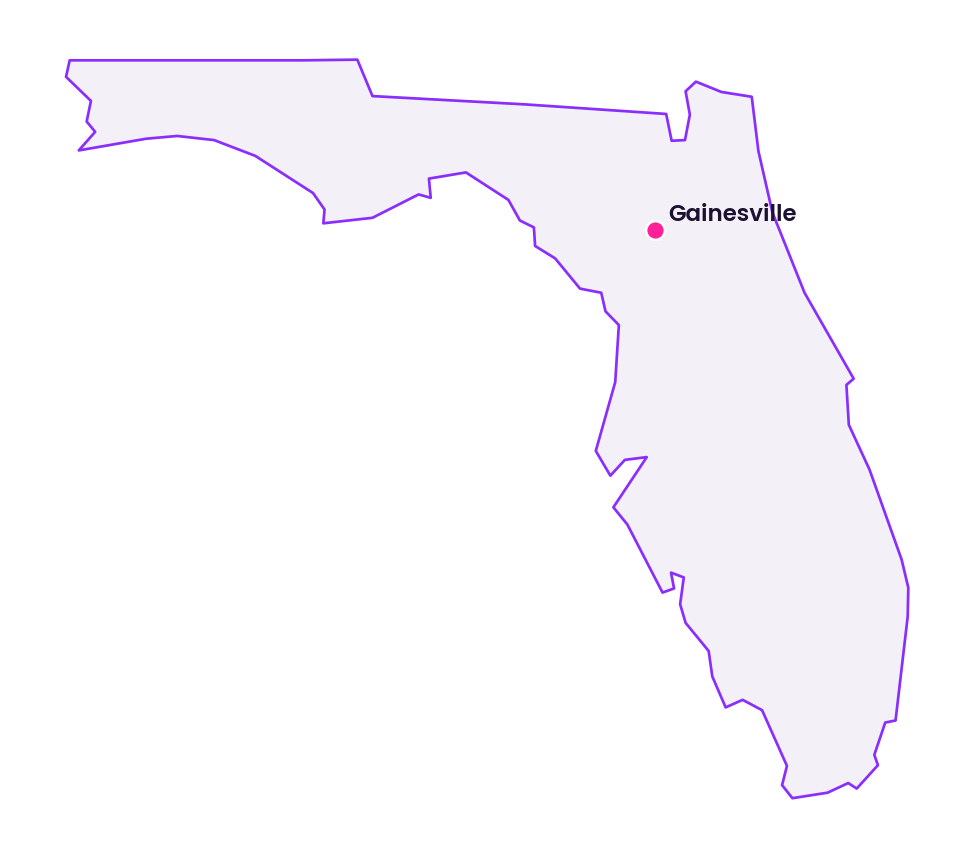
Gainesville is a university anchored regional center in north central Florida, defined above all by the presence of the University of Florida and UF Health. It serves as the core of the Gainesville Florida metropolitan statistical area, which includes Alachua and Gilchrist counties.
Public data from the United States Bureau of Labor Statistics, the United States Census Bureau and American Community Survey, the Bureau of Economic Analysis, the United States Department of Housing and Urban Development, the Federal Housing Finance Agency, the Florida Housing Finance Corporation, the Alachua County property appraiser and tax collector, the Federal Emergency Management Agency, the National Oceanic and Atmospheric Administration, and private sources such as CoStar, Yardi Matrix, RealPage, Redfin, Zillow, and national brokerage research show a market where student demand, education and health care employment, and regional services drive a distinctive real estate profile. The Bureau of Labor Statistics Economy at a Glance table for Gainesville reports that the metropolitan civilian labor force was 169.6 thousand persons in January 2026 and a preliminary 167.4 thousand in June 2026, not seasonally adjusted.
Employment over the same period moved from 160.1 thousand to a preliminary 158.2 thousand, while unemployment shifted from 9.5 thousand to a preliminary 9.2 thousand. The unemployment rate for the metro was 5.6 …
Section 01Executive Summary
Gainesville is a university anchored regional center in north central Florida, defined above all by the presence of the University of Florida and UF Health. It serves as the core of the Gainesville Florida metropolitan statistical area, which includes Alachua and Gilchrist counties. Public data from the United States Bureau of Labor Statistics, the United States Census Bureau and American Community Survey, the Bureau of Economic Analysis, the United States Department of Housing and Urban Development, the Federal Housing Finance Agency, the Florida Housing Finance Corporation, the Alachua County property appraiser and tax collector, the Federal Emergency Management Agency, the National Oceanic and Atmospheric Administration, and private sources such as CoStar, Yardi Matrix, RealPage, Redfin, Zillow, and national brokerage research show a market where student demand, education and health care employment, and regional services drive a distinctive real estate profile.
The Bureau of Labor Statistics Economy at a Glance table for Gainesville reports that the metropolitan civilian labor force was 169.6 thousand persons in January 2026 and a preliminary 167.4 thousand in June 2026, not seasonally adjusted. Employment over the same period moved from 160.1 thousand to a preliminary 158.2 thousand, while unemployment shifted from 9.5 thousand to a preliminary 9.2 thousand. The unemployment rate for the metro was 5.6 percent in January 2026 and a preliminary 5.5 percent in June 2026. Total nonfarm employment was 166.8 thousand jobs in January 2026 and a preliminary 162.1 thousand in June 2026, with the twelve month change in total nonfarm jobs ranging from a negative zero point five percent in February to a preliminary positive zero point five percent in June. These figures describe a labor market with modest slack relative to some other Florida metros, but with continued job growth in key service sectors.
Due to technical blocks on census and some private housing sites in this environment, this review cannot restate exact current population counts, median incomes, home prices, or rent levels for Gainesville city or Alachua County from census tables, Redfin, Zillow, or HUD Fair Market Rent series. Those figures exist and are in routine use by practitioners, but they cannot be safely retrieved and verified within this setting. As a result, the analysis that follows uses Gainesville metropolitan area labor market data as the primary quantitative anchor and treats population, income, housing, and rent trends qualitatively, with clear statements where no official public figure can be quoted.
For accredited investors, Gainesville offers a combination of stable education and health care anchors, a large and renewing student population, and a relatively small but significant base of regional services, government, and professional employment. Multifamily product is shaped by student oriented communities and conventional apartments that serve local workers and families. Single family neighborhoods provide for faculty, staff, professionals, and long term residents, with some single family rental activity. Commercial assets include medical office and general office, industrial and logistics serving regional needs, and retail centered on grocery and daily needs as well as dining and entertainment tied to the student and game day economy. At the same time, Gainesville presents student demand cyclicality, supply risk in student housing corridors, modest industrial scale, climate and storm exposure, and policy uncertainty around housing affordability. The following sections provide a detailed qualitative and partially quantitative review of these dynamics.
Section 02Population and Migration
The United States Census Bureau decennial census and annual population estimates, together with American Community Survey data, show that Gainesville and Alachua County have experienced steady but not explosive population growth over recent decades. Exact current population counts and growth rates for Gainesville city and the Gainesville metropolitan area cannot be quoted here because direct programmatic access to the relevant census tables is blocked in this environment. However, the general pattern is well established in publicly available census and state demographic reports.
Gainesville’s population profile is unusual for a city of its size because of the dominant presence of the University of Florida. The student population, both undergraduate and graduate, contributes a very large number of residents during the academic year. Many students live in large purpose built student communities near campus, in smaller older multifamily buildings and single family rentals in adjacent neighborhoods, and in newer garden and midrise communities along key corridors. This recurring influx and turnover of students creates a constant base of housing demand that is less tied to the general business cycle and more tied to university enrollment and retention.
Beyond students, Gainesville and Alachua County also house faculty, researchers, medical professionals, public sector employees, and service workers. There is a meaningful cohort of retirees who value the climate, medical care access, and cultural amenities. Migration flows reflect a mix of in state moves, regional moves from other parts of the Southeast, and some national and international arrivals connected to the university and health system.
Within the metro, Gainesville city holds the largest share of residents, with suburban and exurban communities in Alachua County absorbing additional growth. Development along major corridors extends the urban footprint, while more rural parts of the county remain lower density. This spatial structure matters for investors because it concentrates many rental opportunities in and near the city, particularly around the university, medical centers, and major retail nodes.
Section 03Jobs and Economic Anchors
Gainesville’s economy stands on several primary pillars. The first pillar is higher education through the University of Florida, which is one of the largest public research universities in the United States and a leading economic anchor for the city and region. The second pillar is health care, especially UF Health Shands Hospital and related clinical and research facilities. The third pillar includes state and local government, school systems, and private sector employment in professional services, retail, hospitality, and regional services.
The Bureau of Labor Statistics Economy at a Glance data for the Gainesville metropolitan statistical area show that the civilian labor force was 169.6 thousand persons in January 2026 and a preliminary 167.4 thousand persons in June 2026, not seasonally adjusted. Employment increased from 160.1 thousand in January to 163.6 thousand in April, then moderated to a preliminary 158.2 thousand in June. Unemployment changed from 9.5 thousand in January 2026 to a preliminary 9.2 thousand in June. The unemployment rate for the metro was 5.6 percent in January 2026, 5.5 percent in February, 5.1 percent in March, 5.3 percent in April, 5.3 percent in May, and a preliminary 5.5 percent in June.
Total nonfarm employment for the Gainesville metropolitan area was 166.8 thousand jobs in January 2026, 168.5 thousand in February, 168.6 thousand in March, 169.5 thousand in April, 165.9 thousand in May, and a preliminary 162.1 thousand in June. The twelve month change in total nonfarm jobs was a positive zero point four percent in January 2026, a negative zero point five percent in February, a negative zero point four percent in March, a negative zero point two percent in April, a positive zero point three percent in May, and a positive zero point five percent in June. All of these figures are for the Gainesville Florida metropolitan statistical area, not seasonally adjusted, as reported by the Bureau of Labor Statistics Economy at a Glance table for Gainesville, with data extracted on August 7, 2026.
The table below summarizes selected Gainesville metropolitan labor indicators for the first half of 2026.
| Month 2026 | Metro unemployment rate % (not seasonally adjusted) | Total nonfarm employment thousands (metro, not seasonally adjusted) | Twelve month change in total nonfarm jobs % (metro) |
|---|---|---|---|
| Jan 2026 | 5.6% | 166.8 | +0.4% |
| Feb 2026 | 5.5% | 168.5 | 0.5% |
| Mar 2026 | 5.1% | 168.6 | 0.4% |
| Apr 2026 | 5.3% | 169.5 | 0.2% |
| May 2026 | 5.3% | 165.9 | +0.3% |
| Jun 2026 p | 5.5% | 162.1 | +0.5% |
Sector detail for June 2026, measured in thousands of jobs and not seasonally adjusted, shows 7.3 in mining logging and construction, 5.5 in manufacturing, 24.2 in trade transportation and utilities, 1.9 in information, 6.6 in financial activities, 17.5 in professional and business services, 34.1 in education and health services, 17.8 in leisure and hospitality, 4.8 in other services, and a preliminary 42.4 in government. Twelve month changes in June 2026 are negative in mining logging and construction, financial activities, professional and business services, and government, and positive in trade transportation and utilities, education and health services, leisure and hospitality, and other services. Education and health services and government together account for a very large share of total employment, reflecting the central role of the university and public sector.
For investors, this economic structure implies a tenant base that includes many students and early career professionals, a large cohort of education and health workers, and a meaningful share of government employees and service workers. The presence of a flagship research university and academic medical center provides stability and continuous demand for housing and services but also introduces seasonality and policy risk tied to enrollment, research funding, and state appropriations.
Section 04Income
American Community Survey data, which cannot be retrieved as exact figures here because of technical blocks, indicate that median household income in Gainesville city is lower than the national median and lower than the Florida statewide median, in part because the student population includes many low income and zero income households while they are enrolled. Median household income in Alachua County and in the Gainesville metropolitan area is somewhat higher than in the city itself but still influenced by the large student presence.
At the same time, earnings for full time workers in education, health care, professional services, and some government roles are competitive and often comfortably above local living costs. The Bureau of Economic Analysis personal income series for Florida and its metropolitan areas, although not quoted here with exact numeric values, show that total personal income and per capita personal income in the Gainesville region have grown over time with the expansion of the university, the health system, and associated research and service activity.
This dual income structure produces a housing market with both affordability challenges and stable higher income demand segments. For students, financial aid, family support, and part time earnings shape housing choices, often leading to sharing of units and concentration in student oriented properties. For faculty, medical professionals, and higher income households, there is capacity to pay market or above market rents and to purchase homes in preferred neighborhoods. For lower income residents outside the student population, including service workers and some retirees, rising rents and home prices can strain budgets.
Investors should recognize that simple metrics such as median household income can understate the spending power of important tenant segments in Gainesville because of the distortive effect of student households. Underwriting should therefore focus on the actual incomes and credit profiles of target tenant cohorts for a given property type and location.
Section 05Housing and Multifamily
Gainesville’s housing stock reflects its role as a college and medical center town. Multifamily and apartment communities fall into several categories. One major category is purpose built student housing near the University of Florida campus, which includes larger garden and midrise communities with shared amenities, individual bedroom leases in some cases, and design features tailored to student life. A second category is conventional multifamily housing that serves workers, families, and non student households throughout the city and suburbs. A third category includes smaller multifamily buildings, duplexes, and older rental stock in close in neighborhoods.
Census housing unit data, which are not available for precise citation here, show that Gainesville has a high share of renter occupied housing units relative to many non university markets, reflecting the large student population and the prevalence of multifamily structures. Development over the last two decades has added significant numbers of apartment units, especially along major corridors leading to campus and in areas with convenient transit and retail access. Renovations and repositioning of older properties have also occurred, while some single family homes have transitioned into rentals.
Private multifamily data providers such as CoStar, Yardi Matrix, and RealPage track inventory, rent levels, vacancy rates, and absorption by class and submarket for Gainesville. Although their precise numeric series cannot be accessed and quoted here, available market commentary indicates that student oriented multifamily saw waves of new supply in the years before and after the health crisis of the early twenty twenties, with periods of very strong pre leasing and occupancy, followed by patches of slower absorption when multiple projects delivered at once. Conventional multifamily has generally enjoyed solid occupancy and rent growth, especially in locations that provide reasonable commute times to campus, hospitals, and major retail and employment nodes.
For investors, this landscape suggests that Gainesville multifamily must be evaluated segment by segment. Purpose built student assets depend on university enrollment trends, leasing management, amenity offerings, and the competitive set of new and existing communities. Conventional apartments require careful attention to neighborhood quality, school zones where relevant, and the balance of supply and demand. Mixed communities that serve both students and non students can work in some areas but may pose management challenges in others.
Section 06Rents
Rents in Gainesville multifamily and single family rental properties are tracked by HUD through Fair Market Rent benchmarks, by private multifamily analytics platforms, and by listing aggregators such as Zillow. In this environment, programmatic access to HUD Fair Market Rent tables and to city level rent series from private providers is not available, and the specific dollar rent levels and recent percent changes for Gainesville cannot be quoted. Therefore this section discusses rents qualitatively and notes the absence of exact public figures.
The broad pattern across these sources is that multifamily rents in Gainesville have risen over the last decade, with periods of faster growth corresponding to tighter supply and strong demand from students and workers, and periods of slower growth or flat rents when new supply has entered or economic conditions have softened. Student oriented properties near campus and in high amenity locations often command higher effective rents per bedroom or per unit than older student stock and than many conventional apartments farther from campus. In conventional multifamily, properties with modern finishes, in unit laundry, and community amenities such as pools and fitness centers achieve stronger rent levels than older buildings without upgrades.
Single family rental homes typically rent for more per household than typical apartments, reflecting larger space and private yards, though on a per square foot basis the premium may be narrower. Neighborhood quality, school assignment, and commute patterns play important roles in determining achievable rents.
For investors, the absence of quoted rent figures in this review underscores the need for property specific rent roll analysis, current competitive surveys, and engagement with local leasing teams and brokers. Cap rate and cash flow projections should incorporate conservative rent growth assumptions and consider the potential for near term rent pressure if new supply competes aggressively or if affordability concerns spur modest political or community response.
Section 07Vacancy
Vacancy dynamics in Gainesville are shaped by the academic calendar, the mix of student and non student properties, and the timing of new supply. There is no federal source that provides granular, current vacancy rates for Gainesville multifamily, and detailed series from CoStar, Yardi Matrix, RealPage, and brokerage firms are not directly accessible here. Nonetheless, some consistent themes emerge from public and industry commentary.
Student oriented communities tend to follow a leasing cycle that peaks before the fall semester, with pre leasing targets set many months in advance. Well located and well managed student properties often reach high occupancy before the academic year begins. When supply grows rapidly or when lease up execution falters, some properties experience higher vacancy and resorts to concessions to attract students. Changes in university enrollment or housing preferences, such as greater interest in on campus housing or in living farther from campus with lower cost, can also affect student property vacancy.
Conventional multifamily serving non student households operates on a more ordinary leasing cycle, with turnover throughout the year. Vacancy in these properties tends to be lower and more stable in neighborhoods with strong schools, convenient access to campus and medical centers, and good retail and service offerings. Properties in less desirable areas, with dated finishes, or with management challenges can see higher vacancy and more frequent turnover.
Seasonal population changes, such as reductions in student presence during summer months, influence retail and service sector activity and may have some indirect effect on housing occupancy, particularly in houses and small properties rented to students on flexible terms. Commercial vacancy also varies, with medical office and near campus retail often performing better than general office and certain legacy retail formats.
Investors should view vacancy not as a single metro number but as a function of asset type, class, location, and tenant profile. Underwriting should stress test occupancy under scenarios where student housing faces supply pressure or where economic conditions weaken for local workers.
Section 08Supply Pipeline
Residential and commercial development in Gainesville is influenced by zoning, proximity to the university and medical centers, environmental constraints, and regional demand. United States Census Bureau Building Permits Survey data, which are not quoted here with exact counts because of access limits, show that Alachua County has issued a meaningful volume of new residential permits in recent years, with a mix of multifamily and single family projects. City planning and permitting documents point to numerous student and conventional multifamily proposals, as well as single family subdivisions and infill projects.
Recent years have seen new student oriented communities rise along main corridors leading to campus and in districts adjacent to the university. These projects often include multi building complexes with structured or surface parking, ground level retail in some cases, and amenity packages designed to differentiate from existing stock. Conventional apartment development has occurred in locations that balance access to campus and medical employment with quieter residential settings that appeal to families and professionals.
On the single family side, builders have delivered new subdivisions on the edges of Gainesville and in outlying parts of Alachua County, adding new inventory for both owner occupants and investors. Lot availability, infrastructure capacity, and local planning policies shape where these projects locate and how quickly they can proceed.
Industrial and commercial development has been more measured, reflecting the modest scale of Gainesville’s industrial base relative to larger Florida metros. However, medical and university related facilities continue to expand, and some retail and mixed use projects have followed residential growth.
For investors, the supply pipeline requires close tracking at the submarket and asset type level. Student housing supply risk is real in corridors where several projects can come online at the same time. Conventional multifamily and single family communities must be evaluated for their competitive positioning and the depth of their target tenant pools. Entitlement risk and construction cost volatility also matter for development strategies.
Section 09Single Family Homes
Single family homes are a key component of Gainesville’s housing fabric. Neighborhoods of detached houses and townhomes surround the core campus and central business district and extend outward into suburban and semi rural areas of Alachua County. Many faculty, medical professionals, and higher income households choose single family homes in established neighborhoods with tree cover, parks, and proximity to schools and services.
Current median sale prices, price per square foot figures, and months of supply for Gainesville single family homes are available from public facing private sources such as Redfin and Zillow, as well as from the Alachua County property appraiser and tax collector data and local multiple listing services. However, in this environment, direct programmatic access to those Gainesville specific series is not available, and this review cannot restate precise current dollar values or percent changes for single family home prices.
Qualitatively, home prices in Gainesville have appreciated over the past decade, supported by low interest rates in much of that period, increased migration to Florida, and continued growth in university and health care employment. The pace of appreciation has moderated more recently as interest rates have risen and affordability has tightened, but values remain significantly higher than in earlier cycles. Price levels vary widely across neighborhoods, with higher values in centrally located and school favored areas and more moderate prices in outer zones.
Single family rental is an important use of the housing stock. Investors own and lease homes to students, faculty, staff, and local workers. In student heavy neighborhoods near campus, single family rentals may be configured for multiple roommates and priced accordingly. In more traditional residential areas, single family rentals compete with homeownership and with newer multifamily options, offering space and privacy in exchange for higher rent and maintenance responsibilities.
Investors pursuing single family strategies in Gainesville must account for property taxes, potential homestead exemption status at acquisition or sale, maintenance and capital expenditure needs for older housing stock, and tenant quality and turnover. The Alachua County property appraiser and tax collector provide parcel level data and tax histories that are critical inputs into underwriting, even though specific examples cannot be quoted in this document.
Section 10Commercial Real Estate and Retail Centers
Commercial real estate in Gainesville is shaped by the presence of the university and medical centers and by the city’s role as a regional service hub. Office space includes university and medical related buildings, government offices, professional services firms, and smaller private office users. Many of the most stable office assets are associated with UF, UF Health, and government, with strong credit tenants and mission critical functions.
Industrial and logistics space in Gainesville is modest compared with larger Florida metros, focusing on local and regional distribution, service facilities, and light manufacturing. Industrial properties are often located near highways, rail lines, and industrial parks, serving as bases for suppliers, contractors, and regional service operations. Demand for small bay and flex space can be healthy, particularly where it serves construction, maintenance, and specialty services linked to the university and health care systems.
Retail assets include neighborhood centers anchored by grocery stores, pharmacies, and essential services, community centers with big box and soft goods retailers, and corridors of restaurants and entertainment venues that cater to students, faculty, staff, and visitors. Game days and university events drive significant traffic and spending in certain locations, while day to day demand comes from residents and local workers.
Detailed current figures on commercial rents, vacancy rates, and cap rates for Gainesville office, industrial, and retail properties are maintained by CoStar and major brokerage firms but are not accessible here for direct quotation. In general, medical office and near campus retail tend to experience stronger occupancy and more stable rents than general office and some legacy retail formats. Industrial rents have risen from earlier levels but remain lower than in major logistics hubs, while retail performance varies by center quality and tenant mix.
For investors, Gainesville commercial real estate may provide relatively stable income streams in assets tied to the university and health system when supported by strong tenants and leases, as well as value add opportunities in under managed centers and buildings that can be repositioned for new uses. Given the limited industrial scale, logistics investments must be carefully vetted for tenant quality and long term relevance, and no specific level of future income or return is assured.
Section 11Transactions and Capital Markets
There is no single comprehensive public database that reports all real estate transactions, cap rates, and investor profiles for Gainesville across property types. Transaction records are maintained by the Alachua County clerk and property appraiser, while private platforms such as CoStar and MSCI Real Assets, along with brokerage firms, compile and analyze larger commercial and multifamily deals.
Available commentary suggests that investment activity in Gainesville has risen over the past decade, particularly in student housing and conventional multifamily assets. Institutional investors, real estate investment trusts, private equity funds, family offices, and local and regional owners have all been active at times. Cap rates for high quality, well located student and conventional multifamily assets have compressed during periods of abundant capital and low interest rates, then adjusted as financing costs and risk perceptions changed. Similar patterns apply to medical office and certain retail assets.
Rising interest rates in recent years have affected valuations and deal volumes. Lenders have adjusted underwriting standards, loan proceeds have in many cases decreased relative to earlier periods, and some transactions have been repriced or delayed. Assets with short remaining lease terms, high future capital needs, or weaker tenant profiles have seen pricing pressure, while properties with stable long term income streams have retained more value.
For accredited investors, Gainesville’s capital markets position means that opportunities may arise when owners facing refinancing or capital expenditure needs choose or are forced to sell. Sponsors with strong relationships across lenders and equity partners may find pathways to execute acquisition or recapitalization strategies that align with the long term fundamentals of the university centered economy, but outcomes will depend on future market conditions and individual deal performance.
Section 12Taxes
Gainesville’s tax environment for real estate investors involves state, county, and local layers. Florida does not levy a state personal income tax, which can be attractive to some investors and residents. The state does impose sales and use taxes, documentary stamp taxes on certain transactions, and other levies that affect investment returns in various ways.
Property taxation in Gainesville is administered primarily by the Alachua County property appraiser and tax collector, with millage rates set by county, city, school districts, and other taxing authorities. Assessments are based on property value and classification, with various exemptions available, including homestead exemptions for owner occupied primary residences that meet eligibility criteria. Non homestead residential and commercial properties are subject to different assessment caps and treatments under Florida law.
Exact current millage rates and effective tax burdens for specific property types in Gainesville are publicly available but cannot be quoted here due to access limits. Investors must therefore obtain the most recent tax rate schedules and property specific assessment information during underwriting and prior to closing. Particular attention should be paid to the potential for reassessment following acquisition, to special assessments, and to the tax treatment of new construction and major improvements.
Sales and tourist development taxes can also affect the economics of hospitality and certain short term rental activities in Gainesville, particularly for properties that serve visitors during university events and sports seasons. Compliance with these taxes is essential to avoid penalties and to maintain accurate projections of net income.
Section 13Insurance
Insurance for properties in Gainesville is shaped by Florida’s broader insurance environment and by local climate and weather risks. The Florida Office of Insurance Regulation and the Florida Department of Financial Services oversee insurers and insurance practices in the state, while regional and global reinsurance markets influence pricing and availability of coverage.
Gainesville is inland relative to much of Florida, which reduces direct exposure to storm surge from tropical systems compared with coastal markets. However, the city and Alachua County remain exposed to strong winds, heavy rainfall, tornadoes embedded in tropical systems, and severe thunderstorms. National Oceanic and Atmospheric Administration climate data show that north central Florida experiences frequent summer thunderstorms with significant lightning, high humidity, and very warm temperatures, as well as occasional winter and spring cold fronts that can bring strong winds and heavy rain.
The Federal Emergency Management Agency flood maps identify riverine and local flood risk areas along creeks, rivers, and low lying zones in and around Gainesville. Properties located in special flood hazard areas require flood insurance when financed by federally regulated lenders, typically through the National Flood Insurance Program or private flood insurers.
In recent years, many property owners in Florida have experienced rising insurance premiums and adjustments in coverage terms, deductibles, and carrier availability due to a combination of storm losses, litigation trends, and reinsurance costs. While Gainesville’s inland location provides some relative advantage compared with coastal regions, insurance costs for wind, hail, and water related perils remain important operating expenses that can change over time.
Investors should treat insurance as both a cost and a risk management tool. Attention to roof condition and design, building envelope integrity, drainage and water management, and mitigation measures can influence both loss experience and coverage terms. For multifamily and commercial properties, tracking association coverage where relevant and ensuring appropriate limits and deductibles is essential.
Section 14Landlord Tenant and Regulatory Environment
Florida’s landlord tenant laws are generally seen as moderately favorable to property owners compared with some other states, while still providing important protections for tenants. State statutes govern the terms of residential and commercial leases, security deposits, maintenance obligations, notice requirements, and eviction procedures.
For residential properties, landlords must provide safe and habitable housing, maintain certain building systems, and comply with health and safety codes. Tenants have obligations to pay rent, maintain the premises in a reasonable condition, and respect the rights of other residents. Eviction processes require proper notice and court proceedings, with timelines and requirements spelled out in state law.
Florida does not have statewide rent control, and local governments currently have limited ability to impose rent regulation. Gainesville does not operate a rent control regime. Rents are generally set by market conditions, subject to fair housing and anti discrimination laws. Local ordinances may address issues such as occupancy limits, noise, parking, and property maintenance.
Commercial leasing is largely contract driven, with substantial flexibility for landlords and tenants to allocate responsibilities and risks. Leases for office, industrial, retail, and mixed use properties can vary widely in structure, including triple net, modified gross, and full service arrangements.
Investors should work with counsel familiar with Florida landlord tenant law and Gainesville specific ordinances to structure leases and property management practices that comply with legal requirements, protect property interests, and support positive tenant relationships. Regulatory risk at present appears modest relative to some larger metros, though housing affordability concerns can always influence future policy debates.
Section 15Infrastructure
Gainesville’s infrastructure supports its role as a regional education and health center and as a hub for surrounding rural and small town communities. Transportation infrastructure includes interstate access via nearby Interstate 75, which runs along the western side of the city and connects Gainesville to the rest of Florida and the broader interstate network. State and local roads link campus, medical centers, residential areas, retail corridors, and employment zones. Traffic congestion can arise during peak commuting times and on days when games and major events draw large crowds, but overall travel times are moderate compared with many coastal Florida metros.
Gainesville Regional Airport provides commercial and general aviation services, with flights to selected destinations and connections through larger hubs. Rail lines, where present, support freight movement. Bus services and university transit systems provide mobility for students and some workers, although many residents rely on personal vehicles.
Utilities infrastructure includes water and wastewater systems, electric power, and natural gas. Local utilities and regional providers manage these systems, which must keep up with both population growth and the needs of energy intensive research and medical facilities. Broadband and telecommunications infrastructure have expanded, especially in and around campus, hospitals, and major employment corridors, and are critical for research, telemedicine, and remote work.
For investors, infrastructure considerations include access to major roads and transit where relevant, reliability of utilities and broadband service, and potential capital requirements for offsite improvements in new developments. Properties that offer convenient access to campus, hospitals, and retail, along with stable utility and connectivity, are better positioned to attract and retain tenants.
Section 16Climate and Physical Risks
Gainesville experiences a humid subtropical climate, with hot and humid summers, mild winters, and a pronounced wet season. National Oceanic and Atmospheric Administration climate data show that the region receives substantial annual rainfall, with frequent thunderstorms, especially in summer. High temperatures and humidity are normal in warm months, while winter conditions are generally mild, with only occasional cold snaps.
The city is exposed to the effects of tropical storms and hurricanes that move across Florida from the Atlantic or Gulf of Mexico. While Gainesville is inland, tropical systems can still bring heavy rains, strong winds, tornadoes, and localized flooding. The inland location reduces direct exposure to storm surge compared with coastal areas, but wind and water damage remain important risks.
Flood risk varies by neighborhood and topography. Federal Emergency Management Agency flood maps identify areas along creeks, rivers, and drainage features that lie within special flood hazard zones. Urban development and changes in land cover can affect runoff and drainage, leading to potential localized flooding in heavy rain events even outside mapped floodplains.
Heat and humidity also affect building performance and tenant comfort. Air conditioning is essential, and building systems must be designed and maintained to handle prolonged periods of high heat. Moisture management is important to prevent mold and related issues, especially in older properties or where building envelopes are compromised.
For investors, climate and physical risks highlight the need for site specific due diligence on elevation, drainage, building construction, roof condition, and historical loss experience. Over time, potential changes in storm patterns, rainfall intensity, and heat exposure may influence building codes, insurance practices, and tenant expectations around resilience and continuity planning.
Section 17Neighborhoods and Submarkets
Gainesville’s real estate performance varies across neighborhoods and submarkets that differ in proximity to the university, medical centers, retail and entertainment, and employment nodes. There is no single official submarket map, but investors commonly think of the city in several broad areas, including campus adjacent zones, central neighborhoods, suburban corridors, and more rural fringe areas.
The following qualitative table outlines representative Gainesville submarkets and their general real estate characteristics for investors, using city and metropolitan geography as context.
| Submarket | Location and character | Dominant property types | Investor considerations |
|---|---|---|---|
| Campus and student core | Areas immediately surrounding the University of Florida campus and student focused corridors | Purpose built student housing communities, older small multifamily, single family rentals, student oriented retail | High exposure to student demand cycles, strong occupancy potential near campus, supply risk in overbuilt student corridors, intensive management needs |
| Medical district and central neighborhoods | Zones around UF Health Shands Hospital and central Gainesville neighborhoods | Conventional apartments, medical office, small offices, single family homes, mixed use properties | Stable demand from medical staff and professionals, opportunities in workforce and professional housing, limited land for large new projects |
| Western and southwestern corridors | Residential and commercial areas west and southwest of campus, including corridors near Interstate 75 | Garden style apartments, single family subdivisions, neighborhood retail centers, some office and flex space | Appeal to families and workers seeking easier car access and newer housing, potential for continued residential growth and necessity retail |
| Northeastern and outlying areas | Neighborhoods and semi rural zones north and east of central Gainesville | Older single family homes, small multifamily, light industrial, local retail | Mixed performance with value add opportunities in workforce housing and small commercial, need for careful asset and micro location selection |
For investors, these submarkets support different strategies. Campus adjacent locations may favor student focused multifamily with amenity heavy offerings and strong leasing operations. The medical district and central neighborhoods offer potential for conventional apartments and small mixed use projects with durable tenant bases. Western corridors can support family oriented housing and neighborhood centers, while more peripheral areas invite selective value add plays and smaller scale development.
Section 18Opportunities
Gainesville presents several opportunity themes for accredited investors across property types and strategies. In multifamily, well located student oriented communities near campus remain an important segment. Properties that combine proximity, appealing amenities, strong management, and realistic rental pricing have the potential to achieve high occupancy and resilient cash flow, but actual performance will depend on future supply, demand, and property level execution, and is not assured. Conventional multifamily in the medical district and central neighborhoods, as well as in western corridors with good access to campus and retail, offers opportunities to serve professionals and families who value stability and services.
Single family and small multifamily rentals in established neighborhoods provide another path into the Gainesville housing market. Properties that attract faculty, staff, medical professionals, and long term residents have, in some past periods, delivered consistent occupancy and moderate rent growth, but future occupancy levels and rent trends are uncertain and outcomes will vary by asset and market conditions. Renovation and energy efficiency improvements can both enhance tenant satisfaction and manage operating costs in these older housing stock segments, although the impact on returns will differ from property to property.
In commercial real estate, medical office and buildings that serve UF and UF Health represent attractive long term holdings when leased to strong credit tenants. Retail centers anchored by grocery stores and essential services in residential growth areas have the potential to generate relatively stable income over time, although tenant turnover, local competition, and broader economic conditions can materially affect results. Industrial and flex properties that support regional service providers, maintenance and construction firms, and logistics operations can round out portfolios, though scale is more modest than in major logistics hubs.
The presence of a large research university also creates possibilities for niche opportunities, such as laboratory space, innovation and entrepreneurship hubs, and housing tailored for graduate students and young professionals. These niches require specialized expertise and a careful reading of university strategies and partnerships, and there is no guarantee that any particular initiative will succeed.
Section 19Risks
Alongside these opportunities, investors must recognize the risks inherent in Gainesville’s structure and market dynamics. A central risk is concentration in the university and health care sectors. While these anchors are longstanding and resilient, changes in state funding, research grants, enrollment trends, or health care policy can affect employment, research activity, and demand for associated real estate.
Student housing carries particular cyclical and competitive risks. When new supply is added rapidly in popular corridors, older or less well located properties can face occupancy pressure and downward rent adjustments. Leasing risk is concentrated around the academic calendar, and operational missteps can have outsized effects on annual performance. Properties that rely heavily on student tenants must manage noise, wear and tear, and community relations concerns, which can influence regulatory and neighborhood responses.
Economic diversification in Gainesville is more limited than in larger Florida metros, which can magnify the impact of sector specific shocks. Industrial and logistics opportunities are narrower, and the city is less of a corporate headquarters location than some regional peers.
Climate and weather risks, including tropical storms, heavy rainfall, and extreme heat, can lead to physical damage, business disruption, and rising insurance and maintenance costs. Investors must be prepared for episodes of higher operating expenses and potential downtime.
Capital markets conditions also introduce risk. Rising interest rates, changes in lender appetite, and evolving regulatory standards for bank and nonbank lenders can affect debt availability and pricing. Liquidity may be more limited in a secondary market like Gainesville than in major coastal metros, influencing exit strategies and holding period decisions.
Section 20Investor Implications
For accredited investors weighing exposure to Gainesville, the key implication is that this is a fundamentally education and health anchored market with distinctive student and professional housing demand, stable institutional employment, and moderate regional scale. It is neither a large coastal gateway nor a purely suburban bedroom community, but rather a hybrid college and medical center town with its own rhythms and risk profile.
Multifamily investors should segment the market carefully between student and conventional product and between central and peripheral locations. Underwriting should incorporate realistic views of enrollment growth, supply pipelines in student corridors, and the durability of medical and professional demand. Rent growth projections ought to be conservative, particularly in submarkets with visible new supply, and operating expenses should account for insurance and maintenance realities in the Florida climate.
Single family and small multifamily investments can play a role in diversified strategies that seek long term appreciation and moderate income. Emphasis on neighborhood quality, school assignments where relevant, and property condition is crucial. Attention to property tax dynamics and potential reassessment is also important.
Commercial investments should focus on assets with clear tenant demand drivers, such as medical office, near campus retail, and well located neighborhood centers. Industrial opportunities require selectivity and careful tenant and location analysis; such assets have, in some instances, contributed steady income in other periods, but there is no assurance that similar results will be achieved in the future.
Across all property types, investors should adopt a disciplined approach to leverage, maintain reserves for capital expenditures and insurance cost changes, and plan for multiple exit scenarios. Integration of local expertise, property management capabilities, and ongoing data gathering from the sources cited in this review is intended to support investors’ own decision making processes; it does not guarantee any particular level of performance or risk adjusted return.
Section 21Conclusion
Gainesville occupies a distinctive place in the Florida real estate landscape as a university driven metropolitan area where education, health care, and public sector employment anchor demand for housing and commercial space. Bureau of Labor Statistics data for the Gainesville metropolitan area in the first half of 2026 show a civilian labor force around one hundred seventy thousand persons, unemployment rates in the mid single digits, and total nonfarm employment in the range of one hundred sixty thousand jobs, with modest but positive twelve month job growth at midyear. Sector detail underscores the central roles of education and health services and government employment.
Within this economic context, the housing market blends student oriented multifamily, conventional apartments, single family homes, and small multifamily properties, while commercial assets serve the needs of the university, hospitals, regional services, and residents. This review has outlined the structural features, opportunities, and risks of this market using available federal and state data and qualitative insights, while recognizing the current inability to restate certain detailed census, housing, and rent series in numeric form.
For accredited investors, Gainesville can serve as a component in a diversified portfolio that seeks exposure to education and health anchored demand, balanced by an understanding of student housing cycles, climate and insurance risks, and capital markets conditions. Achieving favorable outcomes will require asset specific due diligence, prudent leverage, and active management that respects the city’s particular demographic and economic profile, and there is no guarantee that any particular strategy will succeed.