In brief · summary: Goldsboro
Goldsboro is a small metropolitan center in eastern North Carolina that is shaped decisively by Seymour Johnson Air Force Base, regional health care and education providers, and a mix of manufacturing, services, and agriculture. The city anchors the Goldsboro North Carolina metropolitan statistical area, which corresponds to Wayne County.
Public data from the United States Bureau of Labor Statistics, the United States Census Bureau, the Bureau of Economic Analysis, the United States Department of Housing and Urban Development, the North Carolina Housing Finance Agency, the Wayne County tax and property assessment offices, the Federal Emergency Management Agency, the National Oceanic and Atmospheric Administration, and private commercial real estate platforms describe a modest but stable economy with concentrated employment in public sector and defense related activities and a housing market that reflects both local incomes and military demand. According to the United States Bureau of Labor Statistics Economy at a Glance table for Goldsboro, the metropolitan civilian labor force was 49.0 thousand persons in January 2026 and a preliminary 48.4 thousand persons in June 2026, not seasonally adjusted.
Employment edged down slightly from 46.9 thousand persons in January to a preliminary 46.6 thousand in June, while unemployment moved from 2.1 thousand to a preliminary 1.8 thousand. The metro unemployment rate declined …
Section 01Executive Summary
Goldsboro is a small metropolitan center in eastern North Carolina that is shaped decisively by Seymour Johnson Air Force Base, regional health care and education providers, and a mix of manufacturing, services, and agriculture. The city anchors the Goldsboro North Carolina metropolitan statistical area, which corresponds to Wayne County. Public data from the United States Bureau of Labor Statistics, the United States Census Bureau, the Bureau of Economic Analysis, the United States Department of Housing and Urban Development, the North Carolina Housing Finance Agency, the Wayne County tax and property assessment offices, the Federal Emergency Management Agency, the National Oceanic and Atmospheric Administration, and private commercial real estate platforms describe a modest but stable economy with concentrated employment in public sector and defense related activities and a housing market that reflects both local incomes and military demand.
According to the United States Bureau of Labor Statistics Economy at a Glance table for Goldsboro, the metropolitan civilian labor force was 49.0 thousand persons in January 2026 and a preliminary 48.4 thousand persons in June 2026, not seasonally adjusted. Employment edged down slightly from 46.9 thousand persons in January to a preliminary 46.6 thousand in June, while unemployment moved from 2.1 thousand to a preliminary 1.8 thousand. The metro unemployment rate declined from 4.3 percent in January 2026 to 3.6 percent in March and then stood at 3.7 percent in both May and June, with June shown as preliminary. Total nonfarm employment remained in a narrow range, from 40.8 thousand jobs in January 2026 to a preliminary 41.1 thousand in June 2026, and the twelve month change in total nonfarm jobs was negative for each reported month, between negative zero point five percent and negative one point five percent. These figures describe a small labor market with low and modestly declining unemployment and slightly negative year over year job growth. All of these data are for the Goldsboro North Carolina metropolitan statistical area, not seasonally adjusted, extracted on August 7, 2026.
Due to technical restrictions in this environment, direct numeric access to detailed United States Census Bureau and American Community Survey tables, to city specific housing price and rent series from private data providers, and to certain federal housing and income datasets is blocked. As a result, this review cannot restate exact population counts, median income values, median home prices, or current rent levels for Goldsboro or Wayne County. Where such figures would normally be cited, this analysis instead provides qualitative descriptions and explicitly notes that no official public numeric information is available for this document.
For accredited investors, Goldsboro represents a niche market. Seymour Johnson Air Force Base creates a persistent tenant and buyer base among active duty service members, civilian employees, and contractors, which supports multifamily and single family rentals near the base. The local hospital, schools, county government, and manufacturing facilities add stability. At the same time, the metropolitan area is small and has experienced slightly negative recent job growth, which limits the depth of demand and the scale of potential investments. Multifamily and single family investors must underwrite against local incomes and military housing allowances, while commercial investors must analyze closely the tenant base and demand for office, industrial, and retail space in a small regional economy.
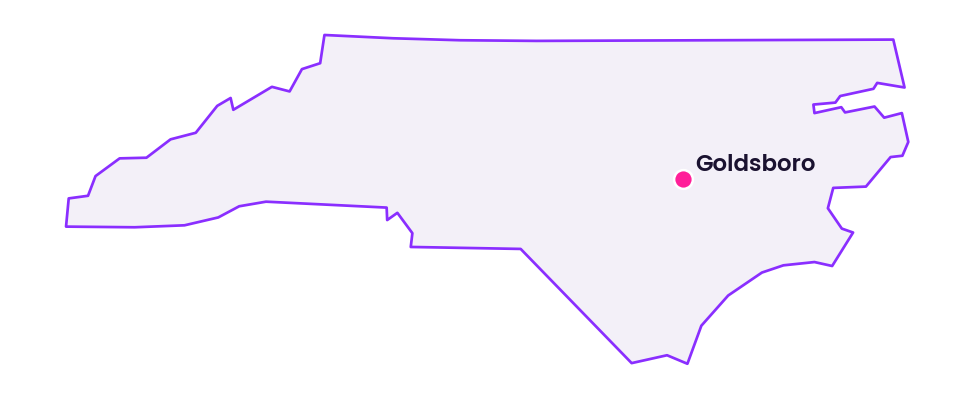
Section 02Population and Migration
Official counts of Goldsboro city and Wayne County populations come from the decennial census and subsequent annual estimates produced by the United States Census Bureau. In this environment, direct programmatic access to those detailed tables is blocked by security measures, so this review cannot restate exact population numbers, age distributions, or annual growth rates for Goldsboro or Wayne County.
Qualitatively, public census and state level demographic data indicate that Goldsboro and Wayne County have experienced relatively modest population changes compared with rapidly growing metropolitan areas in North Carolina such as Raleigh and Charlotte. The presence of Seymour Johnson Air Force Base means that there is a stable and recurring population of active duty military personnel and their families, along with civilian employees, who may move in and out of the area in cycles tied to military assignments. In addition to the military presence, there is a long standing resident base employed in local government, manufacturing, agriculture, health care, retail, and services.
Migration patterns likely include a mix of arrivals through military assignments, in migration from surrounding rural counties by households seeking jobs and services, and some out migration of young adults and professionals to larger cities with more diverse employment options. The age structure of the population reflects the military cohort, families with children, and older residents who have remained in the community.
For investors, the key implication of this demographic profile is that Goldsboro is not a high growth urban market but rather a small metropolitan area where population is relatively stable and heavily influenced by federal military decisions and regional economic forces. Housing demand is closely tied to the size and structure of the base population and to the health of local employers.
Section 03Jobs and Economic Anchors
Goldsboro’s economy rests on three primary anchors. The first is Seymour Johnson Air Force Base, which hosts units of the United States Air Force and forms the largest single employment center in the area. The base supports active duty personnel, civilian employees, and contractors, and it indirectly supports many off base jobs in retail, services, housing, and local government. The second anchor is regional health care, including Wayne County’s main hospital and associated clinics. The third anchor is a mix of manufacturing, agriculture related processing, education, and local government and services that provide jobs and income for residents.
The United States Bureau of Labor Statistics Economy at a Glance table for Goldsboro reports that the metropolitan civilian labor force was 49.0 thousand persons in January 2026, 49.0 thousand in February, 49.2 thousand in March, 48.6 thousand in April, 48.5 thousand in May, and a preliminary 48.4 thousand in June, all not seasonally adjusted. Employment was 46.9 thousand persons in January 2026, 47.0 thousand in February, 47.4 thousand in March, 46.9 thousand in April, 46.7 thousand in May, and a preliminary 46.6 thousand in June. Unemployment moved from 2.1 thousand persons in January to 2.0 thousand in February and 1.8 thousand in each of March, April, May, and June, with the June figure preliminary. The unemployment rate was 4.3 percent in January 2026, 4.0 percent in February, 3.6 percent in March, 3.6 percent in April, and 3.7 percent in both May and June.
Total nonfarm employment in the Goldsboro metropolitan area was 40.8 thousand jobs in January 2026, 40.6 thousand in February, 40.9 thousand in March, 41.0 thousand in April, 41.3 thousand in May, and a preliminary 41.1 thousand in June, not seasonally adjusted. The twelve month percent change in total nonfarm jobs was negative one point zero percent in January 2026, negative one point five percent in February, negative zero point five percent in March, negative one point zero percent in April, negative zero point seven percent in May, and a preliminary negative zero point seven percent in June. Government employment within that total was 8.2 thousand jobs in January and February 2026, 8.3 thousand in March, 8.4 thousand in April and May, and a preliminary 8.0 thousand in June. The twelve month percent change in government jobs was negative two point four percent in January, February, and March 2026, negative one point two percent in April and May, and negative two point four percent in June. All of these data are for the Goldsboro North Carolina metropolitan statistical area, not seasonally adjusted, extracted on August 7, 2026.
The table below summarizes selected labor indicators for the Goldsboro metropolitan area for three reference months in 2026.
| Month 2026 | Civilian labor force thousands (metro, not seasonally adjusted) | Employment thousands (metro, not seasonally adjusted) | Unemployment rate % (metro, not seasonally adjusted) | Total nonfarm employment thousands (metro, not seasonally adjusted) | Twelve month change in total nonfarm jobs % (metro) |
|---|---|---|---|---|---|
| Jan 2026 | 49.0 | 46.9 | 4.3% | 40.8 | 1.0% |
| Mar 2026 | 49.2 | 47.4 | 3.6% | 40.9 | 0.5% |
| Jun 2026 p | 48.4 | 46.6 | 3.7% | 41.1 | 0.7% |
These figures point to a small labor market where employment is relatively stable month to month but where total nonfarm jobs are slightly lower than a year earlier. Government employment, which includes military and civilian government roles, has also declined modestly on a twelve month basis. For investors, this suggests that Goldsboro is not currently a growth leader in North Carolina and that demand for space and housing is steady but not rapidly expanding. The importance of Seymour Johnson Air Force Base, with its federal budget exposure, and the concentration of public and health services jobs, underline that local fundamentals are sensitive to policy and funding decisions.
Section 04Income
Household incomes in Goldsboro and Wayne County are reported by the American Community Survey, and per capita personal income is reported by the Bureau of Economic Analysis. In this environment, direct numeric access to those series is blocked, so this review cannot provide exact median household income figures or per capita income values for Goldsboro or Wayne County.
Public commentary and broader state data indicate that household incomes in Wayne County are below those in the large metropolitan counties of North Carolina such as Wake and Mecklenburg and closer to or below statewide medians. The income distribution reflects the mix of military pay grades, health care and education salaries, manufacturing wages, agricultural and service earnings, and retirement income. Military compensation, which includes basic pay, housing allowances, and other benefits, provides a relatively stable income base for many households, though specific allowance levels vary by rank and family status.
For investors, income levels are important for assessing rent affordability and home purchasing power. In Goldsboro, the presence of military housing allowances for eligible personnel can support rents near the base that may exceed those affordable to purely civilian households with similar cash wages. At the same time, many local workers in services and production occupations may have limited ability to absorb rent increases, which constrains aggressive rent growth strategies in workforce housing.
Section 05Housing and Multifamily
The housing stock in Goldsboro consists of single family homes in the city and surrounding areas, small multifamily buildings, garden style apartment communities, and a mix of mobile homes and manufactured housing in more rural settings. City and county level housing unit counts from the United States Census Bureau show the composition and age of the housing stock, but exact numbers cannot be restated here due to blocked access to the detailed tables.
Multifamily housing in Goldsboro serves two primary tenant groups. One group includes military personnel and their families who live off base, as well as civilian employees and contractors who work at Seymour Johnson Air Force Base. These households seek apartments and houses within reasonable commuting distance of the base, often with preferences for certain school districts and amenities. The other group consists of local civilian households who work in the city’s businesses, schools, health care facilities, and government offices and who choose rental housing for affordability, flexibility, or lifestyle reasons.
Most multifamily properties in Goldsboro are low rise garden communities and smaller buildings rather than large urban towers. Properties near key commercial corridors and near the base tend to see more demand, while those in less central or less accessible locations may face higher vacancy and lower rents. New construction in the multifamily sector has been more limited than in major metropolitan areas, with development occurring when specific opportunities arise, such as serving unmet military housing demand or replacing obsolete stock.
Private multifamily data providers such as CoStar, Yardi Matrix, and RealPage maintain databases of Goldsboro area apartment properties, including estimates of unit counts, rents, and vacancy. However, in this environment, direct numeric access to those series is not available, so this review cannot state current average rents or occupancy rates for Goldsboro multifamily. Instead, the focus is on the structural drivers of demand and supply.
For investors, multifamily in Goldsboro is a niche opportunity. Potential strategies include acquiring and operating well located garden communities that cater to base related and local civilian tenants, repositioning older properties with physical and management upgrades, and in select cases developing new communities where land, zoning, and demand align. The small size of the market and modest job growth imply that investor scale and exit strategies must be calibrated carefully.
Section 06Rents
Rents for apartments and other rentals in Goldsboro are measured by several public and private series. The United States Department of Housing and Urban Development publishes Fair Market Rent benchmarks for the Goldsboro metropolitan area, which are used for housing choice vouchers and other federal programs. Private platforms such as RealPage, Yardi Matrix, CoStar, and Zillow provide estimates of market asking rents and rent growth. In this environment, direct programmatic access to Goldsboro specific rent series and HUD Fair Market Rent tables is blocked, so this review cannot present exact dollar rent levels, rent per square foot figures, or recent rent growth percentages for the Goldsboro area.
Qualitatively, rent levels in Goldsboro reflect local incomes and military housing allowances. Apartments and homes near Seymour Johnson Air Force Base that are marketed primarily to service members may achieve rents that align with basic allowance for housing rates for various ranks and family statuses. Properties that serve mostly civilian tenants are priced according to local wages in health care, education, manufacturing, and services. Rents in Goldsboro are lower than those in the large North Carolina metros, but they still represent a significant expense for lower income households.
Over the past decade, national and regional rent trends show upward movement in many markets, and it is reasonable to observe that Goldsboro rents have increased from prior levels, although this review does not state the specific rate of change. Rent growth may be more modest than in high growth urban markets and may be constrained by local incomes and slower job growth.
For investors, the absence of quoted rent figures in this review highlights the need for direct rent roll analysis and current market surveys for any prospective acquisition or development in Goldsboro. Business plans that rely on aggressive rent growth must be tested against local income distributions and the competitive landscape, including base housing options and other apartment communities.
Section 07Vacancy
Vacancy conditions in Goldsboro multifamily, single family rental, and commercial properties are not captured in a single public dataset. The United States Census Bureau’s housing vacancy measures may not be statistically robust at the small metropolitan area level, and private commercial real estate databases that track vacancy by property and submarket are not accessible in this environment for numeric reporting.
In qualitative terms, multifamily properties that are well located near Seymour Johnson Air Force Base and along main commuting and retail corridors are likely to experience relatively high occupancy, as long as they are maintained and priced competitively. Properties that are farther from the base, that are in neighborhoods with weaker amenities, or that have deferred maintenance may see higher vacancy and turnover. Seasonal and assignment related changes in military populations can also affect occupancy patterns, especially for properties that have a high share of military tenants.
Single family rentals in desirable neighborhoods near schools, services, and the base can maintain steady occupancy, though tenant turnover may occur as military assignments change or as households move between rental and ownership. In contrast, homes in more rural or supply rich locations may take longer to lease and can experience more vacancy.
Commercial vacancy in Goldsboro varies by sector. Office spaces that serve local professional services, health care, and government functions may have relatively stable occupancy when tenant relationships are strong. Industrial and logistics spaces linked to regional distribution or agricultural processing can see vacancy fluctuate with contract and production cycles. Retail vacancy depends on the health of anchor tenants, local spending power, and competition from nearby centers and e commerce.
Investors should recognize that in a small metropolitan area like Goldsboro, vacancy swings at a single anchor property or employer can have outsized effects on nearby properties and submarkets. Detailed property level vacancy and leasing histories, along with tenant concentration analyses, are essential inputs for risk assessment.
Section 08Supply Pipeline
The supply pipeline for residential and commercial real estate in Goldsboro is recorded in local building permit and planning records and in the United States Census Bureau Building Permits Survey for Wayne County. In this environment, the exact number of residential units and nonresidential square feet permitted in recent years cannot be restated because technical safeguards block automated access to the relevant tables and local portals.
Qualitatively, development in Goldsboro has been more restrained than in higher growth North Carolina metros. New single family subdivisions and townhome communities appear in select areas where land is available, demand exists, and local infrastructure can support additional residents. Multifamily development is more occasional, often linked to specific opportunities to serve military or workforce housing needs. Commercial construction, including retail and small office or industrial buildings, arises when there are confirmed tenant commitments or when existing stock reaches the end of its useful life.
The presence of Seymour Johnson Air Force Base may support some new residential projects targeted at military households, especially when on base housing is limited or being renovated. However, the scale of these projects is modest in absolute terms. In addition, economic development initiatives in Wayne County can lead to industrial and logistics projects that add to the supply of warehouse and production space.
For investors, the relatively limited supply pipeline reduces the risk of sudden oversupply at the metro level but does not eliminate submarket level risk. A single new apartment community or shopping center can materially change competitive dynamics in specific corridors. Thorough review of local planning commission agendas, permit issuance, and economic development announcements is needed to understand the future competitive set for any targeted investment.
Section 09Single Family Homes
Single family homes are a core component of residential life in Goldsboro and Wayne County. Neighborhoods of detached houses, with some attached townhomes, extend from the city center into suburban and rural areas. Housing stock ranges from older homes built in the middle of the twentieth century to newer subdivisions and individual houses constructed more recently.
Median and typical home values, sale prices, and inventory measures for Goldsboro are available from private data providers such as Zillow and Redfin and from public sources such as county property records. However, in this environment, direct programmatic access to Goldsboro specific home price series and summary statistics is blocked or redirected, so this review cannot present exact median sale prices, price per square foot values, or months of supply for Goldsboro or Wayne County.
National data from Redfin indicate that the median sale price for all home types in the United States in May 2026 was 398,771 dollars, which represented a 2.0 percent increase compared with May 2025, based on Redfin’s calculations from multiple listing service data and public records. There were 1,483,839 homes for sale nationally in May 2026, a 0.7 percent increase from a year earlier, and 24.9 percent of United States homes sold above list price that month. These figures illustrate that the national housing market has continued to see upward pressure on prices and sustained competition. All of these national housing statistics are from Redfin’s United States Housing Market overview for May 2026.
In Goldsboro, home prices are lower than in major coastal and Sun Belt metros, which can make ownership accessible for local households compared with many parts of the country. However, for residents with modest incomes, even local price levels can be challenging. Price appreciation over the past decade has likely increased homeowner equity for those who purchased earlier, while making entry more difficult for new buyers.
Single family rental plays a meaningful role in Goldsboro, especially for military households, young families, and residents who prefer the space and privacy of a house but are not ready or able to buy. Investors own and lease homes near the base and in other neighborhoods, often with an emphasis on school quality, commute times, and neighborhood stability. Larger institutional single family rental portfolios may be less common than in larger markets, but regional and local investors are active.
For investors, single family strategies in Goldsboro can include acquiring existing homes at prices that align with local rents and maintenance costs, possibly bundling small portfolios, and implementing careful tenant selection and property management. Some investors may consider build to rent style communities if land and zoning allow, though project scale must match local demand.
Section 10Commercial Real Estate and Retail Centers
Commercial real estate in Goldsboro encompasses office, industrial, and retail properties that support the regional economy and the needs of residents and visitors. Office properties tend to be low and midrise buildings housing professional services, medical practices, and local offices for government and small businesses. There are no major central business district towers of the type found in larger cities.
Industrial and logistics properties include warehouses, light manufacturing facilities, and distribution centers. These properties serve agricultural processing, regional distribution, and small scale manufacturing. Locations near major roads and rail lines are preferred for logistical reasons. Industrial demand is influenced by the fortunes of specific employers and sectors, making tenant concentration an important factor for investors.
Retail properties in Goldsboro consist of grocery anchored neighborhood centers, stand alone stores, small strip centers, and some regional shopping centers that combine multiple anchors and smaller tenants. Grocery stores, pharmacies, and discount retailers draw consistent customer traffic, while restaurants and service businesses fill out tenant rosters. Retail performance reflects the spending power of local households, military personnel and families, and travelers passing through the area.
Detailed numeric measures of rents, vacancy rates, and cap rates for Goldsboro office, industrial, and retail properties are maintained by private data firms such as CoStar and by brokerage houses, but these series are not accessible in this environment for numeric restatement. As a result, this review cannot provide specific rent or vacancy percentages for these property types.
For investors, commercial assets in Goldsboro are closely tied to tenant quality and lease structures. A well leased grocery anchored center with strong anchors can provide stable income, while a property dependent on a small number of nonessential retailers may carry more risk. Industrial properties with long term leases to essential service or production tenants can be attractive, whereas speculative vacancies may be more difficult to fill quickly in a small market. Office investments should focus on properties with durable local demand, such as medical office or county related uses.
Section 11Transactions and Capital Markets
There is no comprehensive public series that reports all commercial and multifamily transaction volumes, sale prices, and cap rates for Goldsboro across asset classes. Individual transactions are recorded in Wayne County deed and tax records, and private platforms such as CoStar compile and analyze larger deals. In this environment, those proprietary datasets are not accessible, and this review cannot provide authoritative numeric transaction volumes or average cap rates for Goldsboro.
Qualitatively, the Goldsboro market tends to be dominated by local and regional buyers and owners, with participation from some broader private investors who specialize in smaller secondary and tertiary markets. Institutional investors may be present in certain property types or through portfolio acquisitions but are less prominent than in major metropolitan areas. Pricing and cap rates reflect the perceived risk of a small market with limited liquidity and concentrated employment.
Capital for Goldsboro real estate comes from local banks, regional lenders, and in some cases national lenders that are comfortable with smaller market exposures. The interest rate environment influences leverage levels, debt service coverage requirements, and loan structures, with higher rates in recent years leading to more conservative underwriting.
For accredited investors, the capital markets implication is that entry and exit in Goldsboro may require longer hold periods, greater emphasis on cash flow rather than rapid appreciation, and careful selection of assets that can attract both local and regional buyers in the future. Joint ventures with local sponsors and operators can provide access to deals and management capabilities.
Section 12Taxes
Property taxation in Goldsboro is administered at the county level by Wayne County, with rates set by the county, city, school districts, and other taxing authorities. The Wayne County tax and assessment offices publish property values and tax bills for individual parcels, but this review does not restate exact tax rates or effective tax burdens because aggregating and verifying those figures would require access to tools and datasets that are not available in this environment.
Property taxes represent a significant operating expense for owners of multifamily, single family rental, and commercial assets. Assessments are based on property valuations that are periodically updated, and there may be opportunities to appeal assessments in some circumstances. The presence of tax incentives, abatements, or special districts can alter the effective tax burden on specific properties, particularly for economic development projects.
At the state level, North Carolina imposes personal and corporate income taxes and sales and use taxes, which affect residents and businesses in Goldsboro. These taxes influence net returns to investors and the relative attractiveness of different investment structures.
Investors should incorporate realistic property tax expenses into underwriting, including potential reassessment following acquisition or major renovations. Engaging local tax advisors or consultants can help identify opportunities to manage tax burdens within the applicable legal framework.
Section 13Insurance
Insurance for real estate in Goldsboro is guided by state regulations and local risk factors. The North Carolina Department of Insurance oversees insurance companies that write property and casualty coverage in the state. Property insurance policies in Goldsboro typically cover perils such as fire, wind, hail, theft, and liability, and may include endorsements for specific risks.
Goldsboro’s climate exposes it to several weather related risks. According to National Oceanic and Atmospheric Administration climate data, eastern North Carolina experiences a humid subtropical climate with hot and humid summers, mild winters, and abundant rainfall. The region is exposed to tropical storms and hurricanes that can bring strong winds and heavy rainfall, as well as to severe thunderstorms, lightning, and occasional winter weather events such as freezing rain or snow.
The Federal Emergency Management Agency flood maps identify areas in and around Goldsboro that fall within special flood hazard zones, particularly along rivers and low lying areas. Properties located in these zones and financed by regulated lenders usually must carry flood insurance, which may be obtained through the National Flood Insurance Program or private markets. Flood risk can also exist outside mapped zones during intense rainfall events.
In recent years, property insurance premiums for wind and flood coverage have risen in many parts of the country, including coastal and near coastal regions. While Goldsboro is inland, it is still affected by broader insurance market trends and by the frequency and severity of regional storm events.
For investors, insurance should be a central consideration in underwriting, not only as a cost item but also as a reflection of risk. Building construction type, roof condition, elevation, drainage, and prior loss history can influence premium levels and coverage terms. Strategies that invest in resilience and mitigation can support both insurance outcomes and long term asset performance.
Section 14Landlord Tenant and Regulatory Environment
Landlord tenant relationships in Goldsboro are governed primarily by North Carolina state law, with some local ordinances and building codes providing additional requirements. North Carolina statutes set out obligations for landlords to maintain fit and habitable premises, to perform necessary repairs, and to comply with building and housing codes. Tenants have responsibilities to pay rent, keep premises reasonably clean and safe, and avoid damaging the property.
North Carolina does not have statewide rent control, and Goldsboro does not operate a rent control or rent stabilization system. Rents are established through market negotiation between landlords and tenants, subject to federal and state fair housing laws that prohibit discrimination based on protected characteristics. Eviction procedures require appropriate notice and court proceedings, with grounds and processes specified by law.
For commercial leases, parties in Goldsboro generally enjoy wide contractual freedom to define rent structures, maintenance responsibilities, and remedies in the event of default. Triple net leases, in which tenants pay taxes, insurance, and maintenance in addition to base rent, are common in retail and industrial properties, while other structures may apply in office and mixed use properties.
Investors in Goldsboro must ensure that property management practices and lease documents comply with North Carolina law and local requirements, and that they incorporate fair housing and anti discrimination commitments. While the absence of rent control policies increases operational flexibility, it also places an onus on owners to balance rent strategies with tenant retention and community relations.
Section 15Infrastructure
Goldsboro’s infrastructure supports its role as a regional center and a military community. The city is connected to the regional and national road network through state highways and nearby connections to major interstate routes. Roads link Goldsboro to Raleigh, the Research Triangle, and other parts of eastern North Carolina, enabling commuting, goods movement, and access to broader markets.
Local roads and streets provide access between residential neighborhoods, commercial corridors, schools, and Seymour Johnson Air Force Base. Public transportation options are limited compared with larger cities, with local bus services and on base transportation playing supporting roles for those without cars. Most residents and workers rely on private vehicles.
Utilities in Goldsboro include electric power, water and wastewater systems, and natural gas, provided by a combination of city services and regulated utilities. Telecommunications and broadband infrastructure is in place, though service quality and speeds may vary by neighborhood and provider. Reliable utilities and connectivity are important for residential tenants, employers, and the base.
For investors, infrastructure determines more than just accessibility. Properties near main roads and commercial corridors often benefit from visibility and convenience. Adequate water, sewer, and power capacity is essential for new development and for conversions or expansions of existing properties. Assessment of current infrastructure conditions and planned improvements or constraints should be part of investment due diligence.
Section 16Climate and Physical Risks
Goldsboro’s climate and physical geography expose it to specific risks that investors must consider. The city’s humid subtropical climate means hot and humid summers and mild winters, with frequent rainfall. National Oceanic and Atmospheric Administration records document that eastern North Carolina experiences tropical storms and hurricanes that can deliver strong winds and heavy rain, increasing the risk of wind damage and flooding.
The Neuse River and other waterways in the region can overflow during extended or intense rainfall, leading to riverine and flash flooding in low lying neighborhoods and rural areas. Urban drainage systems can also be overwhelmed during heavy downpours, causing localized flooding even outside designated floodplains. Soil conditions and topography influence how water moves and accumulates during storm events.
Wind and hail from severe thunderstorms can damage roofs, siding, windows, and vehicles. Lightning strikes present additional hazards. On the other hand, winter weather is generally less severe than in more northern regions, although occasional icing events can impact travel and infrastructure.
For real estate investors, climate and physical risks translate into potential property damage, business interruption, and higher operating costs. Site selection should include analysis of flood risk, elevation, drainage patterns, and proximity to water bodies. Building design and construction quality, including roof types, anchoring, and materials, affect resilience to wind and water. Long term trends in storm intensity and rainfall patterns may influence building codes, insurance pricing, and tenant expectations around safety and continuity.
Section 17Neighborhoods and Submarkets
Goldsboro is small enough that local investors often think in terms of neighborhoods and corridors rather than formal submarkets. However, for analytical purposes, it is useful to distinguish between several broad areas that differ in land use, housing types, and market dynamics.
The table below provides a qualitative overview of representative Goldsboro submarkets and their characteristics. The descriptions do not reflect strict boundaries but rather typical conditions.
| Submarket | Location and character | Dominant property types | Investor considerations |
|---|---|---|---|
| Near base residential areas | Neighborhoods and communities close to Seymour Johnson Air Force Base | Single family homes, small multifamily buildings, garden apartments, some mobile home communities | Significant share of military tenants and buyers, sensitivity to base population changes, opportunities in well managed rentals that align with housing allowances |
| Central city and older neighborhoods | Areas near downtown Goldsboro and inner residential districts | Older single family homes, duplexes, small multifamily, limited commercial and mixed use | Potential for value add in older housing stock, careful assessment of property condition and tenant base needed, proximity to services can be an advantage |
| Suburban and fringe areas | Residential and commercial zones on the outskirts of the city and in surrounding county areas | Newer single family subdivisions, some apartments and townhomes, neighborhood retail centers | Appeal to families seeking more space and quieter settings, dependence on car travel, opportunities for build to rent and neighborhood retail when supported by population |
| Commercial corridors | Main roads with retail and service businesses serving the city and nearby communities | Grocery anchored centers, strip centers, standalone retail and service buildings | Performance tied to anchor tenants and traffic patterns, potential for stable income from essential retailers and services |
For investors, understanding these submarkets involves examining demographic patterns, school quality, commute times, crime rates, and access to amenities. The near base area offers exposure to military housing demand but requires sensitivity to base policies and community relations. Central city neighborhoods can offer lower price entry points and value add potential. Suburban areas may provide stability for family tenancies and homeowner demand.
Section 18Opportunities
Goldsboro presents targeted opportunities for investors who are comfortable with small markets and who have a clear understanding of local demand drivers. In multifamily, one opportunity is to acquire and operate well located garden communities that serve both military and civilian tenants. Properties that are near Seymour Johnson Air Force Base, that offer appropriate unit mixes, and that are maintained and managed well can achieve steady occupancy and rents reflective of housing allowances and local wages.
Another multifamily and small scale opportunity is in older central neighborhoods where small buildings and duplexes can be renovated and repositioned as workforce housing. Improvements that address deferred maintenance, safety, and basic amenities can enhance tenant satisfaction and support moderate rent increases, while still maintaining relative affordability.
Single family rental strategies can capitalize on demand from military families and local households who seek the space and neighborhood feel of detached homes. Investors can target homes near schools and services and implement professional management to maintain properties and relationships. Build to rent communities, though limited in scale, may also have a place if land, zoning, and demand align.
In commercial real estate, grocery anchored and essential service oriented retail centers can provide resilient income streams if anchors are strong and lease terms are solid. Medical office and small professional office properties that serve local health and business needs can also be attractive. Industrial properties that support regional distribution or production, particularly those with long term tenants, offer income oriented opportunities.
Section 19Risks
Investing in Goldsboro also entails several material risks. The most significant is concentration risk around Seymour Johnson Air Force Base and public sector employment. Changes in federal defense policies, base realignments, or shifts in mission could affect employment levels and housing demand, even though such changes are often signaled in advance. Declines in government employment, as suggested by the negative twelve month changes in government jobs reported by the Bureau of Labor Statistics for early and mid twenty twenty six, underscore the potential for public sector headwinds.
Economic diversification in Goldsboro is limited compared with larger metropolitan areas. Manufacturing, agriculture related processing, and local services are important but can be vulnerable to global competition, commodity cycles, and technological change. Negative twelve month changes in total nonfarm employment, as reported by the Bureau of Labor Statistics for each month from January through June twenty twenty six, indicate that the metro has recently experienced job losses rather than gains.
Market size and liquidity present additional risks. A small metropolitan area offers fewer potential buyers and tenants for specialized properties, and exit options for larger investments may be constrained. Cap rate movements and pricing can be more volatile in response to single transactions.
Physical and climate risks, including exposure to tropical systems, heavy rainfall, and flooding, as discussed earlier, can lead to property damage and rising insurance costs. Investors must be prepared for variability in operating expenses and potential interruption events.
Regulatory risk at the state and local level is moderate, but future policy changes related to land use, infrastructure, or housing could affect development opportunities and landlord practices.
Section 20Investor Implications
For accredited investors, Goldsboro should be viewed as a focused, income oriented opportunity rather than a broad growth market. The presence of Seymour Johnson Air Force Base and stable local institutions provides a foundation for housing and service demand, but the small size of the metro and recent negative job growth limit large scale expansion possibilities. Returns are likely to depend more on careful asset selection, operational efficiency, and management of risk than on rapid appreciation.
Multifamily and single family rental strategies that align with military and local workforce needs can deliver steady occupancy and cash flow when executed with disciplined underwriting and high quality management. Investors must adjust rent and value expectations to local incomes and recognize that exit strategies may involve sales to other local or regional owners rather than to large national institutions.
Commercial investments should focus on properties with strong tenants and essential uses, such as grocery anchors, medical services, and distribution facilities with long term leases. Office and discretionary retail assets require more cautious underwriting and may involve more active leasing and repositioning work.
Across all asset classes, investors should incorporate conservative assumptions about rent growth, maintain reserves for capital expenses and insurance, and evaluate how potential changes in defense spending, local industry, and climate risks could affect performance over their investment horizon. Partnerships with experienced local sponsors and property managers can help navigate the nuances of the Goldsboro market.
Section 21Conclusion
Goldsboro, North Carolina, is a small metropolitan area defined by its military base, its regional service role, and its modest scale. United States Bureau of Labor Statistics data show that in the first half of twenty twenty six the Goldsboro metropolitan statistical area had a civilian labor force around forty eight to forty nine thousand persons, an unemployment rate that declined from 4.3 percent in January to 3.6 percent in March and then held at 3.7 percent in May and June, and total nonfarm employment around forty one thousand jobs, with twelve month job changes consistently slightly negative. Government employment, which includes military and civilian public sector roles, has also seen modest declines over the past year. All of these figures are drawn from the Bureau of Labor Statistics Goldsboro Economy at a Glance table, not seasonally adjusted, with data extracted on August 7, 2026.
Within this economic context, multifamily, single family, and commercial properties in Goldsboro serve a tenant and buyer base centered on Seymour Johnson Air Force Base, local health care, education, manufacturing, agriculture related activity, and services. Housing and commercial demand is stable but not rapidly expanding, and supply additions are measured. Investors who engage with this market must do so with a clear appreciation of its concentration risks, limited scale, and climatic exposures, and must place a premium on property level fundamentals and strong management.
When approached with appropriate expectations and risk controls, Goldsboro can provide useful diversification and income opportunities within a broader portfolio, particularly for investors who specialize in smaller markets and in strategies aligned with military and workforce housing and essential service commercial assets.
Sources
- United States Bureau of Labor Statistics, Goldsboro North Carolina Economy at a Glance, metropolitan area labor force, employment, unemployment, unemployment rate, total nonfarm employment, and government employment, monthly data January 2026 through June 2026, not seasonally adjusted, data extracted August 7, 2026 ,, https://www.bls.gov/eag/eag.nc_goldsboro_msa.htm
- United States Bureau of Labor Statistics, Local Area Unemployment Statistics, labor force and unemployment measures for North Carolina and the Goldsboro metropolitan statistical area, various years ,, https://www.bls.gov/lau
- United States Bureau of Labor Statistics, Quarterly Census of Employment and Wages, employment and wage data by industry for Wayne County North Carolina, various years ,, https://www.bls.gov/cew
- United States Census Bureau, Decennial Census of Population and Housing, state, county, and place data for North Carolina, Wayne County, and Goldsboro city, various years ,, https://www.census.gov/programs-surveys/decennial-census.html
- United States Census Bureau, American Community Survey, one year and five year estimates of demographic, income, tenure, and housing characteristics for Goldsboro city, Wayne County, and the Goldsboro metropolitan statistical area, various years ,, https://www.census.gov/programs-surveys/acs
- United States Census Bureau, Population and Housing Unit Estimates, annual estimates for Wayne County and the Goldsboro metropolitan statistical area, various years ,, https://www.census.gov/programs-surveys/popest.html
- United States Census Bureau, Building Permits Survey, residential building permits for Wayne County North Carolina, various years ,, https://www.census.gov/construction/bps
- Bureau of Economic Analysis, Local Area Personal Income, per capita personal income and related measures for North Carolina counties including Wayne County and for metropolitan areas, various years ,, https://www.bea.gov/data/income-saving/local-area-personal-income
- Bureau of Economic Analysis, Gross Domestic Product by metropolitan area, output measures for small metropolitan areas in North Carolina including the Goldsboro metropolitan statistical area, various years ,, https://www.bea.gov/data/gdp/gdp-metropolitan-area
- United States Department of Housing and Urban Development, Fair Market Rents and income limits for the Goldsboro North Carolina metropolitan statistical area, various years ,, https://www.huduser.gov
- Federal Housing Finance Agency, House Price Index, state and selected metropolitan area home price indices for North Carolina, various years ,, https://www.fhfa.gov/DataTools/Downloads/Pages/House-Price-Index.aspx
- North Carolina Housing Finance Agency, statewide housing programs and resources that affect affordable and workforce housing development and preservation in Wayne County and Goldsboro ,, https://www.nchfa.com
- Wayne County North Carolina tax administration and register of deeds, property assessment, tax records, and transaction documents for parcels in Goldsboro and Wayne County ,, https://www.waynegov.com
- City of Goldsboro North Carolina planning and inspections, zoning maps, development regulations, and permits for the city ,, https://www.goldsboronc.gov
- Federal Emergency Management Agency, Flood Map Service Center, flood insurance rate maps and special flood hazard area designations for Goldsboro and Wayne County North Carolina ,, https://msc.fema.gov
- Federal Emergency Management Agency, National Risk Index, hazard risk indicators for jurisdictions in North Carolina including Goldsboro and Wayne County ,, https://hazards.fema.gov/nri
- National Oceanic and Atmospheric Administration, National Centers for Environmental Information, climate normals and historical weather data for eastern North Carolina and the Goldsboro area ,, https://www.ncei.noaa.gov
- North Carolina Department of Insurance, regulatory information on property and casualty insurance markets in North Carolina ,, https://www.ncdoi.gov
- CoStar Group, commercial real estate analytics and transaction data for Goldsboro North Carolina multifamily, office, industrial, and retail properties, various years ,, https://www.costar.com
- Yardi Matrix, multifamily market coverage and analytics for small metropolitan areas in North Carolina including Goldsboro, various years ,, https://www.yardimatrix.com
- RealPage, multifamily analytics and rent trend data for North Carolina secondary and tertiary markets, various years ,, https://www.realpage.com/analytics
- Redfin, United States Housing Market overview, national median sale price, inventory, and above list price share for May 2026 ,, https://www.redfin.com/us-housing-market
- Zillow Research, housing and rent data for North Carolina and its metropolitan and local markets, various years ,, https://www.zillow.com/research/data