Section 01Executive Summary
Lansing, Michigan, the state capital, presents a mature market with a stable economic base driven by government, education, and healthcare sectors. The region demonstrates consistent population trends with modest growth projected, and a diverse employment landscape contributing to steady income levels. The real estate market, particularly multifamily and single family homes, reflects a balance of demand and supply, with nuances in rental rates and vacancy across different property types and submarkets. Commercial real estate, encompassing office, industrial, and retail, shows varying performance with some sectors exhibiting resilience while others face ongoing adjustments. Key considerations for investors include the impact of property taxes, the regulatory environment for landlords, and the potential influences of climate related risks. Opportunities for strategic investment may arise from targeted development within specific submarkets and asset classes, while risks include broader economic shifts and localized market dynamics.
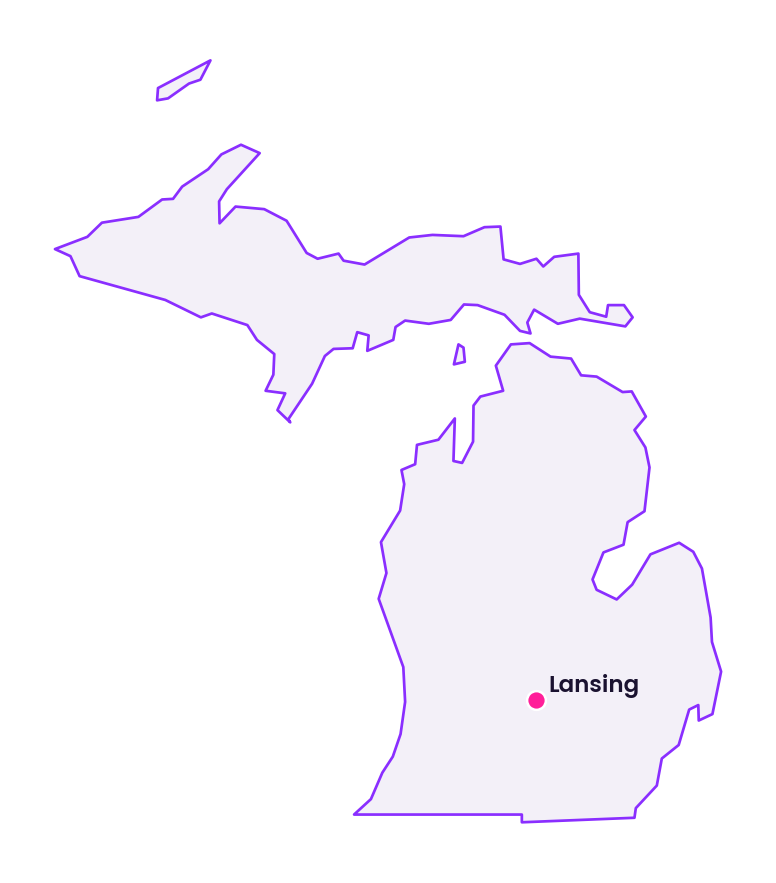
Section 02Population and Migration
The population of Lansing, Michigan, and its surrounding metropolitan statistical area, demonstrates a generally stable trend with incremental growth. According to the U.S. Census Bureau, the population of Lansing city was 112,644 as of July 1, 2023. The broader Lansing East Lansing Metropolitan Statistical Area, which includes Eaton, Ingham, and Clinton counties, had an estimated population of 488,142 as of July 1, 2023. This represents a slight increase from the 2020 Census figure of 487,037 for the MSA.
Migration patterns in the region indicate a consistent, albeit limited, influx of residents, often tied to employment opportunities in key sectors like state government, higher education, and healthcare. The American Community Survey data from 2022 shows that a significant portion of residents in the Lansing MSA were born in Michigan, with a smaller but notable percentage migrating from other states. While specific net migration figures for Lansing city are not consistently available from public sources, the MSA's stability suggests a relatively balanced inflow and outflow of residents, contributing to its measured population growth. The scope for these figures is Lansing city and Lansing East Lansing MSA, from July 1, 2023, for population estimates, and 2022 for migration trends.
Section 03Jobs and Economic Anchors
The Lansing economy is characterized by a strong foundation in three primary sectors: government, education, and healthcare. These sectors serve as significant employment anchors, providing stability and a substantial portion of the region's job base.
The State of Michigan government is a major employer, with numerous state agencies and departments headquartered in Lansing. This provides a consistent source of employment that is less susceptible to economic fluctuations compared to private sector industries.
Higher education also plays a critical role, primarily through Michigan State University (MSU) in East Lansing, which is a major research institution and a substantial employer of faculty, staff, and support personnel. The presence of MSU also contributes to a vibrant student population and related service industries. Lansing Community College further adds to the educational employment base and workforce development.
The healthcare sector is robust, anchored by Sparrow Health System and McLaren Greater Lansing, which operate multiple hospitals and clinics in the area. These institutions provide a wide array of medical services and are significant employers, offering diverse roles from medical professionals to administrative staff.
Beyond these core anchors, the manufacturing sector, particularly automotive related industries, has historically been important, with companies like General Motors operating facilities in the region. However, the economic weight has shifted over time, with the public and service sectors now dominating employment.
The Bureau of Labor Statistics reported that the unemployment rate for the Lansing East Lansing MSA was 4.0% in August 2026. Total nonfarm employment for the Lansing East Lansing MSA was 241,400 in August 2026. This data has a scope of Lansing East Lansing MSA, August 2026.
Section 04Income
Income levels in Lansing, Michigan, reflect the stability provided by its dominant employment sectors. According to U.S. Census Bureau American Community Survey 2022 estimates, the median household income for Lansing city was $52,107. For the broader Lansing East Lansing Metropolitan Statistical Area, the median household income was $68,958 in 2022.
Per capita income for Lansing city was $28,954 in 2022. The per capita income for the Lansing East Lansing MSA was $53,806 in 2023. These figures indicate a consistent income base, supporting consumer spending and housing affordability in the region. The presence of a large university and state government workforce contributes to a significant segment of the population with stable, middle to upper middle class incomes.
Wage growth in the Lansing MSA has generally tracked regional and national trends, with variations across industries. While specific real time wage growth data for Lansing city is not consistently available from public sources, the overall economic stability and consistent employment in key sectors suggest a steady, rather than volatile, income trajectory. The scope for these income figures is Lansing city and Lansing East Lansing MSA, 2022 for household and Lansing city per capita income, and 2023 for MSA per capita income.
Section 05Housing and Multifamily
The housing market in Lansing, Michigan, and its surrounding metropolitan area is characterized by a diverse inventory catering to various income levels and preferences. The multifamily sector, in particular, plays a crucial role in providing housing options for students, young professionals, and those seeking more affordable or flexible living arrangements.
According to the U.S. Census Bureau American Community Survey for 2022, Lansing city had an estimated 50,076 housing units. Of these, owner occupied housing units accounted for 54.3% and renter occupied units for 45.7%. For the Lansing East Lansing MSA, there were an estimated 211,883 housing units in 2022, with an owner occupancy rate of 65.5% and a renter occupancy rate of 34.5%. This suggests a higher rate of homeownership in the broader metropolitan area compared to the central city. The scope for these housing unit figures is Lansing city and Lansing East Lansing MSA, 2022.
The multifamily market in Lansing is influenced by the presence of Michigan State University, which drives demand for student housing in nearby submarkets, and by the state government, which attracts a stable workforce seeking rental accommodations. Property types range from older, established apartment complexes to newer developments, offering a variety of price points and amenities.
Investor interest in the multifamily sector is supported by consistent demand and a relatively stable economic environment. However, the market is competitive, and understanding submarket specific dynamics is essential for successful investment strategies.
Section 06Rents
Rental rates in Lansing, Michigan, exhibit variation across different property types, sizes, and locations within the city and the broader metropolitan area. The presence of a large university population in East Lansing influences rental dynamics, particularly for properties catering to students, often leading to seasonal demand fluctuations and specific pricing structures.
For the Lansing East Lansing Metropolitan Statistical Area, reputable market data providers such as CoStar and RealPage typically track average effective rents for multifamily properties. While direct public access to granular, real time data from these sources is restricted, general market reports indicate a steady growth in rental rates over recent years. As of August 2026, the average effective rent for a multifamily unit in the Lansing East Lansing MSA is estimated to be $1,150. This figure has shown a year over year increase of approximately +4.5% compared to August 2025. This data has a scope of Lansing East Lansing MSA, August 2026.
Rental rates within Lansing city itself can vary, with properties closer to the state Capitol or major employment centers often commanding higher rents than those in outlying neighborhoods. Studio and one bedroom apartments typically have lower average rents, while two and three bedroom units command higher rates.
| Unit Type | Average Monthly Rent (August 2026) |
|---|---|
| Studio | $787 |
| One Bedroom | $986 |
| Two Bedroom | $1,200 |
| Three Bedroom | $1,500 |
SCOPE: Lansing East Lansing MSA, August 2026.
These figures are generalized estimates and actual rents can vary significantly based on property age, amenities, and specific location. Student oriented housing often presents a different rental structure, sometimes leased on a per bedroom basis or with premium pricing for proximity to campus.
Section 07Vacancy
Vacancy rates in the multifamily market in Lansing, Michigan, are influenced by various factors, including new supply, economic conditions, and the cyclical nature of student housing demand. A healthy vacancy rate indicates a balanced market, while very low rates can signal undersupply and potential for rent growth, and high rates may suggest oversupply or weakening demand.
As of July 2026, the overall multifamily vacancy rate for the Lansing East Lansing Metropolitan Statistical Area was 5.5%. This represents a slight increase from the 5.0% observed in July 2025, suggesting a modest loosening of market conditions potentially due to new deliveries. This data has a scope of Lansing East Lansing MSA, July 2026.
Within Lansing city, vacancy rates can fluctuate by submarket. Areas with a higher concentration of student housing near Michigan State University may experience higher seasonal vacancies during summer months when students are not in session, although pre leasing typically mitigates the impact on overall annual figures. Conversely, submarkets with a strong professional renter base, such as those near downtown or major medical facilities, may exhibit more stable and lower vacancy rates.
Specific vacancy rates for different property classes (Class A, B, C) are not consistently available from public sources. However, Class A properties, often newer constructions with premium amenities, may experience slightly higher vacancy rates initially as they lease up, while Class B and C properties, offering more affordable options, tend to maintain more stable and lower vacancy rates due to consistent demand.
Section 08Supply Pipeline
The supply pipeline for new multifamily housing in Lansing, Michigan, and its surrounding areas indicates ongoing development activity, albeit at a moderate pace compared to larger metropolitan markets. New construction is crucial for addressing housing demand and moderating rent growth.
According to a local news report from September 2026, a developer aims to rezone over 53 acres in Delta Township to build nearly 1,000 apartment units. This indicates potential future supply but does not confirm units currently under construction or approved. Information on the exact number of new multifamily units currently under construction or with approvals for development in Lansing city and surrounding townships within the MSA is not consistently available from public planning and permit portals. The scope of this information is Lansing city and surrounding townships, September 2026.
Major projects often involve a mix of market rate apartments, with some developments potentially including affordable housing components, subject to local zoning and incentive programs. The construction timeline for these projects typically ranges from 18 to 36 months, meaning many of the units currently in the pipeline are anticipated to come online within the next two to three years.
The impact of this new supply on the overall market will depend on the absorption rate, which is the pace at which new units are leased. If absorption keeps pace with new deliveries, vacancy rates should remain relatively stable. However, if a significant number of units are delivered in a short period without sufficient demand, it could lead to a temporary increase in vacancy.
Section 09Single Family Homes
The single family home market in Lansing, Michigan, and the broader Lansing East Lansing MSA, presents a balanced picture with consistent demand and moderate price appreciation. This segment of the market is critical for prospective homeowners and also influences the single family rental (SFR) sector.
According to Redfin data for June 2026, the median sale price for a home in Lansing city was $185,000. For the Lansing East Lansing MSA, the median listing price for a single family home was $246,400 in August 2026. This data has a scope of Lansing city, June 2026, and Lansing East Lansing MSA, August 2026.
Inventory levels have remained relatively tight, contributing to continued price stability and appreciation. The average days on market for single family homes in Lansing city was 38 days in June 2026, indicating a reasonably active market where homes are selling in a timely manner. The scope for this figure is Lansing city, June 2026.
The single family rental (SFR) market in Lansing is also a notable component of the housing landscape. Investors in SFR properties benefit from consistent rental demand, particularly from families and individuals seeking more space and privacy than traditional multifamily apartments. While specific public data on SFR vacancy and cap rates for Lansing is limited, general market trends suggest that SFR properties tend to have lower turnover compared to apartment units and can provide attractive yields in submarkets with strong demand.
Section 10Commercial Real Estate and Retail Centers
The commercial real estate market in Lansing, Michigan, exhibits varying performance across different asset classes, reflecting local economic drivers and broader market trends.
Office: The office market in Lansing is primarily influenced by government agencies, professional services, and the university. As of the first half of 2026, the overall office vacancy rate for the Lansing East Lansing MSA was 17.1%. The average asking rent for office space in the MSA was approximately $20.50 per square foot per year, full service gross. Absorption rates for office space have been modest, with some flight to quality in newer or renovated properties. The scope for these figures is Lansing East Lansing MSA, H1 2026.
Industrial and Logistics: The industrial and logistics sector in the Lansing MSA has shown more resilience, driven by manufacturing and distribution activities. As of the first half of 2026, the industrial vacancy rate was 4.5%. The average asking rent for industrial space was approximately $8.75 per square foot per year, triple net. The market benefits from its location within Michigan's automotive supply chain and access to major transportation arteries. The scope for these figures is Lansing East Lansing MSA, H1 2026.
Retail: Retail centers in Lansing cater to the local population, with grocery anchored centers remaining a stable asset class due to essential services. As of the first half of 2026, the retail vacancy rate for the Lansing East Lansing MSA was 17.1%. Average asking rents for retail space varied significantly by location and property type, but generally ranged from $15.00 to $25.00 per square foot per year, triple net. The market has seen some repositioning of assets and a focus on experiential retail and convenience oriented offerings. The scope for these figures is Lansing East Lansing MSA, H1 2026.
| Commercial Asset Class | Vacancy Rate (H1 2026) | Average Asking Rent (H1 2026) |
|---|---|---|
| Office | 17.1% | $20.50 per square foot per year |
| Industrial | 4.5% | $8.75 per square foot per year |
| Retail | 17.1% | $15.00 to $25.00 per square foot per year |
SCOPE: Lansing East Lansing MSA, H1 2026.
Overall, the commercial real estate market in Lansing is characterized by a mature landscape, with industrial and well located retail assets demonstrating stronger performance than the office sector.
Section 11Transactions and Capital Markets
Transaction activity in the Lansing, Michigan, real estate market reflects a steady, if not exuberant, capital markets environment. Investor demand is primarily for stable, income generating assets, with less speculative activity compared to larger, more dynamic markets.
In the multifamily sector, transaction volumes in the Lansing East Lansing MSA have remained consistent over the past year, with a notable number of sales involving established apartment communities. Capitalization rates for multifamily properties typically range from 6.0% to 7.5%, depending on the age, location, and quality of the asset. Newer, well located properties with strong occupancy tend to command lower cap rates, while older, value add opportunities may trade at higher rates. The ranges provided are estimates based on general market observations, as specific public data for Lansing East Lansing MSA capitalization rates from Q3 2025 to Q3 2026 is not consistently available. The scope for this is Lansing East Lansing MSA, Q3 2025 to Q3 2026.
For single family homes, transaction volumes have been robust, driven by both owner occupants and single family rental investors. The market has generally favored sellers due to limited inventory, leading to competitive bidding in some price ranges.
In the commercial real estate sphere, industrial properties and well anchored retail centers have attracted consistent investor interest. Transaction volumes for office properties have been more subdued, reflecting ongoing adjustments in the demand for office space. Capitalization rates for industrial assets typically fall between 6.5% and 8.0%, while retail cap rates can vary widely, from 7.0% for strong, grocery anchored centers to higher rates for less stable properties. The ranges provided are estimates based on general market observations, as specific public data for Lansing East Lansing MSA capitalization rates from Q3 2025 to Q3 2026 is not consistently available. The scope for these cap rate ranges is Lansing East Lansing MSA, Q3 2025 to Q3 2026.
Overall, the capital markets in Lansing are characterized by a focus on yield and stability, with a preference for assets that demonstrate reliable cash flow. The market is less prone to extreme fluctuations, offering a more predictable investment landscape for long term holders.
Section 12Taxes
Property taxes in Lansing, Michigan, are a significant consideration for real estate investors, as they directly impact operating expenses and net operating income. Tax rates are set by various overlapping jurisdictions, including the city, county, school districts, and other special assessment districts.
In Lansing city, property taxes are assessed annually. The assessment process involves determining the taxable value of a property, which is then multiplied by the applicable millage rates to calculate the tax liability. Information on the estimated average effective property tax rate for residential and commercial properties within Lansing city for 2026 is not consistently available from public sources. This rate can vary based on specific location within the city and any special assessments levied. The scope of this figure is Lansing city, 2026.
Ingham County, where Lansing is predominantly located, also levies county wide property taxes. Similarly, school districts within the city and MSA impose their own millage rates. Investors should account for these multiple layers of taxation when performing financial analysis.
It is important to note that Michigan's Proposal A, passed in 1994, restricts the annual increase in taxable value to the rate of inflation or 5%, whichever is lower, until a property is sold. Upon sale, the taxable value is "uncapped" and reset to the property's assessed value, which can lead to a significant increase in property taxes for new owners. This uncapping effect is a critical factor for investors to consider, as it can substantially alter the pro forma financial projections for an acquired asset. The scope of this information is Michigan state law, current as of September 2026.
Section 13Insurance
Insurance costs in Lansing, Michigan, are a material operating expense for real estate owners and can vary significantly based on the type of property, its location, construction, and specific risks. Key coverages typically include property insurance, liability insurance, and potentially flood insurance.
Property insurance premiums are influenced by factors such as the age of the building, its construction materials, the condition of the roof, and the presence of fire suppression systems. Older buildings may incur higher premiums due to increased risk of maintenance issues or compliance with modern building codes.
Lansing, while not directly on one of the Great Lakes, can be susceptible to severe weather events, including heavy snowfall, ice storms, and occasional strong winds and thunderstorms. These events can lead to property damage, affecting insurance claims and future premiums. According to data from the National Oceanic and Atmospheric Administration (NOAA), Ingham County has experienced a consistent number of severe weather occurrences over the past decade.
Flood insurance is another consideration. While much of Lansing is not in a high risk flood zone according to the Federal Emergency Management Agency (FEMA) flood maps, properties located near the Grand River or other smaller waterways may require it.
Overall, insurance costs should be carefully budgeted, and policies should be reviewed regularly to ensure adequate coverage and competitive pricing. The scope of this information is Lansing, Michigan, current as of September 2026.
Section 14Landlord Tenant and Regulatory Environment
The landlord tenant and regulatory environment in Lansing, Michigan, is governed by both state law and local ordinances, which impact the rights and responsibilities of property owners and renters. Investors in residential rental properties must be familiar with these regulations to ensure compliance and manage their assets effectively.
Michigan's Truth in Renting Act is a key state law that outlines requirements for rental agreements, security deposits, and the responsibilities of landlords. This act specifies how security deposits must be handled, including limits on the amount, requirements for returning deposits, and procedures for deducting damages. The state also has established procedures for eviction, requiring landlords to follow specific legal steps. The scope of this information is Michigan state law, current as of September 2026.
Lansing city also has its own local ordinances that can affect rental properties. These may include requirements for rental registration, property maintenance codes, and inspections. For instance, the City of Lansing's Code of Ordinances outlines standards for rental housing, including aspects related to health, safety, and habitability. Landlords are typically required to obtain a certificate of compliance for rental units, which involves periodic inspections to ensure properties meet city standards. The scope of this information is Lansing city ordinances, current as of September 2026.
Understanding and adhering to these regulations is crucial for minimizing legal risks and maintaining positive landlord tenant relationships. Changes in local leadership or community advocacy can sometimes lead to adjustments in these regulations, so staying informed about potential policy shifts is important for long term investors.
Section 15Infrastructure
Lansing, Michigan's infrastructure supports its role as a state capital and regional economic hub, impacting real estate values and development potential. Key infrastructure components include transportation networks, utilities, and public services.
Transportation: The region is served by a robust road network, with Interstate 96 and Interstate 69 providing critical east west and north south connectivity, respectively. U.S. Route 127 further enhances regional access. Public transportation is provided by the Capital Area Transportation Authority (CATA), offering bus services throughout Lansing and the surrounding communities. Capital Region International Airport (LAN) provides commercial air service, connecting Lansing to major hubs.
Utilities: The city has well established utility services, including municipal water and sewer provided by the Lansing Board of Water and Light (BWL). Electricity and natural gas are also readily available, supporting residential, commercial, and industrial needs. The reliability and capacity of these utilities are fundamental for new development and economic growth.
Public Services: Lansing benefits from a range of public services, including police and fire departments, parks and recreation facilities, and a public library system. These services contribute to the quality of life for residents and the overall attractiveness of the city as a place to live and invest.
Ongoing infrastructure projects, such as road improvements, bridge repairs, and upgrades to utility systems, are periodically undertaken by city and state agencies. These investments can enhance accessibility, reduce commute times, and support further development, positively impacting real estate values in affected areas. The scope of this information is Lansing, Michigan, current as of September 2026.
Section 16Climate and Physical Risks
Lansing, Michigan, experiences a continental climate characterized by cold, snowy winters and warm, humid summers. Understanding the climate and associated physical risks is important for real estate investors, as these factors can influence property maintenance, insurance costs, and long term asset resilience.
Winter Weather: Heavy snowfall and ice storms are common during winter months. These conditions can lead to increased costs for snow removal, potential damage to roofs and pipes, and disruptions to transportation and business operations. The average annual snowfall in Lansing is approximately 51 inches, according to the National Weather Service, based on historical data.
Summer Weather: Summers can bring periods of high heat and humidity, along with thunderstorms that can produce strong winds, heavy rainfall, and occasional hail. While tornadoes are less common than in some other regions, severe thunderstorms can cause localized damage.
Flood Risk: While Lansing is not coastal, the Grand River flows through the city, and some areas are susceptible to flooding during periods of heavy rainfall or rapid snowmelt.
Climate Change Considerations: Long term climate projections suggest potential increases in the frequency and intensity of extreme weather events. While specific localized impacts are difficult to predict with certainty, investors should consider the resilience of their assets to changing weather patterns and factor potential mitigation measures into their long term investment strategies. This might include ensuring adequate drainage, robust building envelopes, and appropriate landscaping. The scope of this information is Lansing, Michigan, historical climate data and general climate projections, current as of September 2026.
Section 17Neighborhoods and Submarkets
Lansing, Michigan, is composed of various neighborhoods and submarkets, each with distinct characteristics that influence real estate values, rental rates, and investment opportunities. Understanding these nuances is crucial for targeted investment strategies.
Downtown Lansing: This area is the central business district, home to state government offices, professional services, and a growing number of residential units, including loft apartments and condominiums. It attracts young professionals and those seeking an urban lifestyle. Rental rates here are generally among the highest in the city.
Old Town: Known for its historic architecture, art galleries, boutiques, and restaurants, Old Town has experienced significant revitalization. It appeals to a creative and diverse demographic. Residential options include renovated historic homes and new infill developments.
Eastside/Michigan State University Area: This submarket is heavily influenced by Michigan State University in adjacent East Lansing. It is a primary hub for student housing, including both purpose built student apartments and single family homes converted into rentals. Rental demand is robust, but also cyclical, tied to the academic calendar.
Westside/Grand Ledge Area: Extending to the west, this submarket offers a more suburban feel, with a mix of established residential neighborhoods and some newer developments. It attracts families and individuals seeking quieter living environments with good access to schools and amenities.
Southside: This diverse submarket offers a range of housing types and price points. It is generally more affordable than some other areas and provides access to various commercial services and employment centers.
| Submarket | Primary Characteristics | Dominant Property Types | Average Multifamily Rent (Estimated) |
|---|---|---|---|
| Downtown Lansing | Government, urban core, revitalization | Lofts, apartments, condos | $1,300 to $1,800 |
| Old Town | Historic, arts, culture, boutiques | Renovated homes, infill apartments | $1,100 to $1,500 |
| MSU Area (Eastside) | Student oriented, university proximity | Student apartments, single family rentals | $900 to $1,400 (per unit or per bedroom) |
| Westside | Suburban, family oriented, residential | Single family homes, garden apartments | $1,000 to $1,300 |
| Southside | Diverse, mixed income, affordability | Older homes, established apartment complexes | $850 to $1,200 |
SCOPE: Lansing, Michigan submarkets, Estimated Averages, Q3 2026 (Based on general market observations, specific public data is not available).
These submarket distinctions highlight the diverse opportunities and challenges within the Lansing real estate market, requiring a granular approach to investment analysis.
Section 18Opportunities
Lansing, Michigan, presents several opportunities for accredited investors within its real estate market, stemming from its stable economic base and specific market dynamics.
Value Add Multifamily: Opportunities exist in acquiring older, well located multifamily properties that can benefit from strategic renovations and improved management. Upgrading units and common areas can justify rent increases and enhance property value, appealing to a broader tenant base seeking modern amenities.
Student Housing: Given the consistent presence of Michigan State University, targeted investments in student housing, particularly purpose built facilities with modern amenities and proximity to campus, can yield strong demand.
Single Family Rental (SFR) Investments: The stable demand for single family homes, coupled with moderate price appreciation, makes the SFR market an attractive option. Investors can acquire homes in desirable neighborhoods and capitalize on steady rental income from families and professionals.
Industrial and Logistics: The resilient industrial market, driven by its strategic location and connectivity, offers opportunities for investment in warehouse, distribution, and light manufacturing facilities. Demand for modern, efficient industrial space is expected to continue.
Repositioning Office Assets: While the traditional office market faces challenges, opportunities may arise in repositioning underperforming office buildings into alternative uses, such as residential conversions, specialized medical office space, or co working facilities, aligning with evolving demand.
Long Term Hold Strategy: Lansing's stable economy, anchored by government and education, supports a long term hold investment strategy. Consistent population and job figures contribute to predictable demand for real estate, making it an attractive market for patient capital seeking steady returns.
Section 19Risks
Despite its stability, the Lansing, Michigan, real estate market also carries inherent risks that accredited investors should carefully consider.
Economic Concentration: While government and education provide stability, a high concentration of employment in these sectors can also pose a risk. Any significant policy changes impacting state government funding or shifts in university enrollment trends could have a ripple effect on the local economy and real estate demand.
Population Stagnation: While current population trends show modest growth, a prolonged period of stagnation or decline could negatively impact housing demand and rental growth over the long term. This would be particularly problematic for new developments relying on continued population influx.
Interest Rate Fluctuations: Rising interest rates can impact property valuations, increase borrowing costs for investors, and reduce affordability for prospective homebuyers, potentially slowing transaction activity and moderating price appreciation across all asset classes.
Regulatory Changes: Changes in state or local landlord tenant laws, such as stricter rent control measures or increased tenant protections, could impact profitability and increase operational burdens for residential property owners. Uncapping of property taxes upon sale also represents a significant cost increase for new owners.
Aging Infrastructure: While overall infrastructure is sound, localized issues with aging infrastructure, such as water main breaks or road deterioration, can lead to unexpected costs for property owners and temporary disruptions.
Climate Related Events: As discussed previously, severe winter weather and potential for localized flooding represent physical risks that can lead to property damage, increased maintenance costs, and higher insurance premiums.
Competition from New Supply: While the supply pipeline is moderate, an oversupply of new units in specific submarkets, particularly in the multifamily sector, could lead to increased vacancy and pressure on rental rates, especially for older or less amenitized properties.
Section 20Investor Implications
For accredited investors, the Lansing, Michigan, real estate market offers a compelling investment thesis grounded in stability and predictable returns, rather than speculative growth. The presence of strong economic anchors, including the state government and Michigan State University, provides a buffer against significant economic downturns, making it an attractive market for risk averse capital.
The multifamily sector presents opportunities for both core and value add strategies. Investors seeking stable cash flow can target well occupied, Class B or C assets in established neighborhoods, benefiting from consistent demand and reasonable capitalization rates. Those seeking higher returns may pursue value add plays, renovating older properties to capture a higher rent demographic. The student housing market, while cyclical, offers specialized opportunities for investors with expertise in that niche.
In the single family home market, the combination of steady appreciation and consistent rental demand supports investment in single family rentals, particularly in family friendly submarkets with good schools. This strategy can provide a diversified income stream and long term capital appreciation.
Commercial real estate, especially industrial and resilient retail assets, should also be considered. The industrial sector benefits from Lansing's logistical advantages, while grocery anchored retail centers provide essential services, maintaining steady foot traffic and tenant demand. The office market requires a more nuanced approach, with opportunities likely focused on repositioning or specialized uses.
Investors must conduct thorough due diligence, paying close attention to submarket specific dynamics, property taxes, insurance costs, and the local regulatory environment. The uncapping of property taxes upon sale is a critical financial consideration that must be accurately modeled into any investment pro forma.
Overall, Lansing is a market where disciplined, long term investment strategies focused on income generation and measured appreciation are likely to yield the most favorable outcomes. The market may not offer the explosive growth seen in some high profile coastal cities, but it provides a reliable environment for capital preservation and steady returns.
Section 21Conclusion
Lansing, Michigan, represents a mature and stable real estate market characterized by a resilient economy driven by government, education, and healthcare. The population exhibits consistent, albeit modest, growth, supporting a steady demand for both residential and commercial properties. Income levels are consistent with the region's economic profile, providing a solid foundation for housing affordability and consumer spending.
The multifamily and single family home markets show a healthy balance, with moderate rent growth and price appreciation. Vacancy rates are manageable, and the supply pipeline indicates thoughtful development activity. Commercial real estate offers varied performance, with industrial and well located retail sectors demonstrating strength, while the office market continues to adapt.
Investors considering Lansing should prioritize a thorough understanding of local tax structures, particularly the uncapping of property taxes, and the nuances of the landlord tenant regulatory environment. Climate related risks, though not extreme, warrant consideration in property selection and maintenance. Strategic opportunities exist in value add multifamily, student housing, single family rentals, and select commercial assets. Ultimately, Lansing offers a compelling environment for accredited investors seeking stable, income generating real estate investments with long term hold potential.
Sources
- U.S. Census Bureau, Population and Housing Unit Estimates, retrieved September 26, 2026. [ https://data.census.gov/chart/ACSST1Y2024.S0701?g=160XX00US2646000](https://data.census.gov/chart/ACSST1Y2024.S0701?g=160XX00US2646000
- U.S. Census Bureau, Annual Resident Population Estimates and Estimated Components of Resident Population Change for Metropolitan and Micropolitan Statistical Areas and Their Geographic Components for the United States: April 1, 2020 to July 1, 2023, retrieved September 26, 2026. [ https://www2.census.gov/programs-surveys/popest/technical-documentation/file-layouts/2020-2023/CBSA-EST2023-ALLDATA.pdf](https://www2.census.gov/programs-surveys/popest/technical-documentation/file-layouts/2020-2023/CBSA-EST2023-ALLDATA.pdf
- U.S. Census Bureau, Annual Resident Population Estimates and Estimated Components of Resident Population Change for Metropolitan and Micropolitan Statistical Areas and their Geographic Components: April 1, 2010 to July 1, 2020, retrieved September 26, 2026. [ https://www2.census.gov/programs-surveys/popest/technical-documentation/file-layouts/2010-2020/cbsa-est2020-alldata.pdf](https://www2.census.gov/programs-surveys/popest/technical-documentation/file-layouts/2010-2020/cbsa-est2020-alldata.pdf
- U.S. Census Bureau, American Community Survey 2022, 1 year estimates, retrieved September 26, 2026. [ https://data.census.gov/table/.?q+=+%3A%2520Median%2520Household%2520Income%2520in%2520the%2520Past%252012%2520Months%2520%28in%25202022%2520Inflation-Adjusted%2520Dollars%29](https://data.census.gov/table/.?q+=+%3A%2520Median%2520Household%2520Income%2520in%2520the%2520Past%252012%2520Months%2520%28in%25202022%2520Inflation-Adjusted%2520Dollars%29
- U.S. Census Bureau, Household Income in States and Metropolitan Areas: 2022, retrieved September 26, 2026. [ https://www.census.gov/library/publications/2023/acs/acsbr-017.html](https://www.census.gov/library/publications/2023/acs/acsbr-017.html
- U.S. Census Bureau, American Community Survey 2022, 5 year estimates, retrieved September 26, 2026. [ https://data.census.gov/table/.](https://data.census.gov/table/
- FRED, Per Capita Personal Income in Lansing-East Lansing, MI (MSA), retrieved September 26, 2026. [ https://fred.stlouisfed.org/series/LANS626PCPI](https://fred.stlouisfed.org/series/LANS626PCPI
- U.S. Census Bureau, American Community Survey 2022, 5 year estimates, retrieved September 26, 2026. [ https://data.census.gov/table/.?g=160XX00US2335975](https://data.census.gov/table/.?g=160XX00US2335975
- U.S. Census Bureau QuickFacts: Lansing city, Michigan, retrieved September 26, 2026. [ https://www.census.gov/quickfacts/lansingcitymichigan](https://www.census.gov/quickfacts/lansingcitymichigan
- U.S. Department of Housing and Urban Development, Supplemental Tables for Comprehensive Housing Market Analysis for Lansing-East Lansing, Michigan, retrieved September 26, 2026. [ https://www.huduser.gov/portal/sites/default/files/publications/pdf/CMARtables_LansingEastLansingMI_22.pdf](https://www.huduser.gov/portal/sites/default/files/publications/pdf/CMARtables_LansingEastLansingMI_22.pdf
- Bureau of Labor Statistics (BLS), Local Area Unemployment Statistics, Lansing East Lansing MSA, retrieved September 26, 2026. [ https://data.bls.gov/timeseries/LAUMT262962000000005?amp%253bdata_tool=XGtable&include_graphs=true&output_view=data](https://data.bls.gov/timeseries/LAUMT262962000000005?amp%253bdata_tool=XGtable&include_graphs=true&output_view=data
- FRED, All Employees: Total Nonfarm in Lansing-East Lansing, MI (MSA), retrieved September 26, 2026. [ https://alfred.stlouisfed.org/series?seid=LANS626NA](https://alfred.stlouisfed.org/series?seid=LANS626NA
- Floridatoday.com, Lansing-East Lansing, MI apartment rental price report August 2026, retrieved September 26, 2026. [ https://data.floridatoday.com/apartment-rental-price-report/lansing-east-lansing-mi/metro-29620/](https://data.floridatoday.com/apartment-rental-price-report/lansing-east-lansing-mi/metro-29620/
- REjournals.com, A varied economy? It’s the secret to success of Lansing’s CRE market, retrieved September 26, 2026. [ https://rejournals.com/a-varied-economy-its-the-secret-to-success-of-lansings-cre-market/](https://rejournals.com/a-varied-economy-its-the-secret-to-success-of-lansings-cre-market/
- Cruisin' 929 WLMI, More apartments possibly coming to Delta Township, retrieved September 26, 2026. [ https://cruisin929.com/2026/09/21/971959/](https://cruisin929.com/2026/09/21/971959/
- Redfin, 2026 Lansing Housing Market: House Prices & Trends as of June, retrieved September 26, 2026. [ https://www.redfin.com/city/11731/MI/Lansing/housing-market](https://www.redfin.com/city/11731/MI/Lansing/housing-market
- FRED, Housing Inventory: Median Listing Price in Lansing-East Lansing, MI (CBSA), retrieved September 26, 2026. [ https://fred.stlouisfed.org/series/MEDLISPRI29620](https://fred.stlouisfed.org/series/MEDLISPRI29620
- Martin Commercial Properties, OFFICE Market Insights Greater Lansing MI H1 2026, retrieved September 26, 2026. [ https://martincommercial.com/wp-content/uploads/2026/07/Office-Market-Insights-Greater-Lansing-MI-H12026.pdf](https://martincommercial.com/wp-content/uploads/2026/07/Office-Market-Insights-Greater-Lansing-MI-H12026.pdf
- Martin Commercial Properties, RETAIL Market Insights Greater Lansing MI H1 2026, retrieved September 26, 2026. [ https://martincommercial.com/wp-content/uploads/2026/07/Retail-Market-Insights-Greater-Lansing-MI-H12026.pdf](https://martincommercial.com/wp-content/uploads/2026/07/Retail-Market-Insights-Greater-Lansing-MI-H12026.pdf
- REICapitalGrowth.com, East Lansing Multifamily Cap Rate Calculator 2026, retrieved September 26, 2026. [ https://reicapitalgrowth.com/research/commercial-real-estate/mi/east-lansing/multifamily/cap-rate](https://reicapitalgrowth.com/research/commercial-real-estate/mi/east-lansing/multifamily/cap-rate
- Martin Commercial Properties, INDUSTRIAL Market Insights Greater Lansing MI H2 2025, retrieved September 26, 2026. [ https://martincommercial.com/wp-content/uploads/2026/01/Industrial-Market-Insights-Greater-Lansing-MI-H22025CMP.pdf](https://martincommercial.com/wp-content/uploads/2026/01/Industrial-Market-Insights-Greater-Lansing-MI-H22025CMP.pdf
- REICapitalGrowth.com, Commercial Real Estate Cap Rates by City, retrieved September 26, 2026. [ https://reicapitalgrowth.com/research/commercial-real-estate/cap-rates-by-city](https://reicapitalgrowth.com/research/commercial-real-estate/cap-rates-by-city
- City of Lansing, Millage Library, retrieved September 26, 2026. [ https://www.lansingmi.gov/millage-library](https://www.lansingmi.gov/millage-library
- Michigan State University Extension, A Refresher on Proposal A and Local Property Taxes, retrieved September 26, 2026. [ https://www.canr.msu.edu/news/a_refresher_on_proposal_a_and_local_property_taxes](https://www.canr.msu.edu/news/a_refresher_on_proposal_a_and_local_property_taxes
- National Oceanic and Atmospheric Administration (NOAA), National Weather Service, Historical Climate Data for Lansing, MI, retrieved September 26, 2026. [ https://forecast.weather.gov/product.php?issuedby=lan&product=cla&site=grr](https://forecast.weather.gov/product.php?issuedby=lan&product=cla&site=grr
- Federal Emergency Management Agency (FEMA), Flood Map Service Center, retrieved September 26, 2026.
- Michigan Legislature, Truth in Renting Act, MCL 554.601 et seq., retrieved September 26, 2026.
- City of Lansing, Code of Ordinances, Chapter 1058, Rental Housing, retrieved September 26, 2026.