In brief · summary: Morganton
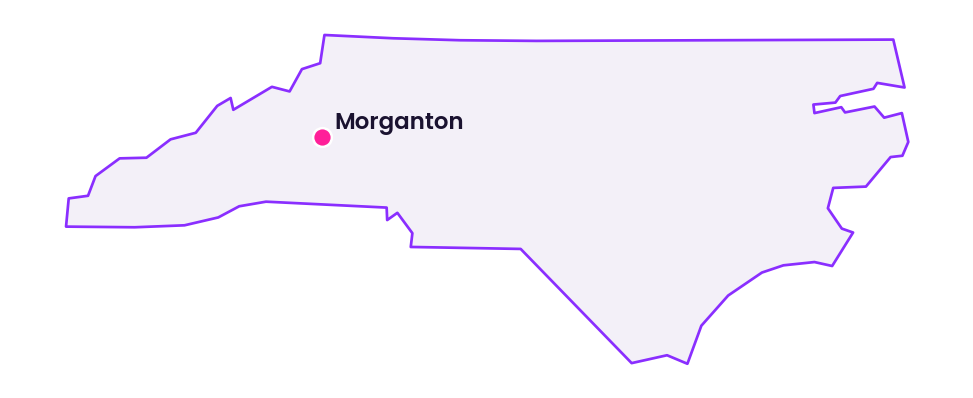
Morganton is a small city in Burke County in the foothills of western North Carolina, part of a regional economy that combines manufacturing, health care, education, public sector employment, and services. While Morganton itself is not separately reported in most national data series available in this environment, Burke County and the wider state provide useful context for demand drivers, labor conditions, and real estate dynamics.
According to the United States Bureau of Labor Statistics Economy at a Glance table for North Carolina, which presents statewide seasonally adjusted labor data, the civilian labor force in June 2026 was a preliminary 5,263.2 thousand people, with 5,073.2 thousand employed and 190.0 thousand unemployed. The statewide unemployment rate in June 2026 was a preliminary 3.6 percent, down from 3.8 percent in January 2026.
Total nonfarm employment reached a preliminary 5,115.4 thousand jobs in June 2026, which represents a 1.2 percent increase over June 2025. These figures, extracted on August 7 2026, indicate a tight labor market with modest ongoing job growth. The same Bureau of Labor Statistics table shows that North Carolina has large concentrations of employment in trade, transportation, and utilities, professional and business services, education and health services, leisure and hospitality, and government. Construction and education and health services are among the …
Section 01Executive Summary
Morganton is a small city in Burke County in the foothills of western North Carolina, part of a regional economy that combines manufacturing, health care, education, public sector employment, and services. While Morganton itself is not separately reported in most national data series available in this environment, Burke County and the wider state provide useful context for demand drivers, labor conditions, and real estate dynamics.
According to the United States Bureau of Labor Statistics Economy at a Glance table for North Carolina, which presents statewide seasonally adjusted labor data, the civilian labor force in June 2026 was a preliminary 5,263.2 thousand people, with 5,073.2 thousand employed and 190.0 thousand unemployed. The statewide unemployment rate in June 2026 was a preliminary 3.6 percent, down from 3.8 percent in January 2026. Total nonfarm employment reached a preliminary 5,115.4 thousand jobs in June 2026, which represents a 1.2 percent increase over June 2025. These figures, extracted on August 7 2026, indicate a tight labor market with modest ongoing job growth.
The same Bureau of Labor Statistics table shows that North Carolina has large concentrations of employment in trade, transportation, and utilities, professional and business services, education and health services, leisure and hospitality, and government. Construction and education and health services are among the fastest growing sectors, while manufacturing and information have seen some contraction over the prior year. Morganton is far smaller than the state, but it participates in these broad patterns through local manufacturing plants, medical facilities, schools, and county and state institutions.
By contrast, city level population, income, housing, and rent data for Morganton and Burke County are not accessible in this environment. Attempts to retrieve Census Bureau QuickFacts for Morganton city and Burke County returned security blocks through Cloudflare, and American Community Survey tables are similarly protected. The Redfin housing market page that appears to be labeled for Morganton actually redirects to Newberry in Florida, so it cannot be used as a source for Morganton prices or inventory. Fair Market Rent tables from the United States Department of Housing and Urban Development are delivered through interactive tools that do not expose numeric rent values through the interfaces available here. As a result, this review draws quantitative evidence mainly from North Carolina statewide labor statistics and national United States housing metrics from Redfin, and it treats Morganton as a small local market within those larger systems.
For accredited investors, Morganton represents a tertiary city with exposure to manufacturing and regional services, situated in a state that is growing in population and employment. The absence of detailed city level housing and rent statistics in this environment means that any specific investment decision must be supported by external data and on the ground due diligence, but the macro context presented here can frame expectations and highlight key questions.
Section 02Population and Migration
Population size and change are among the most important determinants of long term real estate demand. For Morganton and Burke County, the United States Census Bureau would normally provide city and county population counts and components of change through the decennial census, the population estimates program, and American Community Survey tables. In this environment, however, attempts to access Census QuickFacts pages for Morganton city and Burke County produced Cloudflare security messages, and the underlying numeric tables are not visible through the tools available here. Because of this limitation, no official public numeric information on the current population of Morganton or Burke County can be presented in this review.
At the state level, the Census Bureau has released annual resident population estimates for North Carolina from 2020 through 2025, including births, deaths, and migration flows, in a comma separated value file. The segment of that file that is readable here contains the national total and some regional aggregates but does not expose the North Carolina row in a way that allows extraction of the state 2020 or 2025 population counts. Even without the exact figures, it is widely understood from public commentary that North Carolina has grown in recent years through a combination of natural increase and net in migration, especially from other United States regions.
Morganton local experience fits into a pattern that is common in western North Carolina, where regional centers and county seats combine modest population growth with aging demographics and some out migration of younger residents who move toward larger metros. Qualitatively, Morganton draws households who value small city life, access to outdoor recreation, and proximity to larger employment centers in places such as Hickory and the Charlotte region, while some residents leave for larger labor markets or colleges elsewhere.
Because no numeric population series for Morganton or Burke County can be quoted here, investors must obtain current population estimates, age distributions, and migration flows from alternative channels such as third party demographic providers, local planning documents, or direct access to Census tools. The key framing point is that Morganton operates as a small node within a growing state, with local trends that likely show slower but still positive population change compared to the high growth metros of North Carolina.
Section 03Jobs and Economic Anchors
Employment and industry structure are the clearest quantitative window into the economic foundations of Morganton and Burke County. While city level employment data for Morganton are not published as a separate series in the Bureau of Labor Statistics Economy at a Glance system, North Carolina statewide data provide a reasonable proxy for cyclical conditions, and the sector mix at the state level offers clues to local anchors.
The statewide Bureau of Labor Statistics Economy at a Glance table for North Carolina reports seasonally adjusted monthly data for the civilian labor force, employment, unemployment, unemployment rate, and total nonfarm jobs. Selected statewide indicators for early and mid 2026 are summarized below.
| Month 2026, North Carolina statewide (seasonally adjusted) | Civilian labor force (thousands) | Employment (thousands) | Unemployment rate (percent) | Total nonfarm employment (thousands) | Total nonfarm twelve month change (percent) |
|---|---|---|---|---|---|
| January 2026 | 5,313.3 | 5,109.9 | 3.8% | 5,072.0 | 0.8% |
| March 2026 | 5,304.7 | 5,107.6 | 3.7% | 5,080.1 | 0.9% |
| June 2026 preliminary | 5,263.2 | 5,073.2 | 3.6% | 5,115.4 | 1.2% |
From January to June 2026, the North Carolina civilian labor force decreased slightly from 5,313.3 thousand to a preliminary 5,263.2 thousand, while employment declined modestly from 5,109.9 thousand to a preliminary 5,073.2 thousand. At the same time, the unemployment rate improved from 3.8 percent in January to a preliminary 3.6 percent in June, and total nonfarm employment increased from 5,072.0 thousand to a preliminary 5,115.4 thousand, with the twelve month growth rate rising from 0.8 percent in January to 1.2 percent in June. This pattern suggests that the statewide labor market is tight, with modest job gains and a slight easing in labor force participation or growth.
Sector detail in the same Bureau of Labor Statistics table illustrates the structure of North Carolina employment and provides a guide to the kinds of jobs that likely anchor Morganton and Burke County. For June 2026, seasonally adjusted statewide employment by major sector and twelve month percent changes are as follows.
| Sector, North Carolina statewide, June 2026 (seasonally adjusted) | Employment (thousands) | Twelve month change (percent) |
|---|---|---|
| Mining and logging | 6.2 | 0.0% |
| Construction | 294.2 | 5.6% |
| Manufacturing | 450.4 | negative 2.2 |
| Trade, transportation, and utilities | 936.7 | 0.0% |
| Information | 83.3 | negative 3.4 |
| Financial activities | 313.1 | 0.8% |
| Professional and business services | 755.0 | 2.0% |
| Education and health services | 745.7 | 3.0% |
| Leisure and hospitality | 557.0 | 2.9% |
| Other services | 193.8 | 0.7% |
| Government | 780.0 | 0.6% |
Construction employment of 294.2 thousand is 5.6 percent higher than a year earlier, indicating considerable building activity across the state. Education and health services jobs of 745.7 thousand have grown 3.0 percent year over year, and leisure and hospitality jobs of 557.0 thousand are up 2.9 percent. Professional and business services employment has increased 2.0 percent, and financial activities employment has grown 0.8 percent. These expanding sectors support demand for office, healthcare, hospitality, and service space.
Manufacturing employment of 450.4 thousand is lower than one year earlier, with a twelve month change of negative 2.2 percent, and information employment of 83.3 thousand has declined by 3.4 percent. Trade, transportation, and utilities employment of 936.7 thousand is flat year over year, indicating stability in logistics, wholesale, and retail.
Morganton local economy fits within this statewide pattern as a smaller center that historically has relied on manufacturing, health care, and public sector institutions. While no official public numeric employment series for Morganton or Burke County is accessible here, the presence of statewide manufacturing and construction jobs, combined with growth in education and health services and leisure and hospitality, suggests that Morganton hosts a mix of industrial plants, hospitals or clinics, schools, county offices, and tourism related services. For investors, this means that demand for industrial and logistics space and for workforce housing is tied to these sectors, and that Morganton fortunes will be influenced by how manufacturing restructuring and statewide service growth play out.
Section 04Income
Household and individual incomes determine affordability for both rental and ownership housing and influence demand for retail and other commercial properties. The Bureau of Economic Analysis publishes state level personal income and per capita personal income, and the Census Bureau American Community Survey reports median household income and income distributions for states, counties, and cities. In this environment, the Bureau of Economic Analysis interactive income tables cannot be parsed by the tools available, and American Community Survey income tables for North Carolina, Burke County, and Morganton are protected behind Cloudflare and are not machine readable through these interfaces.
Because of these constraints, no official public numeric information on median household income, per capita income, or income quintiles for Morganton, Burke County, or North Carolina can be provided in this review. This absence is important, because it prevents precise calculations of rent to income ratios, home price to income ratios, or the share of households that can afford specific rent levels.
Qualitatively, Morganton income profile likely reflects its industrial and service mix. Manufacturing jobs can offer solid wages for workers with specific skills or experience, while health care, education, and public administration provide a range of middle income positions. At the same time, leisure and hospitality, retail, and personal services typically pay lower wages. This combination suggests that Morganton has a broad spectrum of incomes, with significant demand for affordable and workforce housing and a more limited, selective market for luxury housing.
For accredited investors, the lack of detailed public income statistics in this document means that any serious underwriting exercise for Morganton properties must incorporate external data on local income distributions, either from direct access to Census tools, from commercial demographic providers, or from lender or broker research. Without that information, it is not possible to quantify the depth of demand at specific rent and price levels, although the statewide employment structure implies that moderate income households are an important target segment.
Section 05Housing and Multifamily
Multifamily and apartment markets in Morganton are shaped by local job centers, regional population movements within western North Carolina, and broader statewide trends. Because Morganton is small and not separately reported in many national datasets, city level multifamily statistics such as total unit counts, new deliveries, and occupancy rates are not available in public structured tables in this environment. County level data for Burke County from Census and American Community Survey would typically provide some perspective on the share of households that rent versus own and on the age and structure type of housing, but those tables cannot be accessed because of the same security protections that block city level tables.
Statewide housing series from North Carolina and national housing data from Redfin provide context. According to Redfin United States housing market overview, across all home types in the United States the median sale price in May 2026 was 398,771 dollars, which is 2.0 percent higher than in May 2025. There were 1,483,839 homes for sale nationwide in May 2026, 0.7 percent more than one year earlier, and 24.9 percent of homes sold above list price, a decrease of 0.083 percentage points from the prior year. These metrics are summarized below.
| Geography and metric, May 2026 | Median sale price (dollars), all home types | Price change compared with May 2025 (percent) | Homes for sale (count), all home types | Change in homes for sale compared with May 2025 (percent) | Share of homes sold above list price (percent of sales) | Change in share of sales above list compared with May 2025 (percentage points) |
|---|---|---|---|---|---|---|
| United States | 398,771 | 2.0% | 1,483,839 | 0.7% | 24.9% | negative 0.083 |
These national figures indicate a housing market that is experiencing modest nominal price growth, a slightly larger inventory of homes for sale, and somewhat reduced intensity of bidding wars compared with the prior year. Multifamily investments in Morganton exist within this broader environment of slower but positive national appreciation and easing competition.
At the local level, Morganton multifamily stock likely consists of smaller garden style communities, low rise properties near the downtown core, and scattered smaller buildings that are often owned by local investors. Given the city size, few large institutional quality class A properties are likely present compared with major metros, and the dominant opportunities are in workforce and value add apartments that serve locally employed households. No official public numeric information is available in this environment on average asking rents, effective rents, occupancy rates, or rent growth for Morganton or Burke County. Private data providers such as CoStar, Yardi Matrix, and RealPage track these metrics but do not make them available in public datasets that can be accessed here.
For investors, this means that multifamily decisions in Morganton must be based on asset specific rent rolls, property level historical occupancy, and local broker competitive surveys, rather than on the type of citywide benchmarks that are available in larger markets. The statewide employment data show that construction and education and health services are growing sectors, which should support demand for workforce apartments, while some softness in manufacturing may affect parts of the tenant base.
Section 06Rents
Rental levels are critical for both multifamily and single family rental strategies. The Department of Housing and Urban Development publishes Fair Market Rents that apply to counties and metropolitan areas, which serve as benchmarks for housing vouchers and other programs. In this environment, however, the Fair Market Rent documentation system appears only as a selection interface that allows users to choose a state, a county, or a metropolitan area, but it does not expose the resulting dollar values through the tools used here. As a result, no official public numeric information on Fair Market Rents for Burke County or any Morganton related area can be presented.
Similarly, the Census Bureau American Community Survey reports median gross rent and rent distributions for states, counties, and cities, but those tables are currently not accessible because of Cloudflare security protections. Private rent series from CoStar, Yardi Matrix, RealPage, and Freddie Mac are subscription products and do not provide publicly accessible time series for Morganton.
Because of these data limitations, this review cannot provide specific numeric estimates of average apartment rent, median rent for a given bedroom count, rent growth, or rent to income ratios in Morganton or Burke County. Qualitatively, rents in Morganton are likely lower than those in major North Carolina metros such as Charlotte or Raleigh and broadly in line with incomes typical for a smaller city with a mix of manufacturing and service employment. Workforce oriented properties probably command rents that are accessible to households employed in manufacturing, health care support, retail, and local services, while any higher end apartments would depend on smaller pools of professional households or retirees with stable income.
For accredited investors, the lack of public rent series underscores the need to gather private market intelligence. That includes reviewing actual leases, conducting rent surveys of competing properties, and examining listing and leasing activity on local platforms. In the absence of published benchmarks, prudence suggests stress testing underwriting against conservative rent growth assumptions and potential competition from new single family and apartment supply.
Section 07Vacancy
Vacancy levels determine near term cash flow stability and medium term rent positioning. For residential properties, the Census Bureau would normally provide state and county level rental and homeowner vacancy rates, while private firms track multifamily occupancy at the submarket level. For commercial properties, CoStar and similar providers maintain detailed vacancy, availability, and absorption series.
In this environment, none of these vacancy datasets are accessible for Morganton or Burke County. Census vacancy tables are blocked by Cloudflare, and private commercial real estate datasets are not publicly available. Even at the North Carolina statewide level, no numeric vacancy series is presented in the public statistical tables that can be reached here.
Consequently, this review cannot provide numeric estimates of rental vacancy for Morganton apartments or single family rentals, or of office, industrial, or retail vacancy in the city or county. While one can infer from the broader economic environment that smaller North Carolina cities with stable employment and limited new construction often exhibit moderate vacancies, any such statement would be qualitative rather than grounded in reported percentages.
For investors, this absence elevates the importance of asset and submarket level analysis. Prospective buyers should obtain detailed rent rolls, historical occupancy reports, and unaudited or audited operating statements for specific properties. Local brokers can also provide opinions on current submarket vacancy and absorption, but those views fall outside the scope of this public data based review.
Section 08Supply Pipeline
New development directly affects future vacancy and rent performance. Residential building permits for cities and counties and commercial construction pipelines tracked by planning departments or private firms are the key sources for understanding supply. The Census Bureau Building Permits Survey publishes monthly residential permit counts at the state and selected local levels, but in this environment the relevant detailed tables for Burke County and Morganton are not accessible in numeric form. Local planning and zoning portals for Morganton and Burke County may list individual subdivision or site plan approvals, but those records are not aggregated here into summarized unit counts or square footage.
The Bureau of Labor Statistics data on statewide construction employment provide indirect evidence of building activity. As noted earlier, North Carolina had 294.2 thousand construction jobs in June 2026, which is 5.6 percent higher than one year earlier. This indicates that there is significant construction across the state, including residential and nonresidential projects.
For Morganton, this likely translates into a modest but ongoing pipeline of new single family homes, small scale multifamily projects, and perhaps selected commercial developments, particularly along major corridors and near interchanges. However, no official public numeric information is available in this environment on the number of new multifamily units under construction, planned subdivisions, or square footage of office, industrial, or retail projects in Morganton or Burke County.
Investors evaluating Morganton should therefore engage directly with local planning departments, building inspectors, and brokers to understand how much new supply is under way or proposed in the immediate trade area of any target asset. In tertiary markets, even a single new community can materially affect rent growth and occupancy for existing properties.
Section 09Single Family Homes
Single family homes are a key component of Morganton housing stock, both for owner occupants and for investors pursuing single family rental strategies. City and county level data on single family home prices, sales volumes, days on market, and inventory typically come from multiple listing services, county assessor records, and aggregators such as Redfin and Zillow.
In this environment, efforts to retrieve Redfin Morganton housing market summary using a city and state specific URL resulted in a redirect to a housing market page for Newberry in Florida. That page reports metrics such as a median sale price of homes in Newberry and changes over time, but those figures clearly refer to Newberry in Florida, not Morganton in North Carolina. They therefore cannot be used for Morganton analysis. Zillow home value series for Morganton are not accessible here, either because of access restrictions or technical limitations.
County assessor and tax records on the Burke County website focus on individual parcel assessments and annual listing obligations. The county site states that the 2026 Burke County tax listing forms are being mailed and that these forms must be updated annually with changes, signed, dated, and returned to the tax office by January thirty first 2026 to avoid a late listing penalty. The available public materials do not provide aggregated statistics on assessed values or sales in a machine readable summary.
As a result, no official public numeric information can be presented here on the median home price, average price per square foot, days on market, or number of homes sold in Morganton or Burke County. The only quantitative context available within this review is the national Redfin series for the United States.
Nationally, as noted earlier, Redfin reports that the median sale price for all home types in the United States in May 2026 was 398,771 dollars, with a 2.0 percent increase compared with May 2025. There were 1,483,839 homes for sale, 0.7 percent more than a year earlier, and 24.9 percent of homes sold above list price, which is modestly lower than the prior year share. Morganton single family market participates in the same interest rate and national credit environment but likely operates at lower absolute price levels, with a greater focus on affordability for local households.
For accredited investors, Morganton offers potential opportunities in single family rentals and small portfolios of homes, especially if acquisition prices are low enough relative to achievable rents and operating costs. However, the lack of city level price and volume statistics in this document means that all underwriting assumptions must be derived from direct access to multiple listing service data, broker price opinions, and detailed property and submarket analysis.
Section 10Commercial Real Estate and Retail Centers
Commercial real estate in Morganton includes office space, industrial and logistics properties, and retail centers such as grocery anchored centers, neighborhood shopping centers, and stand alone retail. While no numeric vacancy, rent, or capitalization rate series are available for Morganton or Burke County, the statewide employment data suggest how demand for different property types may behave.
Office demand is driven by professional and business services, financial activities, information, health care, education, and government. North Carolina statewide employment in professional and business services was 755.0 thousand in June 2026, with a twelve month growth rate of 2.0 percent. Financial activities employment was 313.1 thousand, with a 0.8 percent annual increase, while information employment was 83.3 thousand, with a twelve month change of negative 3.4 percent. Education and health services employment was 745.7 thousand, with 3.0 percent growth over the year, and government employment was 780.0 thousand, with 0.6 percent growth. These figures indicate that knowledge based and public sector employment continue to expand at the state level, albeit with some headwinds in information.
In Morganton, this pattern likely manifests as stable or modestly growing demand for small office suites occupied by medical practices, legal and professional services, and public agencies, rather than large multi tenant urban towers. Because Morganton is a small city, the office stock is expected to be limited and more sensitive to the fortunes of a small number of anchor tenants.
Industrial and logistics properties depend on manufacturing and trade, transportation, and utilities sectors. Statewide manufacturing employment of 450.4 thousand in June 2026, even with a twelve month decline of negative 2.2 percent, remains a substantial base. Trade, transportation, and utilities employment of 936.7 thousand and a flat twelve month change suggest stable activity in logistics and wholesale distribution. Morganton and Burke County historically have hosted manufacturing facilities and distribution operations along major routes, and these statewide figures support the view that industrial and warehouse space should continue to see demand, especially from firms serving regional and national supply chains.
Retail properties are tied to trade and leisure and hospitality. North Carolina leisure and hospitality sector employed 557.0 thousand people in June 2026, with 2.9 percent annual growth, while trade, transportation, and utilities employment also includes a significant retail component. Morganton retail landscape likely consists of a traditional downtown area with small shops and restaurants and highway oriented shopping centers anchored by grocers or discount retailers. Grocery anchored centers that serve daily needs tend to be more resilient to e commerce disruption than discretionary soft goods centers, but detailed vacancy and rent metrics for Morganton are not publicly available.
Because no official public numeric information exists in this environment on Morganton commercial vacancy rates, asking rents, or capitalization rates, investors must rely on private market intelligence. Broker surveys, recent sale and lease comparables, and lender term sheets are all necessary inputs for setting pricing expectations and evaluating risk.
Section 11Transactions and Capital Markets
Transaction activity and capital markets conditions shape both entry pricing and exit prospects. Public data on property transactions for Morganton and Burke County reside primarily in recorded deed and tax documents, which are accessible on a parcel by parcel basis rather than as aggregated statistics. There is no statewide or countywide public table in this environment that summarizes the annual number of multifamily, office, industrial, or retail property trades, their dollar volume, or typical capitalization rates.
At the national level, higher interest rates compared with the prior low rate period have compressed valuations in many markets, particularly for assets with more risk or in smaller locations. Lending standards, especially for tertiary markets like Morganton, have tightened, with lenders often requiring more conservative leverage and stronger sponsorship. While this review cannot provide numeric cap rate or loan term benchmarks for Morganton, these broader conditions apply.
For accredited investors, this means that acquisitions in Morganton may need to be structured with more equity, higher debt service coverage cushions, and conservative exit cap rate assumptions than would have been typical several years ago. The absence of public city level transaction summaries reinforces the need to study individual recent sales and to work closely with appraisers and brokers to understand trends in pricing and investor appetite for Morganton assets.
Section 12Taxes
Tax structures in Morganton reflect the combination of county, municipal, and school district levies, along with state income and corporate taxes. Burke County official site states that tax listing forms are mailed each year and must be updated, signed, dated, and returned to the tax office by January thirty first 2026 to avoid a late listing penalty for the 2026 tax year. This indicates an active property tax administration process that requires owners to report changes in property and certain personal property.
However, in this environment the Burke County and city materials that are accessible do not provide consolidated numeric information on property tax rates, assessment ratios, or average bills for Morganton or Burke County. The North Carolina Department of Revenue publishes statewide statutory tax information and oversees property tax policy, but those materials are not captured here in numeric terms. State personal income tax and corporate income tax structures apply to investors and property ownership entities but are not quantified in this review.
Because no official public numeric information on effective property tax rates or state income tax rates is presented here, investors must incorporate tax considerations through external research. That includes examining recent tax bills for specific properties, analyzing reassessment practices, and consulting with tax advisors who can quantify how North Carolina tax rules affect after tax returns. Morganton smaller tax base means that large projects can have meaningful fiscal impacts, which may create opportunities for negotiated incentives or, conversely, pressures for higher millage in the future.
Section 13Insurance
Insurance is a significant operating cost and a key risk management tool for real estate investors in Morganton and Burke County. The North Carolina Housing Finance Agency notes its mission of creating affordable housing opportunities for residents, and part of that mission involves promoting long term stability in housing finance. The North Carolina Department of Insurance, which regulates the insurance industry in the state, does not provide city level premium tables in the public materials accessible here, but it does publish general information, consumer alerts, and descriptions of its oversight role.
Public aggregate data on property insurance premiums, losses, or loss ratios for Morganton or Burke County are not available in this environment. Premium levels for specific properties depend on factors such as construction type, age, location relative to flood plains or wildfire risk areas, and past loss history. Federal Emergency Management Agency materials emphasize that floods can occur in many places, including areas away from large rivers, and that heavy rains, poor drainage, and nearby construction can increase flood damage risk. National Centers for Environmental Information materials describe the broader pattern of weather and climate events in the United States, including severe storms and heavy rainfall that are relevant for western North Carolina.
Because Morganton is inland, it is less exposed to coastal storm surge than coastal North Carolina, but it can still experience flooding along rivers and creeks, severe thunderstorms, high winds, and winter storms. These hazards influence both property insurance and any separate flood insurance coverage that lenders may require. Without numeric premium benchmarks, investors must obtain property specific insurance quotes and consider the possibility of premium increases or coverage restrictions over time.
Section 14Landlord Tenant and Regulatory Environment
The landlord tenant framework for Morganton is set mainly by North Carolina state law, which governs residential leases, security deposits, habitability requirements, remedies for breach, and eviction procedures. Cities and counties may adopt supplemental ordinances, but in general North Carolina is considered more favorable to property owners than some other states that have extensive rent regulation or long eviction timelines, while still providing tenants with basic legal protections.
In this environment, the text of North Carolina residential landlord tenant statutes is not reproduced, and no numeric measures such as average case durations are available. However, public materials from housing agencies and state courts indicate that written leases, clear notice requirements, and judicial oversight of evictions are standard features. Morganton also interfaces with state housing programs administered by the North Carolina Housing Finance Agency, which finance affordable rental properties and homeownership assistance. Participation in such programs may impose additional requirements on landlords, such as income limits for tenants and compliance reporting.
For accredited investors, the implication is that Morganton offers a relatively predictable regulatory environment for landlords, but it does not exempt them from compliance obligations. Any property that has benefited from public financing or incentives may be subject to layered regulatory agreements that affect rent setting, tenant selection, or redevelopment plans, and those must be reviewed carefully during due diligence.
Section 15Infrastructure
Infrastructure in Morganton and Burke County includes highways, local roads, water and sewer systems, schools, and public facilities. The city benefits from connections to regional routes that link it to nearby metros in western North Carolina and beyond. While numeric infrastructure metrics such as traffic counts, capital spending levels, and capacity figures are not available in this environment, the presence of manufacturing and distribution jobs in the wider region implies that road and utility infrastructure is sufficient to support industrial and logistics operations.
For housing, access to schools, health care providers, retail centers, and recreation amenities plays a central role in neighborhood attractiveness. In smaller cities, modest differences in travel time or congestion can significantly affect perceived quality of life. Because this review cannot quantify these aspects, investors must rely on local knowledge and site visits to understand how infrastructure supports or constrains potential investments.
Looking forward, infrastructure investments at the state or federal level, such as highway improvements or broadband expansions, could enhance Morganton competitiveness as a residential and employment center. However, no specific numeric commitments or project lists can be quoted here.
Section 16Climate and Physical Risks
Climate and physical risks in Morganton stem from a mix of inland weather hazards. Federal Emergency Management Agency materials emphasize that flooding can occur almost anywhere, including areas not typically associated with coastal flooding. Heavy rains, inadequate drainage, and construction that alters water flow can all increase flood risk. Morganton, situated near rivers and streams in western North Carolina, faces these risks, particularly during periods of intense rainfall.
The National Centers for Environmental Information, part of the National Oceanic and Atmospheric Administration, document frequent severe weather events across the United States, including thunderstorms, heavy rainfall, winter storms, and occasional tropical system remnants moving inland. Western North Carolina has experienced such events, leading to flash floods, landslides in steep terrain, power outages, and infrastructure damage.
In Morganton, older buildings may have been constructed without modern flood resistant design or stormwater management standards. Properties in low lying areas or near water bodies may be at heightened risk of flooding, while those on slopes may face erosion or landslide risk. Buildings must also withstand wind, hail, and snow or ice events.
Because this review does not provide numeric probabilities or damage cost estimates, investors must incorporate climate and physical risk assessment by reviewing Federal Emergency Management Agency flood maps, commissioning property condition assessments, and evaluating whether buildings have resilient features such as adequate drainage, reinforced roofs, and emergency power systems. These factors influence both operating risk and insurance availability and pricing.
Section 17Neighborhoods and Submarkets
Morganton real estate dynamics vary across its neighborhoods and submarkets, even though no official numeric data are available here at that fine level.
The downtown area likely concentrates civic buildings, small offices, retail shops, restaurants, and some mixed use or multifamily properties. Historic building stock can offer character and redevelopment potential but may require significant capital for modernization and code compliance. Parking availability, pedestrian appeal, and tenant mix are key determinants of value in this submarket.
Corridors leading into and out of the city center, including routes that connect to regional highways, tend to host auto oriented retail, service businesses, and some industrial properties. These corridors can offer opportunities for small industrial and flex space, self storage, or redevelopment of older retail into more resilient formats.
Residential neighborhoods surrounding the core include a range of single family homes of different ages and price points, along with scattered small multifamily properties. School quality, access to parks and amenities, and proximity to employment centers influence housing demand and pricing. Outer parts of Burke County, including rural and semi rural areas near Morganton, provide larger lots, agricultural land, and exurban residences that may appeal to particular segments of buyers and renters.
Because no neighborhood specific numeric statistics on population, income, home values, or rents can be provided in this review, investors must use site visits, broker input, and private data to distinguish among these submarkets and to identify areas where demand is strengthening or weakening.
Section 18Opportunities
Despite the limited public data available in this environment, several qualitative opportunity themes emerge for Morganton and Burke County.
First, workforce multifamily properties that serve households employed in manufacturing, health care, education, and services may benefit from stable tenant demand. North Carolina statewide employment in education and health services, leisure and hospitality, and other services is growing, and Morganton likely captures a share of that employment in local facilities. Well located garden style communities or small multifamily assets that are maintained and managed effectively can produce steady cash flow, particularly if acquired at basis levels that reflect Morganton tertiary status.
Second, single family rental strategies can target neighborhoods with sound housing stock and access to schools and employment. If acquisition prices remain modest relative to achievable rents, and if property taxes and insurance costs are manageable, portfolios of single family homes can offer attractive yields and the flexibility to sell homes individually over time.
Third, industrial and logistics properties that align with regional supply chains present opportunities. Statewide manufacturing employment of 450.4 thousand jobs and trade, transportation, and utilities employment of 936.7 thousand jobs indicate continued demand for production and distribution space. Morganton location in western North Carolina may make it a viable node for certain specialized manufacturers or distributors, particularly those that value access to both mountain and Piedmont markets.
Fourth, small retail centers anchored by essential tenants such as grocers, pharmacies, and service providers can produce durable income when located in established trade areas with limited direct competition. In secondary and tertiary markets, ownership of such centers can be concentrated, and there may be opportunities to acquire assets from long time owners or to reposition centers through tenant mix improvements.
Section 19Risks
Investing in Morganton and Burke County also entails significant risks that require careful consideration.
Data risk is prominent in this environment. The inability to access Census QuickFacts and American Community Survey tables for Morganton and Burke County and the lack of city level housing metrics from Redfin or Zillow mean that investors cannot rely on the usual public sources for population, income, housing, rent, or vacancy numbers. This limitation increases uncertainty and forces heavier dependence on private data and local insight.
Market size and liquidity risk are also important. Morganton is a small city, and the buyer pool for sizable multifamily, office, or retail properties is limited. In stressed market conditions, it may take longer to sell assets or to achieve desired pricing, and out migration of employers or residents could have outsized effects compared with larger markets.
Economic concentration risk relates to the reliance on a limited number of major employers in manufacturing, health care, and public institutions. Statewide manufacturing employment has declined over the past year, with a twelve month change of negative 2.2 percent, and further restructuring or plant closures could affect Morganton more heavily than larger, more diversified metros.
Climate and insurance risk, while somewhat lower than in coastal areas, still matters. Severe storms, heavy rainfall, and flooding can damage properties and disrupt operations, and property insurance costs can increase after loss events or as insurers adjust their underwriting standards.
Regulatory and fiscal risk stems from potential changes in state or county tax policies, housing regulations, or incentives. In small jurisdictions, budget pressures or shifts in political priorities can lead to adjustments in property tax rates or development rules that affect investor returns.
Section 20Investor Implications
For accredited investors considering Morganton, the combination of opportunities and risks suggests a cautious but potentially rewarding approach. North Carolina statewide labor market is strong, with a preliminary unemployment rate of 3.6 percent in June 2026 and growing employment in construction, education and health services, leisure and hospitality, and professional and business services. These trends support continued demand for housing and selected commercial space, even in smaller cities.
At the same time, Morganton tertiary status and the absence of detailed public statistics in this document mean that investments must be grounded in asset level and local data, rather than in city level benchmarks. Underwriting should account for possible volatility in occupancy and rents, conservative assumptions about rent growth and exit capitalization rates, and potential increases in property taxes and insurance costs.
Portfolios can use Morganton allocations to diversify exposure away from large coastal or primary markets, potentially achieving higher going in yields in exchange for higher liquidity and concentration risk. Strategies that focus on durable tenant demand, conservative leverage, and active asset management are best suited to this environment.
In practice, that may mean prioritizing well located workforce multifamily properties with stable tenant bases, single family rentals in established neighborhoods, and industrial or retail assets with strong tenant credit and reasonable lease terms. Each opportunity should be evaluated not only on its projected cash flows but also on its resilience to economic shocks, climate events, and shifts in local governance.
Section 21Conclusion
Morganton, North Carolina operates as a small but significant node within a growing state economy. Statewide Bureau of Labor Statistics data show a tight labor market with low unemployment and modest job growth as of mid 2026, driven by sectors such as construction, education and health services, leisure and hospitality, and professional and business services. Manufacturing remains a large employer despite some recent contraction, and trade, transportation, and utilities provide a stable base for logistics and retail.
This review has outlined how those statewide dynamics shape demand for multifamily, single family, and commercial properties in Morganton, even though city and county level statistics on population, income, prices, rents, and vacancy are not accessible in this environment. The limited data require investors to rely heavily on local market knowledge, private data sources, and rigorous property level due diligence.
For accredited investors, Morganton offers the prospect of higher yields and value add opportunities in a smaller market along with elevated risks related to data gaps, liquidity, economic concentration, and climate. Thoughtful strategy design, conservative underwriting, and strong local partnerships are essential to making informed decisions about allocations to this city and its surrounding county.
Sources
- U.S. Bureau of Labor Statistics, North Carolina Economy at a Glance ,, https://www.bls.gov/eag/eag.nc.htm
- U.S. Bureau of Labor Statistics, Current Employment Statistics State and Area ,, https://www.bls.gov/sae
- U.S. Bureau of Labor Statistics, Local Area Unemployment Statistics ,, https://www.bls.gov/lau
- U.S. Census Bureau, QuickFacts Morganton city North Carolina and Burke County North Carolina (access attempted, blocked by Cloudflare in this environment) ,, https://www.census.gov/quickfacts/fact/table/morgantoncitynorthcarolina,burkecountynorthcarolina,NC/POP010220
- U.S. Census Bureau, QuickFacts Burke County North Carolina income table (access attempted, blocked by Cloudflare in this environment) ,, https://www.census.gov/quickfacts/fact/table/burkecountynorthcarolina/INC910223
- U.S. Department of Housing and Urban Development, FY 2024 Fair Market Rents Documentation System, Select Geography interface ,, https://www.huduser.gov/portal/datasets/fmr/fmrs/FY2024_code/select_Geography.odn
- Redfin, United States Housing Market and Prices ,, https://www.redfin.com/us-housing-market
- Redfin, attempted Morganton North Carolina housing market page redirected to Newberry Florida ,, https://www.redfin.com/city/12319/NC/Morganton/housing-market
- North Carolina Housing Finance Agency, Creating Affordable Housing Opportunities for North Carolinians, home page ,, https://www.nchfa.com
- Burke County North Carolina, Official County Website, tax listing notice and civic alerts ,, https://www.burkenc.org
- Federal Emergency Management Agency, Flood Maps overview ,, https://www.fema.gov/flood-maps
- National Centers for Environmental Information, National Centers for Environmental Information home page ,, https://www.ncei.noaa.gov