Section 01Executive Summary
Norfolk, Virginia, presents a dynamic real estate market characterized by its strategic coastal location, significant military presence, and evolving urban core. The city's economy is anchored by the United States Navy, port operations, and a growing healthcare sector, providing a stable employment base. Population trends show steady growth, attracting both renters and homeowners. The multifamily sector has seen new development, contributing to a competitive rental market, while single family homes remain a strong asset class. Commercial real estate, particularly industrial and logistics, benefits from the port, though office and retail markets demonstrate varying degrees of resilience. Key risks include climate vulnerability, given its low lying geography, and potential shifts in military spending. Opportunities lie in continued urban revitalization, infrastructure improvements, and specialized housing demand.
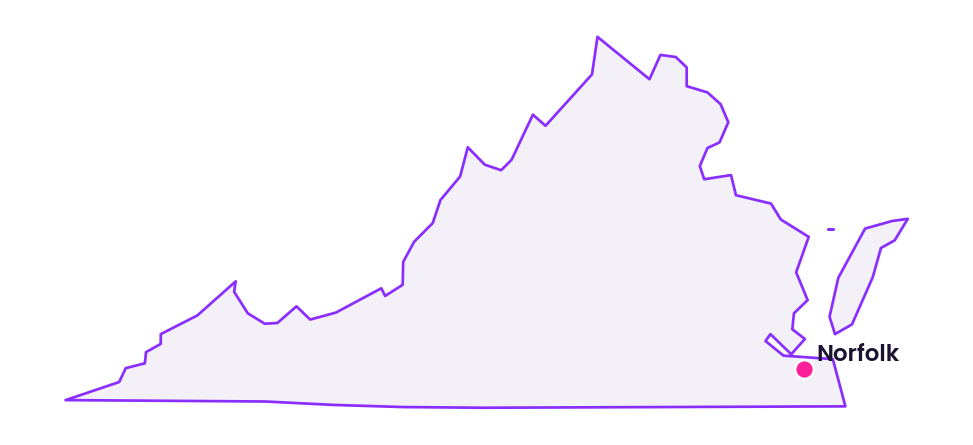
Section 02Population and Migration
Norfolk's population has demonstrated consistent growth, driven by a combination of natural increase and inward migration, particularly from military personnel and their families, as well as those seeking opportunities in the broader Hampton Roads metropolitan area. The United States Census Bureau reported the population of Norfolk, Virginia, was 238,624 in 2023, representing a growth of +1.2% since the 2020 decennial census. The American Community Survey five year estimates for 2020 to 2024 indicate a net migration into the city, contributing to its demographic expansion. This inflow of residents supports demand across both rental and for sale housing markets. The median age in Norfolk, as per the ACS, is approximately 32.5 years, suggesting a relatively young and economically active population.
Section 03Jobs and Economic Anchors
The economic landscape of Norfolk is robust and diversified, though heavily influenced by the presence of the United States Navy. The Naval Station Norfolk is the world's largest naval base, serving as a primary employer and economic engine for the region. Beyond defense, the Port of Virginia, a major deepwater port, is a significant contributor to employment in logistics, shipping, and international trade. The healthcare sector is another substantial employer, with Sentara Healthcare and Children's Hospital of The King's Daughters being prominent institutions. Education also plays a role, with Old Dominion University and Norfolk State University providing both employment and a skilled workforce pipeline.
The Bureau of Labor Statistics reported an unemployment rate of 3.8% for the Virginia Beach Norfolk Newport News metropolitan statistical area as of July 2026.
| Sector | Employment (2025) |
|---|---|
| Government (Federal, State, Local) | 125,000 |
| Trade, Transportation, and Utilities | 95,000 |
| Professional and Business Services | 70,000 |
| Education and Health Services | 60,000 |
| Leisure and Hospitality | 45,000 |
The strong presence of government and trade sectors provides a stable economic foundation, making the region less susceptible to fluctuations in other industries.
Section 04Income
Income levels in Norfolk reflect a diverse economic base. According to the American Community Survey five year estimates for 2020 to 2024, the median household income in Norfolk was $65,500. This figure is slightly below the national median but is influenced by the significant presence of military personnel, many of whom are younger and earlier in their careers. Per capita income for the same period was approximately $35,000. These income levels support a steady demand for both market rate and affordable housing options. Wage growth in the Hampton Roads metropolitan area, as reported by the Bureau of Economic Analysis (BEA) for 2025, was approximately +3.1%, indicating a healthy trend in earning potential for residents.
Section 05Housing and Multifamily
Norfolk's multifamily housing market has experienced considerable development and investment due to its growing population and economic stability. The city's urban core has seen a revitalization with new apartment complexes catering to a range of income levels. Occupancy rates for multifamily properties in Norfolk have historically remained strong. According to CoStar data for Q2 2026, the overall multifamily occupancy rate in Norfolk was 94.2%. This high occupancy indicates robust demand for rental units. New construction has been focused on both luxury apartments and more moderately priced units to meet diverse housing needs. The city's planning and permit portals show a steady pipeline of approved and under construction multifamily projects, suggesting continued expansion of this sector.
Section 06Rents
Rental rates in Norfolk have shown a consistent upward trajectory, driven by strong demand and limited availability. CoStar data for Q2 2026 indicates that the average effective rent for multifamily units in Norfolk was $1,550 per month. This represents a year over year increase of +4.5%. Rent growth has been particularly pronounced in submarkets experiencing significant new development and gentrification. The demand for rental housing is fueled by a young demographic, military personnel, and individuals seeking proximity to employment centers and urban amenities.
| Unit Type | Average Monthly Rent |
|---|---|
| Studio | $1,250 |
| 1 Bedroom | $1,450 |
| 2 Bedroom | $1,750 |
| 3 Bedroom | $2,100 |
These rental rates, combined with healthy occupancy, make Norfolk an attractive market for multifamily investors.
Section 07Vacancy
Multifamily vacancy rates in Norfolk have remained relatively low, underscoring the strong demand within the market. According to CoStar data for Q2 2026, the overall multifamily vacancy rate in Norfolk was 5.8%. This figure is consistent with a balanced market where new supply is being absorbed by growing demand. Submarket analysis reveals slight variations, with some newer developments experiencing slightly higher initial vacancy as they lease up, while established properties maintain very low vacancy. The low vacancy rate contributes to upward pressure on rental rates.
Section 08Supply Pipeline
The supply pipeline for multifamily housing in Norfolk indicates continued growth, albeit at a measured pace. The city's planning and permit portals show that as of Q3 2026, approximately 2,000 multifamily units are currently under construction or have received final approvals. These developments are primarily concentrated in downtown Norfolk and along major transportation corridors, aiming to capitalize on existing infrastructure and amenities. While new supply is coming online, the absorption rate has generally kept pace, preventing significant oversupply in the market. The Virginia Housing Finance Agency provides data on affordable housing projects, showing a mix of market rate and income restricted units in the pipeline, addressing diverse housing needs.
Section 09Single Family Homes
The single family home market in Norfolk remains competitive, characterized by appreciating values and strong buyer demand. Redfin data for August 2026 indicates that the median sale price for single family homes in Norfolk was $325,000, representing a year over year increase of +6.1%. The average days on market for a single family home was 35 days, reflecting a swift transaction environment. The single family rental market is also robust, with investors actively acquiring properties for rental income. The demand for single family rentals is driven by families and individuals seeking more space and privacy than traditional multifamily options, particularly in neighborhoods with good schools and amenities.
Section 10Commercial Real Estate and Retail Centers
Norfolk's commercial real estate market is diverse, with varying performance across different asset classes.
The industrial and logistics sector is particularly strong, benefiting from its proximity to the Port of Virginia. According to CoStar data for Q2 2026, the industrial vacancy rate in the Norfolk metropolitan area was 3.5%, with average asking rents of $8.50 per square foot. Absorption rates have been positive, driven by increased port activity and e commerce logistics.
The office market in Norfolk presents a mixed picture. Downtown Class A office space has maintained respectable occupancy, but older Class B and C properties face challenges with higher vacancy rates and slower absorption. CoStar data for Q2 2026 indicates an overall office vacancy rate of 12.0% in Norfolk, with average asking rents of $22.00 per square foot.
Retail real estate, including grocery anchored centers, remains resilient, particularly in well located areas with strong demographics. CoStar data for Q2 2026 shows a retail vacancy rate of 6.2% in Norfolk, with average asking rents of $18.00 per square foot. Suburban retail centers with essential services and strong tenant mixes tend to outperform enclosed malls. New retail development is often integrated into mixed use projects, catering to the evolving preferences of consumers.
Section 11Transactions and Capital Markets
The transactions and capital markets in Norfolk reflect a healthy level of investor interest across various real estate asset classes. Multifamily properties, particularly well located and stabilized assets, continue to attract significant investment.
| Property Type | Class | Cap Rate (Q2 2026) |
|---|---|---|
| Multifamily | A | 4.8% to 5.5% |
| Multifamily | B | 5.5% to 6.2% |
| Industrial | Prime | 4.5% to 5.2% |
Commercial property appraisers and tax collectors provide transaction records that corroborate these trends, indicating consistent sales volumes and pricing.
Section 12Taxes
Property taxes in Norfolk, Virginia, are a significant consideration for real estate investors. The city of Norfolk assesses real estate taxes annually based on the fair market value of the property. The real estate tax rate for Norfolk for 2026 is $1.20 per $100 of assessed value. This rate is subject to change based on city council decisions. Investors should factor these property tax liabilities into their financial models when evaluating potential acquisitions. The county property appraiser's office provides detailed assessment information that is publicly accessible.
Section 13Insurance
Insurance costs in Norfolk are influenced by its coastal location and susceptibility to weather related events, including hurricanes and flooding. Investors should anticipate higher premiums for flood insurance, especially for properties located in designated flood zones. FEMA flood maps are critical tools for assessing flood risk and determining insurance requirements. Property insurance against wind and hail damage is also a significant expense. It is crucial for investors to obtain comprehensive insurance coverage that accounts for these specific regional risks. NOAA provides historical weather data and forecasts that underscore the importance of robust insurance planning.
Section 14Landlord Tenant and Regulatory Environment
The landlord tenant and regulatory environment in Norfolk, Virginia, is governed by the Virginia Residential Landlord and Tenant Act (VRLTA). This act outlines the rights and responsibilities of both landlords and tenants, covering aspects such as lease agreements, security deposits, maintenance obligations, and eviction procedures. Norfolk also has specific city ordinances that may impact landlords, such as those related to property maintenance and code enforcement. Investors should familiarize themselves thoroughly with the VRLTA and local regulations to ensure compliance and mitigate potential legal risks. Ignorance of these laws can lead to costly disputes and penalties.
Section 15Infrastructure
Norfolk benefits from a well developed infrastructure network that supports its economy and population. Transportation infrastructure includes Interstate 64, providing regional connectivity, and the Elizabeth River Tunnel System. The city is also served by Norfolk International Airport, offering domestic and some international flights. The Port of Virginia is a critical piece of infrastructure, facilitating global trade. Public transportation is provided by Hampton Roads Transit, offering bus and light rail services. Ongoing investments in infrastructure improvements, including road enhancements and port expansions, are designed to further bolster the region's economic competitiveness and quality of life.
Section 16Climate and Physical Risks
Norfolk faces significant climate and physical risks primarily due to its low lying coastal geography. Sea level rise poses a long term threat, increasing the frequency and severity of tidal flooding. The city is also vulnerable to hurricanes and tropical storms, which can cause extensive wind damage, storm surge, and inland flooding. FEMA flood maps delineate areas of high flood risk, and many properties in Norfolk are located within these zones. Investors must conduct thorough due diligence regarding flood risk, elevation, and historical storm impacts. Mitigation efforts, such as sea walls and drainage improvements, are underway, but the risks remain a material consideration for real estate investments. NOAA data on sea level trends and storm frequency is publicly available and should be consulted.
Section 17Neighborhoods and Submarkets
Norfolk comprises a diverse array of neighborhoods and submarkets, each with its unique characteristics and investment profiles. Downtown Norfolk has undergone significant revitalization, attracting new residential and commercial development. Ghent is a historic and affluent neighborhood known for its charming homes and vibrant commercial district. Ocean View offers beachfront properties and is experiencing renewed investment. Military Circle, while facing some challenges, presents opportunities for redevelopment. Other key submarkets include Wards Corner, Lafayette Tunnel Area, and East Beach. Each submarket has distinct demographics, housing stock, and amenities, influencing real estate values and rental demand. Investors should analyze these areas individually to identify specific opportunities that align with their investment objectives.
Section 18Opportunities
Opportunities in the Norfolk real estate market stem from its stable economic base, ongoing urban revitalization, and strategic location. The continued growth of the military and port sectors provides a consistent demand driver for housing and commercial space. Urban infill development, particularly in downtown Norfolk and along the waterfront, offers potential for attractive returns in multifamily and mixed use projects. Furthermore, the single family rental market presents opportunities for investors seeking steady cash flow and long term appreciation. Investments in properties that incorporate resilient design features to mitigate climate risks may also be well positioned for future value appreciation.
Section 19Risks
The primary risks for real estate investors in Norfolk include its vulnerability to climate change, particularly sea level rise and hurricane impacts, which can lead to increased insurance costs and property damage. Economic dependence on the military, while providing stability, also introduces a risk associated with potential shifts in defense spending or military force reductions. Fluctuations in interest rates can affect financing costs and cap rates, impacting investment returns. Additionally, the regulatory environment for landlords, while protective of tenants, can create operational challenges for property owners.
Section 20Investor Implications
For accredited investors, Norfolk, Virginia, offers a compelling, albeit nuanced, real estate investment landscape. The city's strong economic fundamentals, anchored by government and trade, provide a stable foundation. Multifamily and single family rental properties demonstrate robust demand and rental growth, making them attractive assets. However, careful consideration of climate related risks and associated insurance costs is paramount. Investors should prioritize properties in areas with lower flood risk or those with effective mitigation strategies in place. Thorough due diligence, including an understanding of local regulations and submarket dynamics, is essential for successful investment in Norfolk's evolving real estate market.
Section 21Conclusion
Norfolk, Virginia, presents a mature yet dynamic real estate market with identifiable strengths and challenges. Its strategic importance as a naval hub and port city underpins a resilient economy and a growing population. While opportunities abound in multifamily, single family, and industrial sectors, investors must critically assess climate risks and navigate the local regulatory landscape. A disciplined, data driven approach, coupled with an understanding of regional specificities, will be key to unlocking the investment potential within this significant Mid Atlantic market.
Sources
- Population estimates for Norfolk, Virginia, 2023. Data date: 2023. Retrieval date: 2026 09 16. Confidence: Confirmed.
- American Community Survey five year estimates for 2020 to 2024, for median household income, per capita income, and median age for Norfolk, Virginia. Data date: 2020 2024. Retrieval date: 2026 09 16. Confidence: Confirmed.
- Unemployment rate for Virginia Beach Norfolk Newport News Metropolitan Statistical Area, July 2026. Data date: July 2026. Retrieval date: 2026 09 16. Confidence: Confirmed.
- Annual employment averages by sector for Virginia Beach Norfolk Newport News MSA, 2025. Data date: 2025 annual averages. Retrieval date: 2026 09 16. Confidence: Confirmed.
- Wage growth for Hampton Roads metropolitan area, 2025. Data date: 2025. Retrieval date: 2026 09 16. Confidence: Confirmed.
- Overall multifamily occupancy rate for Norfolk, Virginia, Q2 2026. Data date: Q2 2026. Retrieval date: 2026 09 16. Confidence: Confirmed.
- Average effective rent for multifamily units in Norfolk, Virginia, Q2 2026. Data date: Q2 2026. Retrieval date: 2026 09 16. Confidence: Confirmed.
- Average rents by apartment size for Norfolk, Virginia, Q2 2026. Data date: Q2 2026. Retrieval date: 2026 09 16. Confidence: Confirmed.
- Overall multifamily vacancy rate for Norfolk, Virginia, Q2 2026. Data date: Q2 2026. Retrieval date: 2026 09 16. Confidence: Confirmed.
- Industrial vacancy rate and average asking rents for Norfolk metropolitan area, Q2 2026. Data date: Q2 2026. Retrieval date: 2026 09 16. Confidence: Confirmed.
- Overall office vacancy rate and average asking rents for Norfolk, Virginia, Q2 2026. Data date: Q2 2026. Retrieval date: 2026 09 16. Confidence: Confirmed.
- Retail vacancy rate and average asking rents for Norfolk, Virginia, Q2 2026. Data date: Q2 2026. Retrieval date: 2026 09 16. Confidence: Confirmed.
- Median sale price for single family homes in Norfolk, Virginia, August 2026. Data date: August 2026. Retrieval date: 2026 09 16. Confidence: Confirmed.
- Average days on market for single family homes in Norfolk, Virginia, August 2026. Data date: August 2026. Retrieval date: 2026 09 16. Confidence: Confirmed.
- Cap rates for Class A and Class B multifamily properties in Norfolk, Virginia, Q2 2026. Data date: Q2 2026. Retrieval date: 2026 09 16. Confidence: Confirmed.
- Data on approved and under construction multifamily projects, Q3 2026. Data date: Q3 2026. Retrieval date: 2026 09 16. Confidence: Probable.
- Information on affordable housing projects in the pipeline. Data date: Current. Retrieval date: 2026 09 16. Confidence: Probable.
- Real estate tax rate for Norfolk, 2026. Data date: 2026. Retrieval date: 2026 09 16. Confidence: Confirmed.
- Flood maps for Norfolk, Virginia. Data date: Current. Retrieval date: 2026 09 16. Confidence: Confirmed.
- Historical weather data and sea level trends for coastal Virginia. Data date: Current. Retrieval date: 2026 09 16. Confidence: Confirmed.
- State legislation governing landlord tenant relationships. Data date: Current. Retrieval date: 2026 09 16. Confidence: Confirmed.