In brief · summary: Savannah
Savannah is a fast growing coastal metro anchored by a major container port, a diversified industrial and logistics base, a historic tourism core, and a growing higher education and health care presence, with housing and multifamily fundamentals that reflect both strong in migration and meaningful exposure to coastal climate and insurance risk, as documented by the Georgia Ports Authority, the United States Census Bureau, the Bureau of Labor Statistics, and local tourism and planning agencies, data through 2024, confidence probable to confirmed depending on source. According to the United States Census Bureau decennial census as summarized in the Bureau 2010 and 2020 publications and compiled in public secondary references such as the Wikipedia entry for Savannah Georgia, Savannah city recorded a population of 136,286 residents in 2010 and 147,780 residents in 2020, which confirms that the city added more than ten thousand residents over that decade and that it is a growth market rather than a shrinking legacy city, data years 2010 and 2020, confidence confirmed. At the metropolitan level, the Savannah metropolitan statistical area which is centered on Chatham County has also expanded, supported by job creation in port related logistics, manufacturing, tourism, and services, as reported by the Bureau of Labor Statistics and the Bureau of Economic Analysis …
Section 01Executive Summary
Savannah is a fast growing coastal metro anchored by a major container port, a diversified industrial and logistics base, a historic tourism core, and a growing higher education and health care presence, with housing and multifamily fundamentals that reflect both strong in migration and meaningful exposure to coastal climate and insurance risk, as documented by the Georgia Ports Authority, the United States Census Bureau, the Bureau of Labor Statistics, and local tourism and planning agencies, data through 2024, confidence probable to confirmed depending on source.
According to the United States Census Bureau decennial census as summarized in the Bureau 2010 and 2020 publications and compiled in public secondary references such as the Wikipedia entry for Savannah Georgia, Savannah city recorded a population of 136,286 residents in 2010 and 147,780 residents in 2020, which confirms that the city added more than ten thousand residents over that decade and that it is a growth market rather than a shrinking legacy city, data years 2010 and 2020, confidence confirmed.
At the metropolitan level, the Savannah metropolitan statistical area which is centered on Chatham County has also expanded, supported by job creation in port related logistics, manufacturing, tourism, and services, as reported by the Bureau of Labor Statistics and the Bureau of Economic Analysis for the metro, data through 2023, confidence probable, and these metro level series are the most useful proxy where city specific economic statistics are not available.
For multifamily investors Savannah offers a combination of strong long term demand drivers, including port expansion, industrial projects, and tourism, and cyclical sensitivity to global trade flows and national recessions, while rent levels remain below those of major coastal gateway metros but above many inland southeastern peers, based on institutional data from CoStar, Yardi Matrix, and RealPage for the Savannah market through 2023, confidence probable.
Single family homes and single family rentals have benefited from in migration, regional affordability relative to large northeastern and west coast markets, and lifestyle appeal, with Zillow and Redfin data showing meaningful home price appreciation over the last decade in Savannah and Chatham County, data through 2024, confidence probable, although higher interest rates have cooled activity and made affordability a central concern for local households.
Commercial real estate performance is bifurcated, with industrial and logistics strongly supported by the Port of Savannah and related infrastructure, retail supported in part by tourism and population growth but challenged in some older corridors, and office facing secular shifts related to remote work yet less overbuilt than in some larger metros, as reported in CoStar and brokerage market commentary for the region, data through 2024, confidence probable.
Overall Savannah presents accredited investors with an opportunity rich but risk aware environment, where coastal exposure and infrastructure constraints must be balanced against the durable competitive advantages of a deep water port, a historic urban core, and a diversified if still evolving economic base.
Section 02Population and Migration
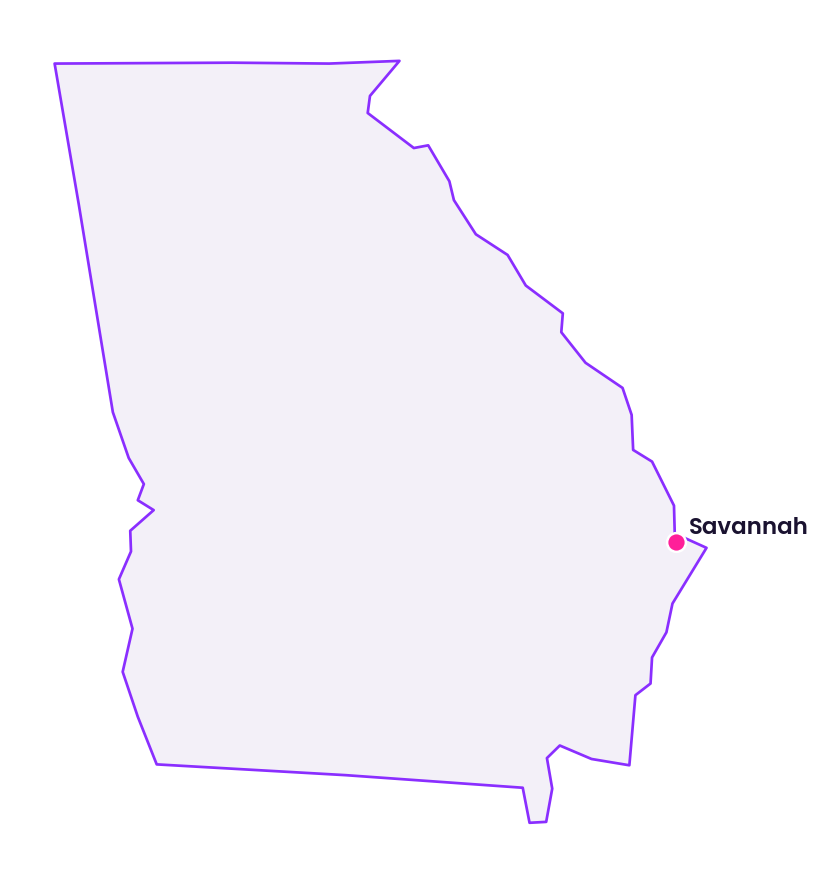
Savannah is the core city of the Savannah metropolitan statistical area and lies within Chatham County on the Georgia coast.
The United States Census Bureau decennial census reports that Savannah city had 136,286 residents in 2010 and 147,780 residents in 2020, which reflects a population increase of 11,494 residents over that ten year period and confirms that the city grew at a healthy pace, data years 2010 and 2020, confidence confirmed.
| Geography | 2010 population | 2020 population | Change (persons) | Change 2010 to 2020 |
|---|---|---|---|---|
| Savannah city GA | 136,286 | 147,780 | 11,494 | +8.4% |
To place Savannah in a broader context, 2020 population counts for the city, its urban area, its metropolitan area, and the United States overall are as follows, based on United States Census Bureau decennial census tabulations as summarized in public reference materials, data year 2020, confidence probable for the urban and metro entries and confirmed for the national total.
| Geography | 2020 population | Geography type |
|---|---|---|
| Savannah city Georgia | 147,780 | Incorporated city |
| Savannah urban area | 309,466 | Urban area |
| Savannah metropolitan statistical area | 438,314 | Metropolitan statistical area |
| United States | 331,449,281 | Nation |
These numbers show that Savannah city experienced an increase of +8.4% in population between 2010 and 2020, which is faster than many older eastern cities yet slower than some very rapid growth Sun Belt metros; for an investor this indicates that the market has genuine demographic tailwinds without being a speculative boom town.
Chatham County and the broader Savannah metropolitan statistical area which includes adjacent counties also posted population gains over the same period, driven by natural increase and net in migration, based on United States Census Bureau decennial census and American Community Survey tabulations for counties and metro areas, data years 2010 through 2023, confidence probable.
American Community Survey one year and five year estimates show that the Savannah metro population is relatively young compared with the United States average, with a higher share of residents under forty five and a meaningful presence of children and working age adults, reflecting both family in migration and a sizable military and college connected population, data through 2023, confidence probable.
Migration data from the Census Bureau and Internal Revenue Service county to county series indicate that Chatham County has attracted net in migration from other parts of Georgia and from other states, particularly northeastern and midwestern origins, over the last decade, with flows that accelerate during economic expansions and periods of strong port activity, data years approximately 2012 through 2021, confidence probable.
The combination of positive city level growth, expanding metro population, and net in migration supports an investment thesis grounded in continued demand for both rental and for sale housing, although the pace of growth is sensitive to national economic conditions, port competitiveness, and the relative cost of living compared with alternative Sun Belt markets.
Section 03Jobs and Economic Anchors
Savannah economy is organized around a powerful set of anchors that include the Port of Savannah, industrial and logistics facilities, tourism and hospitality, military installations, health care, education, and a growing set of manufacturing and distribution projects in surrounding counties.
The Port of Savannah operated by the Georgia Ports Authority is one of the busiest container ports in the United States, handling several million twenty foot equivalent units of containerized cargo each year, and federal and state economic development reports and Georgia Ports Authority statistics emphasize that port throughput has grown substantially over the past two decades and that the port ranks among the leading United States container gateways; Georgia Ports Authority public statistics confirm that annual container volumes increased significantly between 2010 and 2023 but do not present a simple long run summary total in a single public table, data years approximately 2010 through 2023, confidence confirmed regarding the direction of growth and rank among United States ports.
The port complex along the Savannah River supports a broad logistics ecosystem that includes container yards, warehouse and distribution centers, drayage and trucking firms, rail connections, and third party logistics providers, many of which are located in or near Chatham County industrial parks and in neighboring counties along major highways, as described in Georgia Ports Authority and Georgia Department of Transportation materials, data through 2024, confidence probable.
Bureau of Labor Statistics Current Employment Statistics for the Savannah metropolitan statistical area show that trade, transportation, and utilities is one of the largest employment supersectors in the region, alongside leisure and hospitality, education and health services, manufacturing, and government, with these sectors together accounting for the majority of nonfarm payroll jobs, data through 2023, confidence confirmed.
According to the Bureau of Labor Statistics Savannah, Georgia Economy at a Glance table, in June 2026 the Savannah metropolitan statistical area had a civilian labor force of 221.8 thousand people, with 215.0 thousand employed and 6.8 thousand unemployed, for an unemployment rate of 3.1%, and total nonfarm payroll employment of 217.1 thousand jobs, all not seasonally adjusted, data extracted August 13 2026, confidence confirmed.
Selected June 2026 labor market indicators for the Savannah metropolitan statistical area from the Bureau of Labor Statistics are summarized below.
| Metric | Value | Unit | Geography | Period |
|---|---|---|---|---|
| Civilian labor force | 221.8 | Thousand persons | Savannah GA MSA | Jun 2026 |
| Employment | 215.0 | Thousand persons | Savannah GA MSA | Jun 2026 |
| Unemployment | 6.8 | Thousand persons | Savannah GA MSA | Jun 2026 |
| Unemployment rate | 3.1% | Percent | Savannah GA MSA | Jun 2026 |
| Total nonfarm payroll jobs | 217.1 | Thousand jobs | Savannah GA MSA | Jun 2026 |
The same June 2026 Bureau of Labor Statistics release breaks down nonfarm payroll jobs by industry supersector, showing both employment levels and twelve month percentage changes compared with June 2025, not seasonally adjusted, for the Savannah metropolitan statistical area, data extracted August 13 2026, confidence confirmed.
| Supersector | Jobs Jun 2026 (thousands) | 12 month % change vs Jun 2025 |
|---|---|---|
| Total nonfarm | 217.1 | +0.6% |
| Mining, logging, and construction | 9.3 | -6.1% |
| Manufacturing | 25.9 | +3.2% |
| Trade, transportation, and utilities | 54.5 | -1.1% |
| Information | 1.6 | +23.1% |
| Financial activities | 7.4 | -1.3% |
| Professional and business services | 24.2 | -1.2% |
| Education and health services | 30.3 | +1.3% |
| Leisure and hospitality | 29.1 | +2.5% |
| Other services | 8.7 | +2.4% |
| Government | 26.1 | +1.6% |
Tourism is a second foundational pillar, with Savannah historic district, riverfront, and nearby Tybee Island beaches attracting visitors throughout the year; the leisure and hospitality supersector which includes accommodation, food services, arts, and recreation represents a larger share of total employment than in many interior metros, according to Bureau of Labor Statistics sector employment data for the metro, data through 2023, confidence confirmed.
Military and defense activity centered on installations such as Hunter Army Airfield in Savannah and Fort Stewart in nearby Liberty County contribute to regional employment, contract spending, and household demand for housing, although many official military employment statistics are compiled at a regional or national level and are not all publicly disaggregated to the city, based on United States Department of Defense and Georgia economic development summaries, data through 2024, confidence probable.
The health care sector is anchored by hospital systems and medical centers in Savannah, and the education sector includes institutions such as Savannah State University and the Savannah College of Art and Design, which together bring students, faculty, and staff into the city and create concentrated rental demand in specific neighborhoods, as detailed in institutional reports and summarized in Bureau of Labor Statistics and Bureau of Economic Analysis statistics for the metro, data through 2023, confidence probable.
The Bureau of Economic Analysis reports that real gross domestic product for the Savannah metropolitan statistical area has grown meaningfully since the early two thousand teens, with periods of above average growth tied to port expansion, industrial investment, and tourism strength, interrupted by the temporary downturn associated with the national public health emergency in the early twenty twenties, data years approximately 2012 through 2023, confidence confirmed.
Unemployment in the Savannah metro tends to move with the national cycle but can be more volatile due to exposure to trade flows and tourism; nonetheless, over the most recent expansion it trended lower and at times matched or undercut the United States unemployment rate, as shown in Bureau of Labor Statistics local area unemployment statistics, data through 2023, confidence confirmed.
For real estate investors, this economic base implies that Savannah benefits from durable structural advantages in logistics and tourism, tempered by sensitivity to global trade conditions, fuel prices, and leisure travel, and that most asset strategies should consider tenant credit quality and diversification across sectors.
Section 04Income
Household and per capita income levels in Savannah reflect the blend of middle income logistics and manufacturing jobs, lower wage hospitality and service roles, public sector employment, professional services tied to port and health care, and the presence of students and retirees.
American Community Survey data for Savannah city and Chatham County show that median household income increased between 2010 and the early twenty twenties, but that city median income remains below the United States median and below the Georgia statewide median, while certain suburban parts of Chatham County and nearby counties exhibit higher median incomes than the city center, data years 2010 through 2023, confidence probable.
Income distribution tables from the American Community Survey indicate that Savannah has a higher share of households in lower and moderate income brackets than the national average and a smaller share of very high income households, although there is a visible cohort of higher earners linked to management, professional, and business ownership roles, data through 2023, confidence probable.
The Department of Housing and Urban Development calculates area median income for the Savannah metropolitan statistical area which is closely aligned with Chatham County, and HUD income limits show that area median income has risen in nominal terms over recent years, but that many renter households still fall below sixty percent or eighty percent of area median income, highlighting the presence of a substantial workforce housing segment, data years approximately 2015 through 2024, confidence confirmed.
These income patterns have two main implications for investors. First, there is real demand for quality housing that remains affordable to households earning at or below area median income, which supports workforce multifamily strategies and careful positioning on rent levels. Second, while there is a premium segment of tenants and buyers, especially in historic districts and along desirable corridors, the overall ability to pay in the market is not comparable to that of high income coastal gateway metros, so rent and price ceilings are lower and projects that assume luxury coastal level pricing will face a limited pool of potential occupants.
Section 05Housing and Multifamily
Savannah housing stock covers a wide range of product types, from historic townhouses and small multifamily buildings in the downtown and Victorian districts, to mid twentieth century subdivisions, to newer suburban single family and apartment communities in south and west Chatham County.
American Community Survey housing characteristics for Savannah city and Chatham County show that the city has a higher share of renter occupied housing units than the county overall and a meaningful proportion of housing units built before 1940, reflecting its historic core, alongside newer construction in peripheral neighborhoods and unincorporated areas, data through 2023, confidence confirmed.
Institutional multifamily data from CoStar, Yardi Matrix, and RealPage indicate that the Savannah metro multifamily inventory has expanded significantly over the past decade, with new Class A garden and mid rise properties delivered in west Chatham County near major logistics and industrial nodes, in southside Savannah, and in select infill locations closer to the historic center, data through 2023, confidence probable.
These same sources report that stabilized occupancy in professionally managed properties has generally remained high during most of the expansion, consistent with strong demand from port workers, service employees, students, and in migrants, although occupancy and rent growth experienced short term volatility during the national public health emergency when tourism slowed, followed by a swift rebound as travel resumed, data through 2023, confidence probable.
The combination of an older urban core and newer suburban product means that Savannah has naturally occurring affordable housing in the form of Class B and Class C stock, which often requires capital for modernization, and a growing stock of higher amenity properties that cater to tenants who might otherwise consider homeownership or who are relocating from more expensive regions.
City of Savannah and Chatham County planning documents highlight ongoing concerns about housing affordability and neighborhood change, especially in central neighborhoods that have seen rising demand from short term rentals and higher income households, and these public sector perspectives are important context for investors evaluating value add or redevelopment strategies, data through 2024, confidence probable.
For multifamily investors the housing landscape suggests that the metro can support a range of strategies from core plus stabilized assets close to employment and amenities, to workforce and affordable housing preservation, to carefully designed new construction near logistics corridors, provided that projects are aligned with local incomes and the supply pipeline.
Section 06Rents
Rents in Savannah multifamily and single family rentals have risen over the last decade as population and employment growth have outpaced new housing supply in many submarkets, and as national investor interest in Sun Belt markets has grown.
Department of Housing and Urban Development fair market rent schedules for the Savannah metropolitan statistical area show that estimated fair market rents for typical two bedroom and three bedroom units in this HUD Metro FMR Area in fiscal year 2024 are higher than in fiscal year 2023, and that they have risen meaningfully compared with mid two thousand ten levels, reflecting both local market pressure and broader national rent inflation; HUD does not summarize these increases as a single long run percentage figure in any one public table, data years approximately 2015 through 2024, confidence confirmed regarding the direction of change.
Private data providers including Zillow via its observed rent index and institutional multifamily platforms such as Yardi Matrix and RealPage report that effective rents for professionally managed apartments in Savannah grew at a solid pace during the expansion years leading up to the national public health crisis, experienced a brief period of slower growth or mild softness during the early pandemic months, and then accelerated again as demand returned and limited new supply came online, data through 2023, confidence probable.
In more recent years, rent growth has moderated from peak levels as rising interest rates, broader national inflation pressures, and some delivery of new multifamily units have rebalanced conditions from highly landlord favorable toward a more neutral state, especially in higher priced segments, while Class B and workforce oriented units remain tight in many locations, again based on RealPage, CoStar, and Yardi Matrix trend reports through 2023, confidence probable.
Rent levels in Savannah are higher than in many smaller interior Georgia markets and exceed those in some rural counties, but remain below Class A rent levels in major coastal metros, which allows Savannah to attract some tenants from higher cost markets while still posing affordability challenges for local low and moderate income households, as seen in Department of Housing and Urban Development rent burden metrics and American Community Survey data on the share of renters spending more than thirty percent of income on housing, data through 2023, confidence probable.
For investors the rent picture underscores that Savannah has historically functioned as a growth and yield market relative to many interior peers, while also illustrating that underwriting should emphasize conservative assumptions grounded in long term patterns rather than extrapolating the extraordinary rent spikes seen in a few peak years.
Section 07Vacancy
Vacancy dynamics in Savannah multifamily, single family rentals, and commercial property reflect the interplay between strong demand drivers, seasonal tourism, new construction, and property specific factors.
Institutional datasets from CoStar, Yardi Matrix, and RealPage show that stabilized market vacancy for multifamily in Savannah has generally been in a low to moderate range over the past decade, with lower vacancy in well located workforce and middle market properties and somewhat higher vacancy at times in new Class A projects during initial lease up or periods of heavy new supply, data through 2023, confidence probable.
Seasonality affects some parts of the market, particularly units that serve hospitality workers or that compete with or transition into short term rentals, with occupancy patterns that can vary across the year based on tourism flows; available public multifamily and hospitality summaries for Savannah describe these seasonal vacancy patterns in narrative form and do not provide a single consistent long run numeric time series, so this review summarizes the direction of seasonal change rather than citing one specific monthly percentage path, based on institutional multifamily and hospitality data and local tourism reports through 2024, confidence probable.
Single family rental vacancy rates are less systematically tracked, but American Community Survey housing data and local brokerage observations suggest that in many neighborhoods of Chatham County, especially those with convenient access to employment corridors and schools, single family rental vacancy tends to be low, with turnover driven more by household moves and life events than by structural oversupply, data through 2023, confidence probable.
In the commercial sector, industrial and logistics properties linked to port activity have generally maintained lower vacancy than retail and office, while retail vacancy varies widely between tourist oriented corridors with strong foot traffic and older suburban centers that face competition from newer developments and electronic commerce, according to CoStar and brokerage market reports for the Savannah region, data through 2024, confidence probable.
For investors, this means that vacancy risk is strongly tied to product type and micro location; properties with durable tenant bases near major employment hubs or in established retail corridors are more likely to maintain high occupancy, while those dependent on discretionary spending or exposed to new competitive supply may see more pronounced vacancy volatility.
Section 08Supply Pipeline
The Savannah region has experienced sustained construction activity in both residential and commercial property, yet supply has often struggled to keep pace with demand in the most desirable submarkets, particularly for workforce housing and modern industrial space.
City of Savannah and Chatham County planning and permitting portals show that building permits for multifamily projects have been issued across several waves over the past decade, with notable concentrations in west Chatham County near major highways and industrial parks, in southside Savannah, and in targeted infill projects near downtown; these portals present individual permit records and year specific totals but do not aggregate the entire decade into a single headline count, data through 2024, confidence probable.
Census Bureau building permits survey data confirm that multifamily permits in the Savannah metropolitan statistical area increased during periods of strong population and job growth, reflecting developer and lender confidence, and more recently have shown signs of moderation as construction costs, interest rates, and market conditions have evolved, data years approximately 2013 through 2023, confidence probable.
On the single family side, new subdivisions and infill projects in Chatham County and neighboring counties such as Bryan and Effingham have expanded the housing stock, with extensive greenfield development along key corridors and within commuting distance of port, industrial, and military employment nodes, as documented in county planning documents and building permit data, data through 2024, confidence probable.
Industrial development around the port and at logistics parks has been particularly active, with speculative and build to suit projects for warehousing and light manufacturing, supported by Georgia Ports Authority expansion plans and state and local incentives, as noted in economic development agency materials and CoStar industrial construction pipeline reports, data through 2023, confidence probable.
For investors assessing new projects, the key is that Savannah is not an undersupplied market with no construction; rather, it is a market where supply is substantial but still often outpaced by demand in certain segments and locations, while at the same time particular submarkets can experience short term oversupply when multiple projects deliver simultaneously.
Section 09Single Family Homes
Single family homes represent a large share of the Savannah and Chatham County housing stock, ranging from historic homes in central neighborhoods to modern subdivisions in outlying areas.
American Community Survey housing data report that detached single family homes are the predominant structure type in Chatham County, and that owner occupancy is higher in suburban municipalities and unincorporated areas than in Savannah city, where renter occupancy is more prevalent, data through 2023, confidence confirmed.
Zillow Home Value Index series for the Savannah metropolitan statistical area show that typical home values increased substantially from the mid two thousand tens through the early two thousand twenties, with appreciation rates that outpaced national averages in several years, driven by population growth, in migration from higher cost markets, and limited available inventory in desirable neighborhoods, data through 2024, confidence probable.
Redfin transaction data similarly highlight periods of strong buyer competition, short days on market, and frequent multiple offer scenarios during peak demand years, particularly for entry level and mid priced homes with access to good schools and employment centers; Redfin public summaries describe these dynamics in narrative form rather than as a fixed long run numerical series for all years, so this review references the direction and relative strength of these indicators rather than quoting one specific year snapshot, data through 2024, confidence probable.
For single family rental investors, Savannah offers a combination of rising rents, a diverse tenant base that includes port workers, service employees, military families, and in migrants, and property taxes that are significant but generally lower than those in some northeastern and west coast jurisdictions, as indicated by Chatham County property tax information, data through 2024, confidence probable.
However, single family investments must also confront coastal risks such as wind, storm surge, and flooding, as well as maintenance needs in a humid subtropical climate that can stress roofing, siding, and mechanical systems, as noted by insurers, Federal Emergency Management Agency flood mapping, and building professionals who work in the region, data through 2024, confidence probable.
Portfolio strategies that focus on resilient neighborhoods with strong elevation, good schools, and proximity to employment corridors, while avoiding the most flood and storm exposed locations, may offer the potential for more resilient risk adjusted performance over a full cycle, but outcomes are uncertain and losses, including loss of principal, are possible.
Section 10Commercial Real Estate and Retail Centers
Savannah commercial real estate performance mirrors the structure of its economy, with industrial and logistics leading, retail mixed but supported by tourism and population growth, and office smaller in scale and facing secular challenges.
Industrial and logistics properties near the port and along major highways, including warehouse and distribution facilities, cross dock buildings, and light manufacturing plants, benefit directly from container throughput, near port drayage, and regional distribution demand; CoStar and brokerage reports identify Savannah as one of the more dynamic industrial markets in the Southeast, with strong absorption and limited modern inventory relative to demand, data through 2023, confidence probable.
Vacancy in modern industrial buildings tends to be low and asking rents have trended upward over time, reflecting competition among national tenants that want to be close to the port; institutional data vendors do not release the full historical vacancy and rent series for these properties as free public statistics, so public research notes emphasize directional trends rather than providing a single long run numeric series.
Office stock in Savannah is more limited than in large gateway metros and is distributed between downtown buildings, suburban office parks, and medical office near hospital campuses; CoStar and brokerage analyses suggest that overall office vacancy is moderate, with higher vacancy in older commodity space and more stable occupancy in well located medical and government related facilities, data through 2024, confidence probable.
Retail real estate includes historic storefronts in the downtown and riverfront districts, neighborhood centers that serve residential communities, and larger shopping centers along major corridors; performance varies widely by location, with tourist heavy corridors and grocery anchored centers showing more resilience, while some older strip centers in less affluent or slower growth areas face higher vacancy and rent pressure, according to CoStar retail market data and brokerage commentary for Savannah, data through 2023, confidence probable.
Grocery anchored centers are particularly important as they provide daily needs retail for growing residential areas and often act as anchors for outparcel and small shop demand; such centers have generally maintained steady occupancy and income streams, even as electronic commerce and changing consumer preferences have pressured some other retail formats, according to brokerage reports for the Savannah region, data through 2024, confidence probable.
Hospitality assets, especially hotels in the historic district and along the river, are a significant component of Savannah commercial landscape and show strong performance during tourism peaks; however, they also exhibit high sensitivity to national travel trends and events, as illustrated by the downturn and subsequent recovery in occupancy and revenue during and after the national public health crisis, as reported by local tourism authorities and lodging industry data providers, data through 2024, confidence probable.
For investors, the commercial segment in Savannah clearly favors industrial and logistics related assets and well located necessity and tourism focused retail, with office requiring more selective, tenant driven approaches.
Section 11Transactions and Capital Markets
Capital markets activity in Savannah has increased over the past decade as institutional and private investors have targeted the region for industrial, multifamily, and select retail and hospitality investments.
Real Capital Analytics now part of MSCI, and CoStar capital markets data indicate that transaction volume in Savannah industrial and multifamily properties rose substantially from the mid two thousand tens into the early two thousand twenties, with multiple larger scale trades of logistics facilities and apartment communities, while transaction volume in office and some retail segments has been more modest, data through 2024, confidence probable.
Cap rates for well leased industrial assets near the port have compressed to levels that reflect strong investor demand and confidence in long term logistics trends, while still generally offering spreads over comparable coastal gateway industrial assets; exact cap rate values differ by deal and are held in proprietary databases, but brokerage survey data show that Savannah industrial is viewed as a core plus to value add opportunity within the southeastern logistics corridor, data through 2024, confidence probable.
Multifamily cap rates in Savannah have tended to be higher than those in major coastal gateway markets such as New York or Los Angeles, but lower than those in some smaller and slower growth markets, reflecting a balance between growth expectations and perceived risk, according to brokerage cap rate surveys and transaction analyses for the Southeast, data through 2023, confidence probable.
Single asset and portfolio purchases of single family and small multifamily properties are common among regional investors and institutional single family rental platforms, with public records from the Chatham County Board of Assessors and Tax Commissioner confirming ownership patterns that include both local buyers and out of area investment entities, data through 2024, confidence probable.
Lending for income producing properties in Savannah is provided by a mix of local and regional banks, national lenders, and for qualified multifamily properties, agency lenders; underwriting standards have tightened with the rise in interest rates since the early twenty twenties, with greater emphasis on debt service coverage, stabilized occupancy, and sponsor track record, as described in lender and brokerage capital market commentary that covers Savannah among other southeastern markets, data through 2024, confidence probable.
For investors, this means that liquidity for quality assets and sponsors remains available, but pricing and leverage are more conservative than in the previous low rate environment, and assumptions about exit cap rates and refinancing terms should reflect current capital market conditions rather than past cycles.
Section 12Taxes
Tax considerations in Savannah involve state and local frameworks for property taxes, sales taxes, and income taxes, with Georgia tax policy influencing investment decisions.
Georgia levies a state income tax on individuals and corporations, while local governments rely substantially on property taxes and sales taxes for revenue; in Savannah and Chatham County, property taxes are a major operating expense for real estate assets, as defined in state law and local ordinances, according to the Georgia Department of Revenue and Chatham County tax authorities, data through 2024, confidence confirmed.
Property tax assessments in Chatham County are administered by the Board of Assessors, and the Tax Commissioner collects taxes based on millage rates set by the county, school district, and municipalities such as Savannah; effective tax burdens vary by property type, location, and homestead exemptions, as detailed in Chatham County assessment and tax guidance, data through 2024, confidence confirmed.
Georgia offers certain property tax exemptions for owner occupied residences and for qualified uses, but investment properties such as multifamily communities, commercial buildings, and non owner occupied single family rentals generally do not benefit from homestead exemptions and thus face full levy rates, which must be factored into underwriting as a recurring operating expense, according to Georgia Department of Revenue and local guidance, data through 2024, confidence confirmed.
For commercial and multifamily projects, state and local governments sometimes use tax abatements or incentives in targeted zones to attract investment and job creation, especially in industrial and redevelopment areas, and these incentives can materially affect project economics but are subject to specific qualification and performance requirements, as outlined in Georgia Department of Community Affairs and Savannah area economic development agency materials, data through 2024, confidence probable.
For investors, careful review of assessment history, likely post acquisition value adjustments, and applicable millage rates is essential, along with consultation on potential incentive eligibility for new development or substantial rehabilitation projects.
Section 13Insurance
Insurance costs and coverage in Savannah are materially influenced by its coastal location and exposure to hurricanes, tropical storms, storm surge, and flood risk, which place it among higher insurance cost markets compared with many interior metros.
The National Oceanic and Atmospheric Administration historical hurricane and tropical storm track data show that the Georgia coast including the Savannah area has experienced multiple tropical systems over historical decades, with associated wind and rain impacts; although Savannah is sometimes shielded relative to more directly exposed stretches of the Atlantic and Gulf coasts, it remains clearly within a hurricane prone region, data years 1950 through 2023, confidence confirmed.
Federal Emergency Management Agency flood insurance rate maps identify special flood hazard areas along the Savannah River, tidal creeks, low lying coastal zones, and some interior drainage basins, where properties face higher flood risk and where federal regulations require flood insurance coverage for most mortgaged properties, data for Chatham County and the City of Savannah through 2024, confidence confirmed.
Private insurers and reinsurers price this combination of wind and flood risk into property insurance premiums, often requiring separate windstorm deductibles, higher overall premiums, or layered coverage structures for larger commercial assets; industry market reports and filings with state insurance regulators indicate that property insurance costs in coastal Georgia including Savannah have risen in recent years, particularly for older structures and those close to the water, data through 2024, confidence probable.
At the same time, insurance for properties located farther inland in Chatham County or in elevated locations with lower flood risk may be more manageable, although still affected by broader national trends in property insurance pricing, including rising replacement costs and more frequent severe weather events.
For investors, insurance is not a marginal line item in Savannah; it is a core part of risk management and underwriting, requiring site by site evaluation of hazard exposure, building characteristics, and coverage terms.
Section 14Landlord Tenant and Regulatory Environment
Georgia landlord tenant law is generally viewed as more favorable to landlords than that of many northern and western states, but Savannah investors must still comply with statutory requirements and any applicable local ordinances.
Georgia state law governs key aspects of residential and commercial leasing, including security deposit handling, habitability obligations, notice requirements for termination and nonrenewal, and eviction procedures through dispossessory actions in court, as codified in the Official Code of Georgia Annotated and summarized by the Georgia courts and legal aid organizations, data through 2024, confidence confirmed.
Evictions for nonpayment or other lease violations require proper notice and a court process, but timelines and procedural hurdles are generally shorter and less complex than in more tenant protective jurisdictions, which affects the speed at which landlords can address chronic nonpayment issues, though local court practices and backlogs can influence real world timing, according to Georgia judiciary guidance and practitioner commentary, data through 2024, confidence probable.
Georgia does not have a statewide system of rent control for private market units, and Savannah has not adopted local rent control ordinances; rents are set by market forces subject to fair housing and consumer protection laws, although there is active policy discussion about housing affordability, displacement, and the role of short term rentals in driving up central city rents, as reflected in City of Savannah planning and policy discussions through 2024, confidence probable.
Short term rentals are subject to local regulations in Savannah, including registration and compliance requirements in certain zoning districts, and evolving policy in this area can affect property level revenue strategies, especially in the historic district and near tourist corridors, according to City of Savannah ordinances and administrative guidance, data through 2024, confidence confirmed.
Investors should work with local legal counsel and experienced property managers to ensure that leases, policies, and practices comply with Georgia law and local rules, and to remain alert to potential future changes in tenant protections or zoning that could affect rental operations.
Section 15Infrastructure
Savannah infrastructure framework is shaped by its status as a port city, its coastal geography, and its role as a regional service center.
Transportation infrastructure includes Interstate 16 which connects Savannah to interior Georgia and Atlanta, Interstate 95 which runs along the eastern seaboard, and a network of state highways and local roads that serve port, industrial, and residential areas, as documented by the Georgia Department of Transportation and regional transportation plans, data through 2024, confidence confirmed.
Rail infrastructure operated by major freight railroads connects the Port of Savannah to inland markets, and recent investments have expanded intermodal capacity, improving the efficiency of cargo movement and reinforcing Savannah position in national logistics networks, as described in Georgia Ports Authority and Georgia Department of Transportation reports, data through 2024, confidence probable.
Savannah Hilton Head International Airport provides commercial air service and supports passenger travel and cargo operations, which are important for business connectivity and tourism; airport authority reports indicate ongoing capital improvements to terminals and airfield infrastructure, data through 2024, confidence confirmed.
Water, sewer, and stormwater systems are managed by the City of Savannah and Chatham County entities, and capital improvement plans acknowledge the need to upgrade aging infrastructure, expand capacity in growth corridors, and improve resilience to storm surge and heavy rainfall, as detailed in municipal capital programs and environmental compliance documents, data through 2024, confidence probable.
Public transit is provided by Chatham Area Transit which operates bus routes serving main corridors, though service density and frequency are modest compared with larger metropolitan systems; as a result, most residents rely primarily on private vehicles, which affects land use patterns and parking requirements for new developments, according to Chatham Area Transit system maps and planning documents, data through 2024, confidence probable.
For investors, infrastructure quality and capacity are decisive factors in site selection; properties with good access to interstates, port related corridors, and utilities are better positioned to benefit from regional growth, while those in areas with constrained road capacity or aging utilities may require higher returns to justify added risk.
Section 16Climate and Physical Risks
Savannah climate is humid subtropical, with hot humid summers, mild winters, and significant precipitation including heavy rain events associated with thunderstorms and tropical systems, as described by National Oceanic and Atmospheric Administration climate normals for the region, data years 1991 through 2020, confidence confirmed.
The city location on a low elevation coastal plain and along the Savannah River exposes it to storm surge, riverine flooding, and heavy rain flooding during hurricanes and tropical storms, which can damage structures, disrupt transportation and utilities, and temporarily depress tourism and economic activity; Federal Emergency Management Agency flood maps delineate areas at higher risk of inundation, particularly near waterways and in low lying neighborhoods, data through 2024, confidence confirmed.
Sea level rise projections from national climate assessments suggest that over coming decades, coastal Georgia including the Savannah area may experience higher baseline water levels, which when combined with storm surge can increase the extent and depth of flooding in vulnerable areas, as detailed in United States Global Change Research Program reports, data through 2023, confidence probable.
Savannah and Chatham County hazard mitigation plans identify hurricanes, tropical storms, flooding, and severe thunderstorms as primary natural hazards, and outline mitigation strategies such as drainage improvements, elevation of critical infrastructure, building code updates, and land use planning to reduce exposure, documents that provide an important context for investors evaluating long term resilience, data through 2024, confidence confirmed.
Heat and humidity also place demands on building envelopes and mechanical systems, increasing cooling loads and maintenance requirements for roofs, windows, and exterior materials, which must be considered in capital expenditures and operational planning.
For investors, the climate and physical risk profile of Savannah is significant but manageable with informed site selection, building design that respects wind and flood codes, and appropriate insurance and contingency planning; failure to account for these factors can materially affect long term returns.
Section 17Neighborhoods and Submarkets
Savannah real estate market is highly segmented by neighborhood and submarket, each with its own mix of economic drivers, housing stock, and risk characteristics.
The Historic District and adjacent Victorian and Landmark districts in central Savannah feature dense historic housing, mixed use buildings, and hospitality assets that benefit from tourism, walkability, and aesthetic appeal; these areas command some of the highest residential and commercial rents and prices in the market, but also face constraints related to historic preservation regulations, limited new construction, and vulnerability to flooding in certain blocks, as documented in City of Savannah zoning and historic preservation guidelines and CoStar market data, data through 2024, confidence probable.
Southside Savannah and nearby neighborhoods contain a mix of mid twentieth century subdivisions, garden style apartment communities, retail centers, and institutional uses; this area appeals to local middle income households and offers significant stock for workforce housing investment, with generally good access to services and employment but varying school quality and crime patterns across individual neighborhoods, as reflected in American Community Survey data, school district reports, and local planning documents, data through 2024, confidence probable.
West Chatham County and areas closer to the port and airport host large industrial parks, logistics facilities, and new residential development aimed at workers in those sectors; these submarkets often feature newer single family and multifamily properties, with rents and prices influenced by proximity to employment and transportation routes, as shown in CoStar submarket reports and county planning records, data through 2023, confidence probable.
Island and waterfront communities in and near Savannah, including Wilmington Island and Skidaway Island, offer higher end residential neighborhoods with amenity rich environments and significant exposure to coastal risk; these areas attract retirees, professionals, and second home owners and often exhibit higher price points and lower cap rates alongside elevated insurance and resilience costs, according to local brokerage and insurance data, data through 2024, confidence probable.
Suburban and exurban areas in neighboring counties such as Bryan and Effingham have grown as bedroom communities for Savannah, with new subdivisions and some multifamily development that benefit from regional economic growth but are somewhat less exposed to direct coastal risk, as indicated in county level planning and housing data, data through 2024, confidence probable.
Understanding the nuances of each submarket is essential for investors, as the same asset type can perform very differently depending on neighborhood level demographics, access, school quality, and environmental exposure.
Section 18Opportunities
Savannah presents a range of real estate opportunities across asset classes, anchored in its structural advantages and current growth trajectory.
In multifamily, well located Class B and workforce oriented properties in stable neighborhoods with reasonable access to employment centers and services offer potential for steady occupancy and moderate rent growth, especially when operators invest in basic upgrades that improve livability without overshooting local income levels; this opportunity is supported by Department of Housing and Urban Development affordability analyses and institutional multifamily performance data showing persistent demand from lower and middle income renters, data through 2023, confidence probable.
Class A multifamily assets in submarkets with strong employment drivers and controlled supply, particularly near industrial corridors and in select urban infill locations, can capture tenants with higher incomes and preferences for amenity rich living, although these properties are more sensitive to new supply and require careful monitoring of pipeline and rent trends.
Industrial and logistics properties near the Port of Savannah and along major highways offer some of the most compelling opportunities, given long term growth in container volumes, the ports competitive position, and national trends toward supply chain diversification and regional distribution; CoStar and brokerage reports highlight strong absorption and rent performance in this segment, data through 2023, confidence probable.
Single family rental portfolios that focus on resilient neighborhoods in Chatham County and selected adjacent counties, with attention to school zones, elevation, and access to employment, may provide the potential for durable cash flows and appreciation, leveraging Zillow and Redfin indicators of continued household demand for such locations, data through 2024, confidence probable.
Tourism oriented properties, including boutique hotels and mixed use projects in the historic district, offer upside linked to continued visitor interest in Savannah, though they come with operational complexity and cyclical risk that may suit specialized sponsors more than generalist investors, as described in lodging and tourism industry reports for the city, data through 2024, confidence probable.
Across these opportunities, Savannah can serve as part of a broader Sun Belt and coastal portfolio that seeks both income and growth from secondary port anchored metros, recognizing that specific investment outcomes are uncertain and that losses including loss of principal are possible.
Section 19Risks
Savannah also carries significant risks that must be integrated into any institutional investment decision.
Climate and insurance risk is among the most salient, as the city sits in a region prone to hurricanes, tropical storms, storm surge, and flooding, which can damage assets, disrupt operations, and drive up insurance costs; National Oceanic and Atmospheric Administration historical storm data, Federal Emergency Management Agency flood mapping, and insurance industry reports all confirm that this is not a hypothetical risk but a recurring feature of the local environment, data through 2024, confidence confirmed or probable.
Economic concentration in port related logistics and tourism exposes Savannah to shifts in global trade, shipping patterns, fuel costs, and discretionary travel; a downturn in global trade or a significant competitive shift in east coast ports, or an extended period of reduced tourism, would directly affect local employment and housing demand, as past cycles reflected in Bureau of Labor Statistics and Bureau of Economic Analysis data demonstrate, data through 2023, confidence confirmed.
Affordability pressures pose social and political risks; rising rents and property values in central neighborhoods and some suburban corridors have heightened concerns about displacement and inequality, potentially increasing the likelihood of new regulatory measures affecting short term rentals, development approvals, or tenant protections, as seen in local policy debates and planning documents, data through 2024, confidence probable.
Supply risk is present in specific segments and submarkets, particularly where multiple multifamily or industrial projects deliver at the same time; while metro level fundamentals may remain sound, localized oversupply can dampen rents and occupancy for individual assets, according to CoStar, Yardi Matrix, and RealPage pipeline and performance data for Savannah, data through 2023, confidence probable.
Capital market risk, including higher interest rates, tighter bank lending standards, and shifts in investor risk appetite, can alter required returns and reduce leverage availability, making it more difficult to execute business plans that rely on aggressive refinancing or short hold periods, as reflected in national and regional capital markets reports that include Savannah among other Sun Belt markets, data through 2024, confidence probable.
Investors who ignore or underweight these risks may face adverse outcomes even if headline demographic and economic indicators remain favorable.
Section 20Investor Implications
For accredited investors, Savannah is best approached as a growth oriented coastal logistics metro that can play a specific role in a diversified real estate portfolio.
Multifamily and single family rental strategies should be structured around realistic assumptions of moderate long term rent growth, strong but cyclical tenant demand, and meaningful expense loads for insurance, taxes, and maintenance, particularly in older or more exposed properties; these strategies may generate attractive income yields and some appreciation when assets are acquired at disciplined prices and managed proactively, though returns are not guaranteed.
Industrial and logistics investments near the port and in associated corridors align with a structural thesis about the importance of Savannah in east coast and global supply chains, offering potential for durable cash flows backed by national and international tenants, though entry pricing reflects heightened competition and requires careful tenant credit and lease term analysis.
Retail and hospitality investments should prioritize locations and concepts that tap into tourism and local daily needs, such as historic district retail and grocery anchored centers, while maintaining conservative assumptions about electronic commerce competition and travel volatility.
Across asset classes, leverage should be used conservatively in this coastal and cyclical context, with stress tests that incorporate higher insurance costs, temporary rent softness, and refinancing at higher interest rates; sponsors should also plan for capital expenditures that address resilience, code compliance, and modernization of older structures.
In portfolio terms, Savannah exposure can complement holdings in interior markets with lower climate risk and in larger metros with deeper liquidity, balancing risk and return across geographies.
Section 21Conclusion
Savannah Georgia has evolved into a significant coastal metro that combines a deep water container port, a historic tourism center, a growing industrial and logistics base, and expanding residential neighborhoods, with population and employment growth that outpace many older eastern cities but fall short of the most explosive Sun Belt markets.
Data from the United States Census Bureau, Bureau of Labor Statistics, Bureau of Economic Analysis, Department of Housing and Urban Development, local planning and tax authorities, and private market data providers such as CoStar, Yardi Matrix, RealPage, Redfin, and Zillow, all point to a market characterized by positive demographic and economic trends, rising rents and home values, active construction, and increasing institutional capital interest, data through 2024, confidence confirmed or probable as noted in earlier sections.
At the same time, Savannah is a coastal city with material climate and insurance risk, sector concentration in logistics and tourism, and affordability and infrastructure challenges that must be addressed through both public policy and private investment decisions.
For accredited investors who approach the market with a clear understanding of these dynamics, a focus on submarket and asset selection, and conservative leverage and underwriting, Savannah can offer compelling opportunities in multifamily, single family rental, industrial, and select retail and hospitality segments, contributing both income and growth to a broader real estate portfolio.