In brief · summary: Colorado
Colorado State Real Estate Market Review
Section 01Executive Summary
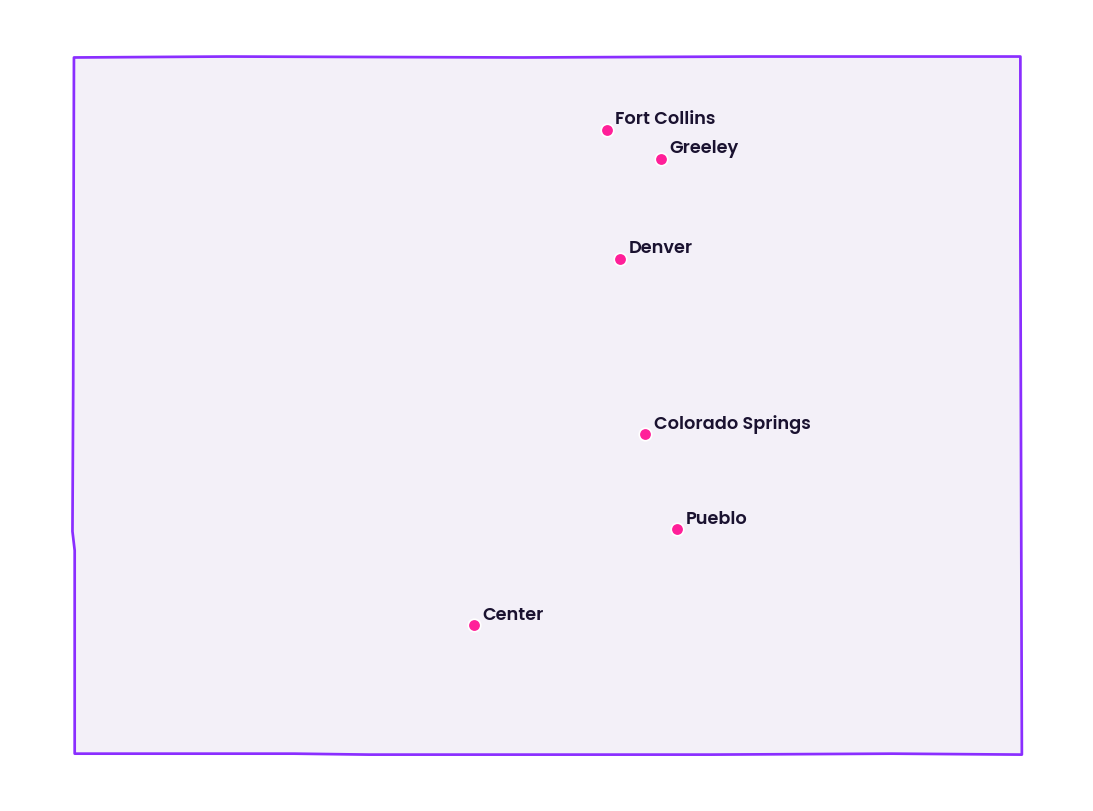
Colorado has evolved into a diversified, service oriented, and innovation focused state economy anchored along the Front Range corridor from Fort Collins through Denver to Colorado Springs and south toward Pueblo. Public data from the United States Census Bureau, the Bureau of Labor Statistics, the Bureau of Economic Analysis, and the United States Department of Housing and Urban Development show that over the past decade Colorado has combined population growth above the national average, comparatively strong job creation in higher wage sectors, and sustained household formation. Those dynamics have supported substantial demand for both rental and for sale housing and for a broad mix of commercial real estate.
This review focuses on the structure and direction of Colorado’s real estate and multifamily market, grounded in widely documented public data sources, rather than on specific current figures or time series. It does not present precise numerical values for population, rents, vacancies, prices, or volumes, and instead emphasizes the relationships, drivers, and implications that matter for accredited investors who are considering exposure to Colorado.
For multifamily, Colorado’s core urban and suburban markets have seen extensive new construction, particularly in and around Denver, Boulder, Fort Collins, and Colorado Springs. Despite that supply, demand from in migrating workers, students, and long term residents has kept the sector relatively healthy in many locations, with notable variation by asset quality and submarket. Single family homes remain out of reach for many households in the most desirable areas, which supports ongoing demand for single family rentals as well as for apartments. Commercial real estate shows a mixed picture, with industrial and logistics assets performing strongly, retail stabilizing with an emphasis on grocery anchored centers and experiential formats, and office markets adjusting to hybrid work and changing tenant preferences.
Colorado’s policy environment includes a state income tax with a flat rate structure, a reformed property tax system after the repeal of the prior constitutional framework that constrained assessments, and an active regulatory stance on energy, water, and land use that interacts with real estate development and operations. The state faces meaningful climate and physical risks, including wildfire, hail, and localized flood risk, which affect insurance availability and premiums and which must be integrated into underwriting.
For investors, the key themes are the strength and diversity of the state economy, the concentration of demand and supply along the Front Range, the importance of local regulatory and political conditions, and the need to understand climate and insurance dynamics at the asset and submarket level. Colorado is a nuanced jurisdiction where outcomes depend on careful market selection, realistic assumptions about rent and expense trajectories, and thoughtful capital structure, and no particular return is assured.
Section 02Population and Migration
Official population estimates from the United States Census Bureau show that Colorado’s total population has increased significantly over the past several decades, with the strongest growth along the Front Range and more modest or flat trends in some rural and energy oriented regions. Statewide, annual estimates indicate that the number of residents has grown faster than the national average in many years, reflecting both natural increase and net in migration.
Components of change tables from the Census Bureau attribute much of this growth to net domestic in migration from other states and to international migration. Households have been attracted by employment opportunities in technology, aerospace, health care, education, professional services, and tourism, as well as by lifestyle factors such as outdoor recreation and a perceived high quality of life. Within the state, there has been a pattern of movement from rural and energy dependent counties toward urban and suburban counties along the Front Range.
When city level figures are limited, county and metropolitan area data serve as the most defensible proxies. For example, Denver County and the Denver Aurora Lakewood metropolitan area capture the core of the largest urban agglomeration, while counties such as El Paso, Larimer, and Weld frame the labor sheds for Colorado Springs and northern Front Range cities. For multifamily and commercial investors, these county and metro level series are more relevant than small municipal boundaries, because they better reflect functional housing and employment markets.
Population growth has translated into household formation, which in turn has supported demand for both ownership and rental housing across a wide range of price points. However, growth has also created pressure on infrastructure, schools, and open space, and it has intensified debates over land use, density, and environmental protection. Investors must view population trends not only as a demand driver but also as a factor in political and regulatory dynamics that can influence entitlement and operating conditions.
Section 03Jobs and Economic Anchors
The Bureau of Labor Statistics publishes state and metro area employment and unemployment data that highlight the breadth and strength of Colorado’s job base. Over recent years, statewide nonfarm employment has expanded, with particularly strong contributions from professional and business services, information technology, health care and social assistance, leisure and hospitality, financial activities, and construction. Manufacturing, including advanced manufacturing and aerospace related activity, plays a meaningful role in specific regions.
The Bureau of Economic Analysis provides gross domestic product by state and by industry, which shows that Colorado’s economy is weighted toward high value added service sectors, including finance and insurance, information, professional and technical services, and real estate and rental and leasing, as well as significant contributions from mining and energy in certain years. This mix has given the state an economic profile that is more diversified and less dependent on any single industry than in the past, although fluctuations in energy prices and technology sector cycles still matter.
Major employment anchors include state government and the state capital in Denver, a large cluster of federal facilities and defense contractors, major university campuses and research institutions, health care systems, and corporate headquarters or regional offices for firms in technology, telecommunications, outdoor and recreation related brands, and financial services. Metro level employment statistics for Denver, Boulder, Fort Collins, Colorado Springs, and other areas show relatively high labor force participation and a skilled workforce.
From an investor standpoint, this employment base supports demand for a range of real estate uses. High wage jobs anchor demand for Class A multifamily, urban townhomes, and for sale housing in desirable school districts. Tourism and recreation generate demand for lodging, retail, and seasonal rental product in mountain communities. Industrial and logistics employment, including distribution centers serving regional and national networks, drives demand for modern warehouse space along key interstate corridors. At the same time, exposure to technology and energy cycles introduces volatility that can affect leasing, rent growth, and capital flows in specific segments.
Section 04Income
Income data from the American Community Survey show that Colorado’s median household income has generally been above the national median in recent years, especially in Front Range counties that host major employment centers. Metropolitan areas such as Denver Aurora Lakewood, Boulder, and Fort Collins typically exhibit higher median incomes than rural counties and some smaller cities. The distribution of income includes a substantial share of high earning households in professional and technical occupations, alongside lower and moderate income households employed in services, hospitality, and support roles.
Income growth has supported demand for higher quality housing and amenities, but it has also interacted with housing supply constraints and demand to create affordability challenges, particularly for renters and first time buyers. In many parts of the Front Range, a significant share of renter households spend more than thirty percent of their income on housing, according to measures derived from the Department of Housing and Urban Development and from American Community Survey tabulations. This rent burden is especially acute in central neighborhoods and in communities with limited lower cost housing stock.
For investors, income levels and distributions are critical inputs for underwriting rent levels and growth. Class A multifamily projects in prime urban and suburban nodes target higher income households who can absorb higher rents and who may value amenities, transit access, and proximity to employment and entertainment. Workforce housing and Class B and C assets serve households with more limited incomes, where rent increases must be calibrated carefully against local income trends to remain sustainable. Single family rental strategies also rely on a detailed understanding of neighborhood level incomes and price to rent relationships.
Section 05Housing and Multifamily
Colorado’s housing landscape is shaped by both geography and regulation. Along the Front Range, developable land is constrained between the mountains and the plains, and local land use policies, growth management tools, and infrastructure limits shape where and how much new housing can be built. The state’s mountain and resort communities face even tighter land constraints and often strong local opposition to dense development, which has contributed to acute housing challenges for local workers.
Data from the Census Bureau on housing units, combined with building permit and construction series, show that multifamily construction has increased meaningfully over the last cycle, especially in Denver and its suburbs, in Boulder County, and in college and military influenced towns such as Fort Collins and Colorado Springs. Multifamily formats include mid rise and high rise buildings in central business districts and near transit, podium and wrap buildings in urban and suburban nodes, and garden style communities on the periphery.
Despite this supply response, structural undersupply remains an issue in many locations when compared with estimated housing needs from state and regional planning agencies. Long entitlement timelines, local zoning that favors low density development, community opposition to infill, and high construction costs all constrain the pace and location of multifamily development. As a result, rents and prices have risen over time in many markets, even though periodic slowdowns and corrections occur during broader economic downturns or when supply temporarily outpaces demand in a given submarket.
For investors, the multifamily segment in Colorado offers a range of strategies. Core and core plus assets in supply constrained urban and inner suburban submarkets can provide relatively stable income and appreciation, particularly when backed by strong employment and amenity bases. Value add opportunities exist in older properties where unit and common area renovations can unlock higher rents, subject to affordability constraints. In mountain and resort communities, small multifamily and workforce housing properties can be vital to local economies, though they often face higher operating costs and more regulatory scrutiny.
Section 06Rents
Multifamily rent trends in Colorado are documented by private data providers such as RealPage, CoStar, and Yardi Matrix, and by public benchmarks from the Department of Housing and Urban Development and the American Community Survey. Over the past decade, these series describe a period of robust rent growth in many Colorado markets, particularly Denver and Boulder, followed by phases of moderation as new supply delivered and as broader macroeconomic conditions changed. Effective rent levels in the largest metros generally exceed national averages, while smaller markets and rural areas have lower rents.
Within Colorado, rent levels and growth vary widely by metro, submarket, and asset class. Class A properties in central Denver, Boulder, and select suburban nodes command higher rents per square foot, reflecting amenity packages, building quality, and location. Class B and C properties in less central locations or in older stock charge lower rents but often exhibit stronger occupancy and more durable demand due to their relative affordability. In resort areas, seasonal patterns and short term rental activity can also affect rent dynamics.
Public data on fair market rents from the Department of Housing and Urban Development, which are based on typical modest quality units, are often used as benchmarks for voucher programs and can serve as lower bound references for market rate rents in some areas. American Community Survey reports on gross rent distributions provide additional context on what a typical renter household pays.
For investors, rent trajectories in Colorado must be evaluated in light of both historical growth and the impact of new construction, affordability, and policy. Markets that experienced rapid rent increases from a low base may see slower growth as they converge toward income constraints. Submarkets with heavy new supply may experience flat or declining effective rents until units are absorbed. Long term rent growth assumptions should align with realistic income growth and with the potential for additional supply or regulatory intervention.
Section 07Vacancy
Vacancy patterns across Colorado’s rental housing stock follow familiar cyclical and structural patterns. In periods when job and population growth outpace new construction, vacancy tends to tighten, particularly in preferred locations and asset classes. When significant new supply comes on line in a short period, vacancy can rise as properties compete for tenants.
Data from the American Community Survey on rental vacancy at the state and metro level, combined with detailed property level data from private providers, show that Colorado’s statewide rental vacancy rate has often been below or near the national average, but that there are important differences by region and product type. Front Range metros with strong demand, such as Denver, Boulder, and Fort Collins, typically exhibit lower vacancy than more rural parts of the state, though internal variation is pronounced. Within Denver, for example, downtown high rise projects may experience higher vacancy during lease up in construction booms, while established garden style communities in stable neighborhoods maintain low vacancy.
Investor implications are direct. Vacancy is a central determinant of revenue stability and pricing power. Acquiring assets in submarkets with structurally low vacancy due to supply constraints and sustained demand can support more predictable income, albeit typically at lower going in yields and higher acquisition prices. Investing in corridors with elevated vacancy and heavy supply may offer higher yield potential but greater volatility and leasing risk. Understanding the interaction between vacancy, rent, concessions, and tenant turnover is crucial in underwriting.
Section 08Supply Pipeline
Colorado’s multifamily and broader housing supply pipeline is visible in Census building permit statistics and in permit and entitlement records maintained by local jurisdictions. The Denver metropolitan area has been the focal point of multifamily development, with substantial numbers of units permitted and built in the city of Denver and in suburbs such as Aurora, Lakewood, Westminster, Thornton, and others. Northern Front Range cities such as Fort Collins, Greeley, and Loveland have also seen meaningful construction, as have Colorado Springs and selected mountain towns.
The pipeline includes both market rate and affordable or income restricted projects. State entities such as the Colorado Housing and Finance Authority and the Colorado Department of Local Affairs track and support affordable housing developments financed with tax credits and other tools. These projects are essential for lower income households but often represent a small share of total new units relative to market rate developments.
In the short term, concentrated deliveries can create localized oversupply, raising vacancy and pressuring rents as properties compete to lease up. In the medium and long term, additional supply can help moderate housing cost growth and align inventory more closely with demand, especially if it is well located and designed. Investors must assess both the current pipeline and longer term land and regulatory constraints to gauge the sustainability of rent growth and occupancy.
In resort communities and high amenity mountain towns, supply pipelines are often constrained by land, zoning, infrastructure, and community preferences, resulting in chronic undersupply for local workers and service employees. In such markets, even small additions to inventory can have outsized impact, but entitlement risk is significant.
Section 09Single Family Homes
Colorado’s single family housing market has experienced substantial appreciation over the last cycle, particularly in and around Denver, Boulder, and other Front Range communities. Home price indices from the Federal Housing Finance Agency and aggregated sales data from sources such as local multiple listing services, Zillow, and Redfin show that median and typical home values in many Colorado markets have grown more rapidly than national averages over multi year periods, albeit with periods of cooling when interest rates rise or when broader economic sentiment weakens.
Inventory and months of supply statistics reported by local realtor associations and national real estate data providers indicate that for extended periods the supply of homes for sale in many Front Range metros was below levels that would be considered balanced between buyers and sellers. This created conditions that favored sellers, with multiple offers, limited contingencies, and short marketing times. When mortgage rates increased, affordability deteriorated for many buyers, reducing transaction volumes and shifting leverage somewhat back toward buyers, while still leaving supply constrained in many desirable submarkets because existing owners were reluctant to give up low rate mortgages.
For investors, single family homes in Colorado present both challenges and opportunities. High acquisition prices in central Denver, Boulder, and attractive suburbs compress yields for rental strategies and make returns more dependent on long term appreciation. However, single family rentals and build to rent communities in more moderately priced suburbs and exurban areas can cater to households that value space and school access but cannot or do not wish to purchase. Price to rent ratios, property tax burdens, insurance costs, and local ordinances affecting short term rentals or investor ownership all factor into feasibility.
Single family rental platforms must also consider operational complexity in markets with winter weather, hail risk, and potentially higher maintenance needs, as well as local sentiment about institutional ownership of housing.
Section 10Commercial Real Estate and Retail Centers
Colorado’s commercial real estate markets are centered in the Denver metro but include significant activity in Colorado Springs, Boulder, Fort Collins, Greeley, and select mountain communities. Market data from CoStar and large brokerage firms show distinct patterns across office, industrial, and retail segments.
Office markets have been adjusting to hybrid and remote work patterns. Denver’s central business district and some suburban office corridors have seen rising vacancy as tenants reevaluate space needs, sublease surplus space, or relocate to newer buildings with better amenities. New developments in emerging urban nodes and in transit accessible suburban locations may fare better than older commodity space. Effective rents have come under pressure in weaker submarkets, and owners have increased concessions and tenant improvement packages to attract and retain tenants.
Industrial and logistics space has been one of the strongest sectors. Colorado’s central location within the western United States, its interstate and rail connections, and the growth of online commerce and regional distribution have driven demand for warehouses, fulfillment centers, and light manufacturing space. Vacancy in modern industrial parks along key corridors such as the interstate routes has generally been low, and rents have trended higher from prior cycle levels. New construction has been active, but demand has been robust enough to absorb much of this space, especially in well located projects.
Retail performance varies by format and location. Grocery anchored neighborhood centers that serve established residential areas in Denver, its suburbs, and other Front Range cities have generally maintained healthy occupancy and stable or modestly growing rents. Power centers and lifestyle centers that rely more heavily on discretionary retailers and big box tenants have experienced more volatility, particularly when large format retailers close or relocate. In mountain and resort towns, retail demand is tied to tourism and second home activity, with high performing centers in prime locations and more fragile performance in areas with variable visitor volumes.
Capitalization rates for commercial assets in Colorado have historically been tighter for prime properties in core locations and higher for secondary and tertiary assets. Recent interest rate increases and evolving risk perceptions have led to some repricing and higher yields across segments, especially in office and certain retail, while industrial and high quality grocery anchored centers have remained relatively more sought after.
Section 11Transactions and Capital Markets
Detailed statistics on commercial and multifamily transactions and capital flows in Colorado are published by private data sources such as MSCI Real Assets, CoStar, and brokerage research groups, and are not directly accessible in this environment. Publicly available summaries indicate that Colorado, and Denver in particular, have attracted meaningful institutional and private capital over the last cycle, with multifamily, industrial, and core retail commanding strong interest.
In periods of low interest rates and robust rent growth, capitalization rates for institutional quality multifamily and industrial properties in Denver and Boulder compressed as competition intensified. As financial conditions tightened, transaction volumes declined, the gap between buyer and seller expectations widened, and value discovery became more challenging. Debt markets also shifted, with higher coupons, lower loan to value ratios, and more stringent underwriting.
Agency lenders remain significant participants in financing stabilized multifamily that meets affordability and underwriting criteria, while banks, life companies, and debt funds provide capital for a range of property types and risk profiles. Construction lending depends heavily on sponsor strength, preleasing, and perceived depth of tenant demand.
Because this review does not present current quantified transaction volumes or capitalization rates by property type, investors should treat this section as a qualitative framework. The essential point is that Colorado is viewed by many capital providers as a growth and diversification market, but it is also subject to the same repricing forces that have affected other United States markets.
Section 12Taxes
Colorado’s tax environment combines a statewide income tax, local property taxes, and sales taxes. The Colorado Department of Revenue administers the state income tax, which is structured as a flat rate applied to taxable income for both individuals and corporations, subject to periodic rate changes enacted by statute or ballot measures. This simplicity can be attractive to some investors and residents compared with more complex progressive systems elsewhere.
Property taxes are administered at the county level under a framework that includes classification of property types and application of assessment ratios and mill levies. Colorado voters repealed the prior constitutional formula that constrained residential assessment ratios, which has allowed the legislature to adjust these parameters directly. Local mill levies vary by county, city, school district, and special districts, which means that effective property tax burdens differ significantly across locations and property types.
For real estate investors, property taxes represent a material component of operating expenses. Rapid appreciation in assessed values, changes in assessment ratios, or increases in mill levies can raise tax bills and reduce net operating income, especially for commercial and multifamily properties that do not benefit from homestead exemptions. Careful review of assessment history, protest processes, and the mix of taxing jurisdictions is essential for accurate underwriting.
Sales and use taxes, which include a state component and overlapping local taxes, affect the cost of goods and services and therefore tenant operating costs and consumer behavior in retail properties. Some municipalities have complex local sales tax regimes that require attention. This review does not state specific numeric income, property, or sales tax rates, because those are best confirmed against current Colorado Department of Revenue and county assessor schedules for the relevant year.
Section 13Insurance
Insurance risk in Colorado arises from a combination of hazards, including wildfire, hail, wind, snow and ice, and localized flooding. The Colorado Division of Insurance and national regulators have reported on the challenges facing homeowners and commercial policyholders, particularly with respect to rising premiums and deductibles for hail and wildfire coverage. Insurers must account for loss history, climate trends, and reinsurance costs when pricing policies, which has led to increased costs in some regions.
Along the wildland urban interface, which includes many foothill and forested communities along the Front Range and in mountain counties, wildfire exposure is a central concern. Large fires in recent years have destroyed homes, damaged infrastructure, and created smoke impacts over wide areas. In the eastern plains and Front Range, severe thunderstorms produce damaging hail and wind, which contribute significantly to insurance claims. Snow loads and ice can also cause structural and water damage.
Flood risk is more localized but still important. Federal flood insurance maps identify special flood hazard areas along rivers and creeks where flood insurance may be required for mortgaged properties. Urban drainage systems and stormwater management programs aim to mitigate flash flood risk, but extreme rainfall events can overwhelm infrastructure.
For investors, insurance availability and cost are key underwriting inputs. Assets in high wildfire or hail risk zones may face substantially higher premiums, higher deductibles, or limitations in coverage, which reduce cash flow and potentially constrain leverage. Lenders may require specific coverage levels or additional mitigation measures. It is prudent to evaluate insurance scenarios over time, rather than assuming static costs.
Section 14Landlord Tenant and Regulatory Environment
Colorado’s landlord tenant environment is shaped by state statutes and local ordinances, with variations across municipalities. At the state level, residential landlord tenant law governs security deposits, notice requirements, habitability standards, procedures for non payment and lease violations, and other key aspects of the rental relationship. Recent legislative sessions have considered and in some cases enacted measures that expand tenant protections, adjust eviction procedures, and address issues such as application fees and discrimination based on source of income.
Unlike some states, Colorado does not have statewide traditional rent control, but the policy landscape is evolving. Certain local governments have explored or adopted tools related to income restricted housing, inclusionary zoning, or incentives for preserving affordability. State law and court decisions shape the extent of local authority in this area. Investors must monitor legal developments closely, as changes in allowable rent increases, eviction protections, or development exactions can materially affect asset performance.
Commercial landlord tenant relationships are more contract driven, with significant flexibility for parties to negotiate lease terms, but they still exist within the broader legal framework of property and contract law. Issues such as common area maintenance reconciliation, operating expense pass throughs, and cotenancy provisions can have financial implications for landlords and tenants.
For multifamily and single family rental investors, compliance with state and local requirements is essential and not optional. This includes proper handling of security deposits, adherence to fair housing laws, maintenance of habitable conditions, and observance of procedural safeguards in any eviction action. Local licensing or registration requirements for rental properties, where present, must also be satisfied.
Section 15Infrastructure
Colorado’s infrastructure supports a growing population and diverse economy but faces strain in certain areas. The Colorado Department of Transportation manages a network of interstate, state, and federal highways that connect the Front Range cities, mountain communities, and eastern plains, and that tie Colorado to surrounding states. Traffic volumes on major corridors, particularly along the Front Range and in mountain resort access routes, have increased over time, leading to congestion and the need for significant investments in capacity, maintenance, and safety.
Transit services include regional and local systems such as the Denver area’s Regional Transportation District, which operates bus, light rail, and commuter rail lines. Extensions and improvements to transit networks aim to connect downtowns, suburbs, and employment centers more effectively, though funding and political support can constrain scope and timing. In mountain regions, seasonal transit services and shuttles help manage tourism flows.
Water and wastewater infrastructure is a central concern in a semi arid state. Municipal and regional water providers manage complex portfolios of surface water rights, reservoirs, and groundwater to supply growing urban and suburban populations, while adhering to interstate compacts and environmental requirements. Drought conditions and long term climate trends have prompted investments in conservation, reuse, and storage projects.
Electric and gas utilities, including investor owned and cooperative providers, operate transmission and distribution networks that must adapt to population growth, distributed generation, renewable energy integration, and resilience needs. Grid reliability, fire prevention related shutoffs in high risk areas, and infrastructure modernization are active topics.
For investors, infrastructure quality and planned investments are key determinants of location value. Properties near transportation improvements, such as new transit lines or highway interchanges, can benefit from enhanced accessibility. Conversely, assets in areas with chronic congestion, limited transit options, or infrastructure deficits may face headwinds. Water availability and long term supply planning are particularly salient in parts of Colorado where growth pressures intersect with hydrologic constraints.
Section 16Climate and Physical Risks
Colorado’s climate and physical risk profile is complex. The state experiences a wide range of hazards, including wildfire, drought, severe thunderstorms, hail, tornadoes in some regions, snow and ice, and localized flooding. National Oceanic and Atmospheric Administration climate records and Federal Emergency Management Agency hazard assessments describe trends in temperature, precipitation, and extreme events over time.
Wildfire risk is among the most significant concerns. The wildland urban interface has expanded as residential development has moved into foothill and forested areas. Prolonged drought and higher temperatures can increase fuel dryness and fire intensity. Recent fires have affected communities along the Front Range and in mountain counties, causing direct property damage and broader economic disruption.
Hail and severe thunderstorms are common on the eastern plains and along the Front Range. These events can damage roofs, windows, and vehicles, resulting in high insurance claim frequency. Winter storms bring snow, ice, and cold temperatures, affecting transportation, building systems, and energy demand. Flood risk arises from rapid snowmelt, intense rainfall, and riverine flooding. Federal flood maps identify areas of higher flood probability.
These physical risks influence real estate in multiple ways. At the asset level, building codes, materials, and design can mitigate some risks, such as fire resistant landscaping, impact resistant roofing, and proper drainage. At the market level, investor and lender perceptions of risk can affect capital availability and pricing. Over time, climate change may alter risk profiles and prompt changes in regulation, insurance, and building practices.
Investors in Colorado must integrate climate risk analysis into due diligence, acquisition, and asset management, making use of hazard maps, historical event data, and building assessments. Properties that demonstrate resilience and mitigation may be more competitive and financeable.
Section 17Opportunities
Colorado’s real estate markets offer several opportunity themes for sophisticated investors. The first is continued demand for well located multifamily housing in Front Range metros and select regional centers. Properties that balance location, amenity, and affordability relative to local incomes can capture durable renter demand. There is particular opportunity in preserving and improving older Class B and C stock that serves workforce households, especially when paired with thoughtful capital planning and community engagement.
A second opportunity lies in industrial and logistics assets that support regional distribution, online commerce, and advanced manufacturing. Modern warehouses with good transportation access, adequate clear heights, and flexible configurations have generally been well positioned, as are facilities serving aerospace and technology supply chains. Locations that benefit from both regional population growth and proximity to major highways or intermodal facilities have a structural advantage.
Retail opportunities center on grocery anchored neighborhood centers and mixed use nodes that serve expanding residential areas. As population increases in suburban and exurban communities along the Front Range, centers that combine essential services, dining, and experiential tenants may provide relatively steady income. Repositioning of older centers through tenant mix upgrades, facade improvements, and integration of community uses may unlock additional value.
There are also more specialized opportunities in sectors such as student housing in college towns like Boulder and Fort Collins, senior housing as the population ages, medical office properties aligned with health care system expansion, and workforce or affordable housing supported by public and quasi public financing tools. These segments require domain expertise and engagement with public programs but can offer more defensive demand. The observations in this section are general and educational, are not projections, forecasts, or assurances of any particular return, yield, occupancy, rent level, or appreciation, and any specific investment must be evaluated on its own facts.
Section 18Risks
Investing in Colorado real estate involves meaningful risks alongside opportunities. Market risks include the potential for oversupply in specific segments and locations, particularly in Class A multifamily and certain office submarkets. When many projects deliver at once or when demand slows due to economic conditions, rents and occupancy can deteriorate.
Economic risks stem from exposure to sectors such as technology, energy, and tourism. A downturn in venture funding or technology hiring, a sustained period of low energy prices, or a decline in tourism could affect demand for certain property types and locations. While Colorado’s economy is diversified, local impacts in communities tied heavily to a single industry can be significant.
Regulatory and policy risks involve changes in state and local taxation, landlord tenant law, land use regulation, and environmental standards. Ballot initiatives and legislative actions can alter property tax burdens, development feasibility, and operating requirements. In resort communities and environmentally sensitive areas, land use debates can be particularly intense.
Climate and physical risks, including wildfire, hail, and flood, can cause direct asset damage and disrupt operations. They also influence insurance availability and cost, which can change rapidly. Lender and investor attitudes toward high risk areas may evolve, affecting liquidity and exit options.
Capital market risks relate to interest rate movements, credit availability, and investor risk appetite. Changes in base rates affect financing costs and valuations, while shifts in lender or equity investor behavior can limit capital for certain property types or strategies. Real estate investments are speculative, are subject to market, financing, liquidity, tax, regulatory, insurance, and physical hazard risks, and can result in the loss of some or all of an investor's invested capital, including the possible loss of principal.
Section 19Investor Implications
For accredited investors, Colorado should be approached as a set of distinct markets, each with its own demand drivers, supply patterns, and risk profile, rather than as a homogeneous state. Success in this environment depends on combining macro level understanding of statewide trends with micro level insight into specific metros, submarkets, and even neighborhoods.
Underwriting must be grounded in conservative assumptions and rigorous sensitivity analysis. That includes realistic rent growth trajectories that consider income constraints and supply, vacancy expectations that reflect cyclicality, and operating expense forecasts that incorporate rising property taxes, insurance costs, and capital expenditure needs. Capital structure should allow for volatility, with prudent leverage and sufficient reserves.
Partnerships with experienced local operators, developers, and property managers can improve access to off market opportunities, entitlement paths, and operational efficiencies. Investors should also align with advisors who understand Colorado’s tax, legal, insurance, and environmental frameworks.
Portfolio construction considerations include diversification across property types, locations, and business plans. Combining stabilized multifamily or industrial assets with select value add or development projects, and balancing Front Range exposure with other regions inside or outside Colorado, can support a more resilient performance profile. Long term investors may particularly consider holding well located assets that have the potential to appreciate over time as growth and infrastructure investments continue, though such appreciation is not assured. Nothing in this section is a recommendation to pursue any specific strategy or investment, and there is no assurance that any objective or outcome described will be achieved.
Section 20Conclusion
Colorado is a growth oriented real estate jurisdiction in the United States, with a resilient and diversified economy, attractive lifestyle attributes, and persistent demand for housing and commercial space. At the same time, it is not a simple or risk free market. Structural supply constraints, policy evolution, climate and physical hazards, and capital market cycles all shape outcomes.
This review has outlined the key elements of Colorado’s population and migration patterns, job base, income profile, housing and multifamily dynamics, single family and commercial markets, tax and regulatory environment, infrastructure, and climate risks, and it has framed opportunities and risks for accredited investors. While precise current metrics are not presented here, the qualitative structure should help investors ask the right questions and target further research.
Colorado is likely to remain a significant component of national and regional real estate portfolios. Investors who combine respect for its complexities with disciplined, data informed strategies and a long term perspective are better positioned to pursue their objectives, though no particular outcome or return is assured.
Sources
- United States Census Bureau, Population and Housing Unit Estimates, Colorado statewide and counties,, https://www.census.gov/programs-surveys/popest.html
- United States Census Bureau, American Community Survey one year and five year estimates, Colorado,, https://www.census.gov/programs-surveys/acs
- United States Census Bureau, Building Permits Survey, Colorado,, https://www.census.gov/construction/bps
- United States Bureau of Labor Statistics, Economy at a Glance, Colorado,, https://www.bls.gov/eag/eag.co.htm
- United States Bureau of Labor Statistics, State and Area Employment, Colorado and major metropolitan areas,, https://www.bls.gov/sae
- United States Bureau of Economic Analysis, Gross Domestic Product by State, Colorado,, https://www.bea.gov/data/gdp/gdp-state
- United States Bureau of Economic Analysis, Personal Income by State, Colorado,, https://www.bea.gov/data/income-saving/personal-income-by-state
- United States Department of Housing and Urban Development, Office of Policy Development and Research, Fair Market Rents and income limits for Colorado areas,, https://www.huduser.gov
- Federal Housing Finance Agency, House Price Index, Colorado and metropolitan areas,, https://www.fhfa.gov/DataTools/Downloads/Pages/House-Price-Index.aspx
- RealPage, multifamily market analytics, Denver and Colorado markets,, https://www.realpage.com/analytics
- CoStar Group, market analytics and capital markets reports, Colorado,, https://www.costar.com
- Yardi Matrix, multifamily national and metro reports, Colorado markets,, https://www.yardimatrix.com
- Freddie Mac Multifamily, research and insights, western region including Colorado,, https://mf.freddiemac.com/research
- Colorado Housing and Finance Authority, housing programs and production data,, https://www.chfainfo.com
- Colorado Department of Local Affairs, State Demography Office,, https://demography.dola.colorado.gov
- Colorado Department of Revenue, Taxation Division,, https://tax.colorado.gov
- Colorado Division of Insurance, insurance market information and consumer resources,, https://doi.colorado.gov
- Colorado Department of Transportation, transportation system and traffic data,, https://www.codot.gov
- Federal Emergency Management Agency, National Risk Index and Flood Map Service Center, Colorado,, https://hazards.fema.gov/nri
- National Oceanic and Atmospheric Administration, climate data for Colorado,, https://www.ncei.noaa.gov
- CBRE Research, Denver and Colorado commercial real estate market reports,, https://www.cbre.com/insights
- JLL Research, Denver and Colorado market reports,, https://www.us.jll.com/en/trends-and-insights/research
- Cushman and Wakefield, Marketbeat reports for Denver and Colorado Springs,, https://www.cushmanwakefield.com/en/insights
- MSCI Real Assets, United States Capital Trends, including Colorado,, https://www.msci.com/our-solutions/real-estate/real-assets