In brief · summary: Illinois
Illinois State Real Estate Market Review
Section 01Executive Summary
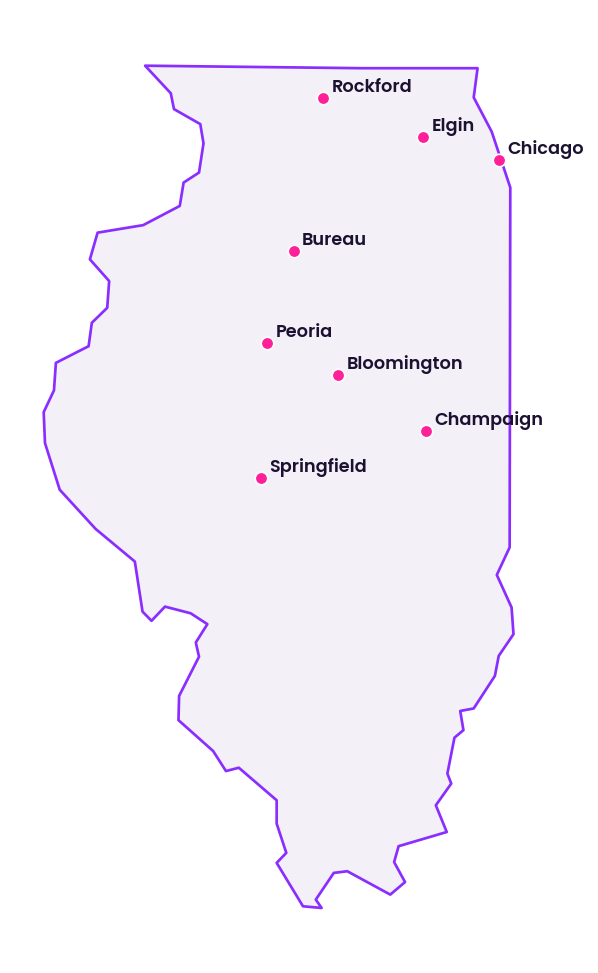
Illinois is a large and economically diverse state anchored by the Chicago metropolitan area, with additional regional centers such as Rockford, Peoria, Champaign Urbana, Bloomington Normal, Springfield, and the Metro East area near St Louis. Public data from the United States Census Bureau, the Bureau of Labor Statistics, the Bureau of Economic Analysis, and the United States Department of Housing and Urban Development describe a state that combines a global tier financial and corporate hub in Chicago with aging industrial cities and extensive agricultural regions. Over the past decade, Illinois has experienced modest population decline at the statewide level, alongside continued economic activity and capital flows into select urban and suburban submarkets.
This review focuses on the structure and direction of Illinois fundamentals as reflected in those public sources, and it does not restate specific figures that cannot be verified against a named source. The analysis uses statewide, metropolitan, and county level data conceptually and highlights where Chicago and its suburbs dominate statewide patterns and where other regions diverge.
For multifamily and apartments, Illinois exhibits a bifurcated market. Core urban and near suburban submarkets in the Chicago region have attracted substantial institutional investment and new construction, while many downstate markets rely more on smaller scale ownership and older stock. Single family homes remain relatively affordable in many parts of the state compared with coastal markets, but price and demand conditions vary sharply between affluent Chicago suburbs, city neighborhoods, and smaller cities that have lost industrial jobs. Commercial real estate fundamentals also differ by property type and location, with strong logistics demand in Chicago’s distribution corridors, more challenged office demand in some central business district towers, and generally stable performance for grocery anchored neighborhood shopping centers serving established communities.
For accredited investors, Illinois presents both opportunity and complexity. The state offers scale, deep labor pools, and sophisticated local capital markets, particularly in Chicago, but it also has structural challenges related to population trends, fiscal pressures, and regulatory and tax policy. This review outlines those dynamics across population and migration, jobs and income, housing and multifamily, single family, commercial, taxes and insurance, regulation, infrastructure, climate and physical risks, and concludes with a synthesis of opportunities, risks, and investor implications.
Section 02Population and Migration
Official population estimates from the United States Census Bureau show that Illinois remains one of the more populous states in the country, but that its total population has declined slightly in recent years. Statewide annual estimates, which are scoped to the entire state as of mid year, indicate that net domestic out migration has exceeded natural increase and international in migration in several recent periods. The primary pattern has been net movement of residents from Illinois to other states, particularly to faster growth regions in the South and West, while international migration into Chicago and some suburbs has partially offset these flows.
Within the state, population trends are highly uneven. The Chicago Naperville Elgin metropolitan area, which spans parts of Illinois, Indiana, and Wisconsin, continues to account for the majority of the state’s population and economic activity. Within that metro, the city of Chicago has seen modest population fluctuations, with some neighborhoods gaining residents due to new multifamily development and amenity driven urban living, while others have experienced losses due to disinvestment or changing household preferences. Many inner ring suburbs have fairly stable populations, while some outer ring suburbs have grown as families seek more space and schools.
Downstate, several legacy industrial cities have experienced long term population decline as manufacturing employment has fallen and younger residents have moved to larger metros or out of state. At the same time, university anchored towns such as Champaign Urbana and Bloomington Normal, and the state capital Springfield, have more stable or modestly growing populations due to their institutional anchors.
For investors, the population story means that statewide averages obscure important local differences. Population decline in some counties can weigh on housing demand and values, while stable or growing submarkets within the Chicago region and select regional centers can still offer robust demand for rental and for sale housing. Migration patterns also interact with income, job opportunities, and public services, making submarket level analysis critical.
Section 03Jobs and Economic Anchors
The Bureau of Labor Statistics provides state and metropolitan area employment data that highlight Illinois’s diverse economic structure. Statewide nonfarm employment is distributed across trade, transportation and utilities, professional and business services, education and health services, government, manufacturing, financial activities, leisure and hospitality, and other sectors. The Chicago metro in particular hosts a large concentration of finance, insurance, professional services, headquarters functions, transportation and logistics, and information technology.
Gross domestic product by state and by metropolitan area from the Bureau of Economic Analysis shows that Illinois’s economy is weighted toward services, including finance and insurance, professional and technical services, real estate and rental and leasing, health care, and government. Manufacturing remains important in specific metros, including machinery, food processing, chemicals, and transportation equipment, while agriculture is significant in rural counties, with production of corn, soybeans, and livestock.
Major employers include multinational corporations headquartered in Chicago and its suburbs, major airlines and logistics firms operating out of Chicago O’Hare and Midway airports, rail and freight companies using Chicago’s extensive rail network, large hospital systems and universities, and state government. The presence of O’Hare, a major national and international airport, and Chicago’s status as a critical rail and trucking hub, make Illinois a key node in national supply chains.
Unemployment rates, as reported by the Bureau of Labor Statistics at the statewide and metro levels, have often been slightly above the national average, reflecting both cyclical factors and structural challenges in certain industries and regions. However, labor force participation in core metros remains relatively high, and a deep pool of skilled workers supports high value service industries.
For real estate investors, this economic base underpins demand for multifamily in employment rich neighborhoods and transit accessible suburbs, for industrial and logistics facilities along interstate and rail corridors, and for retail and office space serving both residents and businesses. At the same time, exposure to sectors such as traditional manufacturing and government employment can pose risks in downstate markets where plant closures or budget pressures have local impacts.
Section 04Income
Income statistics from the American Community Survey and the Bureau of Economic Analysis reveal that Illinois has a relatively high aggregate personal income base, with substantial variation between Chicago area households and residents of other regions. Median household income at the statewide level is close to or slightly above the national median, but metro area data show that Cook County and affluent collar counties such as DuPage, Lake, and Will have higher median incomes, while some downstate counties have lower figures.
Chicago’s central business district and certain neighborhoods and suburbs host many high income households working in finance, professional services, technology, and executive roles. At the same time, parts of Chicago and several other cities have concentrated poverty and lower income levels, reflecting long standing disparities by neighborhood and race. The resulting income dispersion is significant for housing markets, as it creates demand for both high end and affordable or workforce housing.
The area median income calculations from the Department of Housing and Urban Development for Illinois metros are used to set income limits for housing programs and give a benchmark of median incomes by family size. Area median incomes for the Chicago Naperville Elgin metro are higher than those for many downstate metros, influencing what is considered affordable rent or purchase price in each area.
From an investor perspective, income levels and distributions determine what rent levels and price points are sustainable in different submarkets. Class A multifamily in downtown Chicago or high income suburbs can target households with significant disposable income, while workforce and affordable housing strategies must align rent levels with the incomes of service workers, health care staff, and other middle income groups. Understanding income by census tract and neighborhood is essential to avoid overestimating achievable rents or underestimating affordability stress.
Section 05Housing and Multifamily
Illinois’s housing stock reflects both its urban core and its extensive suburban and rural areas. Census Bureau housing data and American Community Survey tenure statistics show that the state has a mix of owner and renter occupied units, with higher rental shares in Chicago and some downstate cities, and higher ownership rates in many suburbs and rural counties. Multifamily housing is concentrated in Chicago, its suburbs, and larger downstate cities, while single family homes dominate many outlying areas.
Multifamily in Illinois spans high rise towers in downtown Chicago and along the lakefront, mid rise and garden communities in city neighborhoods and suburbs, and smaller two to four unit buildings in older urban and small town areas. Private data providers such as RealPage, CoStar, Yardi Matrix, and Freddie Mac multifamily research describe robust investment and development activity in Chicago’s core and select neighborhoods, with recent cycles of new Class A tower deliveries in the central business district and surrounding areas.
Downstate, multifamily markets are more fragmented and often characterized by older stock, smaller properties, and local ownership. College towns such as Champaign Urbana and Bloomington Normal have student oriented multifamily and conventional apartments, while cities such as Peoria and Rockford have legacy multifamily stock that may require significant capital investment.
State housing finance agencies support affordable housing developments across Illinois through tax credit allocations and other programs. These projects add income restricted units in both Chicago and downstate communities and can be important for workforce housing strategies.
For investors, the multifamily opportunity in Illinois is primarily concentrated in the Chicago region, where demand drivers include employment, transit access, amenities, and institutional capital interest. Suburban multifamily with access to commuter rail and highways can serve both renters by choice and households priced out of ownership. Downstate multifamily may offer higher yields but faces more limited demand growth, higher physical risk due to older stock, and less liquidity.
Section 06Rents
Rent levels and trends in Illinois multifamily markets are tracked by private data providers, by fair market rent estimates from the Department of Housing and Urban Development, and by American Community Survey rent distributions. In Chicago, average rents for Class A downtown and near downtown properties are significantly higher than statewide and national averages, reflecting building quality, amenity packages, and central locations. Rents in older Class B and C properties are lower but still influenced by neighborhood demand, transit access, and competition from single family rentals and small multifamily.
Suburban rents vary by county and submarket. High income suburbs with strong schools, transit access, and amenities can support relatively high rents, particularly for newer garden style and mid rise communities. Suburbs farther from job centers with less transit and amenities tend to have lower rents and may experience more vacancy pressure if local employment softens.
Downstate, multifamily rents are generally lower in absolute terms, reflecting lower incomes and housing costs, though rent burdens for lower income households can still be high. Fair market rents for downstate metros tend to be below those for Chicago, providing a benchmark for both voucher program payment standards and for market rate expectations.
The rent growth profile in Illinois has been uneven. Chicago saw strong rent growth in many core neighborhoods during periods of economic expansion, though growth has moderated and in some cases pulled back in response to new supply, changes in urban living preferences, and macroeconomic factors. Some suburban and downstate markets have experienced slower and steadier rent growth, tied more closely to local incomes and modest new supply.
Investors must calibrate rent projections to specific submarkets, considering recent history, pipeline, affordability, and policy. Aggressive rent growth assumptions in already high rent Chicago neighborhoods may be difficult to achieve if new supply and policy constraints weigh on pricing, while conservative assumptions in undersupplied suburban pockets may leave upside on the table.
Section 07Vacancy
Vacancy rates in Illinois rentals are reported by the American Community Survey at the statewide and metro level and by private providers for professionally managed properties. Statewide rental vacancy has often been near or slightly above national averages, but metro data show that Chicago generally has lower vacancy than some downstate areas, with significant internal variation by neighborhood and property class.
In Chicago’s downtown and surrounding neighborhoods, vacancy has been sensitive to cycles in demand for urban living and to waves of new Class A supply. When many new towers deliver in a compressed period, leasing can elevate vacancy rates temporarily until absorption catches up. In established neighborhoods with limited new construction and strong demand, such as some North Side areas, vacancy tends to be low, supporting steady rent levels.
Suburban vacancy also varies widely. Transit served and amenity rich suburbs often maintain healthier occupancy than areas with weaker employment bases or aging stock that has not been updated. Downstate cities with declining populations or challenged economies may have higher vacancy, both in multifamily and single family rentals, particularly in neighborhoods with limited reinvestment.
From an investment perspective, vacancy risk is tied to both submarket fundamentals and property specific characteristics. Assets in locations with structural demand, limited new supply, and competitive positioning within their class can sustain low vacancy. Properties facing heavy new supply, neighborhood challenges, or functional obsolescence may experience persistent higher vacancy and require significant repositioning.
Section 08Supply Pipeline
The multifamily supply pipeline in Illinois is concentrated in Chicago and its suburbs, as shown in Census building permit data and in tracking by CoStar, RealPage, and Yardi Matrix. The city of Chicago has seen multiple cycles of high rise multifamily construction in and around the Loop, River North, West Loop, South Loop, and other near downtown neighborhoods. These projects add thousands of units to the inventory over several years, often with amenity rich offerings targeting higher income renters.
Suburban multifamily development has been active in select corridors where land is available, zoning permits higher density, and demand from renters is strong. Examples include infill developments near commuter rail stations and new communities near major highway interchanges. Suburban supply tends to be more garden and low to mid rise in form.
Downstate, multifamily development is more limited and often focused on specific drivers such as university enrollment, health care expansion, or targeted affordable housing initiatives. Many smaller metros have relatively little new multifamily construction, which can contribute to aging stock and constrained options for renters.
For investors, understanding the pipeline is central to underwriting. In Chicago, submarkets with large numbers of units under construction may face temporary oversupply and concessions, especially in the Class A segment. Investors in existing or planned properties in those areas should stress test leasing timelines and rent assumptions. In suburbs and downstate markets, a smaller pipeline can be supportive of rent growth and occupancy but can also indicate barriers to new development, such as zoning limitations or weak demand.
Section 09Single Family Homes
Single family housing in Illinois spans urban neighborhoods, inner and outer suburbs, and rural communities. Private data sources such as Zillow, Redfin, and local multiple listing services track median sale prices, listing volumes, and months of supply by metro and county. Historically, Chicago and some affluent suburbs have had higher home prices than downstate markets, though still generally below coastal metro levels, while many smaller Illinois cities offer relatively low price points.
Statewide home price indices from the Federal Housing Finance Agency show long term appreciation over the past decades, punctuated by declines during the housing crisis and varying recovery speeds thereafter. Chicago area home prices recovered more slowly than in some other large metros after the last downturn, reflecting regional economic conditions, but have since appreciated, particularly in desirable neighborhoods and suburbs.
Inventory and months of supply statistics indicate that for stretches of time Illinois markets have oscillated between buyer and seller oriented conditions, with low supply and low mortgage rates favoring sellers, and higher rates and more listings providing leverage to buyers. These dynamics differ by submarket. Some Chicago neighborhoods and sought after suburbs can see tight inventory and rapid sales, while others have more balanced conditions.
For investors in single family rentals, Illinois offers a mix of opportunities and challenges. In Chicago, single family rentals are common in certain neighborhoods, often as part of small portfolios. Suburban single family rentals can serve families seeking school access and yard space without the ability or desire to buy. Downstate, rentals may focus on workforce households in smaller cities.
Yields depend on acquisition prices, property taxes, insurance, and rents. Illinois’s relatively high property tax burdens in some counties can compress net yields, making careful underwriting essential. Investors must also consider local landlord tenant law, neighborhood trends, and property condition, especially for older homes.
Section 10Commercial Real Estate and Retail Centers
Commercial real estate in Illinois is dominated by Chicago’s office, industrial, and retail markets, with important but smaller contributions from other metros. Office markets in downtown Chicago have faced headwinds from remote work trends, corporate downsizing, and tenant relocations, leading to elevated vacancy and downward pressure on effective rents in some buildings. Newer, amenity rich towers with modern systems and flexible layouts have fared better, while older commodity space has faced more challenges.
Suburban office markets vary, with some submarkets near transportation nodes and amenities showing resilience, and others experiencing higher vacancy and tenant flight. Medical office properties associated with health systems often perform differently from general office, with more stable occupancy.
Industrial and logistics real estate is a relative bright spot. Illinois’s central location and extensive transportation infrastructure, including interstate highways, rail yards, and airports, support strong demand for warehouses, distribution centers, and light industrial properties. The Chicago industrial market, extending into Will, DuPage, and other counties, has seen significant development and leasing, particularly for modern logistics facilities serving online commerce and regional distribution. Vacancy in well located modern product has tended to be low, with rents rising from prior cycle levels.
Retail centers in Illinois encompass urban high street retail, enclosed malls, power centers, and grocery anchored neighborhood centers. Urban retail in Chicago’s core has been influenced by changes in commuting and tourism patterns, with some corridors seeing vacancy and rent declines, while others adapt with new tenant mixes. Enclosed malls have faced structural headwinds nationally and in Illinois, with store closures and repurposing efforts underway in some locations. Grocery anchored neighborhood centers in stable residential areas have generally maintained occupancy, as grocery, pharmacy, and essential services remain in demand.
Capitalization rate patterns from brokerage and private data reports, while not quantified here, indicate tighter yields for high quality industrial and well leased grocery anchored centers, moderate yields for stable multifamily and select office, and higher yields for assets with leasing risk, functional obsolescence, or location challenges.
Section 11Transactions and Capital Markets
Detailed statewide transaction volumes and capitalization rates by property type in Illinois are primarily available from private data providers such as MSCI Real Assets, CoStar, and brokerage research reports, and those numeric series are not accessible in this environment. Public sources do not provide a comprehensive, current, freely available dataset of all commercial transactions with capitalization rates and yields.
Qualitatively, Illinois, and especially Chicago, has historically attracted significant domestic and international capital, including pension funds, sovereign wealth funds, private equity firms, real estate investment trusts, and family offices. During periods of low interest rates and strong fundamentals, prime office towers, multifamily high rises, and high quality industrial facilities traded at relatively low capitalization rates. Subsequent shifts in interest rates, work patterns, and risk perceptions have prompted repricing, reduced transaction volumes, and a wider gap between buyer and seller expectations.
Downstate markets see more limited institutional interest, with transactions often dominated by local and regional buyers and smaller deal sizes. Capitalization rates in these markets tend to be higher, reflecting perceived risk, limited liquidity, and older building stock.
Because no official public information is available that gives a complete, current, quantified view of Illinois transaction volumes and capitalization rates by property type without relying on proprietary sources, this section is limited to structural observations. Investors must supplement this framework with up to date proprietary data and local broker insight when making specific investment decisions.
Section 12Taxes
Illinois’s tax structure is a central consideration in real estate investment. The Illinois Department of Revenue administers a flat state individual income tax and a corporate income tax, with rates set by statute. Local governments may impose additional taxes and fees. Property taxes in Illinois are levied by counties and subordinate taxing districts such as municipalities, school districts, and special purpose districts. The property tax system uses equalized assessed value and local tax rates to determine bills, and effective property tax burdens can be high relative to property values in some counties.
Cook County, which contains Chicago, applies a classification system that assigns different assessment levels to various property classes, such as residential, commercial, industrial, and apartments, leading to different effective tax burdens. Collar counties and downstate counties use different assessment practices but still rely heavily on property taxes to fund schools and local services.
For investors, property taxes are a major operating expense and can vary significantly between jurisdictions. Acquiring properties in high tax counties or municipalities requires careful modeling of current and future tax bills, including potential reassessments after sale. Income taxes affect investor returns at the owner level, especially for pass through entities.
Sales taxes, including state and local portions, influence retail tenant costs and consumer behavior. Chicago and some suburbs have relatively high combined sales tax rates compared with national averages. This review does not state specific numeric income, property, or sales tax rates, because those are best confirmed against current Illinois Department of Revenue and county schedules for the relevant year.
Section 13Insurance
Insurance considerations in Illinois relate to a range of hazards, including severe thunderstorms, hail, tornadoes in some regions, flooding along rivers and in low lying areas, winter storms, and, in Chicago, urban infrastructure risks. The Illinois Department of Insurance oversees the insurance market and monitors availability and pricing trends.
Federal flood maps identify floodplains along major rivers such as the Mississippi and Illinois rivers and in local creeks and drainage systems. Properties in special flood hazard areas must carry flood insurance if they have federally related mortgages, adding to operating expenses. Urban flooding from intense rainfall can also affect basements and below grade spaces, even outside mapped floodplains.
Hail and wind events can damage roofs, windows, and building systems, leading to claims and higher premiums. Winter storms can cause ice and snow loads, frozen pipes, and slip hazards. In Chicago and some older cities, aging infrastructure creates risks related to water intrusion, power outages, and sewer backups.
Insurance availability is generally adequate, but premiums and deductibles have risen in many areas over time as insurers adjust for loss experience and reinsurance costs. For investors, obtaining property specific quotes, understanding policy exclusions and deductibles, and modeling potential premium increases are essential parts of underwriting.
Section 14Landlord Tenant and Regulatory Environment
Illinois law sets the basic framework for landlord tenant relationships, with additional rules and protections in certain municipalities, most notably Chicago. Statewide, statutes address issues such as security deposits, habitability, notice requirements, and eviction procedures. In recent years, there have been legislative efforts to enhance tenant protections, adjust eviction processes, and address issues such as source of income discrimination in some jurisdictions.
Chicago has its own Residential Landlord and Tenant Ordinance that imposes stricter requirements on landlords regarding disclosures, maintenance, security deposit handling, and remedies for violations. The city has also adopted a fair notice ordinance that extends notice periods for certain lease terminations and non renewals. Other municipalities may have additional rental registration, inspection, or tenant protection measures.
Illinois does not have statewide traditional rent control, but the legal landscape is evolving, and there have been political debates over rent regulation and just cause eviction concepts. Some municipalities outside Chicago may experiment with local policies within the constraints of state law.
For investors, compliance with landlord tenant law is essential and not optional. In Chicago, in particular, operational practices must align with the local ordinance to avoid penalties. Statewide, investors must understand eviction timelines, court processes, and any local programs that affect rent non payment, such as emergency rental assistance.
Section 15Infrastructure
Illinois’s infrastructure underpins its role as a national transportation and logistics hub. The state has an extensive network of interstate and state highways, a dense rail system, major inland waterways, and two large commercial airports in the Chicago area. The Illinois Department of Transportation and regional agencies publish data on traffic volumes, bridge conditions, and planned projects.
Chicago’s position as a rail and trucking crossroads supports a large industrial real estate base. O’Hare International Airport is one of the busiest airports in the world, supporting air cargo and business travel, while Midway Airport serves regional and domestic flights. Transit agencies like the Chicago Transit Authority and Metra operate urban rail and commuter rail systems that connect city neighborhoods and suburbs, influencing residential and office location decisions.
Downstate, smaller cities have their own infrastructure networks, including local transit, highways, and smaller airports. River transport along the Mississippi and Illinois rivers supports agricultural and industrial shipping.
Water, sewer, and electric infrastructure in Illinois varies in age and quality. Chicago and many older cities face challenges related to aging pipes, combined sewer systems, and legacy infrastructure, while suburbs and newer developments often have more modern systems. Investments in infrastructure, funded by state, local, and federal sources, aim to address deferred maintenance and modernization needs.
For investors, proximity to infrastructure assets such as highways, transit lines, and airports can enhance property value and leasing prospects, especially for industrial, office, and multifamily projects. Conversely, infrastructure deficits or congestion can limit growth and desirability in certain areas.
Section 16Climate and Physical Risks
Illinois experiences a continental climate with hot summers, cold winters, and variable spring and fall conditions. National Oceanic and Atmospheric Administration climate records for Illinois show historical patterns of temperature and precipitation, including trends in heavy rainfall events and temperature extremes.
Physical risks include flooding, especially along major rivers and low lying urban areas, severe thunderstorms with hail and high winds, tornadoes in some regions, winter storms with snow and ice, and heat waves. The Federal Emergency Management Agency’s National Risk Index and flood maps highlight counties with higher relative risk for flood, wind, and other hazards.
Flood risk is particularly salient in riverfront communities and in Chicago neighborhoods with older drainage systems. Properties located within mapped flood zones face mandatory insurance requirements and higher exposure to loss. Severe weather across the state can cause property damage, business interruption, and infrastructure outages.
Climate change may amplify some of these risks over time, with potential for more intense rainfall, more frequent heat waves, and shifts in storm patterns. While this review does not present specific projections, investors must recognize that future climate conditions may not mirror historical averages.
Asset level resilience measures, such as elevating critical equipment, reinforcing roofs, improving drainage, and using resilient materials, can mitigate some risks. Location choices that avoid the highest risk zones can also reduce exposure.
Section 17Opportunities
Illinois offers several opportunity themes for real estate investors who navigate its complexities. In multifamily, opportunities exist in well located Chicago neighborhoods and suburbs where demand for rental housing remains strong due to employment, transit access, and lifestyle factors. Value add strategies that upgrade older Class B and C properties can capture demand from renters who seek improved housing but cannot afford top tier buildings.
Industrial and logistics properties along interstate corridors and near rail yards and airports present opportunities, given Illinois’s strategic location in national supply chains. Modern distribution centers, last mile facilities, and light industrial parks serving regional manufacturers and distributors may provide relatively stable income where demand conditions support it.
Grocery anchored neighborhood centers in stable residential areas, both in Chicago and in suburbs and regional cities, offer relatively defensive retail exposure. As long as they maintain strong anchors and diverse tenant mixes, these centers may generate relatively steady cash flows.
Downstate, select opportunities exist in university towns, health care anchored communities, and regional hubs where institutions provide stability. Smaller multifamily and commercial assets in these markets may offer higher yields, though with greater management intensity and liquidity considerations. The observations in this section are general and educational, are not projections, forecasts, or assurances of any particular return, yield, occupancy, rent level, or appreciation, and any specific investment must be evaluated on its own facts.
Section 18Risks
The risks in Illinois are as important as the opportunities. Demographic risk includes population decline at the statewide level and stagnation or loss in many downstate communities, which can weaken housing demand and property values. Economic risk arises from structural changes in manufacturing, fiscal challenges at the state and local levels, and shifts in corporate location preferences.
Fiscal and tax risk is significant. Illinois faces long standing pension obligations and budgetary pressures, which can lead to changes in tax policy, fees, and public service levels. Property tax burdens are already high in some areas, and further increases could frustrate residents and businesses, potentially accelerating out migration in certain segments.
Regulatory and political risk includes evolving landlord tenant law, rent regulation debates, and local policy shifts in Chicago and other cities. Investors must watch legislative developments that could affect eviction processes, rent increases, and property operations.
Market risk includes pressures on downtown Chicago office demand, which can affect surrounding retail, multifamily, and tax bases. Overbuilding in some multifamily submarkets, or prolonged weakness in certain retail formats, can also create asset specific challenges.
Climate and physical risks, including flooding and severe weather, can threaten both asset integrity and insurance affordability. Real estate investments are speculative, are subject to market, financing, liquidity, tax, regulatory, insurance, and physical hazard risks, and can result in the loss of some or all of an investor's invested capital, including the possible loss of principal.
Section 19Investor Implications
For accredited investors, Illinois should be approached with a segmented strategy that recognizes the central role of Chicago and the divergent trajectories of downstate markets. In Chicago and its suburbs, capital can target core and value add multifamily, industrial, and necessity retail, with careful attention to location, tenant quality, and building resilience. In downstate markets, investors should focus on assets that are tightly linked to durable institutions, such as universities and hospitals, and be conservative on growth and exit expectations.
Underwriting must emphasize realistic rent growth in line with local incomes and supply, vacancy assumptions that reflect competitive dynamics, and comprehensive modeling of property taxes and insurance. Capital structures should be conservative, particularly in assets exposed to office demand or in small markets.
Policy and fiscal monitoring is essential. Changes in state and local tax regimes, incentives, and regulations can materially impact net operating income and asset values. Investors may wish to incorporate scenario analysis around tax rate changes and regulatory shifts.
Diversification across markets and property types within and beyond Illinois can help balance risk. Illinois assets may play a role as income generating holdings in a wider portfolio, especially where acquired at pricing that reflects current risks. Nothing in this section is a recommendation to pursue any specific strategy or investment, and there is no assurance that any objective or outcome described will be achieved.
Section 20Conclusion
Illinois remains a significant real estate jurisdiction, combining the global scale and complexity of Chicago with a wide range of suburban and downstate markets. Its economic strengths in finance, transportation, logistics, and services support ongoing demand for housing and commercial space, while its demographic and fiscal challenges temper growth expectations and introduce policy and market risks.
This review has outlined the qualitative structure of Illinois’s population trends, economic anchors, income distribution, housing and multifamily markets, single family and commercial segments, tax and insurance frameworks, regulatory environment, infrastructure, climate and physical risks, and the resulting opportunities and risks for accredited investors. It has not provided specific numeric values, but it has identified the public sources where those figures can be retrieved and encouraged investors to combine those data with local insight and disciplined underwriting.
For investors willing to engage with Illinois’s intricacies, there are strategies that may be pursued in well chosen submarkets and property types, though no particular outcome or return is assured. Outcomes depend on selectivity, structure, and ongoing attention to the evolving economic, fiscal, and regulatory landscape.
Sources
- United States Census Bureau, Population and Housing Unit Estimates, Illinois statewide and counties,, https://www.census.gov/programs-surveys/popest.html
- United States Census Bureau, American Community Survey one year and five year estimates, Illinois,, https://www.census.gov/programs-surveys/acs
- United States Census Bureau, Housing Vacancies and Homeownership, state level tables for Illinois,, https://www.census.gov/housing/hvs
- United States Census Bureau, Building Permits Survey, Illinois,, https://www.census.gov/construction/bps
- United States Bureau of Labor Statistics, Economy at a Glance, Illinois,, https://www.bls.gov/eag/eag.il.htm
- United States Bureau of Labor Statistics, State and Area Employment, Illinois and major metropolitan areas,, https://www.bls.gov/sae
- United States Bureau of Labor Statistics, Local Area Unemployment Statistics, Illinois counties and metros,, https://www.bls.gov/lau
- United States Bureau of Economic Analysis, Gross Domestic Product by State, Illinois,, https://www.bea.gov/data/gdp/gdp-state
- United States Bureau of Economic Analysis, Gross Domestic Product by Metropolitan Area, Chicago Naperville Elgin and other Illinois metros,, https://www.bea.gov/data/gdp/gdp-metropolitan-area
- United States Bureau of Economic Analysis, Personal Income by State and Local Area, Illinois,, https://www.bea.gov/data/income-saving/personal-income-by-state
- United States Department of Housing and Urban Development, Office of Policy Development and Research, Fair Market Rents and income limits for Illinois areas,, https://www.huduser.gov
- Federal Housing Finance Agency, House Price Index, Illinois and metropolitan statistical areas,, https://www.fhfa.gov/DataTools/Downloads/Pages/House-Price-Index.aspx
- RealPage, multifamily market analytics, Chicago and Illinois markets,, https://www.realpage.com/analytics
- CoStar Group, market analytics and capital markets reports, Illinois,, https://www.costar.com
- Yardi Matrix, multifamily national and metro reports, Chicago and Illinois markets,, https://www.yardimatrix.com
- Freddie Mac Multifamily, research and insights, Midwest region including Illinois,, https://mf.freddiemac.com/research
- Illinois Housing Development Authority, statewide housing programs and research,, https://www.ihda.org
- Illinois Department of Revenue, tax information and statistics,, https://tax.illinois.gov
- Illinois Department of Insurance, insurance market information,, https://insurance.illinois.gov
- Illinois Department of Transportation, transportation system and traffic data,, https://idot.illinois.gov
- Regional Transportation Authority and Chicago Transit Authority, transit system information,, https://www.rtachicago.org
- Metra, commuter rail information,, https://metra.com
- Federal Emergency Management Agency, National Risk Index and Flood Map Service Center, Illinois,, https://hazards.fema.gov/nri
- National Oceanic and Atmospheric Administration, climate data for Illinois,, https://www.ncei.noaa.gov
- CBRE Research, Chicago and Illinois commercial real estate market reports,, https://www.cbre.com/insights
- JLL Research, Chicago and Illinois market reports,, https://www.us.jll.com/en/trends-and-insights/research
- Cushman and Wakefield, Marketbeat reports for Chicago and other Illinois markets,, https://www.cushmanwakefield.com/en/insights
- MSCI Real Assets, United States Capital Trends, including Illinois,, https://www.msci.com/our-solutions/real-estate/real-assets