In brief · summary: Kentucky
Kentucky State Real Estate Market Review
Section 01Executive Summary
Kentucky is a mid sized state in the central and southern United States with a diversified economy and a real estate landscape that ranges from urban cores in Louisville and Lexington to small manufacturing towns and rural counties. Public data from the United States Census Bureau, the American Community Survey, the Bureau of Labor Statistics, the Bureau of Economic Analysis, and the United States Department of Housing and Urban Development show that, over the past decade, Kentucky has experienced modest statewide population growth, with gains in metropolitan areas and relative stagnation or decline in some rural counties. This review does not restate specific current figures, even though they appear in the cited sources, and focuses instead on the structure and direction of the market.
For housing, the state is characterized by broad affordability compared with national averages, with single family homes forming the majority of the housing stock and multifamily concentrated in Louisville, Lexington, Northern Kentucky, and university centers. Rents and home prices are moderate in absolute terms but must be evaluated against local incomes, which are below coastal averages but sufficient to support stable occupancy in well located properties. Commercial real estate is anchored by office and medical space in the largest metros, industrial and logistics facilities along interstate and river corridors, and grocery anchored and neighborhood retail centers in cities and towns.
Kentucky’s tax and regulatory framework is relatively predictable and moderate, with state income and sales taxes, property taxes administered locally, and a landlord tenant regime that is less restrictive than in many coastal states. Insurance and physical risks relate primarily to severe weather, including tornadoes, hail, floods, and winter storms, rather than coastal hurricanes or wildfires, although flood and storm risk is material along rivers and in certain regions.
For accredited investors, Kentucky offers income oriented opportunities in multifamily, single family rentals, industrial and logistics properties, and necessity retail in metros with diversified economic bases. The primary challenge is not finding demand in absolute terms but selecting metros and submarkets with resilient employment, managing physical and insurance risks, and setting return expectations in line with modest growth and limited liquidity compared with larger coastal markets.
Section 02Population and Migration
The United States Census Bureau’s decennial census and Population Estimates Program indicate that Kentucky’s total population has grown slowly over recent decades, with statewide annual estimates showing modest net increases in many years and near flat periods in others. American Community Survey data and county level estimates reveal that growth is uneven. Metropolitan counties around Louisville and Lexington have gained residents, supported by job growth in services, logistics, and manufacturing, while many rural counties, especially in eastern Kentucky, have experienced stagnation or decline as coal and traditional manufacturing employment have fallen.
Migration patterns derived from Census components of change series show that net domestic migration has been slightly negative or modestly positive in different time windows, with residents both leaving and moving into the state. International migration has contributed to population stability in some metros, particularly in Louisville, where refugee resettlement and immigrant communities have grown. Within Kentucky, there is a clear movement from rural to urban and suburban counties as younger residents seek job opportunities, education, and amenities.
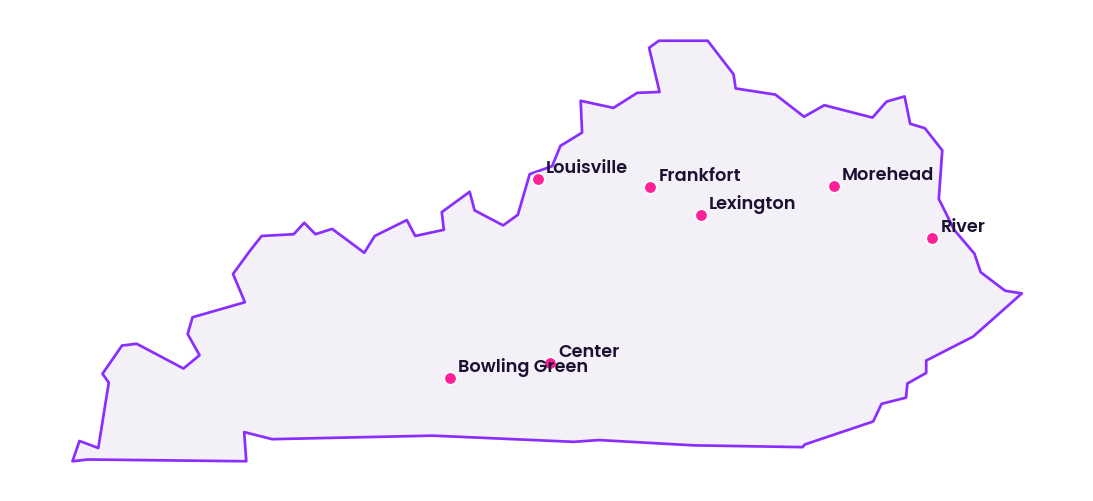
These dynamics have direct real estate implications. Multifamily and newer single family subdivisions in and around Louisville and Lexington benefit from household formation and in migration, while some smaller cities and rural areas face excess housing stock and limited new construction. University centers such as Lexington and Bowling Green maintain more stable or growing populations based on enrollment and academic employment, supporting student and faculty housing demand even when surrounding regions are less dynamic.
Section 03Jobs and Economic Anchors
Employment data from the Bureau of Labor Statistics and gross domestic product figures from the Bureau of Economic Analysis illustrate Kentucky’s mixed economic base. Statewide nonfarm employment is spread across manufacturing, trade and transportation, education and health services, government, professional and business services, leisure and hospitality, and financial activities. Manufacturing is a larger share of employment and output than in many states, with significant concentrations in automotive assembly and supplier plants, aerospace components, metals, chemicals, and food processing.
Real gross domestic product by state and by industry from the Bureau of Economic Analysis shows that manufacturing, transportation and warehousing, and wholesale trade contribute materially to Kentucky’s output alongside health care, finance, real estate, and government. Logistics and distribution play an especially prominent role because of Kentucky’s central location and transportation infrastructure. Major air cargo operations based in Louisville create employment and support demand for industrial space across the region. Interstate highways and rail lines connect Kentucky to surrounding states and national networks, supporting distribution centers and trucking operations.
Louisville and Lexington serve as regional hubs for health care and education. Large hospital systems, universities, and colleges provide stable employment and house students, faculty, and staff. Government employment at the state capital in Frankfort and in local governments adds another layer of stability.
From a real estate perspective, these anchors support demand for multifamily housing close to employment centers and campuses, single family homes in commuter suburbs, industrial and logistics properties near air hubs, interstate intersections, and river ports, and retail centers in neighborhoods and regional clusters that serve workers and residents. At the same time, exposure to cyclical sectors such as automotive manufacturing and to structural shifts in coal and traditional industry introduces risks in certain regions, particularly in smaller cities dependent on one or two large employers.
Section 04Income
Income data from the American Community Survey show that Kentucky’s median household income is below the national median, reflecting its mix of industries and rural structure. However, cost of living, particularly housing costs, is also lower than in many high cost states, which supports reasonable affordability for many households. Income levels vary significantly between metropolitan and rural areas. Counties in and around Louisville and Lexington and some suburban counties report higher median household incomes, while rural and Appalachian counties in the east show lower income levels.
Per capita personal income figures from the Bureau of Economic Analysis confirm this pattern and illustrate the importance of wages and salaries in manufacturing, logistics, health care, and government, as well as transfer payments and retirement income in older communities. Incomes in university and medical center metros also benefit from higher wage professional and educational roles.
For investors, these income profiles are critical. Class A multifamily projects in Louisville and Lexington can target higher income renters who are able to pay rents that reflect modern amenities and central locations, but the size of this cohort is smaller than in global gateway cities. Class B and C assets, and workforce single family rentals, must align rents with the incomes of workers in manufacturing, logistics, health care support, retail, and public services. Aggressive rent growth assumptions in markets with modest income growth and limited inflows of high earners can lead to affordability stress, higher turnover, and delinquency.
Section 05Housing and Multifamily
Kentucky’s housing stock is mostly single family but with significant multifamily inventory in its metropolitan areas and university towns. Census and American Community Survey data show higher renter shares in urban counties such as Jefferson County, which includes Louisville, and Fayette County, which includes Lexington, and higher owner occupancy in suburban and rural counties.
Multifamily product types include urban mid rise and some high rise buildings in Louisville’s central business district and surrounding neighborhoods, garden style communities in suburban areas of Louisville, Lexington, and Northern Kentucky, student oriented and conventional apartments in college towns such as Lexington, Bowling Green, and Morehead, and smaller multifamily properties such as two to four unit buildings and older walk up apartments in small cities and towns.
Private data from RealPage, CoStar, and Yardi Matrix, which track rents, occupancy, and construction at the metro and submarket level, describe generally moderate rent levels and relatively high occupancy in well located properties. Multifamily construction over the past years has focused on Louisville and Lexington, with some activity in Northern Kentucky communities linked to the Cincinnati metro.
The housing market has also seen efforts to create and preserve affordable housing through state and local programs administered by the Kentucky Housing Corporation and local agencies. Tax credit and bond financed projects add regulated units with income and rent restrictions that target lower income households.
For investors, multifamily strategies in Kentucky emphasize core and core plus assets in strong submarkets of Louisville and Lexington, value add opportunities in older Class B and C stock where renovations and improved management can increase net operating income subject to market rent limits, student and faculty housing in university metros that requires management expertise tailored to academic calendars and tenant profiles, and smaller multifamily assets in stable smaller cities, which can provide higher yields but demand more hands on management and carry liquidity risk.
Section 06Rents
Rents in Kentucky’s multifamily markets are moderate relative to national averages and to many coastal and Sunbelt metros, but they vary meaningfully by metro and submarket. Fair market rent benchmarks from the Department of Housing and Urban Development for Kentucky metropolitan and nonmetropolitan areas provide official estimates of typical costs for modest one, two, and three bedroom units, and American Community Survey gross rent distributions confirm that many renters pay amounts near or somewhat below these benchmarks, depending on the area.
In Louisville, Class A urban and suburban properties charge higher rents that reflect building quality, amenities, and access to jobs and services. Class B and C properties in less central neighborhoods and in older stock charge lower rents per unit or per square foot, serving a wide range of workforce renters. In Lexington and university metros, student oriented properties can achieve higher effective rents per bedroom, while conventional apartments align more closely with local household incomes.
Downstate and rural markets tend to have lower rents in absolute terms, but rent burdens can still be high for lower income households, particularly in communities with limited economic opportunities.
For investors, rent growth in Kentucky is tied to local income growth, migration, and supply. In metros with job growth and limited new multifamily construction, incremental rent growth is feasible, though typically not at the double digit rates seen in some high growth Sunbelt markets. Rent increases above income growth in weaker markets, or in submarkets with new competition, are harder to sustain.
Section 07Vacancy
Rental vacancy in Kentucky reflects both statewide affordability and local economic conditions. American Community Survey statewide rental vacancy rates for Kentucky often sit near or modestly above national averages, but this statewide measure combines stronger metros with weaker rural markets. In metropolitan areas, private data from CoStar, RealPage, and Yardi Matrix indicate that stabilized multifamily assets in solid neighborhoods maintain relatively low vacancy, while new Class A properties may see higher vacancy during leasing.
In Louisville and Lexington, vacancy patterns are cyclical but generally controlled, with occupancy supported by local employment, higher education, and modest new supply. In smaller cities that experience plant closures or economic shocks, vacancy can rise in both multifamily and single family rentals. Rural counties with population decline may have chronically higher vacancy in older, less desirable properties.
Investors should not over rely on statewide vacancy aggregates. Instead, vacancy underwriting must be tailored to metro and submarket, considering current occupancy in comparable properties, the pipeline of new supply and its likely absorption, tenant profiles and turnover patterns, and economic momentum and employer stability in the local area. Properties near universities, hospitals, and government centers often enjoy more stable occupancy, while assets in single employer towns or isolated rural areas may face higher and more volatile vacancy.
Section 08Supply Pipeline
The housing and multifamily supply pipeline in Kentucky is visible in Census building permit data and local planning and permitting records. Over the past decade, residential permitting has been concentrated in and around Louisville and Lexington, with additional activity in Northern Kentucky suburbs within the Cincinnati metro, and smaller volumes in Bowling Green and other regional centers.
Multifamily permits have been a modest share of total residential permits compared with single family, but they have increased in response to demand in larger metros and university towns. Louisville has seen new urban infill and suburban mixed use communities, including mid rise apartments and townhome style rentals. Lexington has added student housing and market rate apartments near the university and in growth corridors. Northern Kentucky has seen suburban multifamily aligned with Cincinnati employment and commuting patterns.
Single family permits have been more widely distributed, with activity in metros and, to a lesser extent, in some growing exurban communities. Rural areas with declining populations have seen little new single family construction.
For investors, the supply pipeline is a key input to rent and occupancy forecasts. Submarkets with substantial new Class A deliveries may experience pressure on rents and higher concessions in the near term, even when long term fundamentals remain sound. Markets with limited new multifamily supply and healthy demand can support steadier rent growth and occupancy.
Section 09Single Family Homes
Single family homes are the backbone of Kentucky’s housing market. Census data show that a large majority of owner occupied units are single family detached structures, especially outside core urban neighborhoods. Private market data from platforms such as Zillow, Redfin, and local multiple listing services report median sale prices, days on market, and inventory levels by metro and county, though these numeric values are not restated in this environment.
In general, single family home prices in Kentucky are lower than national averages in absolute terms, with important regional variation. Louisville and Lexington have higher price levels than smaller metros and rural counties, particularly in desirable neighborhoods and suburbs with strong schools and amenities. Northern Kentucky suburbs in the Cincinnati metro also exhibit relatively higher prices. Smaller cities in western and eastern Kentucky have lower price points, reflecting local incomes and demand.
Inventory and months of supply metrics cycle between balanced and seller or buyer favorable conditions depending on mortgage rates, economic conditions, and construction. Low interest rates and limited new construction have historically produced tight inventory and upward price pressure in metros, while higher rates and softening demand can slow sales and increase supply.
For investors, single family rental strategies in Kentucky can be attractive because acquisition costs are relatively low and tenant demand for rental homes is steady. Strategies include acquiring homes in stable, working and middle class neighborhoods in Louisville and Lexington and renting to long term tenants, building portfolios in Northern Kentucky suburbs that attract renters who work in the Cincinnati metro, and owning rentals in smaller metros with stable employers and limited new construction, where yields can be higher. Downside risks include aging stock that requires more capital expenditures, localized economic shocks in single employer towns, and limited liquidity for sales, especially in rural counties.
Section 10Commercial Real Estate and Retail Centers
Commercial real estate in Kentucky is concentrated in its major metros and along key transportation corridors. Office space in Louisville and Lexington includes downtown towers, mid rise buildings, and suburban office parks. Tenants are drawn from health care systems, law and professional services, financial and insurance firms, education and non profits, and corporate back office operations. Remote work trends have moderated office demand, particularly for traditional space, but medical and institutional office uses remain more resilient.
Industrial and logistics properties are a relative strength. Kentucky’s location at the intersection of several interstate highways and major freight rail routes, and its role in express air cargo operations and ground distribution networks, support a robust industrial base. Warehouses, distribution centers, manufacturing facilities, and cold storage properties serve both regional and national markets. Industrial vacancy in well located, modern facilities has tended to be low, with steady rent growth over time, based on private market reports.
Retail real estate in Kentucky includes grocery anchored neighborhood centers in urban and suburban areas, power centers and regional malls, particularly in metro areas, and main street retail in small towns and neighborhood corridors. Grocery anchored and necessity retail has performed relatively well where population is stable or growing, as households rely on these centers for daily needs. Malls and discretionary retail are more exposed to online commerce trends and shifting consumer preferences, with some properties challenged and others repositioned or partially repurposed.
Capitalization rates for commercial properties in Kentucky, as reported in proprietary transaction datasets and brokerage research, are generally higher than for similar assets in prime coastal markets, reflecting local risk and growth expectations and more limited institutional demand. Industrial and grocery anchored centers in strong locations can attract regional and institutional buyers, while office assets and non essential retail often appeal to local and regional investors.
Section 11Transactions and Capital Markets
Transactions and capital flows in Kentucky real estate are tracked by proprietary data providers such as MSCI Real Assets, CoStar, and brokerage firms. Publicly available state and county data document property transfers and recorded prices but do not aggregate these into current, normalized transaction and capitalization rate series that can be accessed in this environment.
Qualitatively, Kentucky sits in the secondary and tertiary tier of United States capital markets. Louisville, Lexington, and Northern Kentucky draw regional institutional capital and some national investors, particularly for industrial, high quality multifamily, and anchored retail assets. Smaller metros and towns see more activity from local and regional buyers, family offices, and owner occupants.
Capital availability and pricing for Kentucky assets reflect national interest rates, lender risk appetite, and investor views on the state’s economic trajectory. Debt financing for multifamily and commercial properties is available from banks, credit unions, agencies for qualifying multifamily, and occasionally life companies. Leverage levels, covenants, and spreads are shaped by asset quality, sponsorship, and local market conditions.
Because no official public information is accessible here that summarizes current Kentucky transaction volumes and capitalization rates by property type, investors should obtain current data from proprietary sources and local market participants when making specific underwriting and valuation decisions.
Section 12Taxes
Kentucky’s tax structure affects both residents and investors. The Kentucky Department of Revenue administers state personal and corporate income taxes, sales and use taxes, and other levies. The state has reformed its income tax system over time, moving toward lower flat rates while adjusting other revenue sources. Local jurisdictions may add local option taxes within statutory frameworks.
Property taxes are assessed and collected at the county level, with oversight from the state. Properties are valued for tax purposes, and rates are applied by local taxing entities such as counties, cities, school districts, and special districts. Effective property tax burdens vary across counties and municipalities, but they are generally moderate compared with high tax states, although investors should evaluate each jurisdiction individually.
For real estate investors, property taxes represent an important operating expense that must be included in pro forma models. Particular attention should be paid to assessment levels and methodologies, recent and historical rate changes by taxing entities, the potential for reassessment after property acquisition, and any abatements, incentives, or special districts that could affect tax liabilities.
Income and sales taxes influence investor net returns and tenant disposable incomes. Kentucky’s overall tax burden is midrange among states, providing a neutral to modestly favorable environment relative to high tax states, but less so than states without an income tax. This review does not state specific numeric tax rates, because those are best confirmed against current Kentucky Department of Revenue and county schedules for the relevant year.
Section 13Insurance
Insurance risk in Kentucky arises primarily from severe weather, including thunderstorms, hail, tornadoes, floods, and winter storms. The Kentucky Department of Insurance regulates the insurance market, but premiums and terms are set by insurers based on risk models and experience.
Flood risk, particularly along rivers and in low lying areas, is mapped by the Federal Emergency Management Agency. Properties in special flood hazard areas must carry flood insurance if they have federally related mortgages. Even properties outside mapped zones can be exposed to flash flooding from heavy rainfall. Flood insurance can be obtained through the National Flood Insurance Program and, increasingly, private carriers.
Wind, hail, and tornado hazards can damage roofs, walls, windows, and other building elements. Insurers in Kentucky incorporate these risks into property and casualty premiums and deductibles, which have increased in some areas as severe weather events and building repair costs have risen. Winter weather, including ice and snow, can create loss risks related to slips, roof stress, and frozen pipes.
Investors should obtain property specific insurance quotes and evaluate coverage limits and exclusions, wind and hail deductibles, flood coverage requirements, and trends in premiums over time. Mitigation measures such as reinforced roofs, impact resistant materials, and improved drainage may reduce risk and, in some cases, premiums.
Section 14Landlord Tenant and Regulatory Environment
Kentucky’s landlord tenant environment is governed primarily by state statutes that define rights and responsibilities for residential and commercial leases. The state has adopted versions of the Uniform Residential Landlord and Tenant Act in some jurisdictions, while others rely on general landlord tenant law. These statutes address topics such as lease terms, habitability, security deposits, repairs, access, and procedures for termination and eviction.
There is no statewide traditional rent control system in Kentucky, and rental rates are set by agreement between landlords and tenants, subject to contract and anti discrimination law. Properties that participate in federal or state housing programs, including tax credit and voucher assisted housing, have rent and income restrictions under program rules.
Eviction procedures require written notice, opportunity to cure in certain circumstances, and judicial process, with timelines and requirements defined in statute. During specific emergency periods, temporary changes may be enacted, but those are not permanent features.
At the local level, some cities may have housing codes, rental registration or inspection programs, and zoning ordinances that affect rental operations, but there is less intensive local regulation of rents and evictions than in many coastal cities.
For investors, Kentucky’s framework offers relative predictability, but compliance is essential. Leasing and property management practices must follow all statutory requirements to avoid legal and reputational risks.
Section 15Infrastructure
Kentucky’s infrastructure supports its roles in manufacturing, logistics, and services. The state has a network of interstate highways, including major routes that cross the state and connect Louisville, Lexington, Northern Kentucky, and other cities to neighboring states and national freight corridors. The Kentucky Transportation Cabinet oversees roads and bridges and manages maintenance and improvement projects.
Rail infrastructure, operated by freight railroads, supports movement of goods including automobiles, manufactured products, and agricultural commodities. River transportation along the Ohio and Mississippi rivers facilitates bulk shipments from port facilities in Kentucky.
Airports in Louisville, Lexington, Cincinnati Northern Kentucky, and other cities provide passenger and cargo services. Louisville in particular is a major air cargo hub with global reach, which has significant implications for logistics and related real estate.
Water and wastewater systems are managed by municipal and regional utilities, with capacity and condition varying by community. Electric and gas utilities operate transmission and distribution networks that have generally reliable service but face modernization and resilience needs in some areas.
For investors, proximity to infrastructure such as highways, ports, and airports enhances the attractiveness of industrial and logistics properties. Multifamily and single family assets benefit from access to transportation, utilities, and community facilities. Infrastructure deficits, aging assets, and congestion can constrain growth or require public and private investments.
Section 16Climate and Physical Risks
Kentucky’s climate is humid and temperate, with four seasons, warm summers, and cool winters. The National Oceanic and Atmospheric Administration’s climate data show that the state experiences a range of extreme weather events, including severe thunderstorms, heavy rainfall, tornadoes, winter storms, and heat waves.
Flooding risk is significant along rivers such as the Ohio and its tributaries and in low lying and poorly drained areas. Flood events can damage buildings, infrastructure, and crops, and they require careful attention in site selection and building design. Federal flood maps identify areas with higher flood probabilities.
Tornado risk is present, particularly in central and western Kentucky, though frequency varies by region. Severe thunderstorms can produce hail and damaging winds. Winter storms occasionally deliver significant snowfall and ice, affecting transportation and building systems.
Climate change projections suggest potential increases in heavy rainfall events and more intense heat waves, which can exacerbate flood risk, heat stress, and energy demand. For real estate investors, these trends reinforce the need for resilience planning and attention to building and infrastructure design.
Section 17Opportunities
Kentucky’s real estate markets present several opportunity themes for sophisticated investors. In multifamily, Louisville and Lexington offer prospects for income oriented investments in Class B and C assets in stable neighborhoods and for selective Class A developments or acquisitions in high demand submarkets. University markets provide opportunities in student housing and in conventional apartments serving faculty, staff, and local workers.
Industrial and logistics properties are a notable opportunity, especially near air cargo hubs, interstate intersections, and river ports. Modern warehouses, distribution centers, and manufacturing facilities that serve regional and national supply chains may support demand and rents, benefiting from Kentucky’s central location.
Grocery anchored neighborhood centers and necessity based retail in growing or stable communities offer another opportunity, as they rely on local consumer spending and often maintain occupancy even during economic downturns.
Single family rental portfolios in metros and stable smaller markets may offer yield potential when acquisitions are disciplined and operations are efficient, though no particular return is assured. These portfolios may appeal to both local and out of state tenants who value affordability and space.
Opportunities also exist in targeted value add strategies that upgrade older assets, improve energy efficiency, and enhance tenant experiences in ways that support modest rent increases and lower operating costs without overburdening tenants. The observations in this section are general and educational, are not projections, forecasts, or assurances of any particular return, yield, occupancy, rent level, or appreciation, and any specific investment must be evaluated on its own facts.
Section 18Risks
Risks in Kentucky include demographic risk, particularly in rural and economically distressed counties with population decline, aging residents, and limited new household formation. Economic risk relates to dependence on manufacturing, especially automotive and other cyclical industries, exposure to coal and traditional energy in some regions, and vulnerability to national and global downturns. Physical and climate risks include flooding, tornadoes, hail, and winter storms, which can damage assets, increase insurance costs, and disrupt operations. Market risk includes oversupply in specific segments or submarkets if developers overbuild relative to demand, particularly in student housing or new suburban multifamily. Liquidity risk arises because smaller markets and assets outside core metros may require longer marketing periods and face a narrower buyer pool. Finally, regulatory and fiscal risk includes changes in state tax policy, economic development incentives, and infrastructure funding that could affect net returns and local competitiveness. Real estate investments are speculative, are subject to market, financing, liquidity, tax, regulatory, insurance, and physical hazard risks, and can result in the loss of some or all of an investor's invested capital, including the possible loss of principal.
Section 19Investor Implications
For accredited investors, Kentucky should be understood as a collection of distinct markets and submarkets rather than a single homogeneous jurisdiction. Investment strategies that focus on metropolitan areas with diversified economies, on submarkets near major employment centers, universities, and infrastructure, and on assets with durable tenant demand and manageable physical risk are more likely to achieve attractive risk adjusted returns.
Underwriting should emphasize conservative rent growth, realistic vacancy and turnover, detailed modeling of property taxes and insurance, and adequate capital reserves. Capital structures should account for potential volatility in interest rates and market liquidity, favoring moderate leverage and longer hold periods for many strategies.
Diversification across property types, including multifamily, industrial, retail, and single family rentals, and across geographies within and beyond Kentucky, can help manage idiosyncratic risks. Engagement with experienced local partners, including brokers, property managers, attorneys, engineers, and lenders, is essential to navigate local conditions and regulations.
Investors should also monitor statewide policy, infrastructure, and climate resilience developments, as these can influence the long term relative attractiveness of Kentucky metros and regions. Nothing in this section is a recommendation to pursue any specific strategy or investment, and there is no assurance that any objective or outcome described will be achieved.
Section 20Conclusion
Kentucky is a moderate growth, industrial and service oriented state with a housing market that remains generally affordable, a multifamily sector concentrated in a few metros and university towns, and commercial real estate opportunities in logistics, manufacturing linked facilities, and necessity retail. Its economic structure, tax and regulatory framework, and physical risk profile differentiate it from coastal gateways and high growth Sunbelt states, offering a different balance of yield and growth.
For accredited investors seeking income and diversification, Kentucky can play a constructive role in a broader United States real estate portfolio, particularly through carefully chosen multifamily, industrial, and retail assets in metros with resilient demand, though no particular outcome or return is assured. Realizing this potential requires disciplined market selection, conservative underwriting, attention to climate and physical risks, and the use of up to date data and local insight.
Sources
- United States Census Bureau, Population and Housing Unit Estimates, Kentucky statewide and counties,, https://www.census.gov/programs-surveys/popest.html
- United States Census Bureau, American Community Survey one year and five year estimates, Kentucky,, https://www.census.gov/programs-surveys/acs
- United States Census Bureau, Housing Vacancies and Homeownership, state level tables for Kentucky,, https://www.census.gov/housing/hvs
- United States Census Bureau, Building Permits Survey, Kentucky statewide and metropolitan areas,, https://www.census.gov/construction/bps
- United States Bureau of Labor Statistics, Economy at a Glance, Kentucky,, https://www.bls.gov/eag/eag.ky.htm
- United States Bureau of Labor Statistics, State and Area Employment, Kentucky and major metropolitan areas,, https://www.bls.gov/sae
- United States Bureau of Labor Statistics, Local Area Unemployment Statistics, Kentucky counties and metros,, https://www.bls.gov/lau
- United States Bureau of Economic Analysis, Gross Domestic Product by State, Kentucky,, https://www.bea.gov/data/gdp/gdp-state
- United States Bureau of Economic Analysis, Gross Domestic Product by Metropolitan Area, Kentucky metros,, https://www.bea.gov/data/gdp/gdp-metropolitan-area
- United States Bureau of Economic Analysis, Personal Income by State and Local Area, Kentucky,, https://www.bea.gov/data/income-saving/personal-income-by-state
- United States Department of Housing and Urban Development, Office of Policy Development and Research, Fair Market Rents and income limits for Kentucky areas,, https://www.huduser.gov
- Federal Housing Finance Agency, House Price Index, Kentucky and metropolitan statistical areas,, https://www.fhfa.gov/DataTools/Downloads/Pages/House-Price-Index.aspx
- RealPage, multifamily market analytics, Kentucky markets,, https://www.realpage.com/analytics
- CoStar Group, market analytics and capital markets reports, Kentucky,, https://www.costar.com
- Yardi Matrix, multifamily national and metro reports, Kentucky markets,, https://www.yardimatrix.com
- Freddie Mac Multifamily, research and insights, Midwest and South regions including Kentucky,, https://mf.freddiemac.com/research
- Kentucky Housing Corporation, statewide housing programs and research,, https://www.kyhousing.org
- Kentucky Department of Revenue, tax information and statistics,, https://revenue.ky.gov
- Kentucky Department of Insurance, insurance market information,, https://insurance.ky.gov
- Kentucky Transportation Cabinet, transportation system and project information,, https://transportation.ky.gov
- Federal Emergency Management Agency, National Risk Index and Flood Map Service Center, Kentucky,, https://hazards.fema.gov/nri
- National Oceanic and Atmospheric Administration, climate data for Kentucky,, https://www.ncei.noaa.gov
- CBRE Research, Louisville and Kentucky commercial real estate market reports,, https://www.cbre.com/insights
- JLL Research, Midwest and Kentucky market reports,, https://www.us.jll.com/en/trends-and-insights/research
- Cushman and Wakefield, Marketbeat reports for Louisville and Lexington,, https://www.cushmanwakefield.com/en/insights
- MSCI Real Assets, United States Capital Trends, including Kentucky,, https://www.msci.com/our-solutions/real-estate/real-assets