In brief · summary: Louisiana
Louisiana State Real Estate Market Review
Section 01Executive Summary
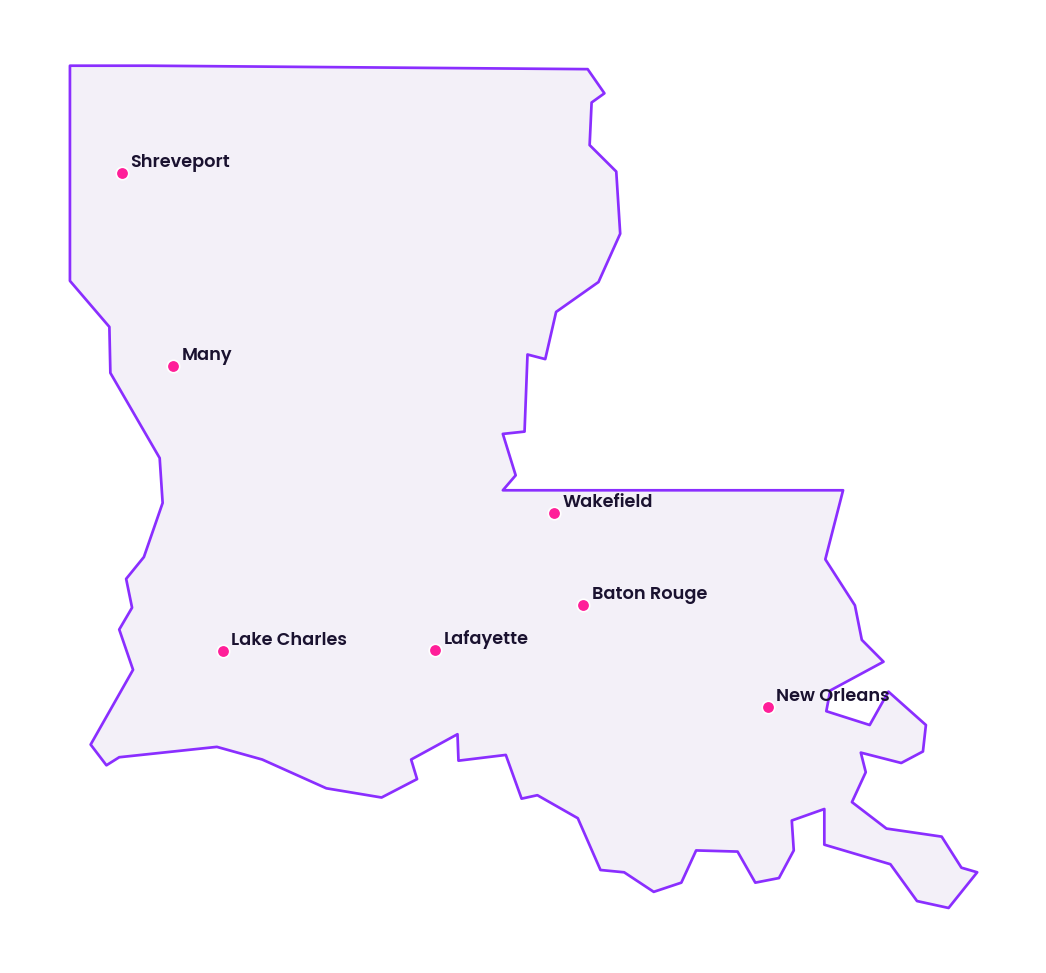
Louisiana is an energy, petrochemical, port, and tourism oriented state with a complex risk profile. Public information from the United States Census Bureau, the American Community Survey, the Bureau of Labor Statistics, the Bureau of Economic Analysis, and the United States Department of Housing and Urban Development shows that the state has a modest population, concentrated in a few metropolitan areas, and that statewide population growth has been slow or negative in several recent years. At the same time, the state retains strategic industries that anchor employment and real estate demand, especially along the lower Mississippi River corridor and in New Orleans, Baton Rouge, Lake Charles, and nearby parishes. This review focuses on structural relationships and directional trends rather than current point figures, which are available through the cited sources but are not restated here.
Housing and multifamily markets in Louisiana are shaped by the interaction of these economic anchors with recurring climate and physical shocks from hurricanes, floods, and coastal land loss. Rents and home prices are moderate by national standards, but incomes are also lower than national averages, and climate and insurance costs are high, producing affordability pressures in some markets. Multifamily demand is strongest in New Orleans, Baton Rouge, Lafayette, Lake Charles, and Shreveport, while many rural and small town markets have limited new construction and older stock.
Commercial real estate reflects the state’s industrial and logistics orientation, with large industrial and petrochemical complexes, port related facilities, and distribution properties along river and coastal corridors, combined with office and medical space in metropolitan centers and neighborhood retail serving local populations. Office demand has faced headwinds from structural economic shifts and work pattern changes, while industrial and logistics assets tied to ports and energy have remained important, though exposed to commodity cycles and the energy transition.
For accredited investors, Louisiana offers opportunities in industrial, logistics, workforce multifamily, and single family rental portfolios in resilient locations, but it also presents outsized climate, insurance, and policy risks. Careful submarket selection, realistic underwriting of operating costs, and explicit climate resilience strategies are essential.
Section 02Population and Migration
The United States Census Bureau’s decennial census and Population Estimates Program show that Louisiana’s total population has fluctuated over the past two decades, with significant declines following major hurricanes and more gradual movements in other periods. State level and parish level estimates indicate that New Orleans lost a large share of its residents after the severe hurricane of the middle two thousands, then regained some population over the next decade, while Baton Rouge and some north shore and suburban parishes gained residents. More recent estimates show statewide population roughly stable to slightly declining, with net domestic out migration offset in part by natural increase and some international in migration.
American Community Survey data reveal that population trends differ by region. Metropolitan parishes around New Orleans and Baton Rouge have fared better than many rural parishes, particularly those affected by long term changes in agriculture, oil and gas activity, and coastal erosion. North shore parishes across the lake from New Orleans and some suburban areas around Baton Rouge have attracted households seeking higher ground, newer housing, and different school options, while some urban neighborhoods have gentrified and added households, and others have experienced ongoing disinvestment and loss.
For real estate investors, these population patterns mean that statewide aggregates can be misleading. Demand for housing and commercial space is concentrated in a limited set of metropolitan and corridor markets, while many rural parishes and smaller towns face structural decline or stagnation. Migration out of heavily exposed coastal and low lying areas into higher elevation suburbs and inland markets, which is documented qualitatively in public sources, is an important driver of relative demand across the state.
Section 03Jobs and Economic Anchors
Employment and output data from the Bureau of Labor Statistics and the Bureau of Economic Analysis show that Louisiana’s economy is anchored by energy and petrochemicals, port and river commerce, manufacturing, tourism and hospitality, health care, education, and government. Statewide nonfarm employment is distributed across trade, transportation and utilities, education and health services, leisure and hospitality, manufacturing, government, professional and business services, and construction, with natural resources and mining being more important in Louisiana than in many other states.
Real gross domestic product by state and by industry from the Bureau of Economic Analysis indicates that the mining and oil and gas extraction sector, along with petroleum and chemical manufacturing, contribute a notable share of state output. Transportation and warehousing are important due to major port facilities along the Mississippi River, on the Gulf of Mexico, and in inland waterways. Tourism and hospitality in New Orleans and other destinations also contribute significantly, as indicated by employment levels in leisure and hospitality in the metropolitan area data.
The state’s major employment anchors include the port complex of New Orleans and the river terminals along the lower Mississippi, which handle bulk commodities, containers, and petrochemical products, along with refineries and petrochemical plants in parishes along the river and in Lake Charles and other coastal areas, and petroleum extraction and service operations in coastal and offshore regions. Large health care systems and academic medical centers operate in New Orleans, Baton Rouge, Shreveport, and Lafayette, universities such as Louisiana State University in Baton Rouge and institutions in New Orleans and other cities draw students and staff, and state government in Baton Rouge and local governments across the state add public sector employment.
These anchors create demand clusters for housing and commercial real estate. Workers in industrial and port facilities support rental and ownership housing in nearby communities, while tourism and hospitality workers need affordable rental options in and around New Orleans and other destinations. At the same time, reliance on carbon intensive industries exposes the state to longer term transition risk as global energy markets evolve.
Section 04Income
American Community Survey estimates show that Louisiana’s median household income is below the national median and below that of many other states, reflecting the state’s industrial mix, educational attainment levels, and rural population share. Income distribution data indicate a significant share of households with low incomes and relatively high poverty rates, particularly in some urban neighborhoods and rural parishes. At the same time, there is a segment of higher income households employed in professional roles, management, specialized health care, and high level positions in energy and petrochemical companies.
Personal income by state and by county from the Bureau of Economic Analysis confirms that earnings from wages and salaries in sectors such as energy, manufacturing, transportation, health care, and government are the main components of income, with nonwage income and transfer payments also meaningful, especially in older and lower income communities.
For real estate investors, this income profile implies that rents and home prices must remain aligned with relatively modest incomes in most areas of the state, that there is persistent demand for affordable and workforce housing, particularly near employment centers and in areas with limited new construction, and that higher end rental and ownership markets, such as historic neighborhoods in New Orleans and certain suburban and riverfront areas, serve a narrower high income segment and may be more volatile. Investments that improve quality within the reach of middle income households and essential workers may be more resilient than those that target only luxury demand segments.
Section 05Housing and Multifamily
Louisiana’s housing stock is a mix of single family homes, small multifamily properties, larger apartment communities, and mobile and manufactured homes, with considerable variation by region. Census and American Community Survey data show that owner occupancy rates are relatively high in many suburban and rural parishes, while renter shares are higher in New Orleans, Baton Rouge, Shreveport, and some smaller cities and towns. Multifamily housing is concentrated in these metropolitan areas and in university and employment centers.
In New Orleans, the housing stock includes historic single family homes, shotgun houses, and small multifamily buildings, along with larger apartment complexes and newer mixed use developments in the central business district, the warehouse district, and selected neighborhoods. Baton Rouge has more conventional garden style apartments and some mid rise communities, with student housing near Louisiana State University and Southern University. Other metros such as Lafayette, Lake Charles, and Shreveport have a mix of small and medium scale multifamily and single family rental stock.
Public housing and subsidized multifamily, supported by programs administered by the United States Department of Housing and Urban Development and the Louisiana Housing Corporation, are present in many parishes, especially in New Orleans and Baton Rouge. These properties operate under regulatory agreements that cap rents and target specific income bands.
For investors, multifamily in Louisiana offers varied strategies. These include core and core plus assets in stable neighborhoods in New Orleans and Baton Rouge that appeal to higher income renters, students, and professionals, workforce housing in garden style communities that serve industrial, service, and health care workers near ports, plants, and hospitals, affordable housing with regulated rents in partnership with state and federal programs, which can provide predictable income but requires expertise in compliance, and value add plays in older Class B and C properties that can be repositioned through repairs and amenity improvements, subject to rent and demand constraints. Climate resilience and elevation are key differentiators in the multifamily stock, especially in coastal and riverine areas.
Section 06Rents
Rent levels in Louisiana’s multifamily markets reflect a balance between lower statewide incomes, moderate construction and land costs relative to coastal regions, and elevated operating expenses due to insurance and maintenance in a challenging climate. American Community Survey rent distributions indicate that median gross rent for tenants in Louisiana is below national medians in absolute terms but consumes a significant share of household income for many renters, especially in New Orleans and Baton Rouge. Fair market rent benchmarks from the Department of Housing and Urban Development for Louisiana metropolitan areas and nonmetropolitan regions provide reference values for modest units, and local market surveys show where market rents deviate above or below these benchmarks.
Private rent series from CoStar, RealPage, Yardi Matrix, Zillow, and Redfin, which cannot be quoted numerically here, describe higher average rents in New Orleans and Baton Rouge, particularly in central and higher amenity neighborhoods, moderate rents in mid sized metros such as Lafayette and Lake Charles, and lower rents in many rural and small town markets, though rent burdens can still be significant for low income households.
In New Orleans, newer Class A properties in the central business district and warehouse district command higher rents, while older small multifamily properties and single family rentals in outlying neighborhoods have lower rent levels but may have higher vacancy and credit risk. In Baton Rouge and other metros, Class A suburban communities with pools, fitness centers, and modern finishes have higher rent levels, while Class B and C stock serves workforce demand.
For investors, rent strategies must consider local income levels and poverty rates, competition from single family rentals and small multifamily, the impact of climate and insurance costs on net rent affordability, and opportunities to add value through quality improvements that tenants are willing and able to pay for.
Section 07Vacancy
Rental vacancy in Louisiana varies by metro, submarket, and property class. State level rental vacancy measures from the American Community Survey provide an overall picture that is often somewhat higher than national averages, reflecting economic volatility and structural challenges in some regions, but this obscures differences between stronger and weaker markets. Private provider data at the metropolitan and submarket level show relatively low stabilized vacancy in well located multifamily assets in New Orleans and Baton Rouge, especially in neighborhoods with stable demand and limited new supply, temporarily higher vacancy during and after major storms as units are damaged, repaired, and rebuilt and as residents relocate, and higher vacancy in aging properties in some parts of Shreveport, Lake Charles, and rural towns that have experienced economic decline or plant closures.
For investors, vacancy assumptions must be tailored to regional economic health and employment trends, exposure to climate events that can disrupt occupancy temporarily and alter medium term demand, and property specific factors such as location, quality, management, and affordability relative to the local tenant base. While some assets can maintain low vacancy in normal conditions, the possibility of storm related disruptions and long repair cycles should be factored into risk assessments.
Section 08Supply Pipeline
The residential and multifamily supply pipeline in Louisiana can be assessed through Census building permits data for the state and its metropolitan areas, along with local planning and permitting information. In recent years, new multifamily construction has been concentrated in metropolitan areas and along growth corridors. New Orleans has seen infill and adaptive reuse projects in central neighborhoods, as well as some new construction in neighborhoods that have attracted reinvestment. Baton Rouge has added student housing near campuses and market rate apartments in growth corridors. Lafayette, Lake Charles, and other metros have had intermittent bursts of multifamily development linked to industrial expansions and energy cycles. Single family construction has occurred in suburban parishes and higher elevation areas, with some rebuilding and replacement construction in storm affected regions.
Because specific permit counts and unit numbers cannot be retrieved here, investors should refer to the cited public sources for detailed figures. Strategically, the key insight is that supply additions in New Orleans and Baton Rouge are limited by land, financing, and regulatory constraints compared with many Sun Belt peers, that local oversupply can still occur in submarkets where multiple projects deliver around the same time, particularly in student housing or luxury oriented segments, and that rural and smaller town markets have minimal new multifamily construction, which means existing stock ages and may become functionally obsolete or more valuable depending on demand.
Section 09Single Family Homes
Single family housing is a major component of Louisiana’s housing stock, particularly in suburban and rural parishes. Census and American Community Survey data show that owner occupied single family homes are common in suburbs of New Orleans and Baton Rouge, in Lafayette and Lake Charles, and in many smaller communities. Private data from Zillow, Redfin, and local listing systems, which cannot be quoted here, indicate that median single family home values in Louisiana are generally lower than national medians, though they vary by metro and neighborhood.
Coastal and higher amenity neighborhoods in New Orleans and in some suburban parishes have higher price levels, especially for homes with historic charm, elevation advantages, or water access. Inland and rural areas have lower price points, often reflecting lower incomes and demand, as well as physical risk exposure in some cases.
Single family rentals play an important role in housing workers in industrial and service sectors, and in providing flexibility for households that cannot or do not wish to buy. Investors have acquired homes and small portfolios in metropolitan areas and some smaller cities, often focusing on neighborhoods near employment centers, schools, and services.
Unique considerations for Louisiana single family investments include storm related risks to structures and infrastructure, which affect capital expenditure needs and insurance, the impact of industrial and port projects on neighborhood desirability and exposure to environmental risks, and rebuilding and buyout programs in heavily damaged or high risk areas. Single family rental strategies that focus on more resilient locations, with homes built or retrofitted to withstand storms, can offer a better balance of risk and return.
Section 10Commercial Real Estate and Retail Centers
Commercial real estate in Louisiana reflects its industrial, port, and service economy. Office, industrial and logistics, and retail segments are distributed across metropolitan and corridor markets.
Office space is centered in New Orleans and Baton Rouge, with additional assets in Shreveport, Lafayette, and other cities. The New Orleans central business district and surrounding neighborhoods host law firms, energy and petrochemical corporate offices, logistics firms, tourism and hospitality management, professional services, and government agencies. Baton Rouge office properties house state government, higher education, health care management, and private sector tenants. Office demand has been affected by remote and hybrid work and by structural changes in energy and manufacturing, leading to some vacancy and rent pressure in older properties, while well located and modern buildings with strong tenants remain in demand.
Industrial and logistics properties, including warehouses, distribution centers, and plants, line the Mississippi River corridor, cluster around port facilities, and occupy sites near interstate highways and rail lines. Private market data describe steady demand for industrial space tied to petrochemical operations, bulk commodity movement, and regional distribution, although exposure to energy cycles and industrial shifts can create volatility in certain markets.
Retail centers in Louisiana include neighborhood shopping centers anchored by grocery stores and pharmacies, power centers with big box tenants, and smaller main street retail in towns and city neighborhoods. Grocery anchored centers that serve stable communities generally maintain occupancy and modest rent growth, while malls and discretionary retail have faced challenges from online commerce and changing consumer behavior.
For investors, commercial real estate in Louisiana offers industrial and logistics assets with durable roles in supply chains, subject to energy and climate risk, office investments that require careful tenant, location, and building selection due to demand shifts, and retail plays focused on essential services and grocery anchors in defensible locations. Capitalization rates for these assets, as reported in proprietary sources, tend to be higher than in national gateway markets, compensating for risk and local demand profiles.
Section 11Transactions and Capital Markets
Transactions and capital flows in Louisiana real estate are tracked in parish records and proprietary datasets such as those maintained by CoStar and MSCI Real Assets. Public sources do not provide a complete, current, freely accessible statewide series of transaction volumes and capitalization rates by property type that can be used here. Therefore, this section remains qualitative.
In recent years, Louisiana has seen capital investment in industrial and logistics facilities along the Mississippi River and in port related zones from both corporate owners and investors, in multifamily assets in New Orleans and Baton Rouge, including acquisitions by regional and national investors attracted to the yield profile, in single family rental portfolios in selected neighborhoods and suburbs, and in retail centers that serve essential needs in stable communities.
Capital availability is influenced by national interest rate conditions, lender risk appetite, and investor perceptions of Louisiana’s climate, insurance, and economic risks. Some lenders are cautious about exposure to high risk coastal and flood zones, which can affect financing terms and leverage for properties in those areas.
Because no official public transaction metrics are available in this environment, investors should refer to proprietary capital markets reports and local brokerage insights for up to date capitalization rates, pricing trends, and lending conditions by property type and metro.
Section 12Taxes
Louisiana’s tax regime includes state and local components. The Louisiana Department of Revenue administers state personal and corporate income taxes, sales and use taxes, and other levies. The state imposes an income tax on individuals and businesses with rates that have been adjusted over time. Sales taxes at the state and local levels combine to produce relatively high total sales tax rates in some jurisdictions.
Property taxes are levied by parishes, municipalities, school districts, and special districts, with assessments based on property values and class. Louisiana’s property tax burden, in terms of effective rates, is moderated by features such as the homestead exemption for owner occupied primary residences, which reduces the taxable value of such homes. Industrial property tax exemptions and economic development incentives have historically reduced property tax burdens for qualifying facilities for defined periods.
For investors, property taxes on non homestead residential and commercial properties are a meaningful operating expense, but they are generally lower in effective rate than in some high tax states. Underwriting must consider assessment practices in each parish, the effects of homestead exemptions on local tax bases and rate settings, and incentive agreements for industrial and commercial properties, including their duration and conditions. Income and sales taxes influence resident and business decisions, including location choices relative to other states in the Gulf and southern regions. This review does not state specific numeric tax rates, because those are best confirmed against current Louisiana Department of Revenue and parish schedules for the relevant year.
Section 13Insurance
Insurance is a critical and challenging factor in Louisiana real estate. The Louisiana Department of Insurance monitors carrier solvency and market conditions, and has reported that multiple major property insurers have reduced their exposure or exited certain coastal and high risk markets in recent years, prompting growth in the residual market and in surplus lines carriers. Homeowners and commercial property insurance premiums have increased significantly for many policyholders, especially in coastal and high risk flood zones.
Wind, hurricane, and storm related risks drive much of the property insurance profile. Inland areas also face severe storm, hail, and tornado risks. Flood risk is managed through the National Flood Insurance Program and private flood insurers, with Federal Emergency Management Agency maps designating areas with higher flood probabilities. Many properties, especially in coastal and low lying parishes, must carry flood insurance as a condition of financing, and flood premiums have risen in some areas as mapping and risk models have been updated.
For investors, insurance costs in Louisiana can be one of the largest operating expenses, and they can change rapidly. Underwriting must incorporate current property and flood insurance quotes, account for possible premium increases over the hold period, consider mitigation measures such as elevation, roof and window upgrades, and hurricane protections that may reduce risk and premiums, and recognize that in some high risk areas insurance availability may be limited to certain carriers or programs, affecting financing and valuation.
Section 14Landlord Tenant and Regulatory Environment
Louisiana’s landlord tenant law is rooted in the state’s civil law tradition and is codified in state statutes and, in some cases, local ordinances. The Louisiana Civil Code defines obligations for lessors and lessees, including duties related to maintenance, habitability, and payment. There is no statewide traditional rent control structure that caps rent increases, and rental rates are generally set through leases between landlords and tenants, subject to fair housing and anti discrimination laws.
Eviction procedures follow state law and involve notices and court proceedings. During specific emergency periods, temporary adjustments may be enacted regarding timelines or protections, but these are not permanent structural features. Local housing codes, inspection programs, and rental registration requirements may exist in some cities, particularly in New Orleans and Baton Rouge, focusing on safety and habitability.
For investors, Louisiana offers a landlord tenant framework that is less restrictive than some coastal states, but it still requires careful compliance with legal requirements and attention to lease drafting, security deposit handling, maintenance, and communication practices. Properties that participate in federal and state housing programs must also comply with program specific regulations.
Section 15Infrastructure
Louisiana’s infrastructure is deeply tied to its waterways, ports, and energy sector. The state’s highway network, managed by the Louisiana Department of Transportation and Development, connects cities and industrial zones through interstate and state routes that follow river and coastal corridors. Bridges and causeways span major waterways and wetlands, and their condition and capacity are crucial for freight and commuter movement.
Port infrastructure along the Mississippi River and on the Gulf supports some of the largest cargo operations in the country by tonnage, handling crude oil, refined products, chemicals, grain, and other commodities. These facilities, supported by rail and pipeline connections, anchor industrial real estate and logistics demand.
Water, sewer, and stormwater systems, managed by local utilities and regional authorities, must contend with high rainfall, subsidence, and sea level pressures. Levee and flood protection systems in and around New Orleans and other areas are managed by federal and local agencies and are critical for protecting lives, property, and economic assets.
Electric and gas utilities provide energy, with infrastructure that serves industrial loads along the river, refineries, and urban and rural communities. Transmission and distribution networks are subject to storm related damage, and system hardening is an ongoing priority.
For investors, access to transportation infrastructure and reliable utilities is essential. Industrial and logistics assets depend on proximity to ports, rail, and highways. Multifamily and single family assets benefit from accessible roads, transit where available, and resilient water and power systems. Infrastructure vulnerabilities can also create risk, particularly in areas where levees, drainage, or roads are under stress from climate impacts.
Section 16Climate and Physical Risks
Louisiana faces some of the most significant climate and physical risks in the United States. Data from the National Oceanic and Atmospheric Administration and the Federal Emergency Management Agency, along with state and academic research, document frequent hurricanes and tropical storms, high rainfall events, extensive flood plains, subsidence, and rapid coastal land loss. Major hurricanes have caused extensive damage to housing, infrastructure, and industrial facilities, especially in coastal and low lying parishes.
Flood risk is pervasive along the Mississippi River, in coastal zones, and in low elevation urban and rural areas. Federal flood insurance maps identify wide areas of special flood hazard, and ongoing mapping updates reflect changing conditions. Storm surge, river flooding, and heavy rainfall events can all cause flooding, sometimes overwhelming levees and drainage systems.
Subsidence and sea level rise compound these risks by lowering ground elevations relative to water levels and by increasing saltwater intrusion. Coastal wetland loss reduces natural buffers that once protected inland areas from storm impacts. Heat and drought can also affect parts of the state, although flooding, storms, and land loss are the central concerns for real estate investors.
These risks affect the safety and habitability of properties, the availability and cost of insurance, lender willingness to finance assets in certain locations, and the long term viability and liquidity of investments in high risk zones. Investors must integrate climate risk assessments into decision making, using public hazard data, elevation and soil analyses, and engineering evaluations. Investments in more resilient locations and structures, or in adaptation and mitigation projects, may be more sustainable in the long term.
Section 17Opportunities
Even with its challenges, Louisiana offers investable opportunity themes. In industrial and logistics, assets located near the Mississippi River and other port facilities, but in relatively higher elevation or better protected zones, can benefit from continued demand for port related storage, processing, and distribution. Modern facilities with strong tenant covenants and adaptation measures may offer attractive income.
In multifamily and single family rentals, opportunities exist in resilient neighborhoods of New Orleans and Baton Rouge that attract residents due to employment, culture, and amenities but that are lower in physical risk relative to some other areas, in workforce housing near industrial and health care employment centers where stable demand supports occupancy, and in projects aimed at increasing the resilience and quality of existing housing stock, especially when supported by public programs and incentives.
Retail opportunities lie in grocery anchored centers and neighborhood retail that serve stable communities with consistent demand for essential goods and services.
There is also scope for impact oriented investments that contribute to coastal resilience, infrastructure reinforcement, and equitable redevelopment, though these often require complex public private partnerships and acceptance of lower financial returns in exchange for social and environmental benefits. The observations in this section are general and educational, are not projections, forecasts, or assurances of any particular return, yield, occupancy, rent level, or appreciation, and any specific investment must be evaluated on its own facts.
Section 18Risks
Risks in Louisiana are pronounced. Climate and physical risk can cause asset damage, interrupt operations, and erode long term viability in certain areas. Insurance risk includes rising premiums, higher deductibles, and potential coverage limitations, especially in high risk zones. Economic risk arises from reliance on carbon intensive industries and exposure to global energy transitions, which could affect employment and industrial real estate demand. Demographic risk includes slow or negative population growth statewide, out migration from high risk or economically challenged areas, and concentration of growth in a few metros. Fiscal and policy risk relates to state and local budget pressures, tax policy changes, and uncertainty over long term coastal protection strategies. Finally, market and liquidity risk arises as some assets may become less attractive or even stranded due to climate, insurance, or regulatory developments, potentially reducing buyer pools and exit values. Real estate investments are speculative, are subject to market, financing, liquidity, tax, regulatory, insurance, and physical hazard risks, and can result in the loss of some or all of an investor's invested capital, including the possible loss of principal.
Section 19Investor Implications
For accredited investors, Louisiana should be approached as a high risk, potentially high yield segment within a diversified portfolio. The state offers unique industrial and cultural assets and certain submarkets with compelling income opportunities, but success requires focusing on relatively resilient locations and structures, with explicit attention to elevation, flood protection, and building quality, prioritizing tenant segments and property types with durable demand such as workforce housing, logistics, and essential retail, incorporating conservative assumptions for insurance, property taxes, and capital expenditures with stress testing for severe climate events and policy changes, limiting exposure to the most vulnerable zones unless strategies are short term, heavily discounted, and explicitly designed around risk, working closely with local partners who understand parish level conditions, hazard history, regulatory frameworks, and community dynamics, and integrating Louisiana allocations into a broader portfolio that balances climate and policy exposure across states and regions. Nothing in this section is a recommendation to pursue any specific strategy or investment, and there is no assurance that any objective or outcome described will be achieved.
Section 20Conclusion
Louisiana occupies a distinctive place in the United States real estate landscape. It combines significant industrial and logistical importance, cultural prominence, and tourism appeal with a complex set of economic, demographic, physical, and policy risks. Public data from federal and state sources show that its population and economic growth have been modest and uneven, and that climate and insurance challenges are significant and evolving.
For accredited investors, the state offers opportunities in industrial, logistics, multifamily, single family rentals, and necessity retail in carefully chosen locations, but these must be framed as part of a risk managed strategy that explicitly accounts for climate, insurance, demographic, and policy uncertainties, and no particular outcome or return is assured. This review has focused on qualitative structure and relationships rather than current figures. Any investment decision should be based on up to date numeric data from the cited public sources, proprietary market information, and rigorous local due diligence.
Sources
- United States Census Bureau, Population and Housing Unit Estimates, Louisiana statewide and parishes,, https://www.census.gov/programs-surveys/popest.html
- United States Census Bureau, American Community Survey one year and five year estimates, Louisiana,, https://www.census.gov/programs-surveys/acs
- United States Census Bureau, Housing Vacancies and Homeownership, state level tables for Louisiana,, https://www.census.gov/housing/hvs
- United States Census Bureau, Building Permits Survey, Louisiana statewide and metropolitan areas,, https://www.census.gov/construction/bps
- United States Bureau of Labor Statistics, Economy at a Glance, Louisiana,, https://www.bls.gov/eag/eag.la.htm
- United States Bureau of Labor Statistics, State and Area Employment, Louisiana and major metropolitan areas,, https://www.bls.gov/sae
- United States Bureau of Labor Statistics, Local Area Unemployment Statistics, Louisiana parishes and metros,, https://www.bls.gov/lau
- United States Bureau of Economic Analysis, Gross Domestic Product by State, Louisiana,, https://www.bea.gov/data/gdp/gdp-state
- United States Bureau of Economic Analysis, Gross Domestic Product by metropolitan area, Louisiana metros,, https://www.bea.gov/data/gdp/gdp-metropolitan-area
- United States Bureau of Economic Analysis, Personal Income by State and Local Area, Louisiana,, https://www.bea.gov/data/income-saving/personal-income-by-state
- United States Department of Housing and Urban Development, Office of Policy Development and Research, Fair Market Rents and income limits for Louisiana areas,, https://www.huduser.gov
- Federal Housing Finance Agency, House Price Index, Louisiana and metropolitan statistical areas,, https://www.fhfa.gov/DataTools/Downloads/Pages/House-Price-Index.aspx
- RealPage, multifamily market analytics, Louisiana markets,, https://www.realpage.com/analytics
- CoStar Group, market analytics and capital markets reports, Louisiana,, https://www.costar.com
- Yardi Matrix, multifamily national and metro reports, Louisiana markets,, https://www.yardimatrix.com
- Freddie Mac Multifamily, research and insights, southern region including Louisiana,, https://mf.freddiemac.com/research
- Louisiana Housing Corporation, statewide housing programs and research,, https://www.lhc.la.gov
- Louisiana Department of Revenue, tax information and statistics,, https://revenue.louisiana.gov
- Louisiana Department of Insurance, insurance market information,, https://www.ldi.la.gov
- Louisiana Department of Transportation and Development, transportation system and project information,, https://www.dotd.la.gov
- Federal Emergency Management Agency, National Risk Index and Flood Map Service Center, Louisiana,, https://hazards.fema.gov/nri
- National Oceanic and Atmospheric Administration, climate and hurricane data for Louisiana,, https://www.ncei.noaa.gov
- CBRE Research, New Orleans and Louisiana commercial real estate market reports,, https://www.cbre.com/insights
- JLL Research, Gulf Coast and Louisiana market reports,, https://www.us.jll.com/en/trends-and-insights/research
- Cushman and Wakefield, Marketbeat reports for New Orleans and Baton Rouge,, https://www.cushmanwakefield.com/en/insights
- MSCI Real Assets, United States Capital Trends, including Louisiana,, https://www.msci.com/our-solutions/real-estate/real-assets