In brief · summary: Massachusetts
Massachusetts State Real Estate Market Review
Section 01Executive Summary
Massachusetts is a compact, densely settled state with an economy anchored in higher education, healthcare, life sciences, technology, and financial and professional services. Public information from the United States Census Bureau, the American Community Survey, the Bureau of Labor Statistics, the Bureau of Economic Analysis, the United States Department of Housing and Urban Development, the Federal Housing Finance Agency, MassHousing, the Massachusetts Department of Revenue, and federal risk agencies shows a state with slow overall population growth, very high incomes in and around Boston, persistent housing supply constraints, and some of the highest ownership and rental costs in the country. Within this setting, multifamily and single family assets in the Boston area, the Route 128 and Route 495 corridors, and select regional centers are supported by strong structural demand, while many smaller cities and rural areas contend with lower incomes, weaker housing markets, and demographic headwinds.
These sources provide precise numbers for population, jobs, incomes, home prices, rents, vacancies, and construction. This review does not restate specific counts, medians, or percentages, even though they exist in the cited datasets, and instead emphasizes the directional and structural information those series contain. Where statewide or metropolitan data are available but city or submarket series are thin, the broader geography is used explicitly as a proxy, and that limitation is noted. Throughout, the focus is on what these patterns mean for accredited investors who can supplement this qualitative framing with fresh numeric pulls from the listed sources.
The core message is that Massachusetts is fundamentally supply constrained in its most productive regions, with high and volatile housing costs, a deep base of knowledge economy employment, and a regulatory and climate risk context that meaningfully shapes returns. Multifamily and single family rentals in and near Boston often function as durable income assets, while value oriented strategies in regional gateway cities and western and southeastern counties require greater care. Commercial real estate fundamentals are strongest in life sciences driven office and lab space and in logistics assets tied to regional distribution, while traditional office in some submarkets and lower quality retail and industrial assets face structural challenges.
Section 02Population and Migration
Decennial Census counts and annual Population Estimates from the United States Census Bureau show that Massachusetts experienced steady but modest population growth over recent decades, with most of that growth concentrated in Greater Boston and a few regional hubs. Statewide growth has been slower than in many southern and western states, and in some recent years net domestic out migration has offset part of the gain from international migration and natural increase.
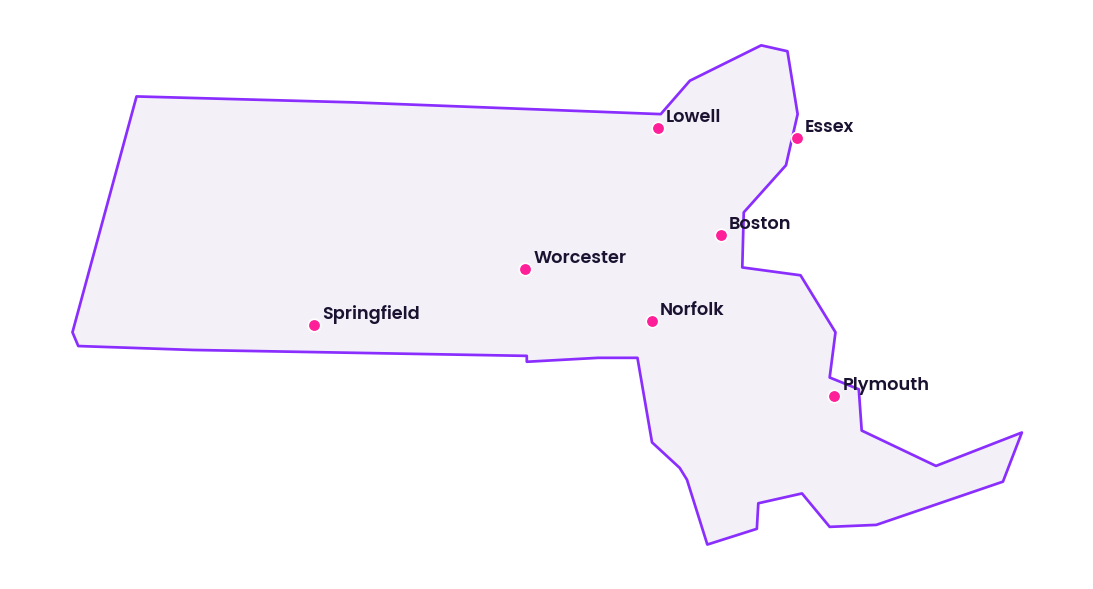
Within the state, the Boston metropolitan area, including Suffolk, Middlesex, Norfolk, Essex, and Plymouth counties, has gained population over the long term, with particular strength in inner suburbs and transit accessible nodes that appeal to knowledge workers and students. Many rural towns in western and central Massachusetts have seen flat or declining population, and several older industrial cities in central and western regions have only modestly stabilized after earlier losses. American Community Survey data show that the state has a relatively high share of foreign born residents, especially in Greater Boston, and significant student populations anchored by world class universities.
Age structure data indicate a pronounced concentration of young adults and working age residents in Boston and surrounding college and employment centers, with many communities elsewhere aging in place. The combination of a growing cohort of older residents, especially outside Greater Boston, and strong inflows of students and early career workers into metropolitan cores creates divergent housing needs across the state.
For investors, these population patterns imply that statewide aggregates obscure a dual reality. On the one hand, Greater Boston exhibits sustained housing demand, pressure on rents and prices, and a deep tenant and buyer pool. On the other hand, some smaller cities and rural areas face stagnant or shrinking populations and excess housing stock, which depresses values and raises questions about long term viability for certain assets. Investment theses must therefore be grounded in metro and submarket trajectories, not in state level averages.
Section 03Jobs and Economic Anchors
The Bureau of Labor Statistics and the Bureau of Economic Analysis show that Massachusetts has a high productivity, service oriented economy, with real output per worker and educational attainment well above national averages. At the state and Boston metro level, employment is heavily concentrated in healthcare and social assistance, educational services, professional and technical services, information, finance and insurance, and government. Manufacturing remains present, but its share of employment is smaller than in past decades and more focused on advanced and niche segments.
Boston functions as a global center for higher education and research, with universities and colleges that draw students and faculty from around the world. These institutions, along with major hospital systems, underpin a vast life sciences sector that includes pharmaceuticals, biotechnology, medical devices, and research organizations. The Route 128 and Route 495 corridors host corporate campuses, office and lab parks, and technology and engineering firms, forming a dense innovation belt around the urban core.
Financial services and asset management are centered in Boston’s downtown and Back Bay, with firms that manage national and global portfolios. Information technology companies, including both established firms and startups, cluster in Cambridge, Boston, and several suburban nodes. Tourism and hospitality, tied to history, culture, and coastal amenities, add a significant service and retail employment base, particularly in Boston, Cape Cod, and the Berkshires.
Outside Greater Boston, employment is anchored by regional hospitals, state universities, logistics nodes, and remaining manufacturing in cities such as Worcester, Springfield, and Lowell. These anchors are smaller in scale but critical to local housing and commercial demand.
For real estate investors, the implication is that much of the state’s durable demand for housing and commercial space is tethered to knowledge and service sectors that are less sensitive to traditional industrial cycles but exposed to higher education trends, healthcare policy, research funding, and corporate location decisions. Properties that provide good access to these anchors, through transit or highways, stand to benefit, while assets in locations that are loosely connected to them require cautious underwriting.
Section 04Income
American Community Survey estimates place Massachusetts among the top tier of states in terms of median household income and per capita income. Incomes are particularly high in the Boston metropolitan area, especially in suburbs with concentrations of professional, managerial, and technical workers. State level personal income data from the Bureau of Economic Analysis confirm that wages and salaries in professional and technical services, finance and insurance, healthcare, education, and information are key components of total personal income, supplemented by investment income and transfer payments.
Within the state, income distribution is uneven. Affluent suburbs west and north of Boston, parts of Cambridge and Boston’s core neighborhoods, and certain coastal communities report very high incomes, while older industrial cities and some rural areas report medians that lag the state average and national benchmarks. Poverty rates in Massachusetts as a whole are lower than national averages, but they remain elevated in specific neighborhoods and cities, particularly where industrial restructuring, educational barriers, and housing costs intersect.
This divergence is important for investors. High incomes in Greater Boston support very high rents and prices for both ownership and rental units, as well as robust spending in retail and services. However, they also contribute to affordability challenges for households that do not participate fully in the knowledge economy. In lower income cities and rural areas, housing may be inexpensive in nominal terms but still unaffordable for many local residents given limited earnings.
Investors must therefore align product type and pricing strategy with local income realities. Luxury and upper tier assets can find deep demand pools in and around Boston, but they are niche products elsewhere. Workforce and affordable housing strategies in gateway cities can deliver impact and returns if acquisition costs are low enough and subsidy structures are stable, but they must recognize the tight budgets of local tenants.
Section 05Housing and Multifamily
Census and American Community Survey housing data show that Massachusetts has an older housing stock than the United States as a whole, with many units built before the middle of the twentieth century. Detached single family homes and small multifamily structures, including two and three family houses, are common across the state, particularly in Greater Boston’s traditional neighborhoods and in older mill towns. Larger apartment buildings and complex style communities are more concentrated in Boston, Cambridge, and select suburbs, as well as in regional centers.
Multifamily housing plays a central role in meeting rental demand in urban cores and inner suburbs. In Boston and Cambridge, mid and high rise apartments, student housing, and mixed use developments provide homes for students, young professionals, and downsizing households. These assets often command high rents and experience low vacancy, especially when located near transit and employment centers. Suburban multifamily includes both garden style communities from the postwar era and newer mid rise and podium projects near transit and highways.
In gateway cities such as Worcester, Lowell, Lawrence, and Springfield, multifamily stock ranges from converted mills and historic buildings to walk up and small complex communities. Here, rents and prices are lower than in Boston, and properties often require significant renovation to meet contemporary standards, but they can provide large numbers of units for workforce and low income households.
Statewide, subsidized and income restricted multifamily properties financed through MassHousing, federal tax credits, and local programs are a critical part of the housing system, particularly for very low income tenants and seniors. Public housing authorities also own and manage substantial stocks.
For investors, multifamily opportunities in Massachusetts span core urban towers, transit oriented developments, value add repositionings of older suburban assets, and mission aligned investments in gateway cities. Regulatory constraints, including zoning restrictions and lengthy permitting processes, limit new supply in many municipalities, particularly in high demand suburbs, which supports rent and price levels but also increases project risk and timelines.
Section 06Rents
Rents in Massachusetts are among the highest in the country, particularly in and near Boston. United States Department of Housing and Urban Development fair market rent schedules for the Boston Cambridge Newton metropolitan area and for other Massachusetts metros show that benchmark rents for modest quality units across bedroom sizes exceed national averages by wide margins in Greater Boston and are moderately above national levels in many smaller metros.
American Community Survey gross rent distributions indicate that a large share of renter households in Massachusetts, especially in Boston, spend a high portion of their income on housing. Rent burdens are particularly severe for low income households, even in areas where rents are lower in absolute terms, because local incomes are modest. In affluent suburbs and central neighborhoods with high incomes, households often pay high rents but devote a smaller share of income to housing.
Private multifamily data from providers such as CoStar, Yardi Matrix, RealPage, and Freddie Mac Multifamily report that Class A properties in central Boston, Cambridge, and select inner suburbs achieve the highest asking rents, followed by newer suburban Class A and well located Class B properties. Older Class B and Class C stock in urban neighborhoods and gateway cities command lower rents, though they may still be high relative to local incomes.
For investors, rent strategy in Massachusetts must navigate strong demand, constrained supply, and political and social attention to affordability. In high cost markets, there is ongoing pressure for policy responses, such as inclusionary zoning, linkage fees, and, in some debates, rent regulation. In lower cost markets, the scope for rent increases is limited by incomes and competition from ownership housing. Underwriting needs to consider not only current rent levels and growth trends but also regulatory risk and the potential for shifts in tenant preferences, such as demand for more space or different locations.
Section 07Vacancy
Rental vacancy in Massachusetts is generally low in high demand markets and higher in weaker areas. The Census Housing Vacancies and Homeownership survey and American Community Survey estimates for the state and major metros show that vacancy rates in Greater Boston have often been below national averages, consistent with strong demand and limited supply. Student and seasonal dynamics can produce short period fluctuations, but the underlying trend is tight.
In smaller metros and rural regions, vacancy can be higher, reflecting both weaker demand and surplus or obsolete housing stock. In gateway cities, some neighborhoods exhibit chronic physical and economic vacancy, especially in distressed multifamily and single family properties, while other neighborhoods near anchors and transit maintain healthier occupancy.
Private multifamily data for Massachusetts metros generally report low stabilized vacancy for well located Class A and Class B properties in Boston and many suburbs, with high occupancy even during national downturns, though lease up periods for new projects can lengthen when there is a cluster of deliveries. In contrast, older or poorly located assets can struggle, particularly if they require significant capital investment.
Investors should therefore distinguish sharply between markets and submarkets. In Boston and supply constrained suburbs, underwriting can reasonably assume low stabilized vacancy but should still stress test for periods of elevated new supply or economic shock. In gateway cities and weaker submarkets, higher vacancy and credit loss allowances are prudent, and business plans should include strategies for repositioning or alternate uses if demand falters.
Section 08Supply Pipeline
Housing supply in Massachusetts is constrained by geography, regulatory barriers, community opposition, and infrastructure limitations. Census Building Permits Survey data for the state show that residential permitting activity has fluctuated over time but has not kept pace with demand in high growth and high income areas, particularly in Greater Boston. Many suburban municipalities have historically zoned large portions of their land for low density single family homes and have been reluctant to permit multifamily or smaller lot developments.
In recent years, state level initiatives and legislation have sought to encourage more housing construction near transit and in job rich communities, including zoning reforms and incentives for multifamily development in designated districts. However, implementation is uneven, and permitting and appeals processes remain complex and time consuming in many jurisdictions.
In Boston, Cambridge, and a limited set of inner suburbs, multifamily construction has been strong, with high rise and mid rise projects adding many units over the past decade. Even so, these additions have not fully alleviated rent pressures, given robust demand from students, workers, and in migrants. In gateway cities, some mill and downtown redevelopment projects have introduced new housing, often with public support, but many potential sites remain underutilized due to financial and regulatory hurdles.
For investors, the supply pipeline presents both constraints and opportunities. In high demand markets, the difficulty of delivering new product supports the value of existing assets and of well entitled development sites, but it also increases project risk, carrying costs, and exposure to political shifts. In less constrained markets, it may be easier to build, but demand and pricing are weaker. Careful assessment of municipal attitudes, zoning maps, recent permitting trends, and transit and infrastructure plans is crucial in weighing development and acquisition strategies.
Section 09Single Family Homes
Single family homes are a central component of Massachusetts housing, especially in suburban and rural communities. American Community Survey data show that detached homes and small attached units account for a large share of owner occupied housing statewide. The age of the housing stock means that many single family properties are older and may require significant maintenance and upgrading, particularly with respect to energy efficiency, insulation, and systems.
Publicly available housing market datasets from sources such as Zillow and Redfin consistently rank Massachusetts among the states with the highest typical home values, with median sale prices in Greater Boston and some coastal communities far above national medians. Price appreciation over recent cycles has been strong, driven by constrained supply, low interest rates for part of the period, and intense demand from high income households. In regional cities and rural areas, home values are lower in absolute terms but have also risen, sometimes sharply, relative to local incomes.
Inventory and months of supply metrics for Massachusetts and its major metros indicate that the for sale market has often favored sellers, particularly in Boston and inner suburbs, with low inventory and rapid sales for well located, move in ready homes. Rising interest rates have cooled activity at the margin and slowed appreciation, but the structural imbalance between demand and supply in many communities persists.
Single family rentals have become more important, especially in Greater Boston and in some gateway cities where households are priced out of ownership or prefer flexibility. Investor owned single family homes and small multifamily properties provide rental options in suburban neighborhoods, though the economics can be challenging due to high acquisition costs and rising taxes and insurance.
For investors, single family strategies in Massachusetts range from owning portfolios of homes in strong school districts and commuter suburbs to repositioning older properties in gateway cities. The key challenges are acquisition cost, capital expenditure needs, and operating expenses, which can constrain yields, particularly if investors rely heavily on leverage. The potential for long term appreciation in land constrained, high income areas must be weighed against these costs and against policy and climate risks.
Section 10Commercial Real Estate and Retail Centers
Massachusetts commercial real estate is concentrated in Greater Boston, with significant office, lab, industrial, and retail inventories that serve the state and wider region. Detailed quantitative series on rents, vacancy, capitalization rates, and absorption are produced by private providers such as CoStar, JLL, CBRE, and Cushman and Wakefield, and this review offers only qualitative interpretation.
Office space in Massachusetts ranges from downtown Boston and Back Bay high rises to suburban office parks along Routes 128 and 495 and smaller buildings in regional centers. The rise of hybrid and remote work has reduced demand for traditional office space, particularly commodity Class B buildings and older suburban campuses, leading to elevated vacancy and pressure on rents and valuations in those segments. However, specialized lab and life sciences space in Boston, Cambridge, and select suburban nodes has seen strong demand, with tight vacancy and high rents reported in recent years, though there are signs of cyclical adjustment as funding conditions evolve.
Industrial and logistics properties are primarily located around Boston’s inner belt, along highways, near distribution hubs, and in regional corridors. These assets benefit from the proximity of Massachusetts to dense population centers in New England and the Northeast, as well as from growth in e commerce and regional distribution. Modern warehouses and last mile facilities have generally enjoyed healthy occupancy and rent growth, while older, functionally obsolete buildings face more competition.
Retail real estate includes downtown shopping districts, regional malls, power centers, and grocery anchored neighborhood centers. Malls and discretionary retail centers have experienced headwinds from e commerce and changing consumer patterns, with some properties undergoing redevelopment or repurposing. In contrast, grocery anchored and daily needs centers in stable neighborhoods and suburbs have maintained occupancy and rents more effectively. Urban retail corridors in Boston and Cambridge have recovered unevenly from disruptions, with some benefiting from renewed foot traffic and others challenged by office utilization and tourism patterns.
For investors, commercial opportunities in Massachusetts are most compelling in industrial and logistics assets in strategic locations, in life sciences oriented office and lab space with strong tenants and sustainable rent levels, and in necessity based retail in solid trade areas. Traditional office investments require significant selectivity and, often, willingness to pursue conversion or repositioning strategies, while lower quality retail carries substantial risk.
Section 11Transactions and Capital Markets
Public transaction data for Massachusetts commercial and large multifamily properties is limited, as most detailed series on volumes, pricing, and capitalization rates are maintained by private providers such as CoStar and MSCI Real Assets. County registries of deeds record individual sales, but they are not aggregated here into state level series.
Qualitatively, Massachusetts, and especially Greater Boston, is a core market for both domestic and international institutional capital. Multifamily, lab and life sciences, and central business district office assets have historically attracted strong interest, with capitalization rates that reflect perceived safety, growth, and liquidity. Industrial assets in key logistics corridors also command significant capital, with yields compressed by competition among buyers.
Rising interest rates and shifts in sector risk perceptions have altered capital markets conditions. Transactions in traditional office have slowed, and pricing has adjusted downward in many cases. Multifamily and industrial volumes have also moderated from peak levels, but these sectors continue to draw attention, especially in high barrier, high income locations. Smaller assets in gateway cities and rural areas are more reliant on local and regional investors, with thinner buyer pools and more volatile pricing.
For investors contemplating Massachusetts acquisitions or dispositions, this means that liquidity and pricing power are strongest in Boston oriented multifamily, lab, and prime industrial segments, and weaker in secondary and tertiary locations and in challenged sectors. Access to debt capital is influenced by lender views on sector and location risk, as well as by sponsor strength and business plan robustness.
Section 12Taxes
Massachusetts levies a state personal income tax and a corporate excise tax, along with local property taxes and certain transaction related taxes. The Massachusetts Department of Revenue administers state level taxes and provides guidance on local property tax systems, while municipalities set property tax rates and manage assessments under state law.
Personal income tax is imposed at a flat or near flat rate on most income types, with a surtax applying to very high incomes under recent policy changes. Corporate excise taxes include components based on net income and tangible property or net worth, affecting entities that own and operate real estate within the state.
Property taxes are a major cost for property owners. Municipal assessors determine property values, and cities and towns set tax rates annually, subject to state constraints on levy growth. Effective tax burdens vary by municipality and property type. Some communities with high service and school spending, and limited commercial tax base, have higher residential rates. Others rely more heavily on commercial and industrial properties. Classification systems in certain cities allow higher rates on commercial real estate relative to residential.
Transfer taxes are imposed in some jurisdictions, including state deed excise taxes and, in a few localities, additional transfer charges. These can add to transaction costs and influence investment decisions, particularly for large assets.
This review does not state specific numeric tax rates, because those are best confirmed against current Massachusetts Department of Revenue and municipal schedules for the relevant year. For investors, understanding the property tax regime at the municipal level is critical. Acquisition underwriting must account for potential changes in assessed value after purchase or redevelopment, and for the trajectory of local tax rates. State and local income and corporate tax rules also shape the after tax return profile, especially for entities with complex structures.
Section 13Insurance
Insurance markets in Massachusetts are shaped by a combination of inland and coastal risks. The Division of Insurance oversees carriers and market practices, but premiums and coverage terms are determined by insurers based on their assessment of hazards such as hurricanes and coastal storms, nor’easters, winter weather, flooding, and fire.
Coastal and near coastal communities face exposure to storm surge, high winds, and wave action from Atlantic storms. In these areas, property owners may need to secure coverage from specialized carriers or the state’s residual market mechanisms if private insurers limit capacity. Flood risk, as mapped by the Federal Emergency Management Agency, is elevated along ocean exposed shorelines, tidal rivers and estuaries, and certain inland rivers. Properties in special flood hazard areas with federally related mortgages must maintain flood insurance, commonly through the National Flood Insurance Program.
Inland, severe winter storms with heavy snow and ice can damage roofs and structures and disrupt power, while heavy rains can induce localized flooding in urban and rural areas alike. Older properties with outdated roofs, inadequate drainage, and weaker envelopes are more vulnerable and may face higher premiums or exclusions.
Investors should therefore secure detailed insurance quotes, including property, liability, and flood coverage as needed, as part of due diligence, and they should plan capital investments that enhance resilience, such as strengthening roofs, improving drainage, elevating critical systems, and, where practical, retrofitting to reduce hazard exposure. Given broader trends in climate related losses, conservative assumptions about future premium growth are warranted.
Section 14Landlord Tenant and Regulatory Environment
Massachusetts landlord tenant law and housing regulation are relatively protective of tenants compared with many states. State statutes and case law establish requirements around habitability, repairs, security deposits, notices, and evictions, and violations can result in penalties for landlords. Eviction processes proceed through the courts and involve multiple steps and timelines, which can extend the period during which nonpaying tenants remain in place.
In addition to statewide rules, certain municipalities have adopted local ordinances that affect rental operations, such as inspection regimes, registration requirements, and, in some cases, relocation assistance for tenants displaced by certain actions. Boston and a few other cities maintain more extensive housing code enforcement and tenant support systems than many smaller municipalities.
While Massachusetts does not currently have a statewide traditional rent control regime for private market housing, there is active policy debate in some localities about rent stabilization and expanded tenant protections. Inclusionary zoning requirements and linkage fees for large developments are already in place in several cities, influencing project economics.
For investors, this regulatory environment implies that residential operations require careful compliance and strong legal and property management capabilities. Delinquency and eviction risk must be underwritten in the context of procedural length and cost, and business plans that contemplate substantial repositioning should account for local tenant protection rules. Commercial leases, particularly for office and retail, are more heavily governed by contract but still operate within Massachusetts legal frameworks.
Section 15Infrastructure
Massachusetts infrastructure reflects its age and dense settlement. The state has an extensive network of roads, bridges, transit, and utilities, much of which was built decades ago and now requires significant maintenance and modernization. The Massachusetts Department of Transportation manages highways and major bridges, while the Massachusetts Bay Transportation Authority operates transit in Greater Boston, including subway, commuter rail, light rail, and bus systems.
Greater Boston’s transit network provides critical connectivity for residents and workers, supporting dense urban housing and commercial patterns. However, aging infrastructure, maintenance backlogs, and service disruptions have raised concerns about reliability and capacity. Outside Boston, transit options are more limited, with regional transit authorities providing bus services in some areas and intercity trains serving major corridors.
Water, sewer, and stormwater systems are managed by a mix of state agencies, regional authorities such as the Massachusetts Water Resources Authority, and local departments. Many systems are old and in need of upgrades to address combined sewer overflows, water quality requirements, and climate related stresses. Electric and gas utilities operate under state regulation, with grid resilience and energy transition investments ongoing.
For real estate investors, infrastructure quality and access are key determinants of location desirability and long term value. Properties near reliable transit, modernized utilities, and well maintained roads can command premiums and attract tenants and buyers, while assets in areas with persistent infrastructure problems may face discounts and higher operating costs. State and local capital plans, as well as federal infrastructure funding flows, are therefore relevant to investment analysis.
Section 16Climate and Physical Risks
Massachusetts is exposed to a range of climate and physical risks documented by the National Oceanic and Atmospheric Administration and the Federal Emergency Management Agency. Coastal areas face storm surge, sea level rise, and erosion from Atlantic storms such as hurricanes and nor’easters, while inland regions experience heavy snow and ice, intense rainfall, riverine flooding, and heat waves.
Sea level rise projections for the Northeast indicate that coastal Massachusetts will see increasing baseline water levels over coming decades, amplifying the impact of storm surges and high tides and threatening low lying neighborhoods, infrastructure, and critical facilities. Some communities already experience more frequent tidal flooding. Riverine systems, including major rivers that traverse the state, have flood plains that can be inundated during extreme precipitation or snowmelt events.
Heat stress is emerging as a concern, particularly in urban heat islands where limited tree cover and high impervious surface coverage raise local temperatures. This can affect health, energy demand, and the desirability of certain locations, especially for vulnerable populations.
Investors must integrate climate risk assessments into acquisition, development, and asset management decisions. This involves reviewing Federal Emergency Management Agency flood maps, state and local climate resilience plans, and building level exposure, evaluating insurance implications, and considering adaptive measures such as elevating structures, improving drainage, and incorporating resilient design. Over longer horizons, some locations may face rising costs or functional obsolescence due to repeated climate impacts.
Section 17Opportunities
Despite its challenges, Massachusetts offers several compelling opportunity themes for accredited real estate investors. One major theme is core and core plus multifamily in and around Boston and Cambridge, especially assets near transit, employment centers, and academic and medical institutions. High incomes and persistent demand in these areas support sustained rent levels and relatively low vacancy, making them attractive for long term holds.
A second opportunity lies in carefully selected investments in gateway cities, where acquisition costs are lower and public and philanthropic initiatives aim to revitalize downtowns and neighborhoods. Value add multifamily, mixed use developments, and adaptive reuse projects that align with local demand and leverage incentives can deliver returns while contributing to community goals, although they carry higher operational and policy risk.
Industrial and logistics assets constitute a third opportunity, particularly in corridors that serve Greater Boston and connect to regional and national networks. Modern warehouses and distribution centers that can serve e commerce, healthcare, and manufacturing tenants are likely to remain in demand as supply chains evolve.
Necessity retail centers and mixed use nodes with strong grocery anchors, pharmacies, and service tenants form another opportunity set. These assets tend to be more resilient to e commerce disruption and can benefit from dense, walkable catchment areas in urban and suburban settings.
Finally, there are impact oriented opportunities in energy efficient and climate resilient housing and commercial properties, including retrofits of existing stock and new construction that integrates green building standards. These may attract growing pools of capital that prioritize sustainability, and can align with state policy goals. The observations in this section are general and educational, are not projections, forecasts, or assurances of any particular return, yield, occupancy, rent level, or appreciation, and any specific investment must be evaluated on its own facts.
Section 18Risks
Investing in Massachusetts real estate also entails distinct risks. Affordability pressures and housing scarcity have made housing policy a central political issue, increasing the likelihood of regulatory changes that affect development rights, inclusionary requirements, and potentially rent setting in some jurisdictions. Investors whose strategies rely heavily on aggressive rent growth or minimal engagement with community concerns may face heightened opposition and policy risk.
Climate and physical risks are material in coastal and flood prone areas and increasingly relevant statewide. Rising insurance costs, stricter building codes, and potential constraints on development in high risk zones can alter project economics and asset values.
Economic risks include the possibility of shifts in higher education and research funding, changes in healthcare reimbursement policies, or corporate relocation decisions that could affect key employment nodes. While the state’s economy is diversified within the service sector, it is still concentrated in knowledge intensive industries that react to global trends and policy.
Market and liquidity risks vary by asset class and location. Core assets in Boston and Cambridge are highly liquid under normal conditions, but values can be volatile when interest rates move sharply or when sector sentiment shifts, as seen in parts of the office and lab markets. Assets in smaller cities and rural areas can be more difficult to sell, with fewer potential buyers and more idiosyncratic pricing.
Finally, operational risks arise from the state’s relatively complex regulatory framework, older building stock, union and labor dynamics in construction and operations, and the need for sophisticated management to meet tenant expectations and legal requirements. Real estate investments are speculative, are subject to market, financing, liquidity, tax, regulatory, insurance, and physical hazard risks, and can result in the loss of some or all of an investor's invested capital, including the possible loss of principal.
Section 19Investor Implications
For accredited investors, Massachusetts is best approached as a strategic allocation to a high cost, high income, supply constrained region with strong human capital and meaningful climate and policy risks. Successful strategies typically share several characteristics.
They focus on locations with durable demand drivers, such as proximity to universities, hospitals, transit, and innovation districts, and they avoid overexposure to fringe or single employer dependent areas. They underwrite conservatively, with realistic assumptions about rent growth, vacancy, property taxes, insurance, and capital expenditures, and they stress test for policy and climate shocks.
They differentiate by asset quality and business plan, recognizing that undifferentiated commodity buildings in challenged sectors are particularly vulnerable. They incorporate environmental, social, and governance considerations, both because of growing investor expectations and because these factors are directly tied to regulatory compliance and physical resilience in Massachusetts.
They also use leverage judiciously and maintain flexibility to reposition, recapitalize, or exit assets as conditions evolve. Partnering with experienced local operators, legal counsel, and consultants is essential, given the state’s complex permitting, zoning, and regulatory environment. Nothing in this section is a recommendation to pursue any specific strategy or investment, and there is no assurance that any objective or outcome described will be achieved.
Section 20Conclusion
Massachusetts occupies a distinctive place in the United States real estate landscape. Its combination of world class educational and medical institutions, a deep innovation economy, high incomes, and constrained land availability in key markets creates strong, persistent demand for housing and commercial space. At the same time, the state faces pronounced affordability challenges, aging infrastructure, climate risks, and regulatory and tax complexities that materially affect investment outcomes.
This review has provided a qualitative overview of Massachusetts real estate and multifamily markets, emphasizing patterns and investor implications rather than restating specific numeric series. The core conclusion is that Massachusetts can play an important role in diversified real estate portfolios, especially through exposure to multifamily, industrial, and necessity retail assets in and around Boston and select regional centers, but that such exposure must be accompanied by disciplined underwriting, active risk management, and thoughtful engagement with state and local policy contexts, and no particular outcome or return is assured.
Any specific investment decision should be supported by current numerical data from the cited public sources, by private market intelligence, and by asset level analysis that accounts for physical condition, tenant quality, and capital structure.
Sources
- United States Census Bureau, Population and Housing Unit Estimates, Massachusetts statewide and counties,, https://www.census.gov/programs-surveys/popest.html
- United States Census Bureau, American Community Survey one year and five year estimates, Massachusetts,, https://www.census.gov/programs-surveys/acs
- United States Census Bureau, Decennial Census of Population and Housing, Massachusetts,, https://www.census.gov/programs-surveys/decennial-census.html
- United States Census Bureau, Building Permits Survey, Massachusetts and metropolitan areas,, https://www.census.gov/construction/bps
- United States Census Bureau, Housing Vacancies and Homeownership, state and regional tables including Massachusetts,, https://www.census.gov/housing/hvs
- United States Bureau of Labor Statistics, Economy at a Glance, Massachusetts,, https://www.bls.gov/eag/eag.ma.htm
- United States Bureau of Labor Statistics, Economy at a Glance, Boston Cambridge Nashua MA NH metropolitan area,, https://www.bls.gov/eag/eag.ma_boston.htm
- United States Bureau of Labor Statistics, State and Area Employment, Massachusetts and metropolitan areas,, https://www.bls.gov/sae
- United States Bureau of Labor Statistics, Local Area Unemployment Statistics, Massachusetts counties and metropolitan areas,, https://www.bls.gov/lau
- United States Bureau of Economic Analysis, Gross Domestic Product by State, Massachusetts,, https://www.bea.gov/data/gdp/gdp-state
- United States Bureau of Economic Analysis, Gross Domestic Product by metropolitan area, Boston Cambridge Newton and other Massachusetts metros,, https://www.bea.gov/data/gdp/gdp-metropolitan-area
- United States Bureau of Economic Analysis, Local Area Personal Income, Massachusetts counties and metros,, https://www.bea.gov/data/income-saving/local-area-personal-income
- United States Department of Housing and Urban Development, Office of Policy Development and Research, Fair Market Rents and income limits, Massachusetts metropolitan areas,, https://www.huduser.gov
- Federal Housing Finance Agency, House Price Index, Massachusetts and its metropolitan statistical areas,, https://www.fhfa.gov/DataTools/Downloads/Pages/House-Price-Index.aspx
- MassHousing, housing finance programs and research for Massachusetts,, https://www.masshousing.com
- Massachusetts Department of Housing and Community Development, housing and community programs,, https://www.mass.gov/orgs/housing-and-community-development
- Massachusetts Department of Revenue, tax policy and property tax information,, https://www.mass.gov/orgs/massachusetts-department-of-revenue
- Massachusetts Division of Insurance, property and casualty insurance information,, https://www.mass.gov/orgs/division-of-insurance
- Massachusetts Department of Transportation, transportation system information,, https://www.mass.gov/orgs/massdot
- Massachusetts Bay Transportation Authority, transit network information,, https://www.mbta.com
- Massachusetts Water Resources Authority, regional water and sewer services,, https://www.mwra.com
- Federal Emergency Management Agency, Flood Map Service Center, Massachusetts,, https://msc.fema.gov
- Federal Emergency Management Agency, National Risk Index, Massachusetts,, https://hazards.fema.gov/nri
- National Oceanic and Atmospheric Administration, National Centers for Environmental Information, climate data for Massachusetts,, https://www.ncei.noaa.gov
- CoStar Group, Massachusetts multifamily, office, industrial, and retail market analytics,, https://www.costar.com
- Yardi Matrix, Boston and New England multifamily market reports,, https://www.yardimatrix.com
- RealPage, multifamily market analytics for Boston and Massachusetts metros,, https://www.realpage.com/analytics
- Freddie Mac Multifamily, research on Northeast multifamily markets including Massachusetts,, https://mf.freddiemac.com/research
- Zillow Research, Massachusetts home value and rental data,, https://www.zillow.com/research/data
- Redfin Data Center, Massachusetts housing market data,, https://www.redfin.com/news/data-center
- CBRE Research, Boston and New England commercial real estate market reports,, https://www.cbre.com/insights
- JLL Research, Boston office, lab, industrial, and retail market insights,, https://www.us.jll.com/en/trends-and-insights/research
- Cushman and Wakefield, Marketbeat reports for Boston and Massachusetts,, https://www.cushmanwakefield.com/en/insights
- MSCI Real Assets, United States Capital Trends, including Massachusetts,, https://www.msci.com/our-solutions/real-estate/real-assets