In brief · summary: Minnesota
Minnesota State Real Estate Market Review
Section 01Executive Summary
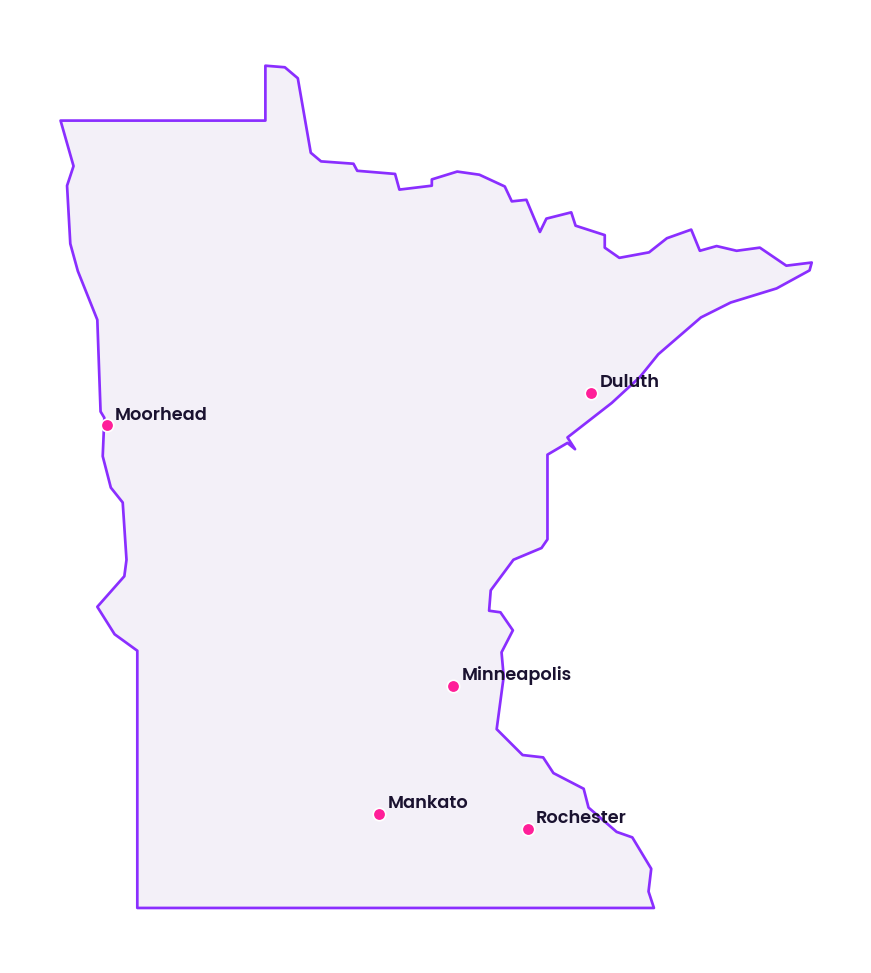
Minnesota is a diversified Upper Midwest state anchored by the Minneapolis Saint Paul metropolitan area, supported by regional centers such as Rochester, Duluth, St Cloud, and Moorhead and a broad rural and small town base. Public information from the United States Census Bureau, the American Community Survey, the Bureau of Labor Statistics, the Bureau of Economic Analysis, the United States Department of Housing and Urban Development, the Federal Housing Finance Agency, the Minnesota Housing Finance Agency, the Minnesota Department of Revenue, the Minnesota Department of Commerce, and federal climate and risk agencies depicts a state with relatively high incomes, stable if slower population growth, and strong institutional employers in healthcare, medical technology, finance, headquarters services, higher education, and advanced manufacturing.
These sources provide detailed numeric series for population, employment, income, home values, rents, vacancy, and construction at the state, metropolitan, and substate levels. This review does not restate specific numeric values, ratios, or year by year figures, even though they exist in the cited datasets, and instead focuses on directional trends and structural relationships indicated by those sources, with clear statements when detailed public transaction or capitalization rate data are not available in accessible form. Any specific investment decision should be supported by fresh numeric pulls from the listed sources.
For investors, Minnesota offers a profile of relatively high educational attainment and income, strong institutional anchors, and comparatively stable housing markets, particularly in the Twin Cities and select regional hubs. Multifamily and single family assets in these markets have historically benefited from steady demand and disciplined supply, while some rural and legacy industrial areas face stagnation and weaker fundamentals. Commercial real estate performance is strongest in industrial and logistics assets tied to distribution and manufacturing, in healthcare and institutional office, and in necessity retail, while traditional downtown office and discretionary retail face structural headwinds. Climate and physical risks around winter weather, heavy precipitation, river and lake flooding, and evolving climate patterns, as well as local regulatory developments around tenant protections and rent controls in some jurisdictions, are key components of the risk framework.
Section 02Population and Migration
According to decennial counts from the United States Census Bureau and annual Population Estimates, Minnesota statewide population has grown steadily but modestly over recent decades, at a pace below faster growing Sun Belt states but generally above some neighboring states that have experienced stagnation or decline. Growth has been concentrated in the Minneapolis Saint Paul metropolitan area and in a few regional centers, while some rural counties and legacy manufacturing towns have seen flat or declining populations.
American Community Survey estimates show that the Twin Cities region accounts for a substantial majority of Minnesota residents, with continued net in migration from other parts of the state and from out of state, including both domestic and international migrants. The metropolitan area has a relatively young and diverse population profile, with large communities of immigrants and refugees and a significant share of working age adults, while rural and small town areas are generally older and more homogeneous.
Within the Twin Cities, population growth has been strongest in suburban counties and in selected urban neighborhoods that have added multifamily housing and amenities, while some inner areas have stabilized or experienced incremental gains after earlier periods of disinvestment. Regional centers such as Rochester, home to a major healthcare and research complex, and college towns have maintained or grown their populations due to institutional anchors. In contrast, some northern and western counties have gradually lost residents over multiple decades as agricultural and resource industries have mechanized and young adults have moved to urban areas.
These patterns imply that statewide averages obscure significant local variation. For investors, demand for housing and commercial space is fundamentally stronger in the Twin Cities and in institutional hubs than in shrinking or aging rural communities. A successful strategy in Minnesota must therefore be grounded in metropolitan and subregional demographic trends rather than simply in statewide totals.
Section 03Jobs and Economic Anchors
Bureau of Labor Statistics data on state and area employment and Bureau of Economic Analysis data on gross domestic product by state and metropolitan area show that Minnesota has a diversified, high value economy. Over the long run, total nonfarm employment statewide has trended upward with cyclical fluctuations, and real output has grown, with the Minneapolis Saint Paul metropolitan area accounting for the majority of both jobs and gross domestic product.
The Twin Cities host a notable concentration of corporate headquarters, including firms in retail, health insurance, medical technology, industrial conglomerates, food and agribusiness, and financial services. These companies provide high wage professional, technical, and managerial jobs and contribute to demand for office space, high quality housing, and supporting retail. The region is also a major center for healthcare and medical research, with large hospital systems and clinics that employ physicians, nurses, technicians, and support staff.
Manufacturing remains important, particularly in medical devices, machinery, food processing, and high precision components. Statewide manufacturing employment has not matched historical peaks, but productivity and output have remained strong, and advanced manufacturing facilities in suburban and regional locations support demand for industrial and logistics real estate.
Outside the Twin Cities, Rochester is anchored by a globally recognized medical and research institution, which drives demand for specialized healthcare, office, hospitality, and housing space. Duluth serves as a Lake Superior port and regional hub for healthcare, education, tourism, and transportation. Other cities such as Mankato, St Cloud, and Moorhead combine university, healthcare, retail, and manufacturing roles.
Overall, Minnesota employment is spread across healthcare and social assistance, professional and business services, manufacturing, trade and transportation, education, government, and leisure and hospitality. This diversification reduces dependence on any single industry, although healthcare and government spending remain significant pillars. For investors, the presence of stable institutional employers and diversified sectors supports long term demand for well located residential and commercial assets.
Section 04Income
American Community Survey estimates indicate that Minnesota median household income has historically been above the national median, reflecting a labor force with relatively high educational attainment and a significant share of employment in professional, technical, and healthcare occupations. Within the state, household incomes are highest in many Twin Cities suburbs, in certain urban neighborhoods with concentrations of professionals, and in some regional centers tied to strong institutions, while incomes are lower in parts of rural Minnesota and in some city neighborhoods with higher poverty rates.
Bureau of Economic Analysis personal income data show that per capita personal income in Minnesota has grown over time and ranks relatively high among Midwestern states, driven by wage income from high value industries, investment income, and transfer payments. Income growth has been stronger in metropolitan counties tied to the largest employers and in communities that attract skilled workers, while many rural areas and legacy industrial towns have seen slower growth.
Despite generally strong income levels, there are significant disparities. Some urban and rural communities have persistent poverty and income inequality, with lower wages, higher unemployment, and a greater share of households burdened by housing costs relative to income. Racial and ethnic income gaps are also evident in large metropolitan areas.
For investors, the income profile implies that there is depth of demand for market rate and higher end housing in many submarkets, particularly in and around the Twin Cities, but that affordability is a real constraint for lower and moderate income households. Retail and service oriented commercial assets must be underwritten with realistic expectations about local purchasing power and sales potential, and multifamily strategies should account for both the opportunities in upscale segments and the substantial need for workforce and affordable housing.
Section 05Housing and Multifamily
United States Census and American Community Survey housing data show that the Minnesota housing stock is diverse and somewhat newer on average than in some older industrial states, but still includes a large share of units built in the mid twentieth century or earlier, particularly in city neighborhoods and established suburbs. Detached single family homes dominate ownership housing, while multifamily and attached units play a large role in the rental market, especially in the Twin Cities and regional centers.
In the Minneapolis Saint Paul metropolitan area, multifamily housing includes a broad inventory of garden style communities from the postwar era, mid rise and high rise buildings in and near downtowns, and newer infill and transit oriented developments along light rail and bus rapid transit corridors. Over the last decade, substantial new apartment construction has taken place in downtown Minneapolis, downtown Saint Paul, inner neighborhoods, and selected suburban nodes, responding to demand from young professionals, downsizing households, and immigrants.
Outside the Twin Cities, multifamily stock is concentrated in regional hubs such as Rochester, Duluth, St Cloud, and Mankato, where student populations, healthcare and education employment, and regional service roles support rental demand. Smaller towns and rural areas have more limited multifamily offerings, often focused on basic workforce and senior housing.
The Minnesota Housing Finance Agency administers a range of programs that finance and support affordable and supportive multifamily housing statewide, including Low Income Housing Tax Credit developments, bond financed projects, and loans and grants for preservation and new construction. Public housing authorities and nonprofit sponsors supplement these efforts with additional units and services. Demand for affordable and deeply affordable units exceeds supply in many communities, and there are long waiting lists in some areas.
For investors, multifamily opportunities in Minnesota include core and core plus properties in strong Twin Cities submarkets, value add renovations of older class B and C assets, and mission oriented investments in affordable housing using state and federal programs. Asset selection must account for building age, capital needs, location relative to employment and transit, and local regulatory context.
Regional variation can be framed qualitatively across several key multifamily regions. The Minneapolis Saint Paul metro, anchored by corporate headquarters, healthcare, universities, and logistics, has seen steady growth through suburban expansion and some urban infill, and it carries a large and diversified stock ranging from garden communities to high rise buildings with significant new construction; it is the deepest and most liquid market in the state, offering opportunities across the risk spectrum, though with growing regulatory attention to tenant protections. The Rochester area, anchored by a major medical and research complex and higher education, is stable to growing because of its healthcare cluster, with multifamily concentrated near the medical and campus areas, presenting strong demand tied to a single institutional anchor at limited but meaningful scale. Duluth and the North Shore, supported by the port, healthcare, education, and tourism, are stable to modestly growing with an aging population in some areas and a smaller multifamily base that includes older buildings and some newer projects, offering niche opportunities with exposure to tourism and regional employment. Smaller cities and rural areas, dependent on agriculture, manufacturing, and local services, are flat to declining in some counties, with limited and often older multifamily stock, which raises risk from demographic headwinds and argues for a focus on preservation and targeted value add.
Section 06Rents
Fair market rent schedules published by the United States Department of Housing and Urban Development for Minnesota metropolitan and nonmetropolitan areas show that gross rent benchmarks in the Minneapolis Saint Paul region are among the highest in the state, reflecting strong demand and higher operating costs, while fair market rent levels in smaller metros and rural counties are lower in absolute terms. Across the state, these benchmarks have generally increased over time, consistent with broader rent inflation and growing construction and operating expenses.
American Community Survey data on gross rents and rent burdens indicate that many Minnesota renter households, especially in the Twin Cities and in certain regional centers, spend more than thirty percent of income on housing, and a nontrivial share spends more than half of income on rent and utilities. This pattern is particularly pronounced among lower income households and in neighborhoods where rents have risen faster than local wages.
Private multifamily data from providers such as CoStar, Yardi Matrix, RealPage, and Freddie Mac Multifamily report that asking rents for class A properties in prime urban and suburban submarkets materially exceed asking rents for older class B and C assets and for properties in weaker locations. Within the Twin Cities, newly built apartments in downtowns and affluent suburbs command top of market rents, while older stock in outer or lower income neighborhoods must compete on price. In regional centers, modern urban infill or well located garden properties typically lead local rent levels.
For investors, rent dynamics suggest that there is room for rent growth in well located and well amenitized properties, particularly where incomes support higher rents and where new supply remains disciplined. However, affordability concerns, regulatory initiatives aimed at tenant protections, and potential local rent controls in some jurisdictions constrain long term rent growth assumptions. Value add strategies must be calibrated to local rent ceilings and must avoid overestimating the ability of renovated units to command large rent premiums in cost sensitive markets.
Section 07Vacancy
Publicly available vacancy information for Minnesota housing from Census surveys and private multifamily analytics indicates that overall rental vacancy statewide has been moderate, with lower vacancies in strong demand submarkets and higher vacancies in weaker markets. In the Twin Cities, stabilized vacancy in class A properties has varied with the construction cycle, rising when large waves of new units deliver and declining as those units lease up, while class B and C properties in established neighborhoods typically maintain lower but more stable vacancy due to affordability and limited new competition at that price point.
Regional centers such as Rochester and Duluth have smaller, more segmented rental markets where vacancy can be higher or lower depending on local economic conditions, institutional expansions, and specific property quality and management. Rural and small town markets often exhibit higher vacancy in older or poorly maintained properties and lower vacancy in the limited supply of well managed, decent quality units.
In addition to standard vacancy, functional vacancy is an issue in some areas, particularly in older buildings with significant deferred maintenance or in properties that are technically occupied but underperforming due to low rents, high turnover, or nonpaying tenants.
For investors, vacancy risk must be evaluated property by property and submarket by submarket. In strong locations with diversified employers and limited new supply, underwriting can assume relatively low stabilized vacancy, while still stress testing for cyclical increases and lease up risk. In weaker or transitional neighborhoods, higher vacancy and credit loss allowances are prudent, and investors must be prepared to invest in physical upgrades and management improvements to stabilize occupancy.
Section 08Supply Pipeline
Residential construction activity in Minnesota, as captured in United States Census Building Permits Survey data, shows a rebound from the lows of the housing bust and a subsequent steady level of single family and multifamily permitting, with the largest volumes in the Twin Cities metropolitan area. Within the metro, multifamily permits have been heavily concentrated in core cities and inner suburbs, particularly near transit lines, major employment centers, and established commercial corridors.
Local planning and permitting records in Minneapolis, Saint Paul, and key suburbs document clusters of new apartment and mixed use projects in downtowns, university districts, and transit served neighborhoods. Suburban multifamily development has also occurred in rapidly growing communities with good freeway access and strong schools. Single family subdivisions and infill projects have progressed in metro edge communities and in some regional centers, though statewide single family building remains below the levels seen in the early two thousands.
Outside the Twin Cities, multifamily supply growth has been more modest. Rochester has seen new construction linked to its medical and research expansion initiatives, while Duluth and other cities have added selective projects. Rural and small town areas have had limited new multifamily development, often focused on specific affordable or senior housing projects.
For investors, the supply pipeline presents both opportunity and risk. In high demand corridors with significant new deliveries, competition can pressure rents and extend lease up timelines, requiring conservative underwriting and strong execution. In supply constrained neighborhoods and smaller markets with stable or growing demand, existing assets may benefit from limited new competition, but investors should remain mindful of long term demographic and economic trends.
Section 09Single Family Homes
Single family homes are the dominant form of owner occupied housing in Minnesota, especially in suburbs, small cities, and rural areas. Census and American Community Survey data show that detached single family units account for the majority of owner occupied units statewide, with attached units and multifamily condominiums making up a smaller share, concentrated mainly in urban and inner suburban locations.
Home value and price data from public facing real estate platforms such as Zillow and Redfin indicate that typical home values and median sale prices in Minnesota have generally been below the national medians in dollar terms but vary widely by region. Twin Cities suburbs, select Minneapolis and Saint Paul neighborhoods, and desirable regional communities with strong schools, amenities, and access to employment command higher prices, while some rural counties and legacy industrial towns have much lower values. Over the last decade, home prices have appreciated significantly in many Minnesota markets, supported by low interest rates for much of the period, limited new construction in some areas, and steady demand.
Inventory and months of supply metrics at the state and metro levels suggest that for sale markets in the Twin Cities and several regional centers have often been characterized by tight supply, with relatively low listings compared with demand and quick sale times for well maintained, appropriately priced homes. Conditions have tended to favor sellers in these markets, especially for entry level and mid priced homes. In contrast, in some rural and small town markets, inventory has been more ample and marketing times longer.
Single family rentals represent a meaningful portion of the rental market, particularly in older urban neighborhoods and in suburban areas where investors have acquired properties as long term rentals. These units provide family sized rentals with yards and neighborhood amenities but require intensive management due to dispersion and property age. Cash flow performance depends on acquisition price, achievable rent levels given local incomes, property taxes and insurance costs, and ongoing capital expenditure.
For investors, single family opportunities in Minnesota include scattered site rental portfolios in select Twin Cities and regional neighborhoods, build to rent communities in growing suburban corridors, and targeted rehabilitation and resale strategies in undervalued areas with improving fundamentals. Each strategy must be tailored to local market dynamics, school district reputation, transportation links, and municipal regulations.
Section 10Commercial Real Estate and Retail Centers
Minnesota commercial real estate is concentrated in the Minneapolis Saint Paul region, with meaningful but smaller inventories in regional centers such as Rochester, Duluth, and St Cloud. Private data from CoStar, CBRE, JLL, Cushman and Wakefield, and other providers outline distinct performance profiles for office, industrial and logistics, and retail segments.
Office markets are anchored in downtown Minneapolis, downtown Saint Paul, suburban corridors such as the Interstate 494 and Interstate 394 belts, and near major institutions. The shift to hybrid and remote work has reduced demand for traditional office space, particularly in older and commodity properties. Downtown Minneapolis, in particular, has seen elevated vacancy and pressure on effective rents and values in some buildings, even as newer or recently renovated properties with strong amenities and credit tenants perform relatively better. Suburban office performance varies, with properties near major highways and amenities faring better than aging, less accessible complexes.
Industrial and logistics assets are a relative strength. The Twin Cities occupy a strategic position in Upper Midwest distribution networks, with freeway, rail, and air connections supporting warehousing, distribution centers, light manufacturing, and cold storage. Occupancy and rent trends for modern, well located industrial buildings have generally been positive, driven by e commerce growth, regional distribution, and manufacturing and food processing demand. Older, lower clear height or less optimally located industrial buildings may struggle more but can still find tenants at appropriate price points.
Retail performance is mixed. Large regional malls and some power centers, including those in the Twin Cities, have faced store closures and redevelopment pressures due to e commerce and changes in consumer behavior, although flagship destinations that combine retail with entertainment and experiential offerings have maintained a role. Grocery anchored neighborhood centers and community centers in stable residential areas have tended to be more resilient, supported by daily needs spending and tenant categories less vulnerable to online competition. Urban and town center retail in revitalizing corridors has benefited from increased residential density and dining and entertainment demand, but remains sensitive to economic cycles and shifts in work and visitation patterns.
For investors, commercial opportunities in Minnesota are strongest in industrial and logistics assets in key corridors, in medical and institutional office near healthcare and education campuses, and in well located, necessity oriented retail centers. Traditional downtown and commodity suburban office and discretionary retail demand cautious underwriting and, in some cases, creative redevelopment or adaptive reuse strategies.
Section 11Transactions and Capital Markets
There is no single public database that comprehensively aggregates Minnesota real estate transactions with capitalization rates, pricing, and volumes at the level of detail required for this review. County recorders maintain property transfer records, and private data providers such as CoStar and MSCI Real Assets compile transaction, yield, and capital flow statistics for the state and its metropolitan markets. Those detailed numeric series are not restated here, so this review does not provide specific transaction dollar volumes, capitalization rate averages, or price per unit figures for Minnesota.
Qualitatively, the Minneapolis Saint Paul metropolitan area functions as an important regional capital markets hub in the Upper Midwest. Institutional and national private capital are active in acquiring and financing multifamily, industrial, and select office and retail assets in the Twin Cities, particularly in core submarkets and for assets with institutional quality characteristics and stable cash flows. Regional centers such as Rochester and Duluth attract more targeted interest, often from regional investors, while smaller markets rely heavily on local buyers and lenders.
Over the last cycle, capitalization rates for high quality multifamily and industrial assets in the Twin Cities compressed as investors sought yield outside coastal gateways, and transaction volumes increased during periods of favorable financing and strong fundamentals. The subsequent rise in interest rates and greater uncertainty about office and retail demand have slowed transaction activity, widened bid ask spreads, and led to repricing, especially in sectors facing structural change.
For investors, this capital markets context means that liquidity is greatest for well located, institutional grade assets in major metros and more limited for secondary and tertiary markets and for challenged asset types. Capital structure decisions, including leverage levels, debt maturities, and covenant packages, are critical in navigating periods of market stress.
Section 12Taxes
The Minnesota tax structure combines state level income, corporate, and sales taxes with local property taxes and special assessments. The Minnesota Department of Revenue administers state income taxes, corporate franchise taxes, sales and use taxes, and oversees aspects of local property tax systems. Minnesota levies a graduated state personal income tax and a corporate income tax, along with a general sales tax and local option taxes.
Property taxes are a core consideration for real estate investors. Counties, cities, school districts, and other taxing jurisdictions levy property taxes based on estimated market values and class rates defined by state law. Assessment practices, classification rates, and mill levies all influence effective tax burdens, which vary meaningfully between jurisdictions and between property types. Residential, commercial, and industrial properties face different statutory class rates and sometimes different local levies.
Minnesota also uses various property tax programs and incentives, including tax increment financing districts, special service districts, and abatements, to support redevelopment, infrastructure, and public purposes. These tools can affect both the level and distribution of property taxes on specific parcels.
This review does not state specific numeric tax rates or class rate percentages, because those are best confirmed against current Minnesota Department of Revenue and local jurisdiction schedules for the relevant year. For investors, careful analysis of current and projected property tax obligations is essential. This includes understanding how market value changes, reclassifications, and improvements affect tax bills, how local fiscal pressures may influence future levy decisions, and how incentive structures might change over an investment horizon. Property taxes are often one of the largest controllable or semi controllable operating expenses in Minnesota assets and can materially affect cash flow and valuation.
Section 13Insurance
Minnesota insurance markets are shaped by the state's climate, geography, and regulatory framework. The Minnesota Department of Commerce regulates insurance carriers and market practices, but insurers set premiums and coverage terms based on exposure to winter storms, snow and ice loads, severe thunderstorms, hail, tornadoes, and flooding.
Minnesota experiences cold winters with significant snowfall and ice, particularly in northern and western regions, as well as summer storms that can include strong winds, hail, and occasional tornadoes. These conditions create risks to roofs, facades, plumbing, and mechanical systems. Heavy snow loads can damage roofs or cause collapses if structures are not adequately designed or maintained, and freeze thaw cycles can degrade building envelopes and infrastructure.
Flood risk arises along major rivers such as the Mississippi, Minnesota, and Red River, as well as in low lying areas near lakes and urban drainage basins. Federal Emergency Management Agency flood maps delineate areas at higher flood risk where flood insurance is required for properties with certain types of financing. Standard commercial and residential property policies typically exclude flood damage, necessitating separate coverage through the National Flood Insurance Program or private markets where applicable.
For investors, insurance considerations include not only premium levels, deductibles, and exclusions, but also requirements from lenders and capital partners regarding coverage limits and resilience measures. Proactive investments in building envelopes, roofs, drainage, and emergency preparedness can reduce both risk and, in some cases, long term insurance costs.
Section 14Landlord Tenant and Regulatory Environment
Minnesota residential landlord tenant law is established by state statutes and judicial interpretations, and it sets out obligations regarding habitability, repairs, notices, security deposits, and eviction procedures. Landlords must provide safe and habitable premises, respond to repair requests within reasonable timeframes, and follow specified steps when terminating tenancies or pursuing evictions. Courts oversee eviction proceedings, and improper or incomplete processes can delay actions or result in dismissals.
The regulatory environment has evolved in recent years, especially in the Twin Cities, where local governments have adopted additional tenant protection ordinances. These include measures related to security deposit limits, just cause notice requirements in some jurisdictions, and enhanced notice periods for certain actions. One large city in the region has adopted a form of rent stabilization or rent control applicable to some properties, and there has been ongoing debate and policy refinement around its scope and implementation. These developments reflect community concerns about housing affordability and stability.
Rental licensing, inspection programs, and code enforcement also vary between municipalities. Cities such as Minneapolis and Saint Paul have rental registration or licensing requirements and conduct periodic inspections to ensure compliance with housing codes, while some suburbs and smaller cities have more limited programs.
For investors, this means that regulatory risk is higher in certain jurisdictions than others, and that compliance with both state law and local ordinances is crucial. Detailed legal and property management guidance is needed for operations in the Twin Cities and other cities with active housing policy agendas. Investors should incorporate potential regulatory changes, including expansion of rent controls or tenant protections, into long term underwriting and sensitivity analyses.
Section 15Infrastructure
Minnesota infrastructure encompasses transportation networks, water and sewer systems, energy grids, and communications. The Minnesota Department of Transportation manages the state highway system and major bridges and collaborates with local governments on regional transportation planning. The Minneapolis Saint Paul region has an extensive network of freeways and arterial roads, as well as light rail lines, bus rapid transit, and local bus service operated by Metro Transit and regional partners. Regional centers have smaller transit systems, and many rural areas rely on private vehicles and limited demand response services.
Air transportation is anchored by Minneapolis Saint Paul International Airport, a major hub that supports business travel, tourism, and air cargo. Regional airports in cities such as Rochester and Duluth provide additional access. Rail freight and port facilities along the Mississippi River and in Duluth and other Great Lakes ports support bulk commodities, manufacturing, and trade.
Water, sewer, and stormwater infrastructure is managed by local municipalities and regional entities. Many systems are aging and require ongoing investment, especially in older urban neighborhoods with combined sewers and legacy infrastructure. Electric and gas utilities provide energy services under state regulation, and investments are underway to modernize grids, integrate renewable energy, and enhance resilience.
For investors, infrastructure quality and accessibility have significant implications for location decisions, tenant attraction, and development feasibility. Properties near reliable transit, major roads, and modern utility systems generally enjoy advantages, while assets in areas with aging or inadequate infrastructure may face higher capital expenditure requirements, constraints on growth, or regulatory mandates.
Section 16Climate and Physical Risks
The Minnesota climate is characterized by cold winters, warm summers, and substantial seasonal variation. National Oceanic and Atmospheric Administration climate records show that much of the state experiences long periods below freezing in winter, with significant snowfall, particularly in the north and along the Lake Superior shore where lake effect snow is common. Summers can be warm to hot, with high humidity in some regions.
Physical risks include winter storms with snow, ice, and high winds, severe thunderstorms with lightning, hail, and strong gusts, occasional tornadoes, particularly in southern and western counties, and heavy rainfall events that can cause flash flooding and river flooding. River systems such as the Mississippi, Minnesota, and Red River have a history of significant flood events, and lake and river shorelines are subject to erosion and fluctuating water levels.
Climate change projections suggest that Minnesota will experience warmer average temperatures, with milder winters and more intense precipitation events, including heavier rain and snowstorms. This increases the risk of flooding, strain on stormwater systems, and stress on building envelopes and infrastructure. At the same time, changes in winter severity may affect energy use patterns and outdoor recreation industries.
Federal Emergency Management Agency flood maps and the National Risk Index provide geographic delineation of flood and other hazards, identifying areas where exposure is higher. For investors, it is important to incorporate these climate and physical risks into site selection, due diligence, design, and ongoing operations, including considerations such as elevation, proximity to water bodies, roof and envelope resilience, and emergency planning.
Section 17Opportunities
Minnesota offers several notable real estate investment opportunities aligned with its economic strengths and demographic patterns. One key opportunity lies in multifamily and mixed use investments in the Minneapolis Saint Paul metropolitan area, particularly in neighborhoods and suburbs with strong access to employment centers, transit, and amenities. These areas combine relatively high incomes, steady population growth or stability, and a deep tenant pool, supporting both core and value add strategies.
A second opportunity involves industrial and logistics assets near major highways, rail corridors, and distribution nodes. Modern warehouses, distribution centers, and light manufacturing facilities in strategic locations can benefit from regional and national supply chain flows, including e commerce, food and agriculture processing, and advanced manufacturing.
Third, mission driven and workforce housing investments supported by Minnesota Housing Finance Agency programs and local initiatives can address clear social needs while providing income that is typically more modest. Preservation of existing affordable housing and development of new income restricted units in high opportunity areas are recurring themes.
There are also niche opportunities in regional centers such as Rochester and Duluth, where institutional anchors, tourism, and port or regional service roles create focused demand for housing, hospitality, and specialized commercial properties. Careful selection of location and asset type is critical in these smaller markets.
Finally, adaptive reuse and repositioning of obsolete or underutilized properties, including some office and retail buildings in the Twin Cities, may unlock value when demand exists for alternative uses such as residential, healthcare, education, or mixed use, provided that capital costs and regulatory frameworks are supportive. The observations in this section are general and educational, are not projections, forecasts, or assurances of any particular return, yield, occupancy, rent level, or appreciation, and any specific investment must be evaluated on its own facts.
Section 18Risks
Investing in Minnesota real estate also entails meaningful risks that must be evaluated realistically. Demographic risk is present in rural and some small town areas experiencing long term population decline or aging demographics, which can depress housing and commercial demand and reduce liquidity. Even within the Twin Cities, some neighborhoods face slower growth or localized challenges.
Economic risk arises from sectoral shifts, including potential downsizing in certain manufacturing segments, changes in healthcare reimbursement and policy, and corporate restructuring. Regions that rely heavily on a small number of major employers or industries may be vulnerable to shocks.
Regulatory and political risks have become more salient, especially in the housing space. Local tenant protection measures, rent stabilization policies in certain jurisdictions, and ongoing debates over zoning and land use can alter project feasibility and operating margins. Future expansions of rent regulation or more stringent development requirements would affect returns, particularly in smaller margin or highly leveraged deals.
Climate and physical risks related to severe weather, flooding, and climate change induced patterns can drive up insurance costs, require substantial capital investments, and affect property values. Failure to adapt buildings and sites to these evolving risks may lead to greater losses over time.
Market and liquidity risks vary by asset type and market size. While core assets in the Twin Cities can attract national capital, properties in secondary or tertiary locations may face thin buyer pools and volatile pricing. Sector specific risks, particularly in traditional office and certain retail formats, complicate investment decisions and may require longer holding periods or nontraditional exit strategies. Real estate investments are speculative, are subject to market, financing, liquidity, tax, regulatory, insurance, and physical hazard risks, and can result in the loss of some or all of an investor's invested capital, including the possible loss of principal.
Section 19Investor Implications
For accredited investors, Minnesota should be considered a relatively stable but nuanced market that rewards careful selection and long term perspectives. The state's combination of strong institutional anchors, relatively high income levels, and disciplined supply in many segments supports a case for durable income producing assets in well chosen locations, particularly in the Twin Cities and select regional hubs.
Investors considering Minnesota should prioritize multifamily and industrial properties in submarkets with diversified employers, good infrastructure, and positive or stable demographic trends. They should approach office and discretionary retail cautiously, focusing on buildings with clear competitive advantages or on projects where alternative uses are feasible. Single family and small multifamily rental strategies can be effective in neighborhoods and suburbs with strong schools and amenities, provided that acquisition bases, operating costs, and rent ceilings are aligned.
Prudent underwriting entails conservative assumptions about rent growth, vacancy, and capital expenditures, explicit modeling of property tax and insurance trajectories, and sensitivity analysis for interest rates and refinancing conditions. Investors must also incorporate regulatory scenarios, especially regarding tenant protections and rent controls, into their risk assessments.
Operational excellence, including proactive maintenance, responsive management, and engagement with community and regulatory stakeholders, is particularly important in markets where local policy and community perspectives play a growing role in shaping real estate outcomes. Partnerships with experienced local operators and advisors who understand Minnesota specific dynamics can support execution. Nothing in this section is a recommendation to pursue any specific strategy or investment, and there is no assurance that any objective or outcome described will be achieved.
Section 20Conclusion
Minnesota occupies an important place in the Upper Midwest real estate landscape as a relatively high income, diversified state with a strong metropolitan core, significant institutional anchors, and substantial variation between regions. Its multifamily, single family, and commercial markets in the Twin Cities and key regional centers offer opportunities for stable income and measured growth, while many rural and smaller city markets require careful scrutiny due to demographic and economic headwinds.
This review has outlined the structural forces that shape Minnesota real estate, focusing on population and migration, jobs and income, housing and multifamily, single family homes, commercial segments, capital markets, taxation, insurance, regulation, infrastructure, and climate risks. The overarching conclusion is that Minnesota can play a constructive role in diversified real estate portfolios when approached with discipline, detailed local knowledge, and a realistic assessment of both opportunities and risks, though no particular outcome or return is assured.
Investors should pair the qualitative insights in this review with up to date numeric data from the cited public sources, rigorous asset level due diligence, and thoughtful capital structuring to align investments with their objectives and risk tolerance.
Sources
- United States Census Bureau, Population and Housing Unit Estimates, Minnesota statewide and counties,, https://www.census.gov/programs-surveys/popest.html
- United States Census Bureau, American Community Survey one year and five year estimates, Minnesota statewide, metropolitan areas, and places,, https://www.census.gov/programs-surveys/acs
- United States Census Bureau, Decennial Census of Population and Housing, Minnesota,, https://www.census.gov/programs-surveys/decennial-census.html
- United States Census Bureau, Building Permits Survey, Minnesota and metropolitan areas,, https://www.census.gov/construction/bps
- United States Census Bureau, Housing Vacancies and Homeownership, regional tables including Minnesota,, https://www.census.gov/housing/hvs
- United States Bureau of Labor Statistics, Economy at a Glance, Minnesota,, https://www.bls.gov/eag/eag.mn.htm
- United States Bureau of Labor Statistics, Economy at a Glance, Minneapolis St Paul Bloomington MN WI metropolitan area,, https://www.bls.gov/eag/eag.mn_minneapolis_stpaul_bloomington_mn_wi.htm
- United States Bureau of Labor Statistics, Economy at a Glance, Rochester MN metropolitan area,, https://www.bls.gov/eag/eag.mn_rochester_mn.htm
- United States Bureau of Labor Statistics, State and Area Employment, Minnesota and metropolitan areas,, https://www.bls.gov/sae
- United States Bureau of Labor Statistics, Local Area Unemployment Statistics, Minnesota counties and metropolitan areas,, https://www.bls.gov/lau
- United States Bureau of Economic Analysis, Gross Domestic Product by State, Minnesota,, https://www.bea.gov/data/gdp/gdp-state
- United States Bureau of Economic Analysis, Gross Domestic Product by metropolitan area, Minnesota metros,, https://www.bea.gov/data/gdp/gdp-metropolitan-area
- United States Bureau of Economic Analysis, Local Area Personal Income, Minnesota counties and metropolitan areas,, https://www.bea.gov/data/income-saving/local-area-personal-income
- United States Department of Housing and Urban Development, Office of Policy Development and Research, Fair Market Rents and income limits, Minnesota metropolitan and nonmetropolitan areas,, https://www.huduser.gov
- Federal Housing Finance Agency, House Price Index, Minnesota and its metropolitan statistical areas,, https://www.fhfa.gov/DataTools/Downloads/Pages/House-Price-Index.aspx
- Minnesota Housing Finance Agency, housing and community development programs and research,, https://www.mnhousing.gov
- Minnesota Department of Revenue, state and local tax information including property tax guidance,, https://www.revenue.state.mn.us
- Minnesota Department of Commerce, insurance market information,, https://www.mn.gov/commerce
- Minnesota Department of Transportation, state transportation system information,, https://www.dot.state.mn.us
- Metropolitan Council, Twin Cities regional planning and housing information,, https://metrocouncil.org
- Federal Emergency Management Agency, Flood Map Service Center, Minnesota,, https://msc.fema.gov
- Federal Emergency Management Agency, National Risk Index, Minnesota,, https://hazards.fema.gov/nri
- National Oceanic and Atmospheric Administration, National Centers for Environmental Information, climate data for Minnesota,, https://www.ncei.noaa.gov
- CoStar Group, Minnesota multifamily, office, industrial, and retail market analytics,, https://www.costar.com
- Yardi Matrix, Midwest and Minnesota multifamily market reports,, https://www.yardimatrix.com
- RealPage, multifamily market analytics for Minnesota metros,, https://www.realpage.com/analytics
- Freddie Mac Multifamily, research on Midwest multifamily markets including Minnesota,, https://mf.freddiemac.com/research
- Zillow Research, Minnesota home value and rental data,, https://www.zillow.com/research/data
- Redfin Data Center, Minnesota housing market data,, https://www.redfin.com/news/data-center
- CBRE Research, Minneapolis St Paul and Minnesota commercial real estate market reports,, https://www.cbre.com/insights
- JLL Research, Minneapolis St Paul office, industrial, and retail market insights,, https://www.us.jll.com/en/trends-and-insights/research
- Cushman and Wakefield, Marketbeat reports for Minneapolis St Paul and Minnesota,, https://www.cushmanwakefield.com/en/insights
- MSCI Real Assets, United States Capital Trends including Minnesota,, https://www.msci.com/our-solutions/real-estate/real-assets