In brief · summary: Montana
Montana State Real Estate Market Review
Section 01Executive Summary
Montana is a large, sparsely populated state with a small but evolving real estate market that combines traditional resource and agriculture based communities with a set of fast growing university, tourism, and amenity driven metros. Public information from the United States Census Bureau and American Community Survey, the Bureau of Labor Statistics, the Bureau of Economic Analysis, the United States Department of Housing and Urban Development, the Federal Housing Finance Agency, the Montana Board of Housing, the Montana Department of Revenue, the Montana Commissioner of Securities and Insurance, the Federal Emergency Management Agency, the National Oceanic and Atmospheric Administration, and private providers such as CoStar, Yardi Matrix, RealPage, Zillow, Redfin, and national brokerage research indicates that Montana has experienced meaningful net in migration and housing demand pressure in selected regions, while much of the state remains low density with modest incomes and limited institutional scale commercial real estate.
These sources provide precise figures for population, employment, income, home values, rents, vacancies, and building permits for Montana statewide and for metros such as Billings, Missoula, Bozeman, Great Falls, Kalispell, Butte, and Helena. This review does not restate specific counts, dollar values, or percentages, even though they exist in the cited datasets, and instead uses those sources qualitatively to describe relative levels, trends, and structures. Any investment decision or underwriting exercise based on this review should be supplemented with fresh, direct pulls from the sources in the final section.
From an investor perspective, the central themes in Montana are strong demand and limited supply in a handful of high amenity and university oriented markets, relatively affordable but thinly traded housing and commercial assets in many smaller towns and rural counties, climate and insurance risk tied to wildfire and extreme weather, and a regulatory and tax environment that is generally moderate but evolving. Multifamily, single family rental, and small scale commercial opportunities cluster along the Interstate corridors and around university and resort metros, while much of the rest of the state presents smaller scale, more idiosyncratic situations with higher liquidity and management risk.
Section 02Population and Migration
United States Census Bureau decennial counts and annual population estimates show that Montana's total population has grown over recent decades but remains small relative to its land area. Population growth has not been uniform. Counties that include or border metros such as Bozeman in Gallatin County, Missoula, Kalispell in Flathead County, and to a lesser extent Billings in Yellowstone County have recorded faster growth, while many rural and eastern counties tied to agriculture and resource extraction have grown slowly, remained flat, or declined.
American Community Survey data indicate that Montana has an age profile that is somewhat older than the national average, reflecting both aging in place in many rural communities and the in migration of retirees drawn by amenities and perceived quality of life. At the same time, university metros such as Bozeman and Missoula skew younger due to student populations and early and mid career in migrants, including professionals and remote workers.
Net migration into Montana has been positive in many recent years. Migration flows include domestic migrants from higher cost states such as California and Washington, from the Mountain West and Midwest, and from other parts of the country who are attracted by outdoor amenities, perceived safety and lifestyle, and expanding job opportunities in selected sectors. International migration is modest in absolute terms but contributes to population change in university and larger metro counties.
For investors, these population and migration patterns create a sharp divide between growth nodes and slow growth or declining areas. Growth in Gallatin, Missoula, Flathead, and Yellowstone counties supports multifamily and single family demand, while many smaller communities face stagnant or shrinking demand bases that limit rent and price growth potential and increase vacancy risk. Understanding county level and metro level population trends is a prerequisite for asset selection in Montana.
Section 03Jobs and Economic Anchors
Bureau of Labor Statistics employment data for Montana show a diverse but small state economy anchored by government, health care, education, retail and services, construction, tourism, agriculture, mining, and some manufacturing and logistics. Statewide job growth over the long term has been positive but modest when compared with faster growing Sun Belt and coastal states, with cycles tied to national recessions, commodity prices, and travel and tourism conditions.
At the regional level, Billings in Yellowstone County is a key economic center, with a concentration of health care facilities, energy related services, distribution activities, and regional retail. Missoula serves as a university and health care hub, anchored by the University of Montana and associated medical facilities, and by transportation and logistics tied to its position along the Interstate corridor. Bozeman and the surrounding Gallatin Valley have emerged as a growth node with Montana State University, technology and professional services firms, outdoor recreation related businesses, and an airport with expanding service. Kalispell and the Flathead region benefit from tourism related to Glacier National Park, lake based recreation, and a growing amenity migration economy. Great Falls, Helena, and Butte add government, military, energy, and legacy industrial roles.
Bureau of Economic Analysis gross domestic product by state and local area personal income data confirm that Montana's per capita output and incomes are below national averages but that some metro counties outperform others. Sectors such as health care, professional and business services, and construction have grown, while agriculture and resource extraction remain important employers and sources of income in many counties.
For investors, the implications are that sustained real estate demand is most likely where diverse employment bases, universities, and tourism or amenity assets overlap. Single industry communities tied heavily to energy, mining, or agriculture present higher cyclicality, while small service centers without clear growth drivers may have limited long term demand for new space.
Section 04Income
American Community Survey estimates show that Montana's median household income and per capita income are lower than national medians, consistent with many interior Western and rural states. Within the state, income levels vary significantly by county. Gallatin County, which includes Bozeman, and Lewis and Clark County, which includes Helena, as well as Missoula and Flathead counties, tend to have higher median incomes and more households in upper income brackets compared with many eastern and central rural counties, where incomes are constrained by agricultural and low wage service employment.
Income distributions also vary within metros. In Bozeman and Missoula, student populations and service workers reduce median household incomes in city limits even as high earning professionals and business owners raise incomes in certain neighborhoods and surrounding areas. In Billings, the mix of health care, retail, and industrial employment leads to a broad middle income base. Rural counties often have higher shares of households dependent on fixed incomes, transfer payments, or seasonal work.
Bureau of Economic Analysis data confirm these patterns, with metro counties recording higher local area personal income per capita and larger contributions from wages, salaries, and proprietors' income, and rural counties showing a larger role for farm income, transfer payments, and non wage components. Housing affordability must be considered in the context of these incomes. While nominal home prices and rents are often lower than in coastal states, local incomes can be low enough that affordability remains a challenge, especially in high demand metros where home price growth has outpaced income growth.
For investors, the income structure indicates that high end, luxury strategies will be limited to narrow segments of the market, primarily in university and resort metros and in niche resort locations. Workforce and middle market housing, priced in line with local incomes, represents a more scalable opportunity, though returns must be calibrated to lower achievable rents and cautious rent growth assumptions.
Section 05Housing and Multifamily
United States Census and American Community Survey housing data show that Montana's housing stock is dominated by single family detached homes, manufactured housing, and small multifamily structures, with larger apartment buildings more common in metros such as Billings, Missoula, Bozeman, Kalispell, Great Falls, and Helena. Renter occupancy rates are lower statewide than in many urbanized states, but within metro areas, especially near universities and downtown cores, renter shares are much higher.
Multifamily housing in Montana spans several segments. In Billings, Missoula, and Great Falls, there are garden style and low rise apartment communities built in postwar and more recent eras, serving workforce renters, young professionals, and seniors. In Bozeman and Missoula, student oriented multifamily plays a significant role, with properties that cater to students with higher bedroom counts, furnished units, and amenity packages. In Kalispell and other tourism influenced markets, multifamily stock supports both permanent workers and seasonal employees.
Affordable and income restricted multifamily is supported by the Montana Board of Housing through Low Income Housing Tax Credits and other programs. These developments are located in both metro and rural areas and serve low income households and seniors. Waiting lists for many properties, along with housing needs assessments, indicate that affordable rental units are undersupplied in several counties.
Private multifamily analytics from CoStar, Yardi Matrix, RealPage, and Freddie Mac Multifamily treat Montana metros as small, non primary markets. Their qualitative reporting suggests that class A multifamily in Bozeman and Missoula commands higher rents and has seen strong absorption during growth periods, while class B and class C stock in older properties provides more affordable options but may require capital investment.
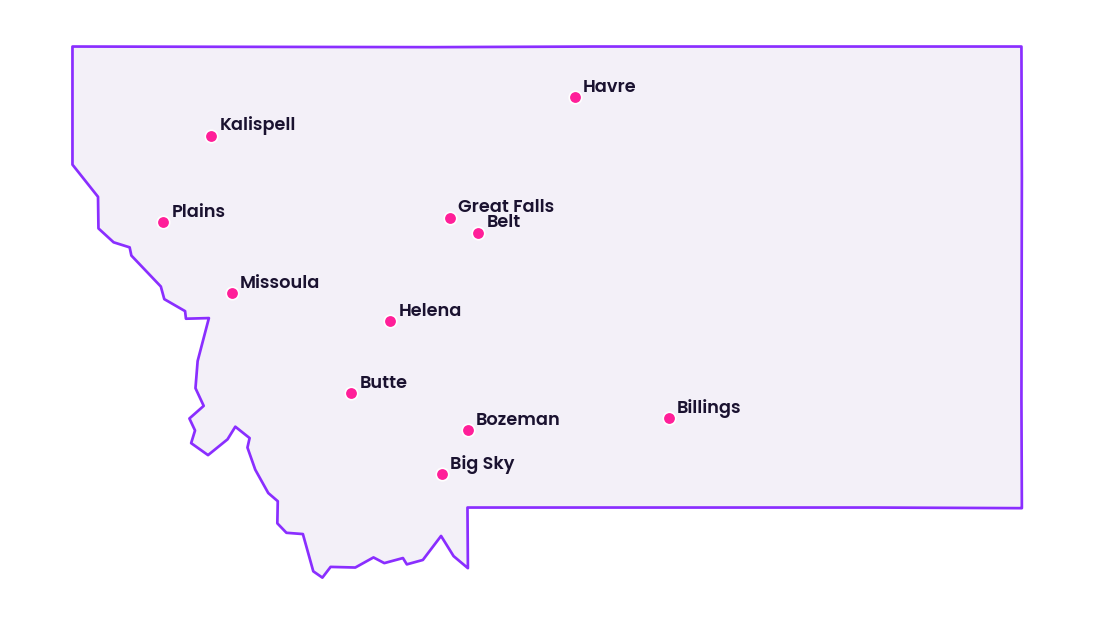
To frame regional differences, Montana can be segmented into key real estate regions from a housing and multifamily perspective. The southwest growth corridor, centered on Bozeman, Big Sky, Helena, and Butte, holds student and workforce apartments along with some newer class A communities that remain limited in scale relative to demand, and it is defined by strong in migration, university anchors, outdoor amenities, and pronounced housing affordability pressures. The western university and tourism corridor, centered on Missoula, Kalispell, and Whitefish, carries university oriented multifamily, workforce housing, and resort adjacent rentals, shaped by university and resort demand, service sector employment, and seasonal and short term rental pressures. The south central energy and services region, anchored by Billings and Laurel, features workforce garden style communities and small and mid sized multifamily, benefiting from its role as a regional medical and retail hub with energy services and relatively stable year round demand. The north central and Hi Line region, including Great Falls, Havre, and smaller towns, is predominantly small multifamily and older stock with few large complexes, supported by military and government anchors in Great Falls and agricultural services amid modest growth. Finally, the eastern plains and rural counties, made up of scattered small centers, have very limited multifamily, often small buildings, tied to agriculture and resource extraction, with flat or declining demand and higher vacancy risk.
For investors, this segmentation underscores that multifamily scale and opportunity are highly concentrated in a few metros, while the rest of the state presents smaller, more localized plays.
Section 06Rents
The United States Department of Housing and Urban Development publishes fair market rents by bedroom size for Montana's metropolitan and nonmetropolitan areas. These fair market rents, defined for voucher and subsidy programs, are generally lower in absolute dollar terms than those in coastal metropolitan areas but differ markedly within the state. Metro areas such as Bozeman, Missoula, Kalispell, and Billings tend to have higher fair market rent levels than many eastern and central rural counties, reflecting stronger demand, higher incomes, and higher housing costs.
American Community Survey data on gross rents and rent burdens show that a significant share of renter households in Montana pay more than thirty percent of their income on housing and utilities, especially in high demand metros and among lower income households. In Bozeman and some resort adjacent communities, median rents for market rate units have risen to levels that are high relative to local wages in service and public sector jobs, leading to documented affordability challenges for workers and students.
Private market data providers such as CoStar, Yardi Matrix, RealPage, and Zillow report that asking rents for newer class A properties in Bozeman, Missoula, and Kalispell are meaningfully higher than rents in older class B and class C properties in the same metros and higher than rents in many smaller markets within Montana. In Billings and Great Falls, rent levels are more moderate but have trended upward over time in nominal terms. In rural areas and small towns, nominal rents are lower, but incomes are also lower, leaving many households rent burdened.
For investors, the rent landscape implies that there is room for quality new multifamily and professionally managed single family rentals in selected metros, where higher rents can support construction costs. At the same time, the ceiling for achievable rents is constrained by local incomes, especially outside of high end amenity and university segments. Rent growth assumptions should be conservative and tailored to each labor market.
Section 07Vacancy
Housing vacancy in Montana reflects both cyclical and structural factors. At a statewide level, Census housing vacancy surveys for the Mountain region show that rental vacancy tends to be moderate, with local divergences. University and tourism influenced metros such as Bozeman, Missoula, Flathead Valley, and Billings have generally experienced tight rental markets, particularly in years of strong in migration or tourism, with lower vacancy in well located and well managed properties and somewhat higher vacancy in older, less competitive stock.
In Bozeman and parts of Missoula and Kalispell, constraints on new supply, land availability, and infrastructure capacity have at times led to very tight conditions, with very limited available units during peak leasing seasons. Student oriented properties show seasonal patterns, with full occupancy during academic terms and slower leasing in off seasons, though the overall vacancy for the full year can still be low when enrollment is healthy.
In contrast, some rural counties and small towns, particularly in eastern Montana and along the Hi Line, have higher physical vacancy rates due to population stagnation or decline, an overhang of older, lower quality housing stock, and limited demand for new units. In these areas, even low rents may not suffice to fill units in buildings that are functionally obsolete or in less desirable locations.
Comprehensive, building class specific vacancy series for Montana's multifamily markets are generally available through private providers and local brokerage reports, though those numeric series are not restated here. Qualitatively, investors should treat vacancy risk as concentrated in older, under maintained properties, in rural communities with weak or declining demand, and in any segment where new supply has recently outpaced realistic absorption.
Section 08Supply Pipeline
United States Census Building Permits Survey data, along with local planning and permitting records in cities such as Bozeman, Missoula, Kalispell, Billings, Great Falls, and Helena, show that Montana's residential construction pipeline has expanded over the past decade, with notable surges in permits during periods of strong in migration and favorable financing, especially in Gallatin, Missoula, Flathead, and Yellowstone counties. The mix of permits has been skewed toward single family detached homes and townhomes, but multifamily permitting has increased in response to rental demand.
Bozeman and the Gallatin Valley have seen significant multifamily construction along major corridors and near Montana State University, including garden style communities, midrise buildings, and mixed use projects. Missoula has permitted new multifamily near the university, downtown, and along transportation corridors. Kalispell and Whitefish have experienced a wave of residential subdivisions and multifamily development tied to tourism and amenity migration. Billings has added multifamily and single family stock to meet its role as a regional center.
In many smaller communities, new construction has been limited by economics. Construction costs, including materials and labor, can be high relative to achievable rents and sale prices, particularly in rural areas with low incomes and limited demand growth. This has constrained new supply despite older stock that may not meet current quality or energy standards.
This review does not restate specific unit counts for the current pipeline, but the broad pattern is clear. For investors, the implication is that new supply risk is heavily concentrated in a few metros, while most of the state remains supply constrained in quality stock. Project level due diligence should always include a review of current and planned permits and subdivision approvals in the relevant jurisdiction.
Section 09Single Family Homes
Single family homes are the primary form of housing in Montana, both in urban and rural areas. American Community Survey tenure and structure data indicate that owner occupancy is higher in Montana than in many large coastal states, although ownership rates vary by metro and age cohort. Detached single family homes, townhomes, and manufactured housing account for most units, with manufactured homes particularly significant in rural counties and on the outskirts of metros.
Home value and sales data from Zillow, Redfin, and Federal Housing Finance Agency house price index series show that Montana home prices have appreciated meaningfully over the past decade, with especially strong gains in Gallatin County, Flathead County, Missoula County, and certain resort oriented submarkets. These appreciation trends reflect net in migration, limited supply of desirable land in valleys and along lakes and rivers, low interest rates for much of the period, and increased remote work flexibility.
Inventory and months of supply indicators from multiple listing services and brokerage reports, while not restated numerically here, have often shown seller leaning conditions in Bozeman, Missoula, Kalispell, and some resort communities, particularly for entry level and mid price homes. Buyers in lower priced segments have faced competition from both local households and out of state buyers, including some making cash offers. In Billings and Great Falls, conditions have been somewhat more balanced but still tighter than in earlier periods before the recent expansion.
Single family rentals constitute an important segment of Montana's rental market. In university and resort metros, many single family homes and townhomes are rented to students, workers, and seasonal employees. In rural areas, single family rentals are often owned by small local landlords. There is limited evidence of large scale institutional single family rental portfolios in Montana compared with some Sun Belt states, but regional and national investors have shown interest in build to rent or scattered site strategies in fast growing submarkets such as Bozeman and Kalispell.
For investors, single family housing in Montana offers potential for both appreciation and income, especially in high demand metros and amenity rich locations. However, acquisition prices in some of these markets have risen to levels that compress yields, and scattered site management in rural and smaller markets can be operationally challenging. Underwriting must reflect local income levels, property tax and insurance costs, and realistic expectations for rent growth.
Section 10Commercial Real Estate and Retail Centers
Commercial real estate in Montana is small in absolute scale but meaningful within regional contexts. Office, industrial, and retail properties are concentrated in metros such as Billings, Missoula, Bozeman, Kalispell, Great Falls, and Helena, with smaller inventories in secondary centers. There is no comprehensive public dataset that provides detailed statewide vacancy, rent, and capitalization rate statistics for commercial real estate by property type and metro in a form that can be restated here. Private data providers such as CoStar and brokerage firms track these metrics, and their qualitative insights can be summarized.
Office markets in Montana are local in character. In Billings and Missoula, office space primarily serves medical, legal, financial, and professional services tenants, as well as branches of larger firms. Bozeman's office market has grown with technology and professional services firms, often in low rise or midrise buildings near downtown and along major roads. Vacancy rates have historically been moderate, with limited construction of new speculative office space and demand concentrated in well located buildings. Shifts toward remote and hybrid work after the pandemic have affected some office demand, but the impact is more muted than in large coastal metros due to smaller footprints and a focus on local services.
Industrial and logistics space is concentrated along Interstate corridors and near rail lines. Billings serves as a distribution center for eastern Montana and parts of Wyoming and the Dakotas, with warehouses, distribution centers, and light industrial properties. Missoula and Bozeman have seen growth in logistics facilities serving regional online commerce, building materials, and food distribution. Industrial vacancy in prime locations has generally been low, with rents that have trended upward as supply chain and distribution needs have expanded.
Retail real estate in Montana revolves around grocery anchored neighborhood centers, community shopping centers, and a small number of regional malls. Billings, Missoula, and Kalispell host regional retail hubs that draw shoppers from wide trade areas. Grocery anchored centers anchored by national and regional grocers tend to perform relatively well, while some enclosed malls and older centers face challenges from online retail and changing shopping patterns. Tourist corridors in resort towns and gateway communities support experiential and specialty retail.
For investors, commercial opportunities in Montana are primarily in necessity retail, well located industrial and flex properties, and niche office buildings tied to stable local employers. Capitalization rates, as reported qualitatively by private providers, are generally higher than those in major coastal metros, reflecting smaller markets, thinner tenant pools, and liquidity risk. Detailed local market analysis is essential before committing capital.
Section 11Transactions and Capital Markets
There is no single public dataset that aggregates all commercial and multifamily real estate transactions, prices, volumes, and capitalization rates for Montana in a way that can be restated numerically here. Montana county recorder and assessor offices maintain records of property transfers, and private data providers such as CoStar and MSCI Real Assets compile transaction and capital flows information, but those proprietary series are not quoted directly in this review.
Qualitatively, transaction activity in Montana is characterized by smaller deal sizes, local and regional buyer pools, and limited institutional ownership compared with larger states. Multifamily assets in Bozeman, Missoula, Kalispell, and Billings attract regional private capital and some institutional interest when portfolios or new developments reach sufficient scale. Single tenant net lease retail and industrial properties with national credit tenants have also drawn attention from national buyers, particularly when lease terms and yields are attractive.
Capitalization rates in Montana tend to be higher than in primary coastal markets, but the spread has compressed in recent years for high quality assets in fast growing metros as competition has increased. In smaller towns and rural areas, capitalization rates can be materially higher, but rent and occupancy risk and exit liquidity constraints rise accordingly. The move to higher interest rates has reduced leverage availability and increased debt service costs, leading to fewer transactions and more emphasis on in place cash flow.
For investors, Montana's capital markets conditions mean that patience and selectivity are crucial. Exit strategies may involve sales to local or regional buyers or to niche institutional players. Underwriting must reflect the potential for extended marketing periods, limited buyer competition in downturns, and the importance of tenant credit and lease terms.
Section 12Taxes
Montana's tax structure has several features that matter for real estate investors. The state levies a personal income tax and a corporate income tax, but it does not impose a general state level sales tax. This places a greater burden on property taxes and income based taxes for funding state and local government services. Property taxation is administered by the Montana Department of Revenue and county treasurers under a classification system that distinguishes between residential, commercial, industrial, agricultural, and other property types.
Effective property tax rates in Montana for residential and commercial property are generally moderate compared with some high tax states, but they vary by county and local mill levies for schools, cities, and special districts. Rapid appreciation in market values in some counties has led to higher assessed values and concerns about rising tax bills, even when nominal rates remain stable. Tax relief programs for certain owner occupied properties and agricultural land mitigate some impacts, but investors in rental and commercial properties must plan for possible increases after reassessment or improvement.
This review does not state specific numeric tax rates or mill levy figures, because those are best confirmed against current Montana Department of Revenue and county schedules for the relevant year. For investors, Montana's lack of a broad sales tax can be a modest positive factor for consumer spending, but property tax and income tax obligations must be modeled carefully. Local variations in mill levies and assessment practices mean that due diligence at the county and municipal level is essential for accurate underwriting.
Section 13Insurance
Insurance considerations in Montana are shaped by exposure to wildfire, hail, severe thunderstorms, winter storms, and localized flooding. The Montana Commissioner of Securities and Insurance regulates the property and casualty market at the state level. Property insurance premiums are influenced by location, building characteristics, construction materials, defensible space, fire protection infrastructure, and loss history.
Wildfire risk is a dominant concern, especially in wildland urban interface areas near forests and grasslands, which are common around Bozeman, Missoula, Kalispell, and many rural and exurban communities. Houses and multifamily buildings that back onto wooded slopes or open land may face higher premiums, stricter underwriting, or coverage limitations. Federal Emergency Management Agency flood maps identify floodplains along rivers such as the Yellowstone, Missouri, Clark Fork, Gallatin, and Flathead, and properties in these zones may require flood insurance.
Winter weather can produce heavy snowfalls, ice, and freeze thaw cycles that affect roofs, plumbing, and roads. Hail events can damage roofs and vehicles, contributing to higher claim frequencies in certain regions. In recent years, national and regional insurance market pressures, including rising reinsurance costs and increased catastrophe losses, have contributed to upward pressure on premiums in many states, including Montana.
For investors, obtaining multiple insurance quotes, understanding coverage limits and exclusions, and investing in mitigation measures are essential. Strategies such as creating defensible space, using fire resistant materials, upgrading roofs, and elevating mechanical systems in flood prone areas can reduce risk and may improve insurability and pricing. Insurance expense assumptions should be stress tested, especially for assets in high risk zones.
Section 14Landlord Tenant and Regulatory Environment
Montana's landlord tenant legal framework is generally considered more landlord friendly than those of many coastal states, while still providing basic protections for tenants. State statutes govern lease terms, security deposits, habitability requirements, notice periods for termination and eviction, and remedies for nonpayment or lease breaches. There is no statewide rent control regime, and local jurisdictions have not adopted comprehensive rent stabilization ordinances for private rental housing comparable to those in certain large coastal cities.
Landlords must maintain dwellings in a habitable condition, repair essential systems, and comply with building, housing, and health codes. Eviction procedures require proper notice and court processes, though timelines are generally shorter and more predictable than in some heavily regulated states. Fair housing laws at the federal and state levels prohibit discrimination based on protected characteristics.
Montana does not impose extensive registration or inspection regimes for most rental properties, although certain cities may require rental licenses, inspections for specific building types, or registrations for short term rentals. Local ordinances can address issues such as nuisance, noise, and zoning compliance.
For investors, the regulatory environment provides flexibility in rent setting and lease structures, subject to market conditions and general legal requirements. It reduces some of the regulatory uncertainties present in more tightly regulated jurisdictions. Nonetheless, responsible property management and adherence to statutory requirements are essential to avoid legal and reputational risks.
Section 15Infrastructure
Montana's infrastructure reflects the state's large land area, low population density, and role as a corridor for interstate commerce rather than as a dense urban region. The Interstate Highway System, notably Interstate 90 and Interstate 15, connects major cities and provides routes for freight and passenger travel. State highways and local roads extend connectivity to smaller towns and rural areas. Road maintenance is a significant expense given the length of the network and the impacts of winter weather, freeze thaw cycles, and heavy truck traffic.
Railroads play an important role in moving bulk commodities such as grain, coal, and manufactured goods. Several freight lines traverse the state, connecting to national networks. Passenger rail service exists but is limited compared with dense urban corridors elsewhere. Airports in Billings, Missoula, Bozeman, Kalispell, Great Falls, and Helena provide commercial air service, with Bozeman in particular seeing expanded routes due to tourism and in migration.
Water and sewer infrastructure is concentrated in city limits and larger towns. Many rural properties rely on wells and septic systems, which can limit development density and require careful site evaluation. Investment needs in aging water and sewer systems are a concern in older communities, while capacity constraints can slow new development in fast growing metros. Broadband internet access has improved, but coverage and speeds still lag in many rural areas, and federal and state initiatives aim to close those gaps.
For investors, infrastructure quality and capacity are key determinants of feasible land use and development. Industrial and logistics assets benefit from proximity to Interstates and rail. Residential and commercial properties require reliable water, sewer, and broadband to be competitive. Infrastructure constraints in high demand metros like Bozeman and Kalispell can limit supply and increase project timelines and costs, but they also contribute to the pricing power of existing, well located assets.
Section 16Climate and Physical Risks
National Oceanic and Atmospheric Administration climate data characterize Montana's climate as continental, with cold winters, warm summers, and significant regional variation in temperature and precipitation. Mountainous western regions receive more precipitation, including snow, while eastern plains are drier and more prone to drought. Climate change projections for the Northern Rockies and Great Plains suggest rising average temperatures, declining snowpack at some elevations, shifts in runoff timing, and increased frequency of extreme precipitation and drought events.
Federal Emergency Management Agency hazard assessments identify wildfire, flooding, severe winter storms, hail, and drought as key hazards across Montana. Wildfires in forested and grassland areas can threaten communities in the wildland urban interface, damage infrastructure, and degrade air quality over large regions. Riverine flooding can occur along major rivers and in localized flash floods, while heavy snow and ice storms can disrupt transportation and power.
These physical risks have direct and indirect implications for real estate. Properties in high wildfire risk areas face potential loss and higher insurance costs. Changing snowpack and runoff patterns can affect ski and recreation economies in some regions, while drought can impact agriculture and water availability. Floodplain development requires careful mitigation and adherence to regulations.
For investors, incorporating climate risk assessments into location decisions, building design, and operations is essential. Assets that are sited away from the highest risk zones, built or retrofitted with resilient materials and systems, and supported by robust community and regional adaptation plans are more likely to retain value over time.
Section 17Opportunities
Montana offers several distinct opportunity sets for real estate investors who are comfortable with smaller markets and are willing to develop local expertise. The strongest multifamily and single family rental opportunities are in fast growing metros such as Bozeman and Missoula, where universities, airports, and lifestyle assets support demand from students, faculty, professionals, and amenity migrants. Well designed workforce housing, both rental and ownership, in these markets may achieve strong occupancy and rent levels, while addressing clear housing shortages.
Kalispell and the Flathead region present opportunities linked to tourism and amenity migration, particularly in workforce and seasonal housing that serves service sector employees who are often priced out of resort cores. Billings offers a more diversified economic base and potential in multifamily, industrial, and service oriented retail tied to regional health care and distribution roles.
Industrial and logistics properties along Interstate 90 and Interstate 15 and near regional hubs can benefit from growth in online commerce, distribution, and regional supply chains. Grocery anchored centers and well located neighborhood retail in stable trade areas may generate relatively resilient income streams. Build to rent and small scale single family rental strategies in growth metros may offer yield and appreciation potential if acquisition and construction costs remain disciplined, though no particular outcome is assured.
Mission oriented investors may find compelling opportunities in affordable and workforce housing leveraging Montana Board of Housing programs, as well as in projects that support rural health care, senior housing, and community services. The observations in this section are general and educational, are not projections, forecasts, or assurances of any particular return, yield, occupancy, rent level, or appreciation, and any specific investment must be evaluated on its own facts.
Section 18Risks
Risks in Montana real estate are significant and must be weighed against the opportunities. Market size and liquidity are primary concerns. Even the largest Montana metros are small in national terms, with limited numbers of buyers and tenants for institutional sized assets. This can translate into longer lease up periods, greater sensitivity to single tenant or single employer events, and extended marketing times at exit.
Economic concentration in certain regions, such as heavy reliance on tourism, energy, or a university, creates vulnerability to sector specific shocks. A downturn in tourism, changes in state or federal energy policy, or enrollment shifts at key institutions could reduce demand in affected markets. Demographic risk exists in rural and eastern counties facing population stagnation or decline, which can lead to chronic vacancy and limited rental growth.
Climate and insurance risks related to wildfire, drought, flooding, and severe weather can affect both operating costs and asset values, especially in high risk zones. Infrastructure limitations, including water and sewer capacity and broadband in some areas, can constrain development and reduce the appeal of certain locations.
Regulatory risk is lower in Montana than in highly regulated states, but changes in state tax policy, land use regulations, or environmental requirements could affect project feasibility. Political and community opposition to large developments or perceived excess tourism in certain areas may also arise. Real estate investments are speculative, are subject to market, financing, liquidity, tax, regulatory, insurance, and physical hazard risks, and can result in the loss of some or all of an investor's invested capital, including the possible loss of principal.
Section 19Investor Implications
For accredited investors, Montana is best viewed as a niche allocation within a broader real estate portfolio, offering diversification benefits, potential yield premiums, and exposure to university and amenity driven growth stories, but with clear constraints on scale and liquidity. Successful strategies will focus on the strongest metros and submarkets, align product with local incomes and employment structures, and incorporate conservative leverage and robust reserves.
Investors should prioritize partnerships with local operators who understand zoning, permitting, community dynamics, and tenant bases. Underwriting should incorporate stress scenarios for occupancy, rent levels, insurance and tax costs, and exit timing. Environmental and climate risk assessments should be integrated into investment committee processes, particularly for assets in wildland urban interface and flood prone areas.
Montana can complement holdings in larger markets by providing targeted growth and income opportunities in segments such as university housing, resort adjacent workforce housing, and small scale industrial, but it should not be relied upon for large scale capital deployment or for rapid cyclical trading strategies. Nothing in this section is a recommendation to pursue any specific strategy or investment, and there is no assurance that any objective or outcome described will be achieved.
Section 20Conclusion
Montana's real estate and multifamily markets reflect the state's blend of rugged geography, small population, evolving economy, and growing appeal as a destination for outdoor oriented lifestyles and remote work. Public data from federal and state agencies and private market analyses paint a picture of a state where growth is concentrated in a handful of metros and amenity regions, while many rural areas face stagnant or declining demand. Housing affordability pressures in Bozeman, Missoula, Kalispell, and Billings coexist with underinvestment and vacancy risk in smaller communities.
For investors, the most compelling opportunities lie in carefully selected multifamily, single family rental, and small scale commercial assets in growth corridors, supported by sound underwriting and local partnerships, though no particular outcome or return is assured. Risks related to market size, economic concentration, climate, and infrastructure require cautious capital structures and realistic expectations.
This review has provided a qualitative framework for understanding Montana's statewide real estate dynamics. Accredited investors should pair these structural insights with up to date numeric data from the listed sources and thorough asset level due diligence to determine whether and how Montana fits into their investment strategies.
Sources
- United States Census Bureau, Population and Housing Unit Estimates, Montana statewide and counties,, https://www.census.gov/programs-surveys/popest.html
- United States Census Bureau, Decennial Census of Population and Housing, Montana,, https://www.census.gov/programs-surveys/decennial-census.html
- United States Census Bureau, American Community Survey one year and five year estimates, Montana statewide, metropolitan and micropolitan areas, and counties,, https://www.census.gov/programs-surveys/acs
- United States Census Bureau, Building Permits Survey, Montana and its metropolitan areas,, https://www.census.gov/construction/bps
- United States Census Bureau, Housing Vacancies and Homeownership, Mountain region including Montana,, https://www.census.gov/housing/hvs
- United States Bureau of Labor Statistics, Economy at a Glance, Montana,, https://www.bls.gov/eag/eag.mt.htm
- United States Bureau of Labor Statistics, State and Area Employment, Montana and its metropolitan areas,, https://www.bls.gov/sae
- United States Bureau of Labor Statistics, Local Area Unemployment Statistics, Montana counties and labor markets,, https://www.bls.gov/lau
- United States Bureau of Economic Analysis, Gross Domestic Product by State, Montana,, https://www.bea.gov/data/gdp/gdp-state
- United States Bureau of Economic Analysis, Local Area Personal Income, Montana counties and metropolitan areas,, https://www.bea.gov/data/income-saving/local-area-personal-income
- United States Department of Housing and Urban Development, Fair Market Rents and income limits, Montana counties and metropolitan areas,, https://www.huduser.gov
- Federal Housing Finance Agency, House Price Index, Montana and its metropolitan statistical areas,, https://www.fhfa.gov/DataTools/Downloads/Pages/House-Price-Index.aspx
- Montana Board of Housing, rental housing and homeownership programs and publications,, https://housing.mt.gov
- Montana Department of Revenue, property tax information and classifications,, https://mtrevenue.gov
- Montana Commissioner of Securities and Insurance, property and casualty insurance information,, https://csimt.gov
- Federal Emergency Management Agency, Flood Map Service Center, Montana,, https://msc.fema.gov
- Federal Emergency Management Agency, National Risk Index, Montana,, https://hazards.fema.gov/nri
- National Oceanic and Atmospheric Administration, National Centers for Environmental Information, climate data for Montana,, https://www.ncei.noaa.gov
- CoStar Group, Montana multifamily, office, industrial, and retail market analytics,, https://www.costar.com
- Yardi Matrix, Mountain region and Montana multifamily market reports,, https://www.yardimatrix.com
- RealPage, multifamily market analytics for Montana metropolitan areas,, https://www.realpage.com/analytics
- Freddie Mac Multifamily, research on Mountain region multifamily markets including Montana,, https://mf.freddiemac.com/research
- Zillow Research, Montana home value and rental data,, https://www.zillow.com/research/data
- Redfin Data Center, Montana housing market data,, https://www.redfin.com/news/data-center
- CBRE Research, Montana and regional commercial real estate market reports where available,, https://www.cbre.com/insights
- JLL Research, Mountain and northern plains commercial real estate insights,, https://www.us.jll.com/en/trends-and-insights/research
- Cushman and Wakefield, Marketbeat and regional reports covering Montana markets,, https://www.cushmanwakefield.com/en/insights
- MSCI Real Assets, United States Capital Trends including transactions in Montana,, https://www.msci.com/our-solutions/real-estate/real-assets