In brief · summary: North Dakota
North Dakota State Real Estate Market Review
Section 01Executive Summary
North Dakota is a small, resource driven state whose real estate markets are shaped by energy production, agriculture, and a concentrated set of regional service hubs rather than by large diversified metros. Statewide labor data from the Bureau of Labor Statistics show that North Dakota currently combines very low unemployment with essentially flat net job growth, a pattern consistent with a mature cycle in which employers are more constrained by labor availability than by demand.
According to the Bureau of Labor Statistics North Dakota Economy at a Glance table, the statewide civilian labor force was 434.9 thousand persons in January 2026 and a preliminary 432.9 thousand persons in June 2026, seasonally adjusted. Statewide employment was 423.6 thousand persons in January 2026 and a preliminary 423.0 thousand persons in June 2026, while unemployment declined from 11.3 thousand persons to a preliminary 10.0 thousand persons over the same period. The statewide unemployment rate moved from 2.6 percent in January 2026 to a preliminary 2.3 percent in June 2026, seasonally adjusted. Total nonfarm employment stood at 446.9 thousand jobs in January 2026 and a preliminary 446.4 thousand in June 2026, with the twelve month change in total nonfarm jobs ranging from negative 0.2 percent in January 2026 to positive 0.7 percent in March 2026 and back to negative 0.2 percent in June 2026. These figures are statewide, monthly, seasonally adjusted, and were extracted on August 7, 2026 from the Bureau of Labor Statistics.
On the ownership side, Redfin North Dakota housing market summary reports that in May 2026 the statewide median sale price for all home types was 313,885 dollars, 3.2 percent higher than in May 2025. Redfin also reports that there were 2,743 homes for sale statewide in May 2026, a 1.3 percent increase on a year over year basis, and that 11.6 percent of North Dakota homes sold above list price that month, 8.9 percentage points lower than one year earlier. These figures are statewide for May 2026 and are based on Redfin calculations from multiple listing service and public record data.
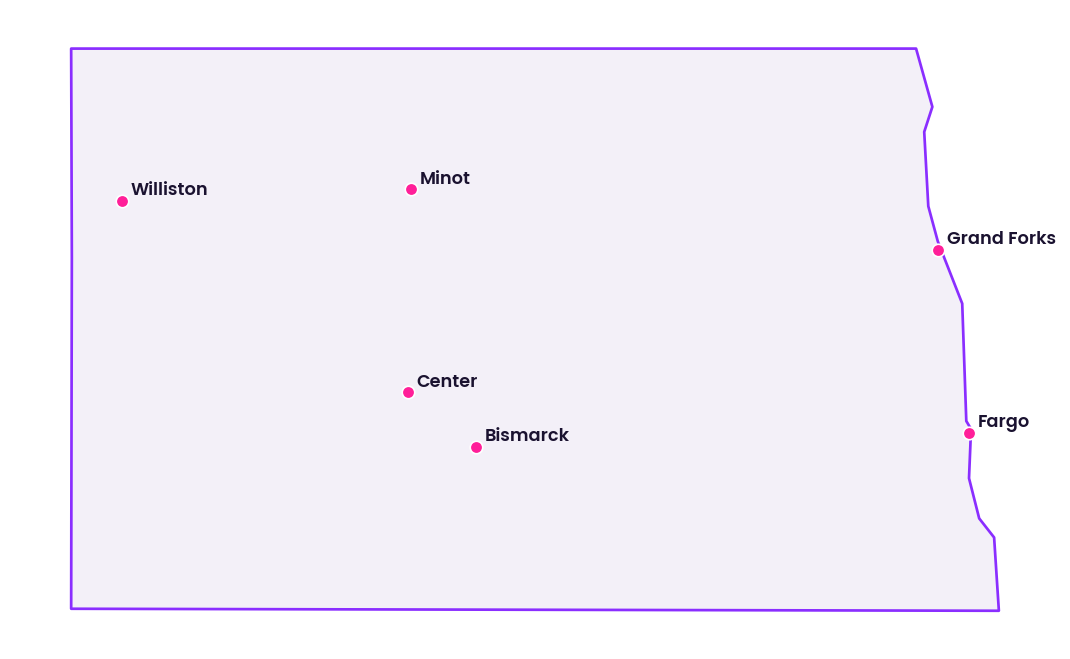
Taken together, these data points describe a state with a very tight labor market, flat net job growth, and a homeownership market where prices are rising modestly, inventory is increasing slowly, and bidding intensity has cooled. For investors, North Dakota offers targeted opportunities in multifamily, single family rental, and industrial and logistics assets in a small number of population centers such as Fargo, Bismarck, and Grand Forks, and in energy linked markets such as the Williston area, but it requires careful navigation of volatility in the oil and gas sector and structural constraints in small rural markets. The remainder of this review builds on these quantitative anchors while explicitly noting where current public data are not accessible.
Section 02Population and Migration
Population and migration dynamics determine the long run base of housing demand. The primary sources for current statewide and local population counts and flows are the United States Census Bureau decennial census, the Population Estimates Program, and the American Community Survey. In this environment, direct programmatic access to the most recent detailed North Dakota population tables is restricted by application programming interface key requirements and interactive tools that are not available, and this review therefore cannot restate the current official population of North Dakota in numeric terms.
Historically, Census data show that North Dakota population has been small relative to most states and has fluctuated over time with agricultural cycles, energy booms and busts, and broader regional trends. The oil and gas development associated with the Bakken formation in the western part of the state produced significant in migration in prior years, particularly to counties such as Williams, Mountrail, McKenzie, and Dunn, while university centers such as Fargo, Grand Forks, and Bismarck attract students and young professionals. Out migration from rural areas and small towns continues as residents move toward larger regional centers or out of state.
Without current numeric Census tables accessible here, the exact statewide population, net migration flows, and age structure cannot be quoted. For investors, the practical implication is that North Dakota real estate markets are highly concentrated in a few metropolitan and micropolitan hubs and selected energy oriented counties, while many rural areas face flat or declining population. Any statewide strategy must therefore be disaggregated quickly into metro and county level theses, using up to date Census and American Community Survey data outside this document to refine assumptions.
Section 03Jobs and Economic Anchors
Labor market conditions and industry mix are the clearest available quantitative window into North Dakota economic base. The Bureau of Labor Statistics North Dakota Economy at a Glance table provides monthly statewide labor force, employment, unemployment, and industry employment data for early 2026. The table below summarizes a subset of these indicators for January, March, and June 2026, seasonally adjusted.
| Month 2026 | Civilian labor force thousands statewide | Employment thousands statewide | Unemployment rate percent statewide | Total nonfarm jobs thousands statewide | Twelve month change in total nonfarm jobs percent statewide |
|---|---|---|---|---|---|
| Jan 2026 | 434.9 | 423.6 | 2.6% | 446.9 | negative 0.2 |
| Mar 2026 | 435.9 | 424.9 | 2.5% | 450.4 | 0.7% |
| Jun 2026 preliminary | 432.9 | 423.0 | 2.3% | 446.4 | negative 0.2 |
These figures confirm that North Dakota maintains one of the lowest unemployment rates in the country, with the rate declining modestly from 2.6 percent in January 2026 to a preliminary 2.3 percent in June 2026. The civilian labor force and employment totals are essentially flat over this period, and total nonfarm jobs oscillate within a narrow band around the mid four hundred thousand range. The twelve month change in total nonfarm jobs is small and negative in January and June 2026, with a modest positive reading of 0.7 percent in March 2026, indicating that job growth has plateaued rather than accelerating.
Sector level Bureau of Labor Statistics data for June 2026 show that North Dakota had preliminary employment of 17.1 thousand jobs in mining and logging, 30.5 thousand in construction, 27.7 thousand in manufacturing, 92.4 thousand in trade, transportation, and utilities, 5.0 thousand in information, 24.1 thousand in financial activities, 33.5 thousand in professional and business services, 72.1 thousand in education and health services, 41.3 thousand in leisure and hospitality, 15.8 thousand in other services, and 86.9 thousand in government. Twelve month percentage changes in these sectors ranged from negative 5.6 percent in mining and logging in January 2026 improving to negative 1.2 percent by June 2026, to positive 5.3 percent in other services in June 2026, while education and health services maintained positive but moderating growth, with a twelve month change of 2.5 percent in February and a preliminary 0.4 percent in June 2026.
These patterns underscore that the state economy continues to be heavily influenced by resource extraction and related trade and transportation activity, with mining and logging still in a mild contraction over the latest twelve month period, and by service sectors such as education, health care, and government that provide stability. Construction twelve month change moved from 3.3 percent in January 2026 to 0.0 percent in June 2026, suggesting that building activity has cooled from earlier peaks. Professional and business services display small positive year over year growth earlier in the period but a negative twelve month change of 2.6 percent by June 2026, which may signal some softening in higher value service employment.
For investors, this mix means that demand for industrial and logistics properties, workforce housing in energy regions, and housing and services in university and government centers remains tied to the volatility of oil and gas prices, agricultural conditions, and federal and state spending. The very low unemployment rate suggests that wage pressures and hiring challenges can be significant for employers, which may limit rapid expansion but also supports household incomes among residents who are employed.
Section 04Income
Income levels and trends are critical for assessing affordability and rent and price ceilings. The primary public sources for statewide and local income measures are the Bureau of Economic Analysis state personal income tables and the Census Bureau American Community Survey median household and per capita income estimates. In this environment, direct automated extraction of the most recent Bureau of Economic Analysis and American Community Survey income tables for North Dakota is blocked by page errors and interactive formats, and as a result this review cannot state the current statewide per capita personal income or median household income for North Dakota in numeric form.
Historically, North Dakota income profile has been shaped by two countervailing forces. On one side, high wage jobs in oil and gas extraction, energy services, and related transportation and construction have pulled up average incomes in affected counties, especially during boom periods. On the other side, agriculture, small town service employment, and some manufacturing activities typically pay moderate wages and are subject to commodity and demand cycles. University centers and state government employment in places like Fargo, Grand Forks, and Bismarck provide stable but not necessarily high incomes.
In the absence of current numeric income measures in this document, investors should assume a bifurcated income distribution, with higher incomes in energy producing counties and in some professional households in regional hubs, and more modest incomes in agricultural and rural communities. This has direct implications for rent levels, achievable price points, and product positioning. Higher end multifamily and single family assets are more likely to be viable in larger cities and in specific energy markets than in most small towns, while workforce housing demand spans a broader geography but at rents and prices that must be closely aligned with local earnings.
Section 05Housing and Multifamily
North Dakota housing stock is dominated by single family homes, but multifamily apartments and small rental properties play crucial roles in college towns, regional centers, and energy labor markets. Statewide, there are relatively few large institutional multifamily properties compared with larger states, and apartment investment tends to concentrate in and around the metropolitan areas of Fargo, Bismarck, and Grand Forks, and in selected energy linked communities such as Williston and Minot.
United States Census Bureau housing unit and tenure tables for North Dakota, which normally quantify the number of housing units, the shares of owner and renter occupied units, and the distribution by structure type, are not accessible in this environment in a form that allows extraction of current statewide counts or percentages. Therefore this review cannot provide precise statewide numbers for the multifamily unit inventory or the statewide renter share.
Publicly available multifamily performance data for North Dakota are limited at the state level. Private sector providers such as CoStar, Yardi Matrix, and RealPage maintain detailed property level and submarket level data for apartments in the state main markets, including occupancy, effective rents, concessions, and new supply, but those datasets are proprietary and not accessible here for numeric quotation. No statewide public source aggregates multifamily performance into a single time series.
Qualitatively, multifamily performance in Fargo and Bismarck reflects their roles as the state largest employment and service centers. University enrollment, health care systems, regional headquarters, and government employment create steady demand for rental housing. In oil producing regions, multifamily and other rental formats have historically experienced sharp swings corresponding to drilling activity and commodity price cycles, with tight markets and high rents during booms and elevated vacancy and pressure during downturns.
For investors, multifamily in North Dakota should be evaluated primarily at the metro, submarket, and even property level rather than through statewide averages. University adjacent properties and well located workforce housing in Fargo, Bismarck, and Grand Forks can offer relatively stable occupancy, while assets in energy corridors may offer higher yields but with pronounced cyclicality.
Section 06Rents
Rents for apartments and other residential rentals are measured in several public and private datasets. The United States Department of Housing and Urban Development publishes Fair Market Rents annually for metropolitan and nonmetropolitan areas in North Dakota, which are used for federal housing programs and as benchmarks for modest rent levels. In this environment, Fair Market Rent numeric values for North Dakota for fiscal year 2026 are contained in large spreadsheet files and an interactive documentation system that are not rendered in numeric form through the current tools, and therefore this review cannot provide the exact dollar values for Fair Market Rents in cities such as Fargo or Bismarck.
Private multifamily analytics systems such as RealPage, Yardi Matrix, and CoStar compile average and median asking and effective rents by unit size, property class, and submarket, as well as rent growth trends. These data are proprietary and are not publicly quoted at a statewide level in a manner that can be extracted here. As a result, this review cannot state North Dakota current average monthly rent for apartments or the statewide change in rent on a year over year basis.
In practical terms, investors should expect rent levels in North Dakota to be lower in absolute dollar terms than in large coastal markets, reflecting both lower costs of living and lower incomes, but rents can still be high relative to local earnings in specific constrained markets. College towns and central neighborhoods in Fargo and Bismarck may command higher rents, particularly for newer and amenity rich properties, while older stock and properties in smaller markets must be priced carefully to maintain occupancy.
The lack of public numeric statewide rent series in this document means that investors must rely on current rent rolls, local market surveys, and proprietary data to quantify rent levels and growth assumptions. Structurally, rental affordability, energy cycles, and demographic composition are key drivers of rent performance.
Section 07Vacancy
Vacancy rates for rental housing in North Dakota are a function of new construction, job growth or contraction, and local demand characteristics. Public rental vacancy metrics would normally be drawn from the Census Bureau housing vacancy measures and from multifamily provider data for institutional stock. In this environment, current North Dakota rental vacancy statistics cannot be extracted from Census tools due to access constraints, and no statewide public dataset aggregates multifamily vacancy into a single, readily accessible series.
In energy producing regions such as the Bakken, vacancy has historically been volatile. During drilling booms, most habitable units may become occupied, with overflow into temporary housing and nontraditional accommodations; during busts, vacancy can spike sharply, particularly in newer or more remote properties. In the regional centers of Fargo, Bismarck, and Grand Forks, vacancy has been more stable, reflecting diversified demand and a more measured supply pipeline, though localized oversupply can still occur when multiple projects deliver at once.
Without numeric vacancy rates, investors must focus on leading indicators of vacancy risk, including construction and permitting activity, population and job trends in specific submarkets, and observed lease up performance. For stabilized assets, historical occupancy, tenant mix, and lease rollover profiles provide clues about resilience. The small absolute size of many North Dakota markets means that a single large new property can materially alter local vacancy dynamics.
Section 08Supply Pipeline
The residential and commercial supply pipeline in North Dakota is recorded in building permits, construction starts, and local planning records. The Census Bureau Building Permits Survey includes counts of units authorized by building permits for North Dakota and for its metropolitan areas, but these recent statewide and metro level permit counts are delivered through files and interfaces that are not accessible in numeric form here. Consequently, this review cannot quote the current annual number of residential units permitted statewide or in specific North Dakota metros.
Qualitatively, new residential construction has slowed from peak levels reached during earlier energy booms and national housing upswings. Single family construction continues in and around growing hubs such as Fargo and Bismarck and in select suburban and exurban communities, but volumes are modest by national standards. Multifamily construction is concentrated in university and employment centers, with limited large scale projects elsewhere.
On the commercial side, industrial and logistics development has occurred near major highways, rail lines, and distribution nodes that serve energy production, agriculture, and regional trade. Office construction is limited and focused on institutional or owner user needs, while new retail tends to take the form of grocery anchored centers and small neighborhood centers that track household growth.
For investors, the key supply pipeline question is less about absolute statewide volume and more about local concentration. In a small market, one or two projects can significantly affect competitive conditions. Investors should pair the structural understanding outlined here with local building permit and planning data to assess whether an asset faces imminent competition.
Section 09Single Family Homes
Single family homes dominate the housing stock in North Dakota and are central to both owner occupied and rental strategies. Public ownership market data from Redfin provide a current statewide snapshot. According to Redfin North Dakota housing market overview, the statewide median sale price for all home types in May 2026 was 313,885 dollars, an increase of 3.2 percent compared with May 2025. Redfin reports that there were 2,743 homes for sale statewide in May 2026, which represents a 1.3 percent increase in the number of listings on a year over year basis, and that 11.6 percent of homes sold above list price in that month, a decline of 8.9 percentage points compared with May 2025. These figures cover all home types statewide in May 2026.
This combination of modest price growth, slightly higher inventory, and a reduced share of sales above list price indicates that North Dakota single family market is neither in a severe downturn nor in a speculative boom. Prices are edging higher, but the pace is moderate, supply is increasing slightly, and buyers are achieving more negotiating power than a year earlier. The statewide picture likely masks significant variation between cities. For example, lists of the most competitive cities in North Dakota from the same Redfin source highlight Williston, Bismarck, Grand Forks, and Fargo among others, reinforcing the idea that specific local markets experience different levels of competition.
For investors, single family strategies in North Dakota can take several forms. In Fargo and Bismarck, single family rental portfolios may benefit from steady demand from families, students, and workers who prefer detached housing but are not ready or able to buy. In energy regions, detached homes may offer high rents during boom periods but can face elongated vacancy in downturns, requiring strong risk tolerance and flexible capital. In smaller towns and rural areas, single family homes can be inexpensive to acquire but may offer limited liquidity and slower rent growth.
The statewide numbers from Redfin provide an important context, they show that North Dakota housing market is active, with thousands of homes for sale and measurable appreciation, but the low share of homes selling above list price suggests that pricing discipline is returning and that investors should underwrite deals on current cash flow and conservative exit assumptions rather than relying on rapid appreciation.
Section 10Commercial Real Estate and Retail Centers
Commercial real estate in North Dakota includes office buildings, industrial and logistics facilities, and retail properties such as grocery anchored centers and neighborhood shopping centers. There is no single statewide public dataset that reports current vacancy, rents, and cap rates for these properties. Such metrics are typically compiled by private providers like CoStar and brokerage research teams, which aggregate leasing and sales data at the market and submarket level. These proprietary datasets are not accessible in this environment for numeric quotation, and therefore this review cannot state statewide commercial vacancy rates, average rents, or cap rate ranges.
Structurally, office demand in North Dakota is concentrated in Fargo, Bismarck, Grand Forks, and a few other centers where state government, universities, health care systems, financial institutions, and professional service firms have a presence. Office buildings are generally mid rise or low rise, with few large high rise complexes. Remote work trends and tenant preferences for newer space affect these markets, though the small scale of the state moderates national headline effects.
Industrial and logistics properties are more directly linked to North Dakota economic anchors. Facilities that serve oil and gas extraction, agricultural processing and storage, and regional distribution benefit from proximity to wells, pipelines, rail lines, and highways. Demand for such space is cyclical, tracking energy and commodity prices, but long term needs for storage and processing support a baseline level of occupancy in key corridors.
Retail real estate in the state is characterized by grocery anchored neighborhood centers, small regional centers, and main street style retail in town centers. Electronic commerce penetration affects shopping patterns, but in many communities brick and mortar retail remains important for daily goods and services. Vacancy and rent levels vary by tenant mix and location, with stronger performance typically in centers anchored by grocers or essential service providers.
For investors considering commercial assets in North Dakota, returns are driven less by broad statewide trends and more by tenant quality, lease terms, and the specific local economic base. Industrial and logistics assets with strong tenants in essential sectors such as food processing and energy can offer durable income, while office investments must contend with limited depth and potential obsolescence risk in older buildings. Retail properties anchored by necessity tenants can be resilient, but lifestyle and discretionary retail face greater competition from online channels.
Section 11Transactions and Capital Markets
Transaction and capital markets data for North Dakota real estate, including total sales volume, number of transactions by asset class, and average or median cap rates, are primarily maintained by proprietary databases, brokerage firms, and county recorder and tax offices. There is no comprehensive statewide public dataset that aggregates recent commercial and residential transactions into a form that can be accessed and summarized numerically in this environment.
Because of this limitation, this review cannot state the total dollar volume of real estate transactions in North Dakota in 2025 or 2026, the statewide average cap rate for multifamily or industrial properties, or the number of sales of specific asset types. Likewise, there is no public statewide series accessible here that tracks average mortgage interest rates specific to North Dakota; such data are generally national in scope.
Qualitatively, transaction activity in North Dakota reflects both local investor behavior and national capital flows. Institutional capital is more limited than in large states, but there is meaningful participation by regional banks, local investors, and specialized funds focused on energy or agricultural real estate. Higher interest rates in recent years have constrained leveraged buyers and reduced some pricing, particularly for assets where income growth is modest or uncertain.
For investors, the absence of public aggregate transaction data in this document reinforces the need to rely on brokerage reports, appraisals, and direct transaction evidence when assessing value. Cap rates and pricing in North Dakota can differ materially from national averages due to smaller market size, liquidity considerations, and sector specific risks.
Section 12Taxes
Taxation is a key component of net returns on real estate investments in North Dakota. Property taxation is administered at the county level under a statewide framework overseen by the North Dakota Office of State Tax Commissioner, with assessed values and mill levies applied to calculate property taxes for residential, commercial, and agricultural land. There is no single official public value for an average effective property tax rate for North Dakota that can be reliably extracted at this time, and this review therefore does not state a statewide effective rate in numeric terms.
North Dakota imposes state individual income taxes and corporate income taxes, with rates and brackets defined by statute and administered by the Office of State Tax Commissioner. Transaction related taxes and fees, such as recording fees and transfer taxes, also apply to real estate transactions, but current statewide average transaction cost figures are not available in this environment.
The practical implication for investors is that tax burdens in North Dakota vary by jurisdiction and property type and must be underwritten on a case by case basis. Agricultural land may receive preferential assessments; owner occupied residential property may benefit from credits or exemptions; and commercial properties may face higher effective rates. Investors should pay particular attention to how reassessment works after sales or improvements and to the trajectory of mill levies in local taxing jurisdictions.
Section 13Insurance
Insurance in North Dakota covers risks including fire, severe winter weather, wind, hail, flooding, and liability. The North Dakota Insurance Department regulates carriers and market practices in the state, while coverage for flood risk is primarily provided through the National Flood Insurance Program administered by the Federal Emergency Management Agency. There is no public dataset accessible in this environment that provides current average property insurance premiums for residential or commercial properties in North Dakota in numeric form.
Historically, North Dakota has not faced the same level of hurricane or coastal surge risk as coastal states, but it experiences severe winter storms, flooding along river systems such as the Red River, and hail and wind events that can damage structures and roofs. National Oceanic and Atmospheric Administration and Federal Emergency Management Agency records document flood events and other hazards, but these sources focus on event characteristics rather than average insurance costs.
Investors must therefore obtain property specific insurance quotes and consider how premiums, deductibles, and coverage limits will affect net operating income. In certain areas, particularly in floodplains or zones with elevated hail risk, insurance costs can be a more material component of expenses than headline averages might suggest. Additionally, shifts in reinsurance markets and catastrophe modeling can influence how carriers underwrite and price risk even in inland states like North Dakota.
Section 14Landlord Tenant and Regulatory Environment
North Dakota landlord tenant and regulatory environment is defined primarily by state statutes and local ordinances. State law governs residential lease terms, security deposits, repair and maintenance obligations, notice requirements, and eviction procedures. There is no statewide rent control or rent stabilization regime, and residential rents are generally determined by private contracts subject to fair housing and other applicable laws.
Eviction processes in North Dakota involve notice and court procedures that vary with the grounds for eviction, such as nonpayment of rent or lease violations. There is no publicly summarized statewide statistic on average eviction timelines or volumes accessible in this environment, so this review cannot provide numeric measures of enforcement speed or frequency.
For commercial properties, leases are largely a matter of contract, with terms negotiated between landlords and tenants based on market conditions and bargaining power. Zoning and land use regulations are administered by municipalities and counties and influence what can be built and where, including multifamily projects, manufactured housing communities, and commercial developments.
For investors, the key features of North Dakota landlord tenant environment include the absence of rent caps, the importance of complying with state law on notices and procedures, and the need to understand local zoning and development approvals. Compared with some larger states, the regulatory environment is relatively straightforward, but the small size of courts and agencies in some jurisdictions can affect how quickly issues are addressed.
Section 15Infrastructure
Infrastructure supports both the economy and the functioning of real estate assets. North Dakota infrastructure includes interstate highways such as Interstate 94 and Interstate 29, which connect the state to regional and national markets, rail lines that move agricultural products and energy commodities, and airports such as Hector International Airport in Fargo and Bismarck Municipal Airport. Quantitative metrics like annual vehicle miles traveled, tonnage through rail and pipeline systems, or passenger counts at airports are published by transportation agencies but are not extracted here numerically due to access constraints.
Energy infrastructure is particularly important. Pipelines, gathering systems, and processing facilities in western North Dakota support oil and gas production and affect the location of industrial and service facilities. Electrical transmission and distribution networks must serve both sparsely populated rural areas and more concentrated urban centers, with implications for reliability and cost.
Water and wastewater systems, along with flood protection infrastructure such as levees and diversion projects, are critical in riverine communities subject to flooding, including the Red River Valley. Telecommunications infrastructure, including broadband networks, has been an area of focus for rural connectivity and economic development.
Investors evaluating assets in North Dakota should consider proximity to and capacity of these infrastructure systems. Industrial assets benefit from direct access to rail, pipeline, and highway networks; residential and commercial properties rely on reliable utilities and transportation access, especially in winter conditions when travel can be difficult.
Section 16Climate and Physical Risks
North Dakota climate and physical risk profile differs from coastal states but still carries material implications for real estate. National Oceanic and Atmospheric Administration climate data describe a continental climate with cold winters, warm summers, and significant temperature swings. Severe winter storms, blizzards, and ice events can disrupt transportation and stress building systems. Spring snowmelt and heavy rainfall can cause flooding along rivers and streams, particularly in the Red River Valley, where flat topography and frozen ground can exacerbate water accumulation.
Federal Emergency Management Agency flood insurance rate maps identify special flood hazard areas across North Dakota, including in and around communities such as Fargo and Grand Forks. Properties in these zones may be required to carry flood insurance if they are financed, and they face heightened risk of flood damage during significant events. Wind and hail are also frequent hazards; hail storms can damage roofs, siding, and vehicles, while straight line winds and tornadoes can cause localized severe damage.
Long term climate projections suggest potential shifts in precipitation patterns, snowpack, and extreme weather frequency, which may affect agricultural productivity, water resources, and infrastructure resilience. For real estate investors, these risks translate into considerations around site selection, building design and materials, insurance coverage, and business continuity planning for tenants.
Section 17Opportunities
Despite its small size, North Dakota offers several distinct real estate opportunity themes for accredited investors who are prepared to work in less liquid markets. In multifamily, stabilized assets in Fargo, Bismarck, and Grand Forks can provide access to steady demand from students, medical professionals, government employees, and regional service workers. Well located workforce housing in these markets, with modest but durable rents, can offer attractive risk adjusted yields relative to larger, more competitive metros.
In single family housing, rental portfolios targeting neighborhoods in and around Fargo and Bismarck can benefit from household formation, preference for detached living, and relatively affordable acquisition costs compared with national medians. The Redfin statewide median sale price figure of 313,885 dollars in May 2026 suggests that entry prices are moderate in absolute terms, even as local incomes and cost structures must be considered carefully.
Industrial and logistics investments linked to energy, agriculture, and regional distribution represent another opportunity theme. Properties that provide essential functions such as storage and processing of grain or other commodities, equipment maintenance for oil and gas operations, or regional warehousing for goods can enjoy stable occupancy and tenant relationships, though they may be sensitive to commodity cycles. Retail properties anchored by grocery stores and essential services in regional hubs can offer resilient income streams in markets where online competitors have a weaker physical presence.
These opportunities are not uniform across the state and require local knowledge and partnerships. The absence of deep institutional capital pools in many North Dakota markets may allow well informed investors to secure favorable entry pricing, but it also implies longer hold periods and more limited exit options.
Section 18Risks
The risks associated with North Dakota real estate are significant and must be weighed carefully. Economic concentration in energy and agriculture exposes many markets to commodity price volatility. When oil prices fall or drilling activity slows, demand for housing, industrial space, and some services in the Bakken region can decline sharply, affecting occupancy and rents. Agricultural downturns can likewise weaken small town economies and demand for local retail and services.
Demographic risks include flat or declining populations in many rural counties and limited inflows of new residents compared with faster growing states. This can constrain long term appreciation and make it more difficult to maintain occupancy and rent growth outside of the main regional centers.
Liquidity risk is pronounced. Many North Dakota assets trade in thin markets with a small buyer pool, which can make it harder to exit investments quickly or at desired valuations, particularly during downturns. Financing conditions may also be more sensitive to local bank appetites and relationships, and national lenders may have limited appetite for small market exposure.
Physical and climate risks, including severe winter weather, flooding, and hail, can increase operating costs and capital expenditure requirements over time. Insurance premiums and deductibles may rise in response to loss experience, and some coverage may become more restrictive.
Finally, data limitations themselves constitute a form of risk. The inability in this environment to access detailed public datasets on population, income, rents, and vacancy means that investors must invest additional effort in assembling and validating information from multiple sources. This increases the importance of conservative underwriting and scenario analysis.
Section 19Investor Implications
For accredited investors, North Dakota is best approached as a set of targeted niches rather than as a homogeneous statewide market. The Bureau of Labor Statistics data show a state with very low unemployment and largely flat job growth, reinforcing the idea that North Dakota is capacity constrained rather than in an early expansion. Redfin statewide housing data show moderate price appreciation, slightly rising inventory, and reduced bidding intensity, which together suggest a market where disciplined buyers have greater leverage than during earlier tight conditions.
Within this environment, core strategies might focus on income oriented multifamily and single family rentals in Fargo, Bismarck, and Grand Forks, where demand is anchored by universities, health care, and government. Opportunistic strategies might target industrial and logistics assets supporting energy and agriculture or cyclical plays in Bakken housing, with the understanding that volatility and timing risk are high. Retail and office investments should be grounded in careful tenant and lease analysis, given the limited depth of backfill demand in many locations.
Capital structure should reflect the small market context and cyclicality. Conservative leverage, strong reserves, and flexible hold horizons can help mitigate liquidity and refinancing risks. Partnering with experienced local operators and maintaining close relationships with regional lenders and service providers can improve access to opportunities and information.
Given the limitations on current public data available in this environment, investors should treat the quantitative figures provided here as a foundation and then augment them with up to date Census, Bureau of Economic Analysis, housing, and proprietary market datasets obtained directly before committing capital.
Section 20Conclusion
North Dakota real estate and multifamily markets occupy a distinct place in an accredited investor opportunity set. The state economy, as reflected in Bureau of Labor Statistics labor data, is characterized by very low unemployment, a modestly contracting or flat job base in aggregate, and a clear dependence on energy, agriculture, trade, and key service sectors. Residential ownership markets, based on Redfin statewide metrics, show moderate home price growth, gradually expanding inventory, and a decline in the share of homes selling above list price, suggesting more balanced conditions.
Opportunities exist in multifamily, single family rental, and industrial and logistics assets in the state main hubs and in selected energy oriented markets. However, these opportunities are framed by meaningful risks, including commodity exposure, demographic stagnation in many areas, climate and physical hazards, and thin transaction markets.
For accredited investors with the ability to conduct granular local analysis, build relationships on the ground, and accept less liquidity than in major metros, North Dakota can provide diversification and income potential. This review has outlined the current macro context and structural features of the state real estate markets based on accessible public data; any investment decision should be supported by further property and market specific research, including updated public and proprietary datasets and professional advice.
Sources
- Bureau of Labor Statistics, North Dakota Economy at a Glance, statewide labor force, employment, unemployment, unemployment rate, and nonfarm employment by industry, monthly data January 2026 through June 2026, seasonally adjusted, extracted August 7, 2026,, https://www.bls.gov/eag/eag.nd.htm
- Bureau of Labor Statistics, Local Area Unemployment Statistics, labor force, employment, and unemployment measures for North Dakota statewide and metropolitan areas, various years,, https://www.bls.gov/lau
- Bureau of Labor Statistics, Current Employment Statistics, statewide employment by industry for North Dakota, various years,, https://www.bls.gov/sae
- Redfin, United States Housing Market, national median sale price, number of homes for sale, and share of homes sold above list price for May 2026 and related indicators, accessed August 7, 2026,, https://www.redfin.com/us-housing-market
- Redfin, North Dakota Housing Market, statewide median sale price, number of homes for sale, and share of homes sold above list price for May 2026, as well as information on competitive cities, accessed August 7, 2026,, https://www.redfin.com/state/North-Dakota/housing-market
- United States Census Bureau, Decennial Census of Population and Housing, population and housing counts for North Dakota statewide, by county, and for metropolitan and micropolitan areas, various years,, https://www.census.gov/programs-surveys/decennial-census.html
- United States Census Bureau, Population and Housing Unit Estimates, annual population estimates for North Dakota and its counties, various years,, https://www.census.gov/programs-surveys/popest.html
- United States Census Bureau, American Community Survey, one year and five year estimates for demographic, income, tenure, and housing characteristics for North Dakota statewide and for local geographies, various years,, https://www.census.gov/programs-surveys/acs
- United States Census Bureau, Building Permits Survey, residential building permits for North Dakota and its metropolitan areas, various years,, https://www.census.gov/construction/bps
- Bureau of Economic Analysis, State Personal Income, personal income and per capita personal income for North Dakota, various years,, https://www.bea.gov/data/income-saving/personal-income-by-state
- Bureau of Economic Analysis, Gross Domestic Product by State, gross domestic product for North Dakota by industry, various years,, https://www.bea.gov/data/gdp/gdp-state
- United States Department of Housing and Urban Development, Fair Market Rents, fiscal year 2026 Fair Market Rents and documentation for North Dakota metropolitan and nonmetropolitan areas, various years,, https://www.huduser.gov/portal/datasets/fmr.html
- North Dakota Housing Finance Agency, statewide housing finance programs and research related to affordable and workforce housing in North Dakota, various years,, https://www.ndhfa.org
- North Dakota Office of State Tax Commissioner, property tax framework, state income taxes, and related tax information affecting real estate in North Dakota, various years,, https://www.tax.nd.gov
- North Dakota Insurance Department, regulatory information on property and casualty insurance markets and insurers in North Dakota, various years,, https://www.nd.gov/ndins
- Federal Emergency Management Agency, Flood Map Service Center, flood insurance rate maps and special flood hazard area designations for North Dakota communities, various years,, https://msc.fema.gov
- Federal Emergency Management Agency, National Risk Index, hazard risk indicators for North Dakota counties and communities, various years,, https://hazards.fema.gov/nri
- National Oceanic and Atmospheric Administration, National Centers for Environmental Information, climate normals and historical weather and storm data for North Dakota, various years,, https://www.ncei.noaa.gov
- CoStar Group, commercial and multifamily real estate analytics and transaction data for Fargo, Bismarck, Grand Forks, and other North Dakota markets, various years,, https://www.costar.com
- Yardi Matrix, multifamily market coverage and analytics for selected North Dakota apartment markets, various years,, https://www.yardimatrix.com
- RealPage, multifamily analytics and rent trend data for North Dakota markets, various years,, https://www.realpage.com/analytics